
News
Zuhair takes up right of Muslims killed by COVID-19 to be buried according to their religion

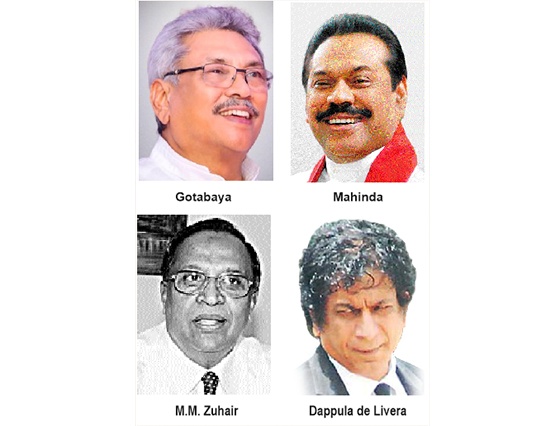
Former lawmaker M. M. Zuhair, PC, has strongly opposed what he calls forcible cremation of Covid-19 victims on a directive given by Attorney General Dappula de Livera, PC.
The following is the text of a letter by former Senior State Counsel Zuhair to President Gotabaya Rajapaksa and Prime Minister Mahinda Rajapaksa:
This is further to my previous representation dated 06th May 2020.
According to media reports the Hon Attorney General has directed the Director-General of Health Services that the dead bodies of Covid-19 victims unclaimed by the immediate members of the family to be cremated. (Ada Derana. Lk-09/12/2020 at 15.07 hrs. and AFP “Sri Lanka cremates Muslim Covid-19 victims against religious wishes” 09/12/2020 7.40 pm).
Firstly it is well known that the right to accord a dignified burial to a deceased person is an internationally recognized right. This is a right available to every person not merely to Muslims.
Secondly it is equally well known that the kith and kin of the deceased Muslims in particular have refused to accept the dead bodies as a protest against the unlawful refusal by the health authorities of our country to allow Covid 19 deceased persons a dignified burial. In the circumstances the Attorney General ought not to have directed the forcible cremation without hearing the kith and kin of the deceased persons. Such direction is in violation of the principles of natural justice, which principles the Attorney General is bound to uphold.
Thirdly, the direction has been made in terms of the Quarantine and Prevention of Deceases ordinance. If that be the case, the Attorney General would have seen that section 3(1)(i) of the Quarantine Ordinance provides for both options of burial and cremation and that he ought not to become a party to directing solely the cremation of the ‘under protest’ bodies without the consent of the kith and kin and in violation of the provisions of the Quarantine Ordinance read with section 17 (1) (c) of the Interpretation Ordinance. He ought not to expose the illustrious office of the Attorney General and the State to possible claims of damages.
Fourthly, Professor Tissa Vitharana has been quoted in the media last week that the expert panel appointed by the Minister of Health to advise her on the quarantine measures does not have a single virologist and hence not a competent panel, though the country has many eminent experts, virologists, epidemiologists, etc. Whereas 190 countries in the world had permitted burial of Covid-19 deceased persons following the World Health Organisation (WHO) guidelines, Sri Lanka and China are said to be the two countries that do not allow burials. The excellent work otherwise done by the countries health authorities and the armed forces are being brought into disrepute world-wide by the panel’s undue delay in resolving the problem by giving convincing scientific reasons as to why the WHO guidelines cannot be followed here.
Fifthly, if in fact and in science Covid- 19 will spread through contamination of water, I wish to state that no one, Muslim or otherwise will ask for burial of their victims. According to WHO any virus contaminated water may cause diarrhea but will not spread Covid-19.
Sixthly recent judicial decisions have kept the matter open to be decided by the Cabinet based on expert opinion which is anxiously awaited. Courts have not restrained the government or the experts from taking necessary decisions.
Permit me also to point out the following matters. Two Ministers Hon. Chamal Rajapaksa and Hon. Mahinda Amaraweera said recently that the government is favourably considering restoring the 27th March 2020 gazette allowing both burial and cremation for Covid-19 deceased persons and a third Minister Hon. Keheliya Rambukwella said a final decision will be taken after the experts give their opinion to the Health Minister Pavithra Wanniarachchi. The country’s accredited experts on the subject must not delay giving the opinion and they must do so with convincing scientific reasons for the public to know, because the government’s pursuit to restore burials in line with the opinion of the experts of the country as well as the World Health Organisation (WHO) guidelines are being perceived as being delayed unreasonably.
According to the WHO, water contaminated by any virus may cause diarrhoea but not Covid 19. If the local experts on virology and epidemiology have scientific reasons to establish that Covid-19 will spread through contamination of water to the living cell of a host, they also need to explain that apart from human beings animals, birds and fish will not be infected and will not host the virus and transmit them to human beings who may consume or handle them. There is thus an urgent need for the Sri Lankan experts to clear with scientific reasons all possible misconceptions.
The main protective measures that the public have been presently made aware of, to restrict the spread of Covid-19 are related to contamination through inhalation of infected droplets or by touching infected surfaces but not to Covid-19 contaminated water being consumed by living cells and getting transmitted to human beings. Experts in the relative field must clarify these matters on an urgent basis with scientific reasoning and evidence.
The composition of the committee of experts and their expertise in the relevant field to override WHO guidelines and the meetings or discussions they are engaged in need to be publicized in the interest of transparency. These representations are being made in the interest of the country’s best interests, its global reputation particularly in the Middle-Eastern countries which provide the highest foreign exchange earnings of US $ 7,000 million per year and in establishing acceptable scientific reasoning in the process of decision making affecting the fundamental rights of persons both living and dead.”
A copy has been also sent to the AG.

Latest News
Heat Index at Caution Level in the Northern, North-central, North-western, Western, Sabaragamuwa, Eastern and Southern provinces and in Monaragala district


Warm Weather Advisory
Issued by the Natural Hazards Early Warning Centre
Issued at 3.30 p.m. on 15 April 2026, valid for 16 April 2026.
The Heat index, the temperature felt on human body is likely to increase up to ‘Caution level’ at some places in the Northern, North-central, North-western, Western, Sabaragamuwa, Eastern
and Southern provinces and in Monaragala district.
The Heat Index Forecast is calculated by using relative humidity and maximum temperature and this is the condition that is felt on your body. This is not the forecast of maximum temperature. It is generated by the Department of Meteorology for the next day period and prepared by using global numerical weather prediction model data.
Effect of the heat index on human body is mentioned in the above table and it is prepared on the advice of the Ministry of Health and Indigenous Medical Services.
ACTION REQUIRED
Job sites: Stay hydrated and takes breaks in the shade as often as possible.
Indoors: Check up on the elderly and the sick.
Vehicles: Never leave children unattended.
Outdoors: Limit strenuous outdoor activities, find shade and stay hydrated.
Dress: Wear lightweight and white or light-colored clothing.
Note:
In addition, please refer to advisories issued by the Disaster Preparedness & Response Division, Ministry of Health in this regard as well. For further clarifications please contact 011-7446491

The Indonesian Navy Sailing Ship KRI BIMA SUCI – 945 arrived at the Port of Colombo on a goodwill visit on 15 Apr 2026 and was welcomed by the Sri Lanka Navy (SLN) in compliance with time-honoured naval traditions.
The vessel’s arrival is a key highlight of the ASEAN Plus Cadet Sail (APCS) – 2026 programme , accompanying a diverse contingent of Navy cadets from 26 different nations alongside their Indonesian counterparts.
The ship is commanded by Commander SUGENG HARIYANTO. Meanwhile, Officer Under-trainees of the Sri Lanka Navy are expected to participate in various programmes aboard the
ship and naval personnel observe its operational functions during its stay in the island.
Furthermore, the ship’s crew is scheduled to take part in programmes organized by the Sri Lanka Navy to enhance camaraderie between the two navies, as well as visit several tourist attractions in the country.
News
PM initiates children into learning at the auspicious time while observing New Year traditional customs and rituals

The Sinhala and Tamil New Year cultural festival, organized by the Ministry of Buddha Sasana, Religious and Cultural Affairs, was held on Tuesday (14) in Gampaha under the patronage of Prime Minister Dr. Harini Amarasuriya, with the performance of traditional auspicious customs and rituals.
In accordance with tradition, during the Punya Kalaya (inauspicious time), the Prime Minister visited the Medagama Sri Sunandarama Viharaya in Gampaha and participated in religious observances and received blessings from Venerable Thunmodara Samitha Thero, a member of the Karaka Sangha Sabha of the Sri Lanka Ramanna Maha Nikaya and the Chief Incumbent of the Medagama Sri Sunandarama Dharmaduta Piriven Viharaya.
The traditional observances of the Sinhala and Tamil New Year cultural festival were held at the residence of Darshana Weerasinghe in Gampaha. Marking the auspicious time for commencing work, and upon the invitation of the host family, the Prime Minister planted a sapling within the premises. Concurrently, Minister of Buddha Sasana, Religious and Cultural Affairs, Dr. Hiniduma Sunil Senevi, and Minister of Foreign Affairs and Tourism, Vijitha Herath, joined the PM.
Subsequently, the Prime Minister joined children in engaging in traditional folk games.
At the auspicious time for engaging work and educational activities, the PM participated with children in reading and writing, guiding them and symbolically marking the commitment to advancing the educational development of the nation’s children.
Thereafter, the Prime Minister and other distinguished guests observed the traditional customs of exchanging greetings, transactions and gifts with the host family, and joined them to partake in the customary New Year meal.
Extending New Year greetings to all citizens, the Prime Minister expressed her gratitude to all Sri Lankans, both at home and abroad, for their contributions in overcoming and effectively managing the various challenges faced by the country.
Speaking at the occasion, Minister Dr. Hiniduma Sunil Senevi stated that the Sinhala and Tamil New Year festival symbolizes renewal and purity, and reflects the energy of the sun. He also conveyed his wishes for a peaceful and prosperous New Year for all.
The occasion was attended by the Deputy Minister of Finance and Planning and Minister of Labour, Dr. Anil Jayantha; Deputy Minister of Labour, Mahinda Jayasinghe; Member of Parliament for the Gampaha District, Ruwan Mapalagama; along with the Gampaha District Secretary, Mayor, Divisional Secretaries, and a large number of government officials.
(Prime Minister’s Media Division)

Babar Azam 71* helps Peshawar Zalmi extend lead at top

Trump threatens to fire Fed chair Jerome Powell if he doesn’t leave in May

Royal Challengers Bengaluru top the table after bowlers help thump Lucknow Super Giants

Showers expected in the Western, Sabaragamuwa, Southern, Central, Uva and North-western provinces

Heat Index at Caution Level in the Northern, North-central, North-western, Western, Sabaragamuwa, Eastern and Southern provinces and in Monaragala district

Pakistani army chief in Tehran amid bid to restart US talks

‘Dates have the highest sugar content to fight Coronavirus’

Sunday Island 27 December – Headlines

#SundayIsland 17th December – Headlines

Sunday Island – 28th March

Sunday Island Headlines – 21 March

Sunday Island – 21st February – Headlines
-

 News4 days ago
CEB orders temporary shutdown of large rooftop solar systems
-
 Features4 days ago
From Royal College Platoon to National Cadet Corps: 145 years of discipline, leadership, and modern challenges
-

 Business6 days ago
Israeli attack on Lebanon triggers local stock market volatility
-

 Business6 days ago
HNB Assurance marks 25 years with strategic transformation to ‘HNB Life’
-

 Latest News4 days ago
PNS TAIMUR & ASLAT arrive in Colombo
-

 News5 days ago
Anura Solomons passes away
-

 Features4 days ago
CIA’s hidden weapon in Iran
-

 Latest News3 days ago
Prasidh, Buttler set up comfortable win for Gujarat Titans