
Features
World mourns a rare polymath:Jacques Christian Soulié

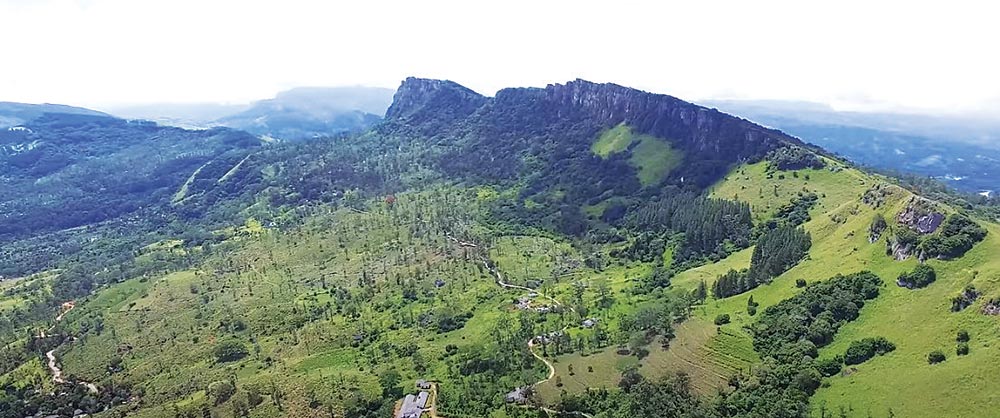
(1939, Montauban – 2025, Kandy)
A psychiatrist by training, professor of French and psychiatry, French by birth and Sri Lankan at heart, a man of the arts, of spirit and of compassion — Dr. Jacques Christian Soulié passed away on July 5 at his home, perched high above Kandy, facing the mythical Hanthana mountains he so dearly loved. He would have turned 86 on September 12.
Former Director of the Alliance Française in Kandy (2000–2010), he leaves behind several generations of students and pupils who regarded him with near-reverence, an arts and culture centre he built with sheer willpower, and the memory of a man driven by an insatiable thirst for knowledge and creative endeavour — right up to his final days. Among his last undertakings: an unfinished collaborative translation of the Mahavamsa, the Great Chronicle of Lanka, covering the period from the 6th century BCE to 1815 CE, and preparations for a celebratory event marking the 10th anniversary of his beloved centre — his “last baby,” and likely the one that gave him the greatest satisfaction.
Born in Montauban (Tarn-et-Garonne) in 1939 into a family of farmers — though he would unapologetically say peasants — he experienced a childhood shaped by wartime anxiety, the absence of a father conscripted into the army, and deep deprivation. His father’s return, after the war, brought with it the long-silenced mystery of a Swiss exile, which would fuel in the son a lifelong search for meaning.
A brilliant student, Jacques earned a scholarship to attend the private SaintThéodard College, a school reserved for the well-born and, occasionally, the exceptionally gifted. There, he became acutely aware of social divisions and began to aspire to a form of spiritual elevation. The early loss of his father, the overwhelming yet quietly expressed love of his mother — an accomplice in the social “heist” her son was mounting against all odds —, the rarefied world of his classmates’ families, glimpsed but never fully shared, and his early involvement in village-level socio-cultural life — all of these formative experiences shaped a complex personality capable of navigating with ease between the margins and the center of civic life, and back again. This gift for fluidity would become a defining trait in a life journey that took him from the endless wheat fields of southwestern France to the misty hills of Kandy, via French Polynesia and the genteel Rue Monge in Paris. Brilliant medical studies led him to a career in military medicine, bringing him — with a high rank — to Tahiti, in the midst of French nuclear testing. But by the end of the Gaullist era, the military world and its strict discipline — the very things that once attracted him — began to lose their appeal. At great personal financial cost, he severed ties with the army and returned to France to take up psychiatry, which he practiced for 25 years before opting for early retirement at age 55.

Along the way, he discovered Buddhism and Sri Lanka — first in Paris, then through travel — with its arts, foundational texts, and luminous culture. He fell instantly in love with Kandy and decided to settle there.
He brought with him a remarkable collection of artworks, paintings, furniture, and rare books, patiently assembled over the years in auction houses and flea markets across Europe. The setting he chose for his new life was worthy of the collection it would house: a two-hundred-year-old noble residence, in the pure Kandyan style, of what is known as Dutch architectural lineage. It is the Naranwala Walawwa.
Hardly had he settled in Kandy than he turned his back on the notion of a peaceful, golden retirement. He offered his services to the Alliance Française of Kandy (AFK), where he quickly became a cornerstone — teaching classes, taking on administrative duties, and giving weekly lectures in psychiatry at the University of Peradeniya (visible from his courtyard) and at Sri Jayewardenepura University in Colombo, a three-hour drive away!
Tireless, he became the unofficial cultural attaché of Kandy’s Francophone community, organizing exhibitions and themed evenings with infectious enthusiasm. He introduced Sri Lankan audiences to the masterpieces of Delacroix, Cézanne, Gauguin, Matisse… to name only a few, and only the painters. Between 2001 and 2012, he took the helm of the Alliance Française of Kandy, ushering in a true golden age — with over 550 students, a record never since equalled, and a rich, varied cultural program. He took charge of a floundering ship in troubled waters and revitalized it. One especially perilous moment stands out: when the AFK had to vacate the premises it had occupied for many years in central Kandy. It fell to him to find a new home in record time — a task he accomplished with calm and brilliance, concealing from the outside world the inner turmoil of seeing his institution nearly cast out onto the street. To this day, the venerable Alliance occupies that uniquely luminous setting, nestled across from the Hanthana mountains. Kandy’s art lovers will long remember the multidisciplinary soirées he masterfully orchestrated — blending visual arts, music, and film screenings — which became his signature, both at the Alliance and beyond.
Even after retiring — successively and in that order — from psychiatry, from his directorship at the Alliance, and from his teaching duties, Jacques Soulié never ceased to create. A man who seemed to take to heart (perhaps too much so) Roger Nimier’s adage — “A man without a project is the enemy of mankind” — launched, in 2010, his final venture: opening his home to the public, transforming it into a center for art and archives. Despite many bureaucratic hurdles — not least due to his status as a foreigner — the Suriyakantha Centre for Art and Culture opened its doors in 2015. Today, the SCAC is a cultural gem of Kandy, leaving no visitor unmoved — as confirmed by the glowing online testimonials. A meticulous perfectionist, he continued — even two months ago — to personally greet every guest, guide them through his centre, and often share a meal with those who wished to linger a little longer in the presence of this stranger who, in truth, had already become their friend. The near-annual event Suriya Kavikara — seven editions in ten years — was the crowning moment of the year. A multidisciplinary evening dedicated to the arts in all their diversity, Suriya Kavikara proudly positioned itself as the heir to the centuries-old Kandyan tradition of honoring the living arts (Kavikara Maduwa).
Almost simultaneously, around 2015, a neurodegenerative illness began to appear. He denied it at first, then fought it, referring — not without irony — to the “honeymoon phase” that marks the onset of Parkinson’s, which had been diagnosed in time and responded well to treatment… until it returned with renewed force. He resisted it to the end. Even last year, he travelled back to France for his usual summer stay, divided between his native Southwest and the Paris of his passions. The memory of this exceptional man — a bridge between two cultures — will be honored. His legacy, both material and spiritual, will live on. In Kandy, his empathy, humanism, and insatiable curiosity will leave an immense void. His spiritual daughters and sons will carry forward his profoundly humanist vision. And the world will mourn a rare kind of polymath — radiant, indefinable, unforgettable.
by Janaka Samarakoon ✍️


“All animals are equal, but some animals are more equal than others” ––George Orwell, Animal Farm
 When I wrote in this column an essay on 4th February 2026 titled, the ‘Beginning of Another ‘White Supremacist’ World Order?’, my focus was on the hypocrisy of Canadian Prime Minister Mark Carney’s Davos address on 20 January 2026 to the World Economic Forum. It was embraced like the gospel by liberal types and the naïve international relations ‘experts’ in our country and elsewhere. My suspicion of Carney’s words stemmed from the consistent role played by countries like Canada and others which he called ‘middle powers’ or ‘intermediate powers’ in the world order he critiqued in Davos. He wanted such countries, particularly Canada, “to live the truth?” which meant “naming reality” as it exists; “acting consistently” towards all in the world; “applying the same standards to allies and rivals” and “building what we claim to believe in, rather than waiting for the old order to be restored.” These are some memorable pieces of Carney’s mantra.
Yet unsurprisingly, it only took the Trump-Netanyahu illegal war against Iran to prove the hollowness in Carney’s words. If he placed any premium on his own words, he should have at least voiced his concern against the continuing atrocities in the Middle East unilaterally initiated by the US and Israel. But his concern is only about Iran’s seemingly indiscriminate attacks across the region targeting US and Israeli installations and even civilian locations in countries allied with the Us-Israel coalition.
Issuing a statement on 3 March 2026 from Sydney he noted, “Canada has long seen Iran as the principal source of instability and terror in the Middle East” and “despite more than two decades of negotiations and diplomatic efforts, Iran has not dismantled its nuclear programme, nor halted its enrichment activities.” A sensible observer would note how the same statement would also apply to Israel. In fact, Israel has been the bigger force of instability in the Middle East surpassing Iran. After all, it has exiled an entire population of people — the Palestinians — from their country to absolute statelessness has not halted its genocide of the same people unfortunate enough to find themselves in Gaza after their homeland was taken over to create Israel in 1948 and their properties to build illegal Jewish settlements in more recent times. And then there is the matter of nuclear weapons. Israel has never been hounded to stop its nuclear programme unlike Iran. There is, in the world order Carney criticixed and the one in his fantasy, a fundamental difference between a ‘Jewish bomb’ and a ‘Muslim bomb’ in the ‘clash of civilisations’ as imagined by Samuel P. Huntington and put into practice by the likes of Messers Trump, Netanyahu, and Carney. That is, the Jewish bomb is legitimate, and the Muslim one is not, which to me evokes the commandments in the dystopian novella Animal Farm.
But Carney, in his new rhetoric closely echoing those of the leaders of Germany, UK and France, did not completely forget his Davos words too. He noted, in the same statement, “we take this position with regret, because the current conflict is another example of the failure of the international order.” But in reality, it is not the failure of the current international order, but its reinforcement by the likes of Mr Carney, reiterating why it will not change.
Coming back to the US-Israel attack on Iran, anyone even remotely versatile in the craft of warfare should have known, sooner or later, the rapidly expanding theatre of devastation in the Middle East was likely to happen for two obvious reasons. One, Iran had warned of this outcome if attacked as it considered those countries hosting US and Israeli bases or facilities as enemies. This is military common sense. Two, this was also likely because it is the only option available for a country under attack when faced with superior technology, firepower and the silence of much of the world. I cannot but feel deep shame about the lukewarm and generic statements urging restraint issued by our political leaders notwithstanding the support of Iran to our country in many times of difficulty at the hands of this very same world order.
When I say this, I am not naïvely embracing Iran as a shining example of democracy. I am cognizant of the Iranian regime’s maltreatment of some of its own citizens, stifling of dissent within the country and its proxy support for armed groups in the region. But in real terms, this is no different from similar actions of Israel and the US. The difference is, the actions of these countries, particularly of the US, have been far more devastating for the world than anything Iran has done or could do. US’s misadventures in Vietnam, Iraq, Syria, and Afghanistan come to mind — to take only a handful of examples.
But it is no longer about Carney and the hollowness of his liberal verbal diarrhoea in Davos. What is of concern now is twofold. One is the unravelling fiction of what he called the ‘new world order’ in which he located countries like Canada at the helm. And the second is the reality of continuing to live in the same old world order where countries like Canada and other middle and intermediate powers will continue to do the bidding of powerful aggressors like the US and Israel as they have done since the 20th century.
Yet, one must certainly thank Trump and Mr Natenyahu for one thing. That is, they have effectively exposed the myth of what used to be euphemistically called the ‘western civilisation.’ Despite its euphemism, the notion and its reality were omnipresent and omnipotent, because of the devastating long term and lingering consequences of its tools of operation, which were initially colonialism and later postcolonial and neocolonial forms of control to which all of us continue to be subjected.
One thing that was clearly lacking in the long and devastating history of the ‘western civilisation’ in so far as it affected the lives of people like us is its lack of ‘civilisation’ and civility at all times. Therefore, Trump and Mr Netanyahu must be credited for exposing this reality in no uncertain terms.
But what does illegal and unprovoked military action and the absence so far of accountability mean in real terms? It simply means that rules no longer matter. If Israel and the US can bomb and murder heads of state of a sovereign country, its citizens including children, cause massive destruction claiming a non-existent imminent threat violating both domestic and international law, it opens a wide playing field for the powerful and the greedy. Hypothetically, in this free-for-all, China can invade India through Arunachal Pradesh and occupy that Indian state which it calls Zangnan simply because it has been claiming the territory of itself for a very long time and also simply because it can. India can invade and occupy Sri Lanka, if it so wishes because this can so easily be done and also because it is part of the extended neighbourhood of the Ramayana and India’s ‘Akhand Bharat’ political logic. Sri Lanka can perhaps invade and occupy the Maldives if it wants a free and perennial supply of Maldive Fish. Incidentally, the Sri Lankan Tamil guerrilla group, People’s Liberation Organization of Tamil Eelam nearly succeeded in doing so 1988.
Sarcasm aside, even more dangerous is the very real possibility of this situation opening the doors for small, violent and mobile militant groups to target citizens of these aggressor countries and their allies as we saw in the late 1960s and 1970s. This will occur because in this kind of situation, many people would likely believe this form of asymmetric warfare is the only avenue of resistance open to them. It is precisely under similar conditions that the many Palestinian armed factions and Lebanese militia groups emerged in the first place. If this happens, the victims will not be the fathers and the vociferous supporters of the present aggression but all of us including those who had nothing to do with the atrocities or even opposed it in their weak and inaudible voices.
If I may go back to Carney’s Davos words, what would “to live the truth?”, “naming reality”, “acting consistently” and “applying the same standards to allies and rivals” mean in the emerging situation in the Middle East? Would this kind of hypocrisy, hyperbole, choreographed silence and selective accusations only end if a US invasion of Greenland, an integral part of the ‘White Supremacist’ World Order’ takes place? By then, however, all of us would have been well-trained in the art of feeling numb. By that time, we too would have forgotten yet another important line in Animal Farm: “No animal shall kill any other animal without cause.”

Sexual education is a vital component of holistic education, contributing to physical health, emotional well-being, gender equality, and social responsibility. Despite its importance, sexual education remains a sensitive and often controversial subject in many societies, particularly in culturally conservative contexts. In Sri Lanka, discussions around sexuality are frequently avoided in formal and informal settings, leaving young people to rely on peers, social media, or misinformation. This silence creates serious social, health, and psychological consequences. By examining the Sri Lankan context alongside international examples, the importance of comprehensive and age-appropriate sexual education becomes clear.
Understanding Sexual Education
Sexual education goes beyond biological explanations of reproduction. Comprehensive sexual education includes knowledge about human anatomy, puberty, consent, relationships, emotional health, gender identity, sexual orientation, reproductive rights, contraception, prevention of sexually transmitted infections (STIs), and personal safety. Importantly, it also promotes values such as respect, responsibility, dignity, and mutual understanding. When delivered appropriately, sexual education empowers individuals to make informed decisions rather than encouraging early or risky sexual behavior.
The Sri Lankan Context: Silence and Its Consequences
In Sri Lanka, sexual education is included in school curricula mainly through subjects such as Health Science and Life Competencies, however the content is often limited and taught with hesitation. Many teachers feel uncomfortable discussing sexual topics openly due to cultural norms, religious sensitivities, and fear of parental backlash. As a result, lessons are rushed, skipped, or delivered in a purely biological manner without addressing emotional, social, or ethical dimensions.
This lack of open education has led to several social challenges. Teenage pregnancies, although less visible, remain a significant issue, particularly in rural and estate sectors. Young girls who become pregnant often face school dropouts, social stigma, and limited future opportunities. Many of these pregnancies occur due to lack of knowledge about contraception, consent, and bodily autonomy.
Another serious concern in Sri Lanka is child sexual abuse. Numerous reports indicate that many children do not recognize abusive behaviour or lack the confidence and language to report it. Proper sexual education, especially lessons on body boundaries and consent, can help children identify inappropriate behavior and seek help early. In the Sri Lankan context, where respect for elders often discourages questioning authority, this knowledge is especially crucial.
Furthermore, misinformation about menstruation, nocturnal emissions, and bodily changes during puberty causes anxiety and shame among adolescents. Many Sri Lankan girls experience menarche without prior knowledge, leading to fear and confusion. Similarly, boys often receive no guidance about emotional or physical changes, reinforcing unhealthy notions of masculinity and silence around mental health.
Cultural Resistance and Misconceptions
Opposition to sexual education in Sri Lanka often stems from the belief that it promotes immoral behaviour or encourages premarital sex. However, international research consistently shows the opposite: young people who receive comprehensive sexual education tend to delay sexual initiation and engage in safer behaviours. The resistance is therefore rooted more in cultural fear than empirical evidence.
Religious and cultural values are important, but they need not conflict with sexual education. In fact, sexual education can be framed within moral discussions about responsibility, respect, family values, and care for others principles shared across Sri Lanka’s major religious traditions. Ignoring sexuality does not protect cultural values; rather, it leaves young people vulnerable.
International Evidence: Lessons from Other Countries
Several countries demonstrate how effective sexual education contributes to positive social outcomes.
In the Netherlands, sexual education begins at an early age and is age-appropriate, focusing on respect, relationships, and communication rather than explicit sexual activity. As a result, the Netherlands has one of the lowest rates of teenage pregnancy and STIs in the world. Young people are encouraged to discuss feelings, boundaries, and consent openly, both in schools and at home.
Similarly, Sweden introduced compulsory sexual education as early as the 1950s. Swedish programs emphasise gender equality, reproductive rights, and sexual health. This long-term commitment has contributed to high levels of sexual health awareness, low maternal mortality among young mothers, and strong societal acceptance of gender diversity. Sexual education in Sweden is also closely linked to public health services, ensuring access to counseling and contraception.
In many developing contexts, international organisations have supported sexual education as a tool for social development. UNESCO promotes Comprehensive Sexuality Education (CSE) globally, emphasising that it equips young people with knowledge, skills, attitudes, and values that enable them to protect their health and dignity. Studies supported by UNESCO show that CSE reduces risky behaviours, improves academic outcomes, and supports gender equality.
In countries such as Rwanda and South Africa, sexual education has been integrated with HIV/AIDS prevention programs. These initiatives demonstrate that sexual education is not a luxury of developed nations but a necessity for public health and social stability.
Comparing Sri Lanka with International Models
When compared with international examples, Sri Lanka’s challenges are not due to lack of capacity but lack of open dialogue and political will. Sri Lanka has a strong education system, high literacy rates, and an extensive public health network. These strengths provide an excellent foundation for implementing comprehensive sexual education that is culturally sensitive yet scientifically accurate.
Unlike the Netherlands or Sweden, Sri Lanka may not adopt early-age sexuality discussions in the same manner, but age-appropriate education during late primary and secondary school is both feasible and necessary. Topics such as puberty, menstruation, consent, online safety, and respectful relationships can be introduced gradually without violating cultural norms.
Sexual Education in the Digital Era
The urgency of sexual education has increased in the digital age. Sri Lankan adolescents are exposed to sexual content through social media, films, and online platforms, often without guidance. Pornography frequently becomes a primary source of sexual knowledge, leading to unrealistic expectations, objectification, and distorted ideas about consent and relationships.
Sexual education can counter these influences by developing critical thinking, media literacy, and ethical understanding. Teaching young people how to navigate digital relationships, cyber harassment, and online exploitation is now an essential component of sexual education.
Gender Equality and Social Change
Sexual education also plays a crucial role in promoting gender equality. In Sri Lanka, traditional gender roles often limit open discussion about female sexuality while excusing male dominance. Comprehensive sexual education challenges these norms by emphasizing mutual respect, shared responsibility, and equality in relationships.
Educating boys about consent and emotional expression helps reduce gender-based violence, while educating girls about bodily autonomy strengthens empowerment. In the long term, this contributes to healthier families and more equitable social structures.
The Way Forward for Sri Lanka
For sexual education to be effective in Sri Lanka, several steps are necessary. Teachers must receive proper training to handle the subject confidently and sensitively. Parents should be engaged through awareness programs to reduce fear and misconceptions. Curriculum developers must ensure that content is age-appropriate, culturally grounded, and scientifically accurate.
Importantly, sexual education should not be treated as a one-time lesson but as a continuous process integrated into broader life skills education. Collaboration between schools, healthcare providers, religious leaders, and community organisations can help normalise discussions around sexual health while respecting cultural values.
Finally , sexual education is not merely about sex; it is about health, dignity, safety, and responsible citizenship. The Sri Lankan experience demonstrates how silence and taboo can lead to misinformation, vulnerability, and social harm. International examples from the Netherlands, Sweden, and global initiatives supported by UNESCO clearly show that comprehensive sexual education leads to positive individual and societal outcomes.
For Sri Lanka, embracing sexual education does not mean abandoning cultural values. Rather, it means equipping young people with knowledge and ethical understanding to navigate modern social realities responsibly. In an era of rapid social and technological change, sexual education is not optional it is essential for building a healthy, informed, and compassionate society.
by Milinda Mayadunna ✍️

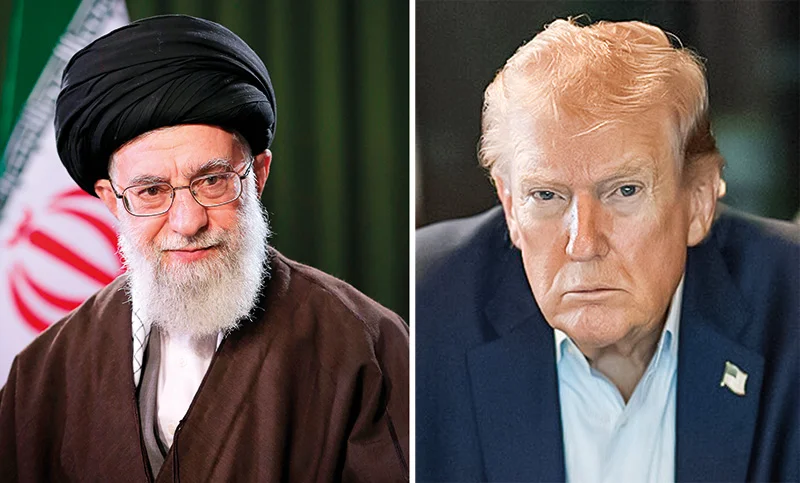
 It was Iran’s first spiritual head of state, the late Ayatollah Khomeini, who singled out and castigated the US as the ‘Great Satan’ in the revolutionary turmoil of the late seventies of the last century that ushered in the Islamic Republic of Iran. The core issue driving the long-running confrontation between Islamic Iran and the West has been religious identity and the seasoned observer cannot be faulted for seeing the explosive emergence of the current war in the Middle East as having the elements of a religious conflict.
The current crisis in the Middle East which was triggered off by the recent killing of Iranian spiritual head of state Ayatollah Ali Khamenei in a combined US-Israel military strike is multi-dimensional and highly complex in nature but when the history of relations between Islamic Iran and the West, read the US, is focused on the religious substratum in the conflict cannot be glossed over.
In fact it is not by accident that US President Donald Trump resorts to Biblical language when describing Iran in his denunciations of the latter. Iran, from Trump’s viewpoint, is a primordial source of ‘evil’ and if the Middle East has collapsed into a full-blown regional war today it is because of the ‘evil’ influence and doings of Iran; so runs Trump’s narrative. It is a language that stands on par with that used by the architects of the Iranian revolution in the crucial seventies decade.
In other words, it is a conflict between ‘good’ and ‘evil’ and who is ‘good’ and who is ‘evil’ in the confrontation is determined mainly by the observer’s partialities and loyalties which may not be entirely political in kind. It should not be forgotten that one of President Trump’s support bases is the Christian Right in the US and in the rest of the West and the Trump administration’s policy outlook and actions should not be divorced from the needs of this segment of supporters to be fully made sense of.
The reasons for the strong policy tie-up between Rightist administrations in the US in particular and Israel could be better comprehended when the above religious backdrop is taken into consideration. Israel is the principal actor in the ‘Old Testament’ of the Bible and is seen as ‘the Chosen People of God’ and this characterization of Israel ought to explain the partialities of the Republican Right in particular towards Israel. Among other things, this partiality accounts for the strong defence of Israel by the US.
For the purposes of clarity it needs to be mentioned here that the Bible consists of two parts, an ‘Old’ and ‘New Testament’ , and that the ‘New Testament’ or ‘Message’ embodies the teachings of Jesus Christ and the latter teachings are seen as completing and in a sense giving greater substance to the ‘Old Testament’. However, Judaism is based mainly on ‘Old Testament’ teachings and Judaism is distinct from Christianity.
To be sure, the above theological explanation does not exhaust all the reasons for the war in the Middle East but the observer will be allowing an important dimension to the war to slip past if its importance is underestimated.
It is not sufficiently realized that the Iranian Islamic Revolution of 1979 utterly changed international politics and re-wrote as it were the basic parameters that must be brought to bear in understanding it. So important is the Islamic factor in contemporary world politics that it helped define to a considerable degree the new international political order that came into existence with the collapsing of the Cold War and the disintegration of the USSR .
Since the latter developments ‘political Islam’ could be seen as a chief shaping influence of international politics. For example, it accounts considerably for the 9/11 calamity that led to the emergence of fresh polarities in world politics and ushered in political terrorism of a most destructive kind that is today disquietingly visible the world over.
It does not follow from the foregoing that Islam, correctly understood, inspires terrorism of any kind. Islam proclaims peace but some of its adherents with political aims interpret the religion in misleading, divisive ways that run contrary to the peaceful intents of the faith. This is a matter of the first importance that sincere adherents of the faith need to address.
However, there is no denying that the Islamic Revolution in Iran of 1979 has been over the past decades a great shaper of international politics and needs to be seen as such by those sections that are desirous of changing the course of the world for the better. The revolution’s importance is such that it led to US political scientist Dr. Samuel P. Huntingdon to formulate his historic thesis that a ‘Clash of Civilizations’ is upon the world currently.
If the above thesis is to be adopted in comprehending the principal trends in contemporary world politics it could be said that Islam, misleadingly interpreted by some, is pitting a good part of the Southern hemisphere against the West, which is also misleadingly seen by some, as homogeneously Christian in orientation. Whereas, the truth is otherwise. The West is not necessarily entirely synonymous with Christianity, correctly understood.
Right now, what is immediately needed in the Middle East is a ceasefire, followed up by a negotiated peace based on humanistic principles. Turning ‘Spears into Ploughshares’ is a long gestation project but the warring sides should pay considerable attention to former Iranian President Mohammad Khatami’s memorable thesis that the world needs to transition from a ‘Clash of Civilizations’ to a ‘Dialogue of Civilizations’. Hopefully, there would emerge from the main divides leaders who could courageously take up the latter challenge.
It ought to be plain to see that the current regional war in the Middle East is jeopardising the best interests of the totality of publics. Those Americans who are for peace need to not only stand up and be counted but bring pressure on the Trump administration to make peace and not continue on the present destructive course that will render the world a far more dangerous place than it is now.
In the Middle East region a durable peace could be ushered if only the just needs of all sides to the conflict are constructively considered. The Palestinians and Arabs have their needs, so does Israel. It cannot be stressed enough that unless and until the security needs of the latter are met there could be no enduring peace in the Middle East.
-

 Features4 days ago
Brilliant Navy officer no more
-

 Opinion4 days ago
Sri Lanka – world’s worst facilities for cricket fans
-

 Business2 days ago
Cabinet nod for the removal of Cess tax imposed on imported good
-

 Features4 days ago
A life in colour and song: Rajika Gamage’s new bird guide captures Sri Lanka’s avian soul
-
 Features5 days ago
Overseas visits to drum up foreign assistance for Sri Lanka
-
 Features5 days ago
Sri Lanka to Host First-Ever World Congress on Snakes in Landmark Scientific Milestone
-
 Latest News2 days ago
Around 140 people missing after Iranian navy ship sinks off coast of Sri Lanka
-
 Business2 days ago
War in Middle East sends shockwaves through Sri Lanka’s export sector