
News
WHO declares monkeypox a global emergency amid surge in cases

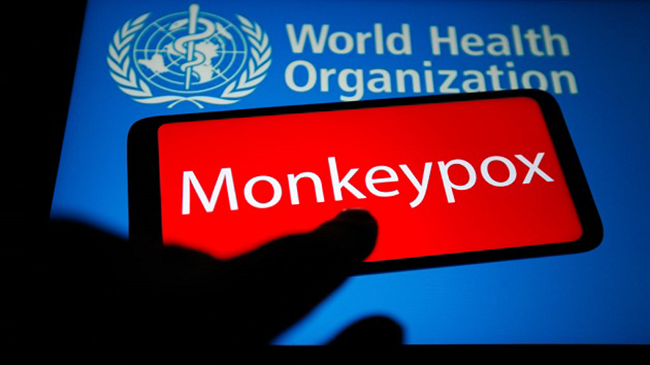
(Al Jazeera)The World Health Organization (WHO) has declared the monkeypox outbreak in more than 70 countries an “emergency of international concern”.
The WHO label – a “public health emergency of international concern” – is designed to sound an alarm that a coordinated international response is needed and could unlock funding and global efforts to collaborate on sharing vaccines and treatments.Governments are advised to raise awareness among doctors and hospitals, take protective measures in suspected cases and educate members of the population on how to protect themselves from infection.
WHO Director-General Tedros Adhanom Ghebreyesus made the decision to issue the declaration despite a lack of consensus among experts serving on the UN health agency’s emergency committee. It was the first time the chief of the UN health agency has taken such an action.
Announcing his decision to declare the health emergency during a media briefing in Geneva, Tedros confirmed that the committee had failed to reach a consensus, with nine members against and six in favour of the declaration.
“We have an outbreak that has spread around the world rapidly through new modes of transmission about which we understand too little and which meets the criteria in the international health regulations,” Tedros said on Saturday.
“I know this has not been an easy or straightforward process and that there are divergent views among the members” of the committee, he added.
Tedros said there are now more than 16,000 reported cases from 75 countries and territories, and five deaths.
A global emergency is WHO’s highest level of alert, but the designation does not necessarily mean a disease is particularly transmissible or lethal.
WHO’s emergencies chief, Dr Michael Ryan, said the director-general made the decision to put monkeypox in that category to ensure the gobal community takes the current outbreak seriously.
Monkeypox has been established in parts of Central and West Africa for decades, but it was not known to spark large outbreaks beyond the continent or to spread widely among people until May, when authorities detected dozens of epidemics in Europe, North America and elsewhere.To date, monkeypox deaths have only been reported in Africa, where a more dangerous version of the virus is spreading, mainly in Nigeria and Democratic Republic of Congo.
In Africa, monkeypox mainly spreads to people by infected wild animals like rodents in limited outbreaks that typically have not crossed borders. In Europe, North America and elsewhere, however, monkeypox is spreading among people with no links to animals or recent travel to Africa.Lawrence Gostin, Director of the WHO Center on Global Health Law, told Al Jazeera there has been “an exponential rise in monkeypox cases in five WHO regions of the world”.
“There should be contact tracing … widespread testing and a strategic deployment of vaccines to try and nip this in the bud. But the window for containment of monkeypox is rapidly closing and we fear that this could become endemic in Europe, North America and other parts of the world over the next months,” Gostin told Al Jazeera.



Approval of the Cabinet of Ministers has been granted at their meeting held on 19.05.2025 in order to introduce amendments to the Inland Revenue Act No. 24 of 2017 including the proposed tax revisions to enhance the tax structure paving way for state financial integrity based on revenue.
Accordingly, the revised draft bill has been prepared by the legal draftsman and clearance of the Attorney General has been received.
Therefore, the Cabinet of Ministers has granted approval for
the resolution furnished by the President in his capacity as the Minister of Finance, Policy Planning and Economic Development to publish the aforementioned draft bill in the government gazette notification and subsequently, forward the same to the Parliament for its concurrence.

The National Mineral Policy was prepared for the first time in the year 1999, and the aforementioned policy has been amended in 2023 to cover matters such as preparing an updated data system related to mineral resources, adding value to the export of minerals, encouraging mineral-related industrialists, extracting mineral resources and managing the environment sustainably, and resolving the issues related to the ownership of the land arising in extracting mineral resources.
The revised National Mineral Policy has been reupdated in line with the manifesto “A Sustainable Resource Utilization – Generation of the Highest Benefit” under the policy statement of the current government” A Thriving Nation – A Beautiful Life.”
Accordingly, the Cabinet of Ministers has approved the resolution presented by the Minister of Industries and
Entrepreneurship to implement the so-formulated “National Mineral Policy—2026.”

The Gampaha High Court has sentenced Twelve (12) individuals to death over the 2022 murder of former Polonnaruwa District Member of Parliament Amarakeerthi Athukorala and his security officer.

Heartbreak for Gurbaz and Afghanistan as South Africa win after double Super Over

Amendment of the Inland Revenue Act No. 24 of 2017

Cabinet nod for “National Mineral Policy” – 2026

Twelve sentenced to death by Gampaha High Court
Ten new buses with facilities for people with special needs

Ghosts of 2016 writ large as England, West Indies meet again

‘Dates have the highest sugar content to fight Coronavirus’

Sunday Island 27 December – Headlines

#SundayIsland 17th December – Headlines

Sunday Island – 28th March

Sunday Island Headlines – 21 March

Sunday Island – 21st February – Headlines
-

 Features4 days ago
My experience in turning around the Merchant Bank of Sri Lanka (MBSL) – Episode 3
-

 Business5 days ago
Zone24x7 enters 2026 with strong momentum, reinforcing its role as an enterprise AI and automation partner
-

 Business4 days ago
Remotely conducted Business Forum in Paris attracts reputed French companies
-

 Business4 days ago
Four runs, a thousand dreams: How a small-town school bowled its way into the record books
-

 Business4 days ago
ComBank and Hayleys Mobility redefine sustainable mobility with flexible leasing solutions
-
 Business5 days ago
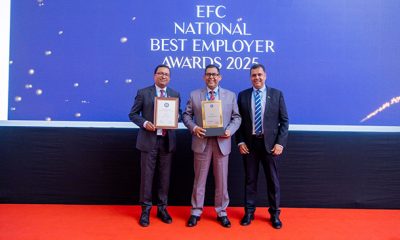
HNB recognized among Top 10 Best Employers of 2025 at the EFC National Best Employer Awards
-

 Editorial6 days ago
All’s not well that ends well?
-

 Business4 days ago
GREAT 2025–2030: Sri Lanka’s Green ambition meets a grid reality check