
News
Whiteflies a growing threat to coconut and other crops in Sri Lanka


Text and pictures by PRIYAN DE SILVA
White flies (Aleyrodidae) have become a threat to coconut and other agricultural crops in Sri Lanka. They damage plants by sucking out its juices. Heavily infested plants can be seriously weakened. Leaves often turn yellow, appear dry and drop prematurely. White flies also transmit crop viruses.
Deputy Director (Research) at the Coconut Research Institute (CRI) Lunuwila, Dr. Nayanie Aratchige says that around 1,500 species of White Fly have been reported from around the world of which four species, Aleurotrachelus atratus (Palm-infesting whitefly), Paraleyrodes minei (Citrus nesting whitefly), Aleurodicus dispersus (Spiraling whitefly) and Aleurodicus cocois (Coconut whitefly) are presently a threat to coconut palms in Sri Lanka.
Dr Aratchige said that the first mention of the White Fly plaguing coconut palms was in Barbados in 1846, and that outbreaks have been reported in the Caribbean and South American regions since the 1990s and outbreaks of Rugose spiraling whitefly (Aleurodicus rugioperculatus) in India since 2016.
The species Aleurodicus dispersus (spiraling white fly) has been present in Sri Lanka since 1990 but it was previously considered a minor pest to coconut palms.
The first major white fly outbreak in coconut plantations in Sri Lanka was reported in 2019 from the Kegalle District and it is believed to have been caused by the accidental introduction of a new species via illegal importation of seedlings, the impact of climate change, sudden drop of natural enemy populations of the native population of whiteflies due to excessive use of insecticides on other crops.

Dr. Nayanie Aratchige
Dr Aratchige said that White Flies had invaded coconut plantations in Gampaha, Kegalle, Kandy, Kalutara, Colombo, Kurunegala, Ratnapura, Puttalam and even the Galle, Matara and Hambantota Districts, which have been battling the Weligama Coconut Leaf Wilt disease for over a decade.
Banana, guava, citrus, avocado, eggplant, okra, cashew, Indian almond (Kottamba), caryota palm (Kithul palm), areca nut, ornamental plants, curry leaves, green chillie, mango, jackfruit, breadfruit, neem, pigeon pea, different varieties of pepper, Water melon, coffee, etc., host the White Fly.
The Coconut Research Institute and the Coconut Cultivation Board are conducting awareness programmes on the identification of the pest and coordinated spraying of insecticides.
Sticky traps
Dr Aratchige said that placing yellow sticky traps or spraying of the following insecticides to control the menace is recommended.
Neem oil and soap mixture
(Neem oil – 10 ml, Soap powder – 05 g dissolved in 1 L of water) or
Thiamethoxam (Actara)
(3g in 10 l of water) or Carbosulfan (Marshal 20) (20ml in 10 l of water) or Chlorantraniliprole+Thiomethoxam (Virtako 40G) (2.5g in 10 l of water)
Neem oil and soap mixture is recommended for all infested areas as this mixture is less toxic to the natural enemies of whiteflies. Artificial insecticides are particularly recommended for newly infested areas and the coconut seedling nurseries.
The CRI is further researching on methods of chemical and biological control and have sought assistance from other countries for importation of exotic natural enemies of the white fly.


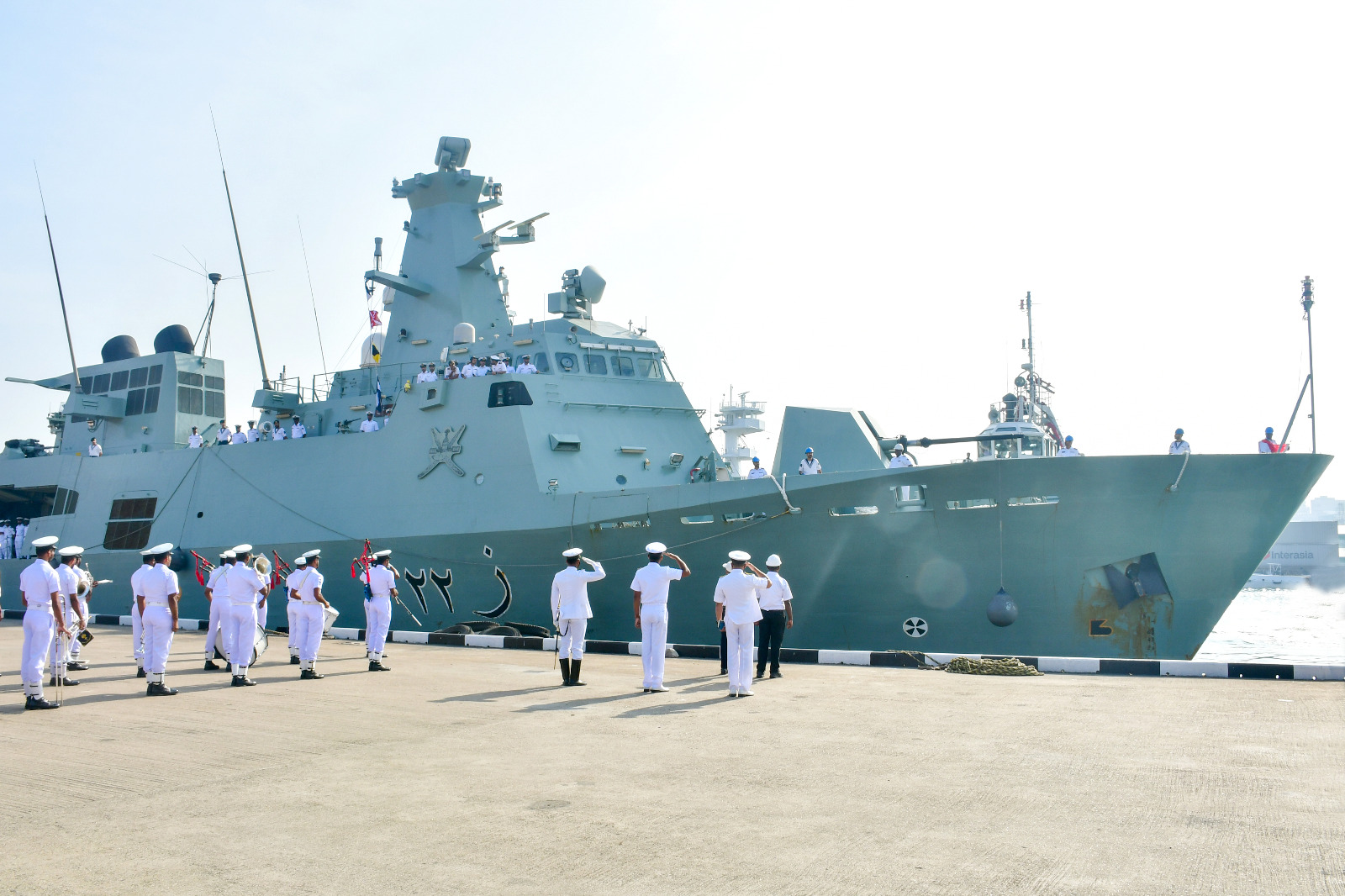
The Royal Navy of Oman Vessel “SADH” arrived at the Port of Colombo on a logistics replenishment visit on Tuesday (10 Feb 26). The Sri Lanka Navy welcomed the visiting ship in
compliance with naval traditions.
The 75m – long ship is commanded by Lieutenant Commander Shaheen Saud Abdul Rahman AI Balushi.
The port call will facilitate professional interaction and goodwill exchanges between the two navies.
During the stay in Colombo, crew members of the ship are expected to visit some tourist attractions in the city of Colombo.

* New Auditor General should not have been sworn in before Speaker – Opp.
* Suspended House Dy. Sec. Gen. Chaminda Kularatne takes his case to CA today
General Secretary of the National People’s Power (NPP) Dr. Nihal Abeysinghe yesterday said that there was no need for Speaker Dr. Jagath Wickramaratne to step down in view of the complaint lodged against him with the CIABOC (Commission to Investigate Allegations of Bribery or Corruption).
NPP General Secretary said so in response to The Island query whether the parliamentary group of the ruling party discussed the growing Opposition calls for the Speaker, who is also the Chairman of the Constitutional Council, to step down to facilitate the investigation.
The NPP parliamentary group consists of 159 MPs, including 18 National List (NL) members.
NL member Dr. Abeysinghe asked whether any other person, who had been investigated by the CIABOC, stepped down from his or her position to facilitate the inquiry.
The top official emphasised that the CIABOC could go ahead with its investigation without any hindrance.

Chamindra and Dr. Jagath
Opposition sources said that there hadn’t been a similar situation before and the CIABOC investigation into Speaker Dr. Wickramaratne is unprecedented as he heads the 10-member CC responsible and directly involved in all key appointments, including that of members to the CIABOC.
Sources pointed out that the newly appointed Auditor General, Ms. Samudrika Jayaratne, took the oath of secrecy before the Speaker on 5 February in Parliament after suspended Deputy General Secretary of Parliament Chaminda Kularatne complained to CIABOC.
In accordance with Section 9 of the National Audit Act, No. 19 of 2018, Jayaratne took the oath of secrecy in her capacity as the Auditor General of the National Audit Office and Chairperson of the Audit Service Commission.
Sources said that Kularatne would move the Court of Appeal today (10) against his removal at the behest of the Staff Advisory Committee, headed by the Speaker.
By Shamindra Ferdinando

The Trincomalee Magistrate’s Court yesterday (09) further remanded 10 persons, including four Buddhist monks, arrested on 19 January, 2026, for allegedly placing a Buddha statue in the coastal reservation, on 16 January.
The Buddhist monks, including Ven. Balangoda Kassapa Thera, and six other individuals, were further remanded until 11 February.
They have been accused of violating the Coast Conservation Act by placing a Buddha statue on a block of land belonging to the Trincomalee Bodhiraja Temple.
Of the four monks, Ven Balangoda Kassapa Thera and Ven Trincomalee Kalyanawansa Tissa Thera moved the Court of Appeal against the Magistrate’s Court decision. The case was heard on 22 January before a Bench comprising the President of the Court of Appeal, Justice Rohantha Abeysuriya, and Justice K. Priyantha Fernando.
Manohara de Silva, PC, and President’s Counsel Uditha Igalahewa, PC, appearing for the petitioners, urged the Court to take up the matter urgently, describing it as a case of exceptional importance.
However, the Court of Appeal on 3 February dismissed the petitions against the remanding of Ven Balangoda Kassapa Thera and Ven Trincomalee Kalyanawansa Tissa Thera.
The order was issued by the Court of Appeal bench consisting of the President of the Court of Appeal, Justice Rohantha Abesuriya and Justice Priyantha Fernando.

Seifert, Allen fifties help New Zealand gallop to record-breaking win against UAE
All-round de Leede leads Netherlands to thumping win over Namibia

Wanindu Hasaranga ruled out of T20 World Cup with injury

Royal Navy of Oman Vessel “SADH” arrives at Port of Colombo

Spirited USA seek Pakistan scalp after opening day heartbreak

New Zealand brace for unfamiliar opponents UAE

‘Dates have the highest sugar content to fight Coronavirus’

Sunday Island 27 December – Headlines

#SundayIsland 17th December – Headlines

Sunday Island – 28th March

Sunday Island Headlines – 21 March

Sunday Island – 21st February – Headlines
-

 Features3 days ago
My experience in turning around the Merchant Bank of Sri Lanka (MBSL) – Episode 3
-

 Business4 days ago
Zone24x7 enters 2026 with strong momentum, reinforcing its role as an enterprise AI and automation partner
-

 Business3 days ago
Remotely conducted Business Forum in Paris attracts reputed French companies
-

 Business3 days ago
Four runs, a thousand dreams: How a small-town school bowled its way into the record books
-

 Business3 days ago
ComBank and Hayleys Mobility redefine sustainable mobility with flexible leasing solutions
-
 Business4 days ago
HNB recognized among Top 10 Best Employers of 2025 at the EFC National Best Employer Awards
-

 Business4 days ago
GREAT 2025–2030: Sri Lanka’s Green ambition meets a grid reality check
-

 Editorial6 days ago
All’s not well that ends well?