
Sports
West Indies bowled out for 43 as England complete 5-0 T20 series win

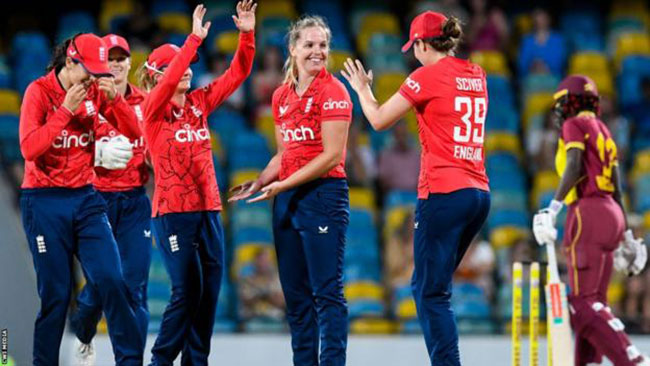
England bowled out West Indies for just 43 on their way to completing a 5-0 clean sweep in the T20 series with an eight-wicket win in Barbados. The hosts were bowled out in 16.2 overs for their lowest-ever total in T20 internationals.Seamers Freya Davies and Alice Davidson-Richards starred with the ball, claiming 3-02 and 3-05 respectively. England chased down the total in 5.3 overs, with Nat Sciver unbeaten on 20.
The result means England have won all eight of their games on the tour of the Caribbean, having won the preceding one-day international series 3-0. England’s dominance has demonstrated an extreme gulf in class between both sides, with Heather Knight’s side very rarely challenged throughout.
West Indies’ batters have struggled throughout both series, which culminated in a woeful collapse.They limped to 16-4 after the six-over powerplay, hit just two boundaries in their entire innings and resembled a tired and deflated side desperately in need of a reset before the T20 World Cup in February.
For the first time in the series, West Indies captain Hayley Matthews won the toss and chose to bat first – a decision that probably made sense, given they lost the previous three games attempting to chase.Matthews is a young captain with immense responsibility on her shoulders – the star in an inexperienced side – and that seems to be taking its toll.
She departed for eight in the second over to trigger a collapse which summed up the series in its entirety as England’s bowlers ran riot.The tourists bowled accurately but did not need to be exceptional. Each batter that came in threw their wicket away in a calamitous frenzy of dot balls, big swings and, quite simply, a huge gap in ability.
There was not much they could do to defend 43, but West Indies bowlers have enjoyed a decent series, while debuts to 19-year-olds Trishan Holder and Djenaba Joseph should serve them well for the future.Given the one-sided nature of the tour, assessing England’s form heading into the World Cup is not straightforward. But there are undoubtedly plenty of positives to take, and the confidence of winning will also serve them well.
England’s depth and ability to rotate players has been a real asset, and a benefit to Knight and new head coach Jon Lewis, and surely comes because of the increased professionalism domestically.There are still question marks around the batting, as England still have a tendency to lose wickets in clusters and there is uncertainty over Alice Capsey’s return from injury, but the bowling has all bases covered.England boast a varied seam attack with Lauren Bell’s pace, the world’s best bowler in Sophie Ecclestone and Charlie Dean’s rapid improvement every time she takes the field, as she finished the leading wicket-taker in the series with 11.
The seamers have all benefited from plenty of game time and rest, with Katherine Brunt, Bell, Sciver and Davies switching in and out of the XI – while Issy Wong recovered from tightness in her quad to play in the final game.They may not have been challenged often, but England have taken valuable points in the ICC Women’s Championship, and Lewis has had the perfect start to his reign.In the new year, attention turns to the small matter of a World Cup and a home Ashes series.
Brief scores:
West Indies 43 in 16.2 overs (Dienaba Joseph 11, Freyas Davies 3-02, Alice Davidson-Richards 3-05) lost to England 44/2 in 5.3 overs (Nat Scivers 20*) by eight wickets


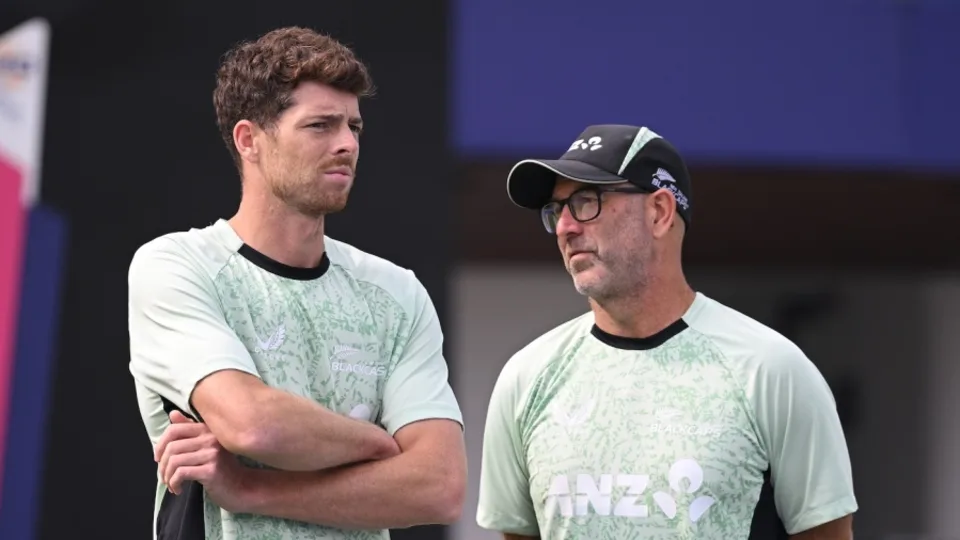
41: That’s the number of times New Zealand and Pakistan faced each other across formats in a 30-month period between October 2022 and April 2025. Twenty four of those meetings came in T20Is, with the sides compensating for a tour which New Zealand abandoned in 2021, citing security concerns by piling on as many bilateral engagements as is it was possible to fit in a calendar.
Aside from a T20 World Cup semi-final in Sydney in 2022, none of those games mattered as much as the one in Colombo on February 21. Both sides have much convincing to do as credible title-contenders after a group stage which saw them ease past lower-ranked teams while getting thumped by the one powerhouse they played. In New Zealand’s case, it was South Africa who gave them a battering, while Pakistan were left similarly bruised by an Indian side that has otherwise not quite hit its straps.
For New Zealand, the biggest challenge is the switch of venue. They played all of their games in Chennai and Ahmedabad, and relied on a balance between seam and spin that leaned towards the former, with Mitchell Santner the only frontline spinner and Rachin Ravindra or Glenn Phillips chipping in with the odd over. In Colombo, that balance is likely to reverse as the slower bowlers take centre stage, something Pakistan have deployed so effectively in most of their matches.
Santner’s men have not tinkered much with the batting order, which has held up remarkably well for the most part. Against weaker oppositions, some combination of openers Finn Allen and Tim Seifert, or top order batters Ravindra and Phillips, have showcased enough firepower to ease home. Opposition attacks have also struggled to puncture their way through, with New Zealand losing just 14 wickets in four games, the second fewest for any side in this tournament.
Unlike New Zealand, Pakistan know this city intimately well by now. Three of their four games may have been played at the SSC – the other Colombo ground – but their match against India here at the RPS was, like Saturday’s contest, also an evening game, giving them a valuable read into the pitch and conditions. It is the venue they used more spin on than any other, with captain Salman Ali Agha suggesting that would only continue in the Super Eight.
Pakistan’s top order has the explosiveness to blow teams away, even if they have struggled to translate that potential with form for Saim Ayub. Sahibzada Farhan at the other end has taken on the mantle for powerplay run-scoring as runs for Agha having dried up before the game against Namibia, and Babar Azam no nearer to maximising his ability. That fragility too quickly brings up a middle order comprising too many bowling allrounders or the untested Khawaja Nafay, a situation that led to a near-defeat against the Netherlands and a decisive defeat against India.
This is two teams situated among the middle powers of this World Cup, eager to demonstrate they’re better than what they managed against true superpowers like India and South Africa. What matters, ultimately, is which of them can show they’re better than the middle power they face off against on Saturday.
Jacob Duffy takes a wicket against Pakistan every 10.5 deliveries. Among bowlers with at least 15 scalps against Pakistan, no one in the world matches that strike rate. Eighteen of his 62 wickets have come against Saturday’s opponents, at an average of 12.77, comfortably the best amongst teams he has played more than five games against. The catch, however, is that all but one of those wickets have come in New Zealand, in conditions very different to what’ll be in front of him at the Premadasa in Colombo. But Hardik Pandya, who boasts an almost equally impressive record against Pakistan, did not find this very venue an impediment against bowling effectiveness against Pakistan. Duffy will hope to have similar success.
Abrar Ahmed was, arguably harshly, dropped against Namibia after an off-day against India. But his longer-term form makes it unlikely he will stay out of the side again in the raised stakes of the Super Eight. He was Pakistan’s second-highest wicket-taker in 2025, and at the Asia Cup last year, his economy rate of 5.36 in spin-friendly conditions was by far the most miserly in the tournament. All of that points to the India game being an aberration, with Pakistan needing him at his best for the business stages. He was Pakistan’s best bowler in the two series against Sri Lanka and Australia prior to this World Cup, and how he responds to the wake-up call of his axing may go some distance to determining the fate of Saturday’s game.
Abrar Ahmed is expected to come back into the side, but Pakistan will not want to make wholesale changes to a team that delivered so handsomely in their must-win game against Namibia.
Pakistan: Sahibzada Farhan, Saim Ayub, Salman Ali Agha (capt) Babar Azam, Khawaja Nafay, Shadab Khan, Usman Khan (wk) Mohammad Nawaz/Faheem Ashraf, Salman Mirza, Usman Tariq, Abrar Ahmed
New Zealand will take a late call on Lockie Ferguson, who gets into Sri Lanka on Friday night after being granted paternity leave. It will be interesting to see how New Zealand manage to incorporate more spin into their XI to reconcile with Sri Lankan conditions. That might bring Ish Sodhi in for his first game this World Cup.
New Zealand: Tim Seifert (wk), Finn Allen, Rachin Ravindra, Glenn Phillips, Mark Chapman, Daryl Mitchell, Mitchell Santner (capt), Jimmy Neesham, Matt Henry, Ish Sodhi Jacob Duffy
[Cricinfo]
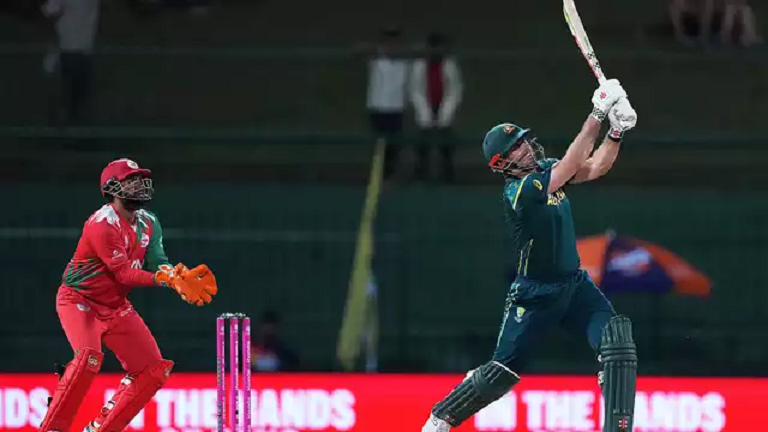
Oman 104 in 16.2 overs (Jatinder Singh 17, Karan Sonavale 12, Hammad Mirza 16, Wasim Ali 32; Marcus Stoinis 1-16, Nathan Ellis 1-14, Adam Zampa 4-21, Glenn Maxwell 2-13, Xavier Bartlett 2-27) lost to Australia 108/1 in 9.4 overs (Mitchell Marsh 64*, Travis Head 32, Josh Inglis 12*; Shakeel Ahmed 1-29) by 9 wickets

The BCB has demoted Taksin Ahmed and Mushfiqur Rahim to lower grades in their 2026 central contracts for the national men’s cricketers. Taskin was the only player in the A-plus category in 2025, with a monthly salary of BDT 1 million (US $8169 approx.), but now he joins the Test, ODI and T20I captains Najmul Hossain Shanto, Mehidy Hasan Miraz and Litton Das, respectively, in category A.
This is the second tier in the BCB’s gradation policy, in which each player earns BDT 800,000 (US $6535 approx.) per year. No player has been placed in the A+ category this time.
It is unclear why Taskin has been demoted despite his strong performances with the ball. The team management has typically reduced his workload to prolong his effectiveness across all three formats. Meanwhile, Mushfiqur, who retired from ODIs in 2025, was in Grade A last year, but now finds himself in Grade B, where he will earn BDT 600,000 (US $4901 approx.) per month. Ten other players are in this category, including Test specialists Monimul Haque, Taijul Islam and Shadman Islam.
Shadman is also among four players promoted from Grade C to B, along with Tanzid Hasan, Rishad Hossain and Mahedi Hasan.
The BCB has also expanded Grade D from last year, when only two cricketers were in that category. This time, there are seven players, including Saif Hasan and Nurul Hasan, who returned to the T20I setup last year.
Grades C and D pay BDT 400,000 (approximately US$3,267) and BDT 200,000 (approximately US$1,633) per month, respectively.
Bangladesh have made a slow start to the year, though, after the government decided not to send the team for the ongoing T20 World Cup. They resume playing international cricket with a three-match ODI series against Pakistan at home on March 12, 14 and 16.
2026 Bangladesh central contracts
Grade A: Najmul Hossain Shanto, Mehidy Hasan Miraz, Litton Das and Taskin Ahmed
Grade B: Mushfiqur Rahim, Mominul Haque, Taijul Islam, Mustafizur Rahman, Towhid Hridoy, Shadman Islam, Tanzid Hasan, Rishad Hossain, Mahedi Hasan, Hasan Mahmud and Nahid Rana
Grade C: Soumya Sarkar, Jaker Ali, Shoriful Islam, Tanzim Hasan, Nasum Ahmed and Khaled Ahmed
Grade D: Saif Hassan, Parvez Hossain Emon, Tanvir Islam, Nayeem Hasan, Hasan Murad, Shamim Hossain and Nurul Hasan
[Cricinfo]

Tariffs ruling is major blow to Trump’s second-term agenda

New Zealand meet familiar opponents Pakistan at spin-friendly Premadasa

Bowlers, Marsh orchestrate consolation Australia win

Development activities in schools within plantation areas should be carried out in coordination with District Coordinating Committees – PM

Asos co-founder dies after Thailand apartment block fall

BCB central contracts: Taskin, Mushfiqur demoted; no player in A+ category

‘Dates have the highest sugar content to fight Coronavirus’

Sunday Island 27 December – Headlines

#SundayIsland 17th December – Headlines

Sunday Island – 28th March

Sunday Island Headlines – 21 March

Sunday Island – 21st February – Headlines
-

 Life style6 days ago
Marriot new GM Suranga
-

 Business5 days ago
Ministry of Brands to launch Sri Lanka’s first off-price retail destination
-

 Features6 days ago
Monks’ march, in America and Sri Lanka
-

 Features6 days ago
The Rise of Takaichi
-

 Features6 days ago
Wetlands of Sri Lanka:
-

 News6 days ago
Thailand to recruit 10,000 Lankans under new labour pact
-

 News6 days ago
Massive Sangha confab to address alleged injustices against monks
-

 Sports2 days ago
Old and new at the SSC, just like Pakistan