
Foreign News
West African leaders make plan for military intervention in Niger

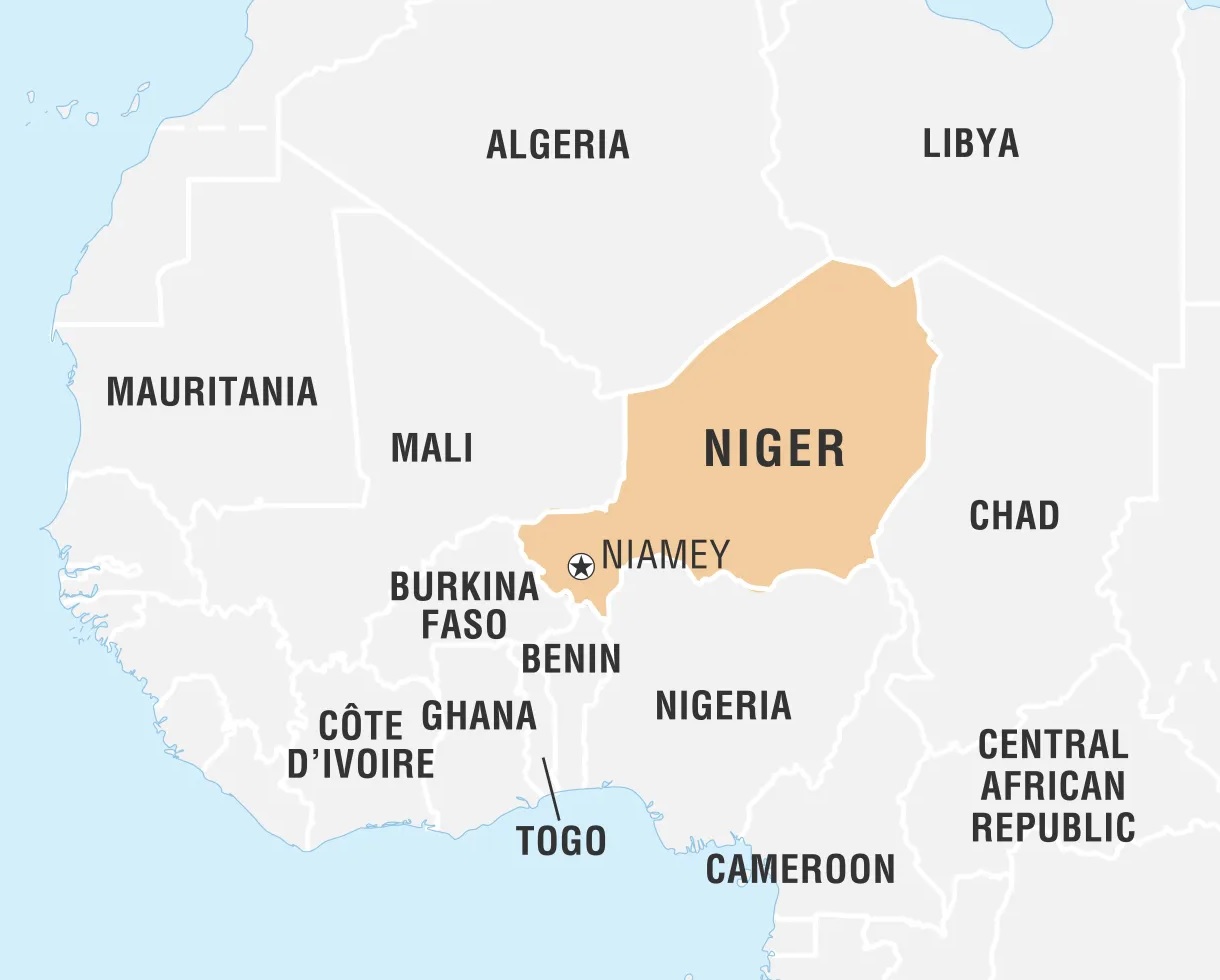
West African defence chiefs have made a plan for potential military intervention to reverse last week’s coup in Niger, including how and when to deploy forces.
The Economic Community of West African States (ECOWAS) will not divulge to the coup plotters when and where it will strike, but Abdel-Fatau Musah –ECOWAS commissioner for political affairs, peace and security – said on Friday the decision will be taken by the bloc’s heads of state.
“All the elements that will go into any eventual intervention have been worked out here, including the resources needed, the how and when we are going to deploy the force,” Musah said at the close of a three-day meeting in Nigeria’s capital, Abuja.
ECOWAS has already imposed sanctions on Niger and said it could authorise the use of force if the coup leaders do not restore power to elected President Mohamed Bazoum by Sunday.
The 15-member body sent a delegation to Niger on Thursday seeking an “amicable resolution”, but a source in the entourage said a meeting at the airport with the military’s representatives yielded no breakthrough.
“We want diplomacy to work, and we want this message clearly transmitted to them that we are giving them every opportunity to reverse what they have done,” Musah said.
Nigerian President Bola Tinubu told his government to prepare for options, including the deployment of military personnel, in a letter read out to the Senate on Friday. Senegal has also said it would send troops.
Niger’s military rulers denounced outside interference and said they would fight back. The 59-year-old coup leader, Abdourahamane Tchiani, served as battalion commander for ECOWAS forces during conflicts in Ivory Coast in 2003, so he knows what such missions involve.
Support for him from other military leaders in neighboring Mali and Burkina Faso, which are both ECOWAS members, could also undermine the regional response. The two countries have said they would come to Niger’s defence.
The coup leaders closed the borders of Niger on July 26 when announcing they had removed Bazoum from power. The borders were opened five days later.
Niger, which borders seven African countries – including Libya, Chad and Nigeria – is seen by the United States and former colonial ruler France as an important partner to address security threats in the region. The country is the largest recipient of US military assistance in West Africa, having received an estimated $500m since 2012.
The country also hosts more than 2,000 Western troops, mostly from the US and France. Various Western nations have cancelled aid and cooperation agreements with the military administration since the putsch.
Niger’s coup was the seventh military takeover in less than three years in Western and Central Africa.
Given its uranium and oil riches and pivotal role in the war with rebels in the Sahel region, Niger also has strategic significance for China, Europe and Russia.
(Aljazeera)


The Inter-American Court of Human Rights (IACHR) has ordered Peru to pay reparations to the family of Celia Ramos, a mother of three whose death resulted from a campaign of forced sterilizations during the 1990s.
Thursday’s landmark ruling stated that the 34-year-old Ramos was coerced into sterilization against her will, causing an allergic reaction that led to her death.
The court ordered Peru to pay her family $340,000 as part of the ruling.
It noted that the Peruvian government had “failed to fulfill its obligation to initiate and conduct a thorough investigation” into Ramos’s case, heightening the strain on her family.
“Ms Ramos Durand’s family members — especially her three daughters, who were children at the time of the events — suffered profound harm as a consequence of the sterilization and death of Celia Edith Ramos Durand and the impunity surrounding the case,” the IACHR wrote in its decision.
Peru’s campaign of forced sterilization took place under the late President Alberto Fujimori, whose tenure included widespread human rights abuses that continue to cast a shadow over the country.
The scheme largely targeted poor and Indigenous women who were often tricked or coerced into sterilisation procedures.
This week’s ruling is the first time the human rights court has weighed in on the issue, which has been the subject of years of legal contestation in Peru.
“After almost 30 years of searching for justice, the Inter-American Court of Human Rights recognised the responsibility of the Peruvian state in the forced sterilization and death of Celia Ramos,” the Peruvian feminist organisation DEMUS said in a social media post, celebrating the ruling.
“This ruling marks a fundamental step in reparations for Celia, her family and the thousands of victims of forced sterilizations in Peru.”
As many as 314,000 women and 24,000 men were sterilized against their will in Peru under Fujimori’s government, which sought to forcibly lower the birth rate as a means of addressing poverty.
The procedures were particularly invasive for the women involved, and some suffered long-term complications, including death.
Family members often received little information about the circumstances that led to loved ones dying after the unnecessary operations. Some survivors did not realise what had happened to them until years later, when they discovered they were unable to have children.
In Ramos’s case, the 34-year-old mother had gone to a state health clinic for medical assistance on July 3, 1997, but was instead forced to undergo tubal ligation.
Ramos, however, suffered a severe allergic reaction during the procedure. She was placed in a recovery room, but the clinic was not able to treat her adequately.
In its decision, the IACHR explained that the clinic “lacked the necessary equipment and medications for adequate risk assessment or to handle emergencies”.
Ramos was ultimately transferred to an intensive care unit in the city of Piura, where she died 19 days later, on July 22, 1997.
The state did not carry out an autopsy and declined to share details with her family.
The compensation outlined in this week’s ruling includes reimbursement for the costs of medical procedures conducted to save Ramos’s life and the estimated loss of income from her death.
In October 2024, the Committee on the Elimination of Discrimination against Women at the United Nations ruled that Peru’s sterilization programme amounted to sex-based violence and discrimination against poor, rural and Indigenous women.
The committee’s statement cited a lack of adequate medical facilities and a lack of informed consent, just as the IACHR did in its decision this week.
“The victims described a consistent pattern of being coerced, pressured, or deceived into undergoing sterilizations at clinics lacking proper infrastructure or trained personnel,” committee member Leticia Bonifaz said.
“The procedures were carried out without informed consent from these victims, with some of them, especially those from remote areas, unable to read and speak Spanish, or fully understand the nature of the procedure.”
Scholars have concluded that Fujimori’s sterilization campaign was driven, in part, by racist views among government officials who saw rural, Indigenous communities as an obstacle to economic modernisation.
[Aljazeera]

The United States-Israeli war on Iran is estimated to have cost Washington $3.7bn so far in its first 100 hours alone, or nearly $900m a day, driven largely by the huge expenditure of munitions, according to new research.
An analysis by Washington-based think tank the Center for Strategic and International Studies (CSIS) underlined the colossal cost of the war, which entered its seventh day on Friday, as the US attacks Iran with stealth bombers and advanced weapons systems.
Researchers Mark Cancian and Chris Park said only a small amount of the estimated $3.7bn cost of the war in the first 100 hours – or $891.4m each day – was already budgeted for, while most of the costs – $3.5bn – were not.
That meant the Pentagon would likely need to request more funding soon to cover the unbudgeted costs, they said, which was likely to prove a political challenge for the Trump administration and provide “a focal point for opposition to the war,” they said.
Domestic cost-of-living concerns, inflation, and now a knock-on effect of rising gas prices due to the conflict are likely to further diminish support among US citizens for the war. It is also dividing Trump’s “America First” base, which he had promised in his presidential campaigns to not enter “foreign wars”.
Noting that the US Department of Defense had released limited specifics on its operations, the researchers said their analysis drew on Congressional Budget Office (CBO) estimates of the operations and support costs for each unit, adjusting for inflation and unit size, and adding 10 percent for costs of “a higher operational tempo”.
Their analysis said the US had expended more than 2,000 munitions of various types in the first 100 hours of the war, and estimated it would cost $3.1bn to replenish the munitions inventory on a like-for-like basis, with the costs increasing by $758.1m a day.
(Aljazeera)

Britney Spears has been arrested in California under suspicion of driving under the influence.
The singer was detained by California Highway Patrol at around 21:30 local time (05:30 GMT) on Wednesday. A representative for her told the BBC: “This was an unfortunate incident that is completely inexcusable.”
She was released in the early hours of Thursday morning and is due to appear at Ventura County Superior Court on 4 May.
The reason for the singer’s arrest was confirmed to CBS, the BBC’s US partner, by the Ventura County Sheriff’s Office in southern California.
Spears’ representative told the BBC: “Britney is going to take the right steps and comply with the law and hopefully this can be the first step in long overdue change that needs to occur in Britney’s life.
“Hopefully, she can get the help and support she needs during this difficult time.
“Her boys are going to be spending time with her. Her loved ones are going to come up with an overdue needed plan to set her up for success for well being.”
The pop star appeared to have deleted her Instagram account on Thursday as news of her arrest broke.
Spears is one of the most successful pop stars ever, with hits such as Baby One More Time, Toxic, Everytime, Gimme More, Womanizer, and Stronger.
The singer said in January 2024 that she would “never return to the music industry”. Her last song was a duet with Elton John in 2022.
However, in a since-deleted social media post from earlier this year, Spears indicated that, although she would not perform in the US again, she was hoping to play live in the UK and Australia in the near future.
For 13 years until 2021, Spears was in a conservatorship – a legal guardianship that saw her finances and personal life controlled by her father.
The singer published her memoir in 2023 titled The Woman in Me, which saw her reflect on her career and detail her struggles living under the conservatorship.
Her ex-husband, Kevin Federline, released his own memoir, You Thought You Knew, at the end of 2025.
[BBC]

India hit back but Sutherland, Hamilton impress to give Australia the edge

Heat Index at ‘Caution Level’ in the Sabaragamuwa province and, Colombo, Gampaha, Kurunegala, Anuradhapura, Vavuniya, Hambanthota and Monaragala districts

Dry weather will prevail over the island.

Prompt solutions will be provided for the salary anomalies prevailing within the teacher and principal services — PM

Zelenskyy visits front line as Ukraine and Russia swap 500 prisoners each

UNP concerned about govt.’s silence over US sub sinking Iranian warship in Lanka’s EEZ

‘Dates have the highest sugar content to fight Coronavirus’

Sunday Island 27 December – Headlines

#SundayIsland 17th December – Headlines

Sunday Island – 28th March

Sunday Island Headlines – 21 March

Sunday Island – 21st February – Headlines
-

 Features5 days ago
Brilliant Navy officer no more
-

 Opinion5 days ago
Sri Lanka – world’s worst facilities for cricket fans
-

 News2 days ago
Legal experts decry move to demolish STC dining hall
-

 Features5 days ago
A life in colour and song: Rajika Gamage’s new bird guide captures Sri Lanka’s avian soul
-

 Business3 days ago
Cabinet nod for the removal of Cess tax imposed on imported good
-

 Features6 days ago
Overseas visits to drum up foreign assistance for Sri Lanka
-
 Features6 days ago
Sri Lanka to Host First-Ever World Congress on Snakes in Landmark Scientific Milestone
-

 News1 day ago
University of Wolverhampton confirms Ranil was officially invited