
Features
Visit to Britain, Canada and the United States

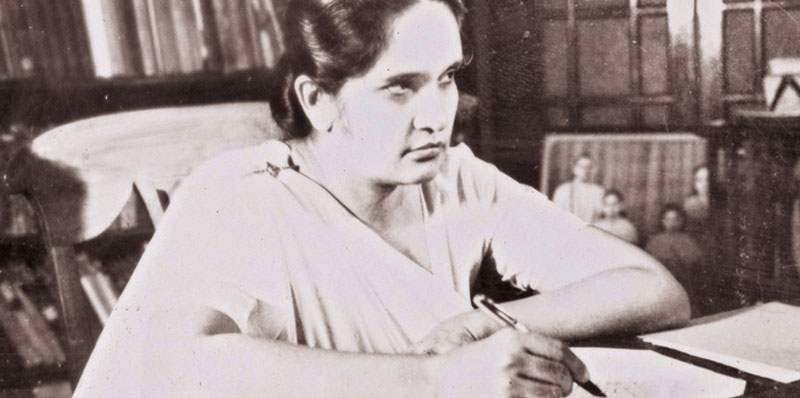
(Excerpted from the autobiography of MDD Peiris, Secretary to the Prime Minister)
In early 1972, the US government extended an invitation to me and to the Public Trustee, Mr. Barnes Ratwatte, to visit America under one of their leadership grants. The period was to be close upon a month. I was reluctant to ask the PM time off for such a long program. But she had heard about it, and wanted me to go. She was convinced that I needed a break, and said “At this rate you will fall ill.” This was both unselfish and gracious of her.
Preparations were therefore made to go. In the making of these preparations Miss Diana Captain of the United States Information Service in Colombo, did an excellent job with great energy, understanding and commitment. She spared no pains to make our forthcoming visit to the United States both useful and enjoyable. In the meantime, the Canadian government, hearing that we were to go to the States invited us to spend a week in Canada. They suggested that I spend at least three days in the Privy Council and Cabinet office in Ottawa, and then go on to Manitoba, which had at the time a left-of-centre government, and view how that Provincial Government functioned.
A separate program was to be arranged for Mr. Ratwatte. When Tilak Gooneratne, our High Commissioner in London, heard about our visit, he telephoned the prime minister and told her that he was very keen that we spend about three or four days in London, where he was going to arrange a program for me in the Cabinet office and the Prime Minister’s office at No. 10, Downing Street. He was going to arrange a separate program for Mr. Ratwatte. The Prime Minister approved both the Canadian and British programs. This meant that I would have to be away for about six weeks. I discussed this aspect with her. But she said “You need a break, and this program will be very useful.”
Britain
So, in July 1972, Barnes and I went to London, on the first leg of a fairly long tour. In London, I had a useful meeting in the British Cabinet office and met Lord Bridges, Principal Secretary to the Prime Minister for Overseas Affairs, in the Prime Minister’s office. Much was discussed during an interesting meeting. Tilak Gooneratne had arranged for us to meet the distinguished Lord Denning, Master of The Rolls, who was President of the Court of Appeal, and a friend of Tilak’s. We had a most cordial and interesting meeting in his Chambers, after which he invited us to sit in his court.
We spent a fascinating 45 minutes in court, with Lord Denning presiding with two other judges, listening to arguments in a complicated tax case. The court sat in a large room which was like a library full of law books and law reports neatly placed on shelves lining the room. Whenever counsel cited a case, three copies of the relevant law report opened to the correct page were placed before the three judges by assistants. It was an efficient process.
We were also taken to The House of Commons, because arrangements had been made for me in particular to see the Prime Minister answering questions in Parliament. The Prime Minister was Sir Edward Heath. We were the guests of two members of Parliament, one Conservative and one Labour. The Conservative M.P. was Mr. Norman Tebbit later, to be a Senior Minister, as well as Chairman of the Conservative Party. He was a charming person, who told us that he knew Ceylon well because as a BOAC pilot, once upon a time he came to Colombo many times. The Labour M.P. was Mr. James Tim, who in fact, joined us later.
By the time we took our seats in a viewing gallery, there was still time for the Prime Minister to answer questions. In fact, he was not yet in the chamber. But, there was someone answering questions, a lady. She was answering questions on education. The Labour benches were baiting her, and there was considerable noise. It was a very lively session. The most interesting feature however. was the style and manner in which she handled the supplementary questions, the interruptions and the general cacophony. She was impressively the master of her brief. She was confident and combative. What was hurled at her from the opposition benches, she hurled back with compound interest added.
We inquired who this lady was, and was told that she was the Rt. Hon. Margaret Thatcher, Secretary of State for Education and Science. I had heard that she was a grocer’s daughter. Her parents presumably were in the retail trade. But this lady was clearly in the wholesale business. There were no rationed quantities delivered in her countering of opposition belligerence. It was marvelous parliamentary theatre. After her display, we found the Prime Minister’s question time tepid and somewhat of an anti-climax.
Later, when we got back to Sri Lanka, in discussing our visit with Mrs. Bandaranaike, I asked her, whether she had met Mrs. Thatcher. She said she had not. I then told her something which turned out to be prophetic. After describing her performance in the House of Commons that day, I said that if Britain was going to have a woman Prime Minister in the foreseeable future, it had to be Mrs. Thatcher. It was not a rash judgment. By this time, I had had occasion to meet a considerable number of Ministers, Prime Ministers and other senior political figures not only from Sri Lanka, but from several other countries as well. My judgement of Mrs. Thatcher was therefore based on perceived personality, confidence, thoroughness, clarity and obvious ability.
The visit to Britain was a packed program. Besides the visits mentioned, there were other appointments, and official lunches where speeches had to be made. We saw much and met many during the course of quite a brief visit.
Canada
The next leg of our journey took us to Canada. We were met at the airport in Ottawa by the High Commissioner William Silva, who had been a Cabinet Minister earlier in Prime Minister SWRD Bandaranaike’s government, and Canadian officials. Here again, we had a packed program. Apart from calling on the Foreign Secretary, and other dignitaries most of my time was spent in the Privy Council office. Here, I was welcomed most warmly and cordially by Mr. Gordon Robertson, Secretary to the Cabinet, and Secretary to the Privy Council.
Mr. Robertson was the senior Most public servant in Canada, and highly respected. He was a genial person with a sense of humour and we got on very well. On my first day, he escorted me to the conference room attached to his office, where four senior officials were waiting, including Mr. Michael Pitfield who succeeded Mr. Robertson in this key position. Against my protests, Mr. Robertson insisted that I take his chair at the head of the table, whilst he sat among the others and that is how we engaged in a fascinating discussion for the next hour.
The Canadians were very open in their analysis and comments. They treated me as a respected colleague and an equal from another Commonwealth country, and assumed that confidences would be kept. I was encouraged to ask any question, and always received frank answers. One of the questions I asked was “what do you regard as your most important responsibility?” The answer was instant, “managing Federal-Provincial relations.” Canada has a Federal structure with entities called Provinces and not States. These provinces have considerable power and authority.
According to the Privy Council team, there arise almost constant disputes between the center and the provinces, and managing these issues was a most important and sensitive task. These are matters which Sri Lanka should also address, in its pursuit of greater devolution. Models which look nice on paper and elegant legally may not be workable in practice. Reflecting on Canadian experience. one would urge caution and a thorough practical grasp of issues, which would require vision and an anticipation of how proposals would actually work out on the ground.
My attachment to the Privy Council office also included meetings with the Deputy Secretaries and some of the Senior Assistant Secretaries. They were handling different areas of work. Even at Assistant Secretary level the office was staffed with senior and experienced people. In fact when I went to see one of them, I found that her previous assignment was as Canada’s Ambassador to Poland. Such was the caliber of people even at Assistant Secretary level. All of them were very friendly and informal and virtually treated me as one of them.
I remember one occasion. when the discussion was on the format of Cabinet papers, one of them pulled out a paper from a sheaf and handed it to me saying “Take a look, this is going to Cabinet next week.- As I started reading it, I realized that it was a paper on defence, and promptly handed it back, saying “I don’t think I should read this.” This was appropriately acknowledged, and I was handed a paper on social security this time. Such was the spirit in which things were done, during a most interesting and instructive week. The High Commissioner hosted a well attended dinner in our honour, and this together with the lunches and dinners hosted by many on the Canadian side, including Mr. Robertson proved rich in the opportunities for social interaction.
From Ottawa we went on to Winnipeg, and were lodged in the excellent Fort Gary Hotel, by the Provincial Government. The Fort Gary was an old Fort built during the time of the Indian threat, and later it had become more like a trading post. The old timber structure suitably modified, with the addition of modern amenities had an excellent atmosphere, as well as very good guest comfort. Our stay here was only for a couple of days, and my program was a busy one. I had interesting and extensive discussions with the Secretary to the Prime Minister, and Secretary to the Cabinet of the Province of Manitoba. One person filled both posts, and in fact. this was another proposal that had come tip during our own constitutional changes. The province had also elected a socialist oriented government. So, I had much to discuss at my meeting with senior officials.
The United States
From Canada, we flew on to the USA to begin our program there. Ambassador Neville Kanekaratne, whom I already knew, hosted a reception in our honour which was attended by three former American Ambassadors to Sri Lanka, Messrs. Satterwaite, Cecil Logan and Andrew Cory. Miss. Frances Willis was out of town and had sent in her regrets. In addition, there were officials from The State Department, AID, the IMF; The World Bank as well as prominent Sri Lankans and Americans within reach.
After the reception, we had a wonderful meeting with Neville and the three former US Ambassadors. It was an excellent start to our program. Over the next few days in Washington D.C.. I had meetings in important American Agencies, such as the State Department, as well as with the President’s Domestic and National Security Council staff at the White House. One of the more interesting discussions was with Mr. Harold Saunders of The National Security Council, considered to be an expert on Middle Eastern Affairs. One of the things that interested me most was the organizational aspects of running the White House and briefing the President. Here again, the senior officials 1 met were most co-operative and helpful.
Our visit to the USA, took us to several States, and we got to visit many places of interest such as the Stock Exchange in New York; the Ford Motor Headquarters in Detroit; the Tennessee Valley Authority; the US Air Force Base in Colorado Springs, the Boeing Aircraft factory in Seattle; Hollywood; the Grand Canyon and the island of Puerto Rico. Visiting so many places, and talking to so many people in various areas of activity was an education in itself. But one of the most fascinating parts of the visit was the opportunity we got, in late August, when we happened to be in Florida, to witness the launching of an orbiting Astronomical Observatory, powered into space by an Atlas Centaur Rocket 135 feet tall.
The Observatory which was named Copernicus, after the famous Polish Astronomer. was to study Planetary, Stellar, Inter-Stellar and Inter Galactic material. The actual launch from Cape Kennedy was to be at about 6.30 am. But we were bused in by 5.30 am. Seats were made available on a multi-tiered platform one and a half miles away, obviously for safety reasons. Anyone who had seen the launch of satellites or rockets on TV or film, cannot imagine what the real thing looked and sounded like.
It was a magnificent spectacle in the pre-dawn darkness. The power of the rocket shook our tiered seats One and a half miles away and the entire sky was one fiery glow. The noise was almost deafening, gradually reducing to the puny sound of a motor cycle engine. What was finally left for sometime was a circle of white smoke like a fleecy cloud. We were very fortunate to see this, because as we later discovered, we had seen one of only six launches during the whole of 1972.
Even in the 1970’s Sri Lankans seemed to be omnipresent in almost all parts of the world. We met them in various parts of Canada and the USA. About their presence in Britain, one does not have to say much. But, one of the most interesting encounters we had was in distant Boulder, Colorado. We had got into town at about two in the afternoon, tired and very hungry. It was not easy to find a place to eat, and we were wandering down a street getting somewhat desperate, until in the distance I saw a sign that read very much like Weerasinghe.
If in the desert, I would have put it to a mirage. But perhaps one also hallucinated in the rarefied air of mountainous Boulder. As we walked towards it, it became plain that we were indeed not seeing things. The board read Weerasinghe’s and it was a restaurant. It appeared to be closed. We rang the bell, and a gentleman, slightly built for an American opened the door. it turned out that he had been a Peace Corps volunteer, working in Bandarawela, where he had met and married a Miss. Weerasinghe. Both of them had opened this restaurant and given it the exotic maiden name of the lady. They were very glad to see us, and most hospitable, although the restaurant itself was closed on that day. This encounter was certainly an instance of what is termed serendipity.
We were in San Francisco, when I received a call from Susantha de Alwis, who was a senior diplomatic officer in our Embassy in Washington D.C. The Prime Minister had wondered, whether I could return a little earlier than originally scheduled, because she felt that WT Jayasinghe who was acting for me, was under considerable strain. By this time, I was out for almost five weeks, and had about a week more to go. Susantha emphasized that the Prime Minister did not ask me to come, but only wondered whether it was possible.
I told him to inform her that I would return by the earliest available flights. She had been both gracious and liberal in permitting me to go for such a long period. I was also aware, that handling the dual duties of Secretary to the Ministry of Defence and Foreign Affairs, and Secretary to the Prime Minister was extremely taxing and stressful, and the responsibilities and work load heavy. It was not surprising that WT was feeling the strain. Therefore. I booked my flights Los Angles/Honolulu/Manila and on to Singapore, and next day to Colombo. This proved to be an odyssey. Los Angles/Honolulu was some five and a half hours flying, followed by a 45 minute wait; then a ten and a half hour flight to Manila. a two hour wait there: and thereafter a three hour flight to Singapore. It was therefore about 19 hours of solid flying plus about five hours at airports, including Los Angeles. By the time I got into Singapore. I was in a daze. I went to bed and slept for 17 straight hours! I knew the condition I was in and I took the precaution of keeping the front desk informed that I did not wish to be disturbed for 24 hours, for otherwise they might have looked to see whether I was dead!
There was much to attend to when I got back. The Prime Minister was apologetic about getting me back early. I assured her that the time spent out, and the rich experience gained were quite enough.


There has been a rare consensus of opinion in the country that the government’s humanitarian response to the sinking of Iran’s naval ship IRIS Dena was the correct one. The support has spanned the party political spectrum and different sections of society. Social media commentary, statements by political parties and discussion in mainstream media have all largely taken the position that Sri Lanka acted in accordance with humanitarian principles and international law. In a period when public debate in Sri Lanka is often sharply divided, the sense of agreement on this issue is noteworthy and reflects positively on the ethos and culture of a society that cares for those in distress. A similar phenomenon was to be witnessed in the rallying of people of all ethnicities and backgrounds to help those affected by the Ditwah Cyclone in December last year.
The events that led to this situation unfolded with dramatic speed. In the early hours before sunrise the Dina made a distress call. The ship was one of three Iranian naval vessels that had taken part in a naval gathering organised by India in which more than 70 countries had participated, including Sri Lanka. Naval gatherings of this nature are intended to foster professional exchange, confidence building and goodwill between navies. They are also governed by strict protocols regarding armaments and conduct.
When the exhibition ended open war between the United States and Iran had not yet broken out. The three Iranian ships that participated in the exhibition left the Indian port and headed into international waters on their journey back home. Under the protocol governing such gatherings ships may not be equipped with offensive armaments. This left them particularly vulnerable once the regional situation changed dramatically, though the US Indo-Pacific Command insists the ship was armed. The sudden outbreak of war between the United States and Iran would have alerted the Iranian ships that they were sailing into danger. According to reports, they sought safe harbour and requested docking in Sri Lanka’s ports but before the Sri Lankan government could respond the Dena was fatally hit by a torpedo.
International Law
The sinking of the Dena occurred just outside Sri Lanka’s territorial waters. Whatever decision the Sri Lankan government made at this time was bound to be fraught with consequence. The war that is currently being fought in the Middle East is a no-holds-barred one in which more than 15 countries have come under attack. Now the sinking of the Dena so close to Sri Lanka’s maritime boundary has meant that the war has come to the very shores of the country. In times of war emotions run high on all sides and perceptions of friend and enemy can easily become distorted. Parties involved in the conflict tend to gravitate to the position that “those who are not with us are against us.” Such a mindset leaves little room for neutrality or humanitarian discretion.
In such situations countries that are not directly involved in the conflict may wish to remain outside it by avoiding engagement. Foreign Minister Vijitha Herath informed the international media that Sri Lanka’s response to the present crisis was rooted in humanitarian principles, international law and the United Nations. The Convention on the Law of the Sea (UNCLOS) which was adopted 1982 provides the legal framework governing maritime conduct and obliges states to render assistance to persons in distress at sea. In terms of UNCLOS, countries are required to render help to anyone facing danger in maritime waters regardless of nationality or the circumstances that led to the emergency. Sri Lanka’s response to the distress call therefore reflects both humanitarianism and adherence to international law.
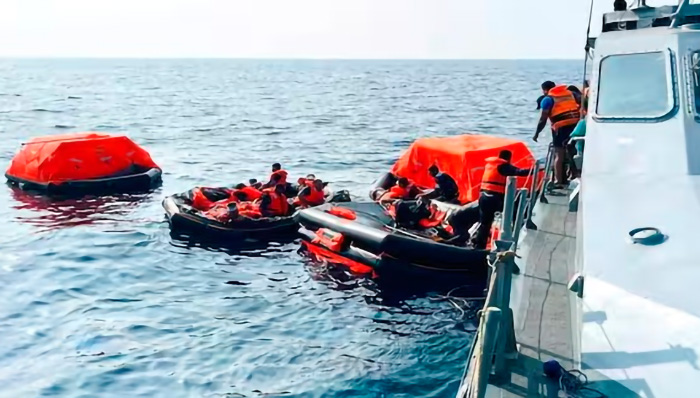
Within a short period of receiving the distress message from the stricken Iranian warship the Sri Lankan government sent its navy to the rescue. They rescued more than thirty Iranian sailors who had survived the attack and were struggling in the water. The rescue operation also brought to Sri Lanka the bodies of those who had perished when their ship sank. The scale of the humanitarian challenge is significant. Sri Lanka now has custody of more than eighty bodies of sailors who lost their lives in the sinking of the Dena. In addition, a second Iranian naval ship IRINS Bushehr with more than two hundred sailors has come under Sri Lanka’s protection. The government therefore finds itself responsible for survivors but also for the dignified treatment of the bodies of the dead Iranian sailors.
Sri Lanka’s decision to render aid based on humanitarian principles, not political allegiance, reinforces the importance of a rules-based international order for all countries. Reliance on international law is particularly important for small countries like Sri Lanka that lack the power to defend themselves against larger actors. For such countries a rules-based international order provides at least a measure of protection by ensuring that all states operate within a framework of agreed norms. Sri Lanka itself has played a notable role in promoting such norms. In 1971 the United Nations General Assembly adopted a resolution declaring the Indian Ocean a Zone of Peace. The initiative for this proposal came from Sri Lanka, which argued that the Indian Ocean should be protected from great power rivalry and militarisation.
Moral Beacon
Unfortunately, the current global climate suggests that the rules-based order is barely operative. Conflicts in different parts of the world have increasingly shown disregard for the norms and institutions that were created in the aftermath of the Second World War to regulate international behaviour. In such circumstances it becomes even more important for smaller countries to demonstrate their commitment to international law and to convert the bigger countries to adopt more humane and universal thinking. The humanitarian response to the Iranian sailors therefore needs to be seen in this wider context. By acting swiftly to rescue those in distress and by affirming that its actions are guided by international law, Sri Lanka has enhanced its reputation as a small country that values peace, humane values, cooperation and the rule of law. It would be a relief to the Sri Lankan government that earlier communications that the US government was urging Sri Lanka not to repatriate the Iranian sailors has been modified to the US publicly acknowledging the applicability of international law to what Sri Lanka does.
The country’s own experience of internal conflict has shaped public consciousness in important ways. Sri Lanka endured a violent internal war that lasted nearly three decades. During that period questions relating to the treatment of combatants, the protection of civilians, missing persons and accountability became central issues. As a result, Sri Lankans today are familiar with the provisions of international law that deal with war crimes, the treatment of wounded or disabled combatants and the fate of those who go missing in conflict. The country continues to host an international presence in the form of UN agencies and the ICRC that work with the government on humanitarian and post conflict issues. The government needs to apply the same principled commitment of humanitarianism and the rule of law to the unresolved issues from Sri Lanka’s own civil war, including accountability and reconciliation.
By affirming humanitarian principles and acting accordingly towards the Iranian sailors and their ship Sri Lanka has become a moral beacon for peace and goodwill in a world that often appears to be moving in the opposite direction. At a time when geopolitical rivalries are intensifying and humanitarian norms are frequently ignored, such actions carry symbolic significance. The credibility of Sri Lanka’s moral stance abroad will be further enhanced by its ability to uphold similar principles at home. Sri Lanka continues to grapple with unresolved issues arising from its own internal conflict including questions of accountability, justice, reparations and reconciliation. It has a duty not only to its own citizens, but also to suffering humanity everywhere. Addressing its own internal issues sincerely will strengthen Sri Lanka’s moral standing in the international community and help it to be a force for a new and better world.
BY Jehan Perera

It was Henry Sweet, the English phonetician and language scholar, who said, “Language may be defined as the expression of thought by means of speech sounds“. In today’s context, where language extends beyond spoken sounds to written text, and even into signs, it is best to generalise more and express that language is the “symbolic expression of thought“. The opposite is also true: without the ability to think, there will not be a proper development of the ability to express in a language, as seen in individuals with intellectual disability.
Viewing language as the symbolic expression of thought is a philosophical way to look at early childhood education. It suggests that language is not just about learning words; it is about a child learning that one thing, be it a sound, a scribble, or a gesture, can represent something else, such as an object, a feeling, or an idea. It facilitates the ever-so-important understanding of the given occurrence rather than committing it purely to memory. In the world of a 0–5-year-old, this “symbolic leap” of understanding is the single most important cognitive milestone.
Of course, learning a language or even more than one language is absolutely crucial for education. Here is how that viewpoint fits into early life education:
1. From Concrete to Abstract
Infants live in a “concrete” world: if they cannot see it or touch it, it does not exist. Early education helps them to move toward symbolic thought. When a toddler realises that the sound “ball” stands for that round, bouncy thing in the corner, they have decoded a symbol. Teachers and parents need to facilitate this by connecting physical objects to labels constantly. This is why “Show and Tell” is a staple of early education, as it gently compels the child to use symbols, words or actions to describe a tangible object to others, who might not even see it clearly.
2. The Multi-Modal Nature of Symbols
Because language is “symbolic,” it does not matter how exactly it is expressed. The human brain treats spoken words, written text, and sign language with similar neural machinery.
Many educators advocate the use of “Baby Signs” (simple gestures) before a child can speak. This is powerful because it proves the child has the thought (e.g., “I am hungry”) and can use a symbol like putting the hand to the mouth, before their vocal cords are physically ready to produce the word denoting hunger.
Writing is the most abstract symbol of all: it is a squiggle written on a page, representing a sound, which represents an idea or a thought. Early childhood education prepares children for this by encouraging “emergent writing” (scribbling), even where a child proudly points to a messy circle that the child has drawn and says, “This says ‘I love Mommy’.”
3. Symbolic Play (The Dress Rehearsal)
As recognised in many quarters, play is where this theory comes to life. Between ages 2 and 3, children enter the Symbolic Play stage. Often, there is object substitution, as when a child picks up a banana and holds it to his or her ear like a telephone. In effect, this is a massive intellectual achievement. The child is mentally “decoupling” the object from its physical reality and assigning it a symbolic meaning. In early education, we need to encourage this because if a child can use a block as a “car,” they are developing the mental flexibility required to later understand that the letter “C” stands for the sound of “K” as well.
4. Language as a Tool for “Internal Thought”
Perhaps the most fascinating fit is the work of psychologist Lev Vygotsky, who argued that language eventually turns inward to become private speech. Have you ever seen a 4-year-old talking to himself or herself while building a toy tower? “No, the big one goes here….. the red one goes here…. steady… there.” That is a form of self-regulation. Educators encourage this “thinking out loudly.” It is the way children use the symbol system of language to organise their own thoughts and solve problems. Eventually, this speech becomes silent as “inner thought.”
Finally, there is the charming thought of the feasibility of conversing with very young children in two or even three or more languages. In Sri Lanka, the three main languages are Sinhala, Tamil and English. There are questions asked as to whether it is OK to talk to little ones in all three languages or even in two, so that they would learn?
According to scientific authorities, the short, clear and unequivocal answer to that query is that not only is it “OK”, it is also a significant cognitive gift to a child.
In a trilingual environment like Sri Lanka, many parents worry that multiple languages will “confuse” a child or cause a “speech delay.” However, modern neuroscience has debunked these myths. The infant brain is perfectly capable of building three or even more separate “lexicons” (vocabularies) simultaneously.
Here is how the “symbolic expression of thought” works in a multilingual brain and how we can manage it effectively.
a). The “Multiple Labels” Phenomenon
In a monolingual home, a child learns one symbol for an object. For example, take the word “Apple.” In a Sri Lankan trilingual home, the child learns three symbols for that same thought:
* Apple (English)
* Apal
(Sinhala – ඇපල්)
* Appil
(Tamil – ஆப்பிள்)
Because the trilingual child learns that one “thought” can be expressed by multiple “symbols,” the child’s brain becomes more flexible. This is why bilingual and trilingual children often score higher on tasks involving “executive function”, meaning the ability to switch focus and solve complex problems.
b). Is there a “Delay”?
(The Common Myth)
One might notice that a child in a trilingual home may start to speak slightly later than a monolingual peer, or they might have a smaller vocabulary in each language at age two.
However, if one adds up the total number of words they know across all three languages, they are usually ahead of monolingual children. By age five, they typically catch up in all languages and possess a much more “plastic” and adaptable brain.
c). Strategies for Success: How to Do It?
To help the child’s brain organise these three symbol systems, it helps to have some “consistency.” Here are the two most effective methods:
* One Person, One Language (OPOL), the so-called “gold standard” for multilingual families.
Amma
speaks only Sinhala, while the Father speaks only English, and the Grandparents or Nanny speak only Tamil. The child learns to associate a specific language with a specific person. Their brain creates a “map”: “When I talk to Amma, I use these sounds; when I talk to Thaththa, I use those,” etc.
*
Situational/Contextual Learning. If the parents speak all three, one could divide languages by “environment”: English at the dinner table, Sinhala during play and bath time and Tamil when visiting relatives or at the market.
These, of course, need NOT be very rigid rules, but general guidance, applied judiciously and ever-so-kindly.
d). “Code-Mixing” is Normal
We need not be alarmed if a 3-year-old says something like: “Ammi, I want that palam (fruit).” This is called Code-Mixing. It is NOT a sign of confusion; it is a sign of efficiency. The child’s brain is searching for the quickest way to express a thought and grabs the most “available” word from their three language cupboards. As they get older, perhaps around age 4 or 5, they will naturally learn to separate them perfectly.
e). The “Sri Lankan Advantage”
Growing up trilingual in Sri Lanka provides a massive social and cognitive advantage.
For a start, there will be Cultural Empathy. Language actually carries culture. A child who speaks Sinhala, Tamil, and English can navigate all social spheres of the country quite effortlessly.
In addition, there are the benefits of a Phonetic Range. Sinhala and Tamil have many sounds that do not exist in English (and even vice versa). Learning these as a child wires the ears to hear and reproduce almost any human sound, making it much easier to learn more languages (like French or Japanese) later in life.
As an abiding thought, it is the considered opinion of the author that a trilingual Sri Lanka will go a long way towards the goals and display of racial harmony, respect for different ethnic groups, and unrivalled national coordination in our beautiful Motherland. Then it would become a utopian heaven, where all people, as just Sri Lankans, can live in admirable concordant synchrony, rather than as splintered clusters divided by ethnicity, language and culture.
A Helpful Summary Checklist for Parents
* Do Not Drop a Language:
If you stop speaking Tamil because you are worried about English, the child loses that “neural real estate.” Keep all three languages going.
* High-Quality Input:
Do not just use “commands” (Eat! Sleep!). Use the Parentese and Serve and Return methods (mentioned in an earlier article) in all the languages.
* Employ Patience:
If the little one mixes up some words, just model the right words and gently correct the sentence and present it to the child like a suggestion, without scolding or finding fault with him or her. The child will then learn effortlessly and without resentment or shame.
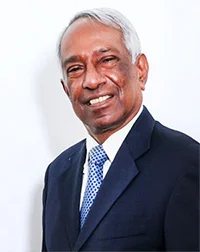 by Dr b. J. C. Perera
MBBS(Cey), DCH(Cey), DCH(Eng), MD(Paediatrics), MRCP(UK), FRCP(Edin), FRCP(Lond), FRCPCH(UK), FSLCPaed, FCCP, Hony.
FRCPCH(UK), Hony. FCGP(SL)
Specialist Consultant Paediatrician and Honorary Senior Fellow, Postgraduate Institute of Medicine, University of Colombo, Sri Lanka

 It is, indeed, encouraging to see our local artistes working on new formats, where their music is concerned.
Variety is the spice of life, they say, and I do agree, especially when it comes to music.
Blending modern synth textures, ambient layers and soulful undertones, the group SIMPSON’S is set to carve a distinct sonic identity within Sri Lanka’s contemporary music landscape.
Their vision, they say, is not simply to produce songs, but to create emotional atmospheres – experiences that elevate, energise and resonate, both locally and beyond.
This four-piece outfit came into the scene, less than two years ago, and they are already making waves with their debut single ‘Balaporottuwak’ (Hope).
The song, I’m told, marks the beginning of a new sound, and at the forefront of ‘Balaporottuwak’ is the group’s lead vocalist and guitarist, Ryo Hera, who brings a rich cultural heritage to the stage.
As a professional Kandyan Wes dancer, Ryo’s commanding presence and textured vocals bring a distinct energy to the band’s sound.
‘Balaporottuwak’

Ryo Hera: Vocals for ‘Balaporottuwak’
is more than just a debut single – it’s a declaration of intent. The band is merging tradition and modernity, power and subtlety, to create a sound that’s both authentic and innovative.
With this song, SIMPSON’S is inviting listeners to join them on an evolving musical journey, one that’s built on vision and creativity.
The recording process for ‘Balaporottuwak’ was organic and instinctive, with the band shaping the song through live studio sessions.
Dileepa Liyanage, the keyboardist and composer, is the principal sound mind behind SIMPSON’S.
With experience spanning background scores, commercial projects, cinematic themes and jingles across multiple genres, Dileepa brings structural finesse and atmospheric depth to the band’s arrangements.
He described the recording process of ‘Balaporottuwak’ as organic and instinctive: “When Ryo Hera opens his voice, it becomes effortless to shape it into any musical colour. The tone naturally adapts.”
The band’s lineup includes Buddhima Chalanu on bass, and Savidya Yasaru on drums, and, together, they create a sound that’s not just a reflection of their individual talents, but a collective vision.

Dileepa Liyanage: Brings
structural finesse and
atmospheric depth to the
band’s arrangements
What sets SIMPSON’S apart is their decision to keep the production in-house – mixing and mastering the song themselves. This allows them to maintain their unique sound and artistic autonomy.
“We work as a family and each member is given the freedom to work out his music on the instruments he handles and then, in the studio, we put everything together,” said Dileepa, adding that their goal is to release an album, made up of Sinhala and English songs.
Steering this creative core is manager Mangala Samarajeewa, whose early career included managing various international artistes. His guidance has positioned SIMPSON’S not merely as a performing unit, but as a carefully envisioned project – one aimed at expanding Sri Lanka’s contemporary music vocabulary.
SIMPSON’S are quite active in the scene here, performing, on a regular basis, at popular venues in Colombo, and down south, as well.
They are also seen, and heard, on Spotify, TikTok, Apple Music, iTunes, and Deezer.

Cabinet approves 14 day Visa extension
Sunil Galagama appointed as District Secretary Badulla

Anupama Mangala Wickramaarachchi appointed District Secretary Ampara
Committee on Economic Surveillance to be established
Cabinet nod to include the National Savings Bank for the Interest-Free Loan Scheme for Students

Nepal election 2026: Counting continues with rapper Balendra Shah’s party close to super-majority

‘Dates have the highest sugar content to fight Coronavirus’

Sunday Island 27 December – Headlines

#SundayIsland 17th December – Headlines

Sunday Island – 28th March

Sunday Island Headlines – 21 March

Sunday Island – 21st February – Headlines
-

 News5 days ago
University of Wolverhampton confirms Ranil was officially invited
-

 News6 days ago
Legal experts decry move to demolish STC dining hall
-

 News5 days ago
Female lawyer given 12 years RI for preparing forged deeds for Borella land
-

 News4 days ago
Peradeniya Uni issues alert over leopards in its premises
-

 News2 days ago
Repatriation of Iranian naval personnel Sri Lanka’s call: Washington
-

 Business6 days ago
Cabinet nod for the removal of Cess tax imposed on imported good
-
 News5 days ago
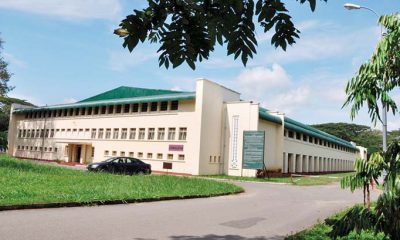
Library crisis hits Pera university
-

 Business7 days ago
Dialog partners with Ratmalana Audiology Centre for World Hearing Day 2026