
News
UNICEF helps accelerate supplementary measles immunisation activity in SL

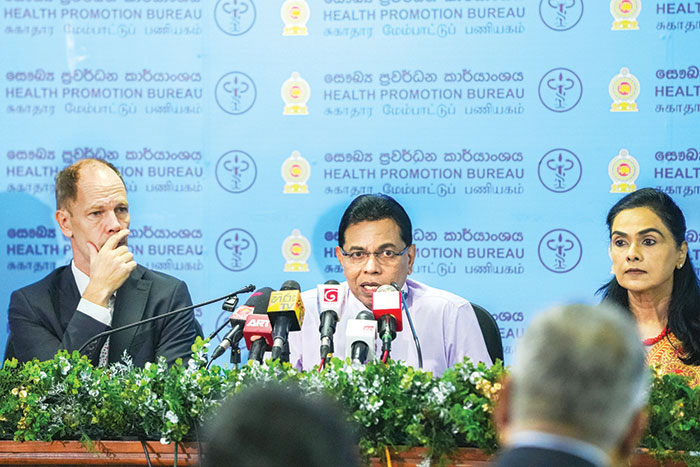
UNICEF, together with WHO, will assist the Ministry of Health in implementing a supplementary measles immunization activity (SIA) in Sri Lanka to control the ongoing measles outbreak, amidst over 700 measles cases reported in the country since May 2023.
The SIA will be launched in two phases; the first phase will commence on 6 January, targeting 6-9-month-olds in nine identified districts with a high population density, where measles cases were reported including Colombo, Gampaha, Kalutara, Galle, Matara, Kandy, Jaffna, Kurunegala and Kalmunai. The second phase will be initiated on January 20 and extended to other age groups across the country.
Speaking at a press briefing held in Colombo recently to announce the launch of the supplementary immunisation activity, UNICEF Representative in Sri Lanka, Christian Skoog said, “UNICEF, as well as
WHO, has been closely associated partners with the Ministry of Health for many years in the implementation of the national immunisation programme, which is a success story in Sri Lanka. However, even with a high immunisation coverage, measles outbreaks can occur among unvaccinated children, especially when there are outbreaks in the region. While the numbers are small with the recent measles outbreak, it is important to take it seriously and that is what the Ministry of Health is doing, in taking appropriate steps to control it.”
He also added the assistance extended by UNICEF during COVID-19 pandemic in 2020-2021 to maintain the quality of vaccines by addressing the gaps in the cold chain equipment system, will undoubtedly support in implementing this effective supplementary immunisation activity.
Meanwhile, Secretary to the Ministry of Health (MoH), Dr. Palitha Mahipala expressed confidence in the success of the vaccination drive, stating, “There is no other country in the world which has reached over 99% immunisation coverage. I can confidently state without any hesitation that Sri Lanka is the only country which reached a 99.9% immunisation coverage. So, I am optimistic that with this supplementary immunisation activity, the measles cases reported will be reduced.”
The measles, mumps and rubella (MMR) vaccine was introduced into Sri Lanka’s immunisation program in 1984. In 2001, a second dose of the vaccine was introduced to improve population level immunity and in 2019, the WHO declared Sri Lanka as a country free of Measles. However, a significant drop in global immunisation coverage from 2020 to 2022 impacted many countries in the region, which has led to a rise in measles cases once again, including in Sri Lanka.
Dr. Alaka Singh, WHO Representative to Sri Lanka who also spoke at the presser said, “The cases reported so far have been mild, and no deaths have been reported. However, measles can be a major childhood disease, which can and must be prevented. Accordingly, MoH has embarked on a rapid supplementary immunization activity in two phases through the strong primary healthcare system. We, as WHO, reiterate our full support for this program and overall recovery in Sri Lanka going forward.”
Other experts in attendance at the media briefing included Dr. Asela Gunawardena, Director General of Health Services, Ministry of Health; Dr. Vinod Kumar Bura, Coordinator, Immunisation and Vaccine Development, Department of Communicable diseases, WHO South-East Asia Regional Office; the Chief Epidemiologist; Director, Health Promotion Bureau as well as other consultants and specialists from MoH.
UNICEF and MoH, through this latest SIA are committed to combating any possible measles outbreaks in Sri Lanka. While measles is highly infectious, past vaccination initiatives have shown success in controlling outbreaks when high coverage is achieved. Stakeholders noted that strategic public awareness and community engagement will be critical in conveying the urgency of vaccinations and ensuring the campaign’s success.








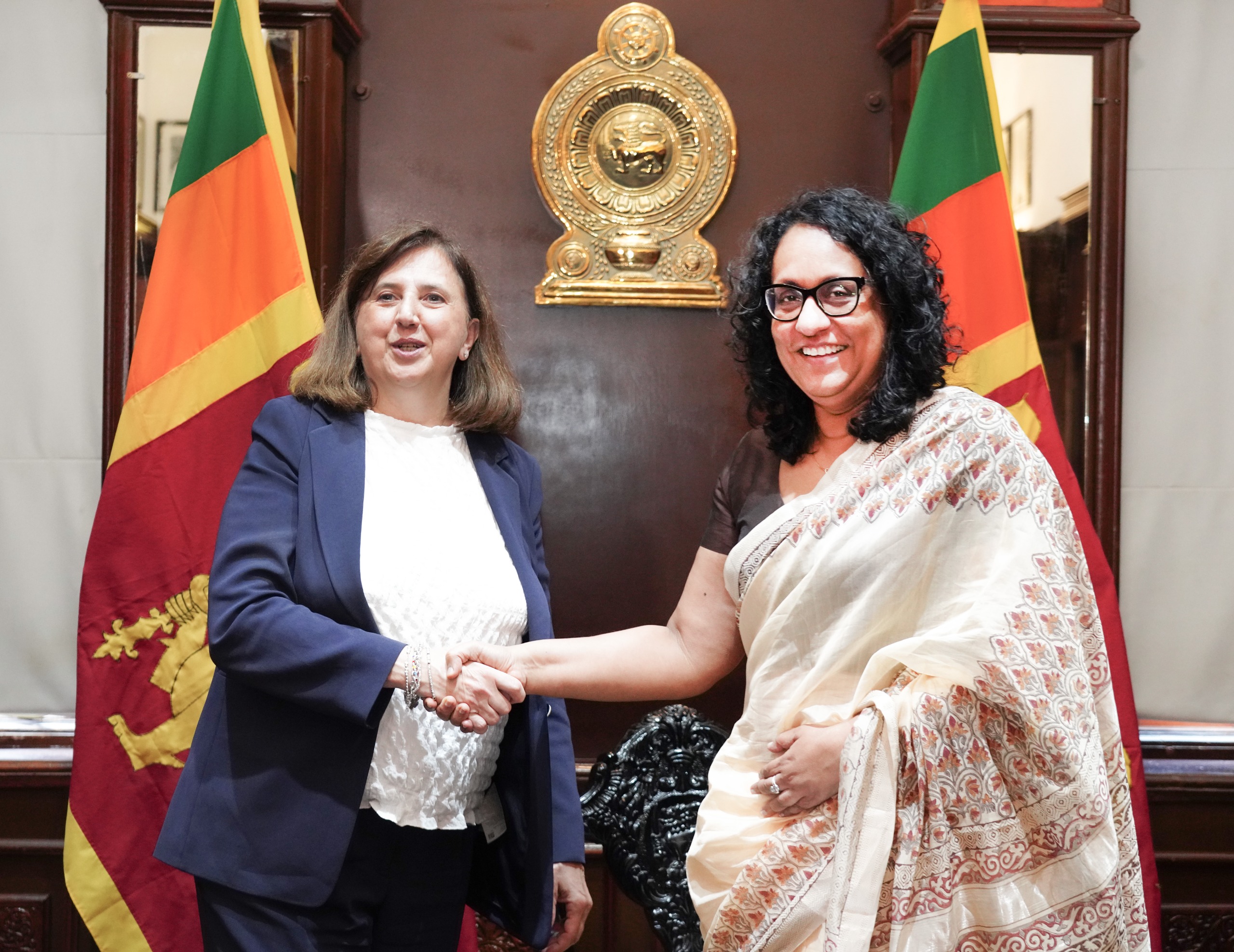
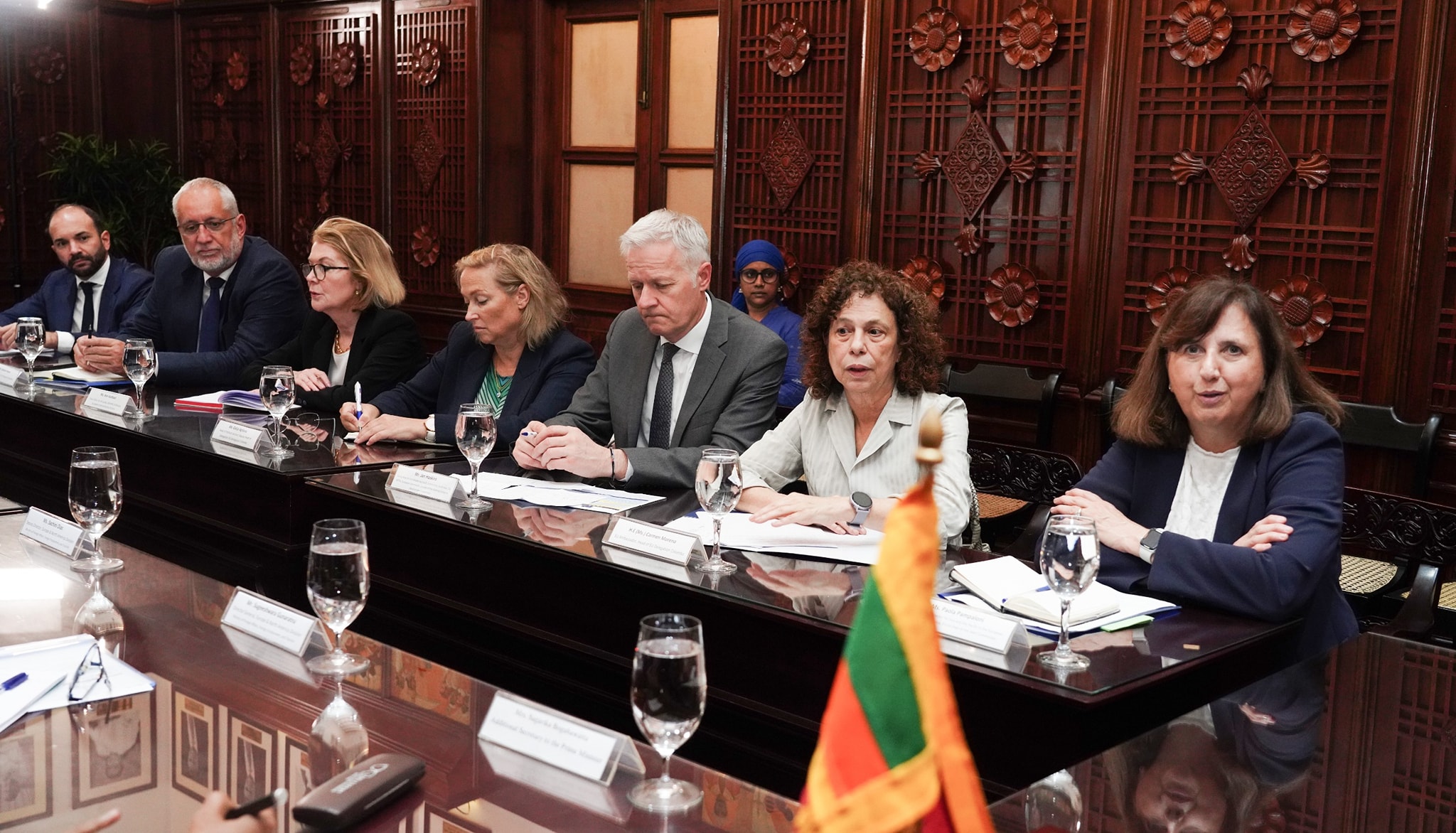
Prime Minister Dr. Harini Amarasuriya met with the representatives of the European External Action Service [EEAS] on Tuesdqy [10 th February] at the Prime Minister’s office.
Welcoming the delegation from the European External Action Service (EEAS), the Prime Minister emphasized the importance of further strengthening and deepening the long-standing partnership between Sri Lanka and the European Union, noting the role of the European Union as a key development and economic partner.
The Prime Minister also expressed appreciation for the timely assistance extended by the European Union to Sri Lanka in response to the recent cyclone, highlighting the EU’s continued solidarity and support during times of need.
Attention was drawn to the need to expand economic cooperation between Sri Lanka and the European Union. The Prime Minister underscored the importance of undertaking necessary legislative and policy reforms to facilitate enhanced economic engagement, trade, and investment.
The delegation was briefed on the ongoing initiatives and reforms being implemented by the new Government aimed at strengthening economic stability, governance, and creating a conducive environment for sustainable growth and international cooperation.
The meeting was attended by the Acting Managing Director for Asia and the Pacific in the European External Action Service, EU co-chair of the Joint Commission, Ms. Paola Pampaloni; EU Ambassador, Head of EU Delegation Ms. Carmen Moreno and the representatives of European External Action Services and Delegation of the European Union, and Additional Secretary to the Prime Minister, Ms. Sagarika Bogahawatta and the officials from the Ministry of Foreign Affairs, Foreign Employment, Tourism Sri Lanka.
[Prime Minister’s Media Division]
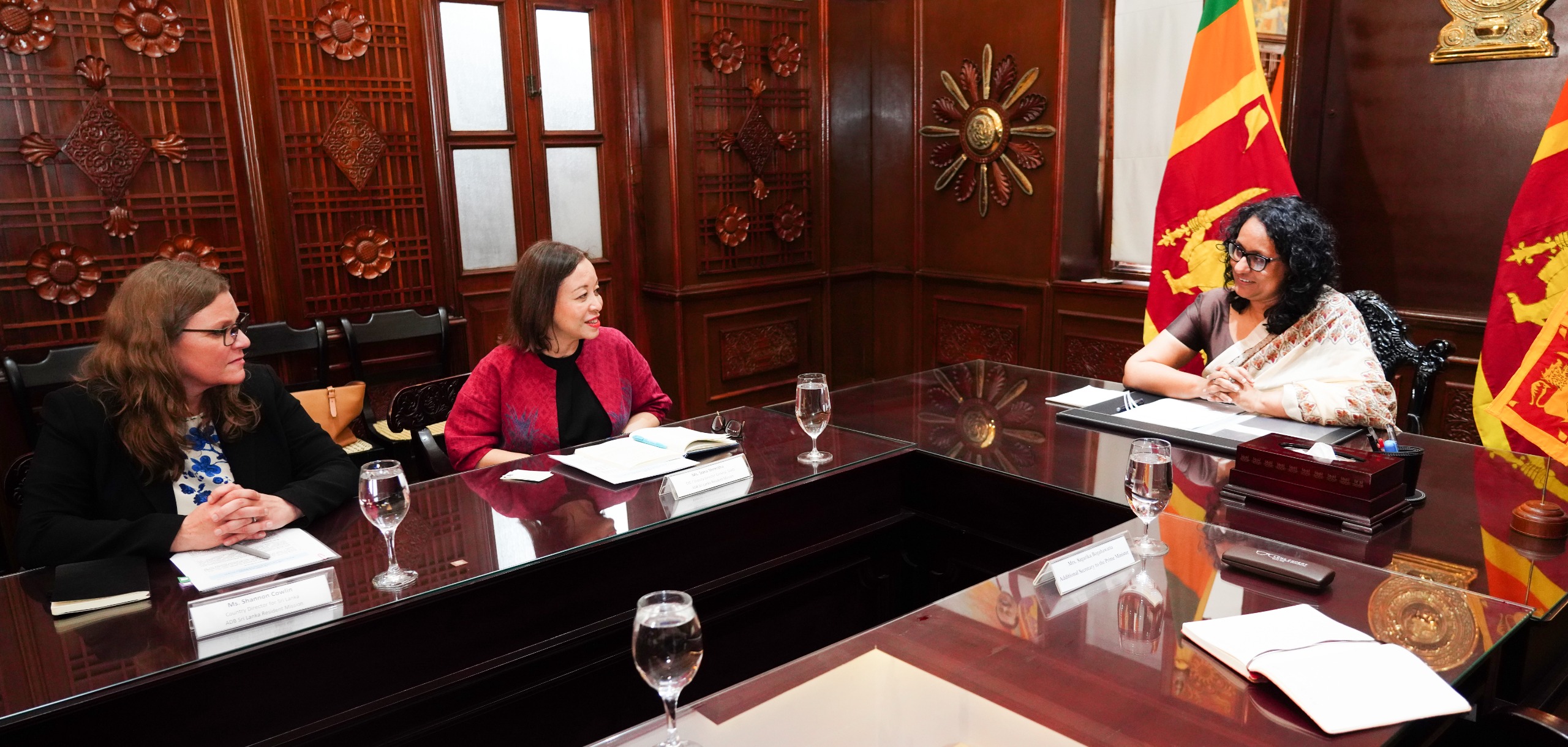
The newly appointed Country Director of the Asian Development Bank for Sri Lanka Ms Shannon Cowlin and the accompanying delegation met with Prime Minister Dr. Harini Amarasuriya on Tuesday [0th of February] at the Prime Minister’s office.
Welcoming the delegation, the Prime Minister extended congratulations to the newly appointed Country Director and acknowledged the long-standing partnership with the Asian Development Bank. The Prime Minister also expressed appreciation for ADB Bank’s continued engagement and support aligned with Sri Lanka’s national development priorities.
The Prime Minister also conveyed gratitude for the timely assistance extended by the ADB in response to Cyclone Ditwah, noting the importance of such support in mitigating the immediate impacts of natural disasters.
The ADB delegation reiterated its readiness to further assist Sri Lanka during the post-cyclone recovery phase, including rebuilding and reconstruction efforts, and emphasized its commitment to the supporting the education sector.
The meeting was attended by OIC / Deputy Director General, SARD Ms. Sona Shrestha, Ms. Cholpon Mambetova Country Operations Head of ADB Sri Lanka Mission Resident, Additional Secretary to the Prime Minister Ms. Sagarika Bogahawatta, Director General of the External Resource Department, Ministry of Finance Samantha Bandara, Director for ADB Division in External Resource Department, Ministry of Finance Ranjith Gurusinghe.
[Prime Minister’s Media Division]
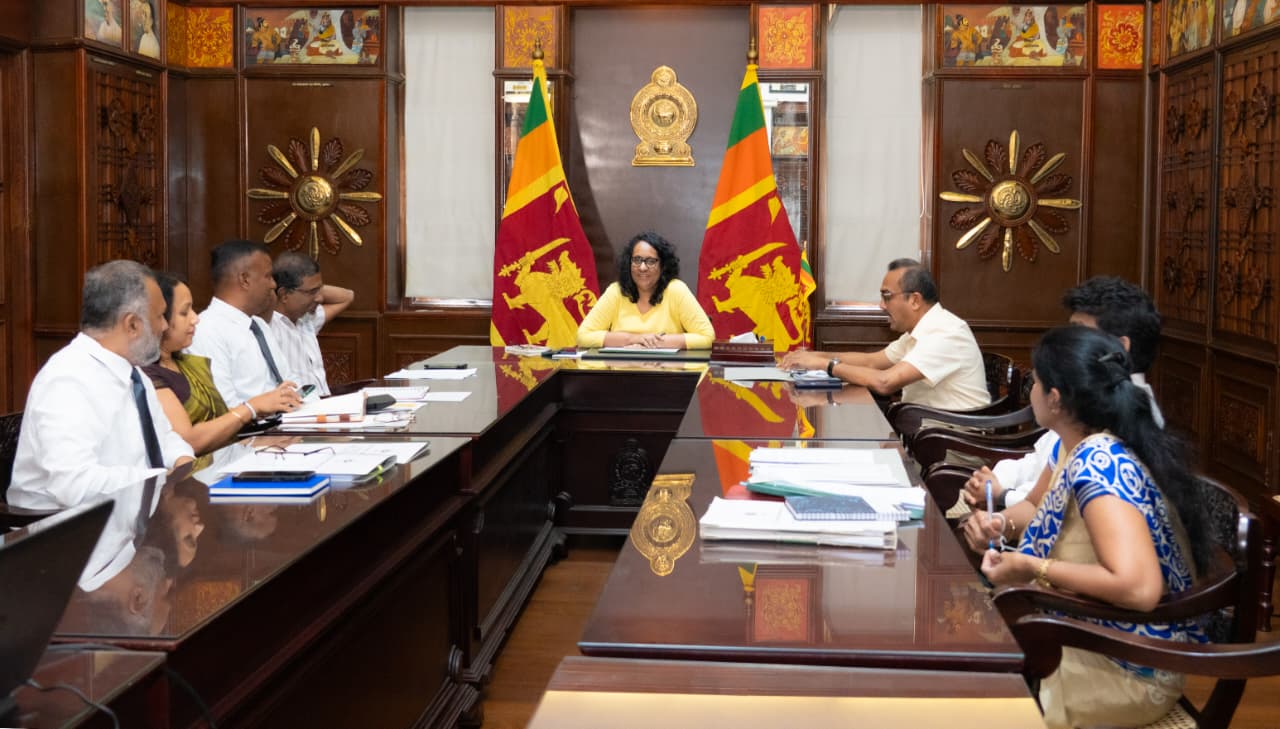
A discussion on regulating school student transport services was held on the 09th of February at the Prime Minister’s Office under the patronage of Prime Minister Dr. Harini Amarasuriya, with the participation of officials from the National Transport Commission and the Ministry of Education.
The authority for regulating school student transport has been vested with the National Transport Commission, and as the relevant draft of regulations have already been prepared, discussions were held on the provisions contained in these drafts as well as on new proposals that should be incorporated.
During the discussion, the attention was focused on meeting the emerging needs of transportation arising from the schools, minimizing issues encountered in the transportation of school students by establishing an organized transport mechanism, and deploying the “Sisu Sariya” school transport service in a more efficient and effective manner followed by the new educational reforms process.
Discussions were also held on introducing laws and regulations to systematize the transportation of schoolchildren, prioritizing child protection by preventing reported incidents of abuse and harassment during student transport, and enhancing professionalism among school transport service providers to ensure a responsible and accountable service.
The focus was also emphasized on the need for coordinated action among the Ministry of Transport, Highways and Urban Development, the National Transport Commission, the Ministry of Education, Higher Education and Vocational Education, and the National Child Protection Authority.
The discussion was attended by the Minister of Transport, Highways and Urban Development Bimal Rathnayake, Chairman of the National Transport Commission P. A. Chandrapala, officials of the National Transport Commission, and the officials from the Ministry of Education, Higher Education and Vocational Education.
[Prime Minister’s Media Division]

Prime Minister meets delegation from the European External Action Service

Moscas star as Italy dismantle Nepal for first World Cup win

Kim Jong Un chooses teen daughter as heir, says Seoul

Newly appointed ADB Country Director to Sri Lanka and delegation meet PM

School student transport services are being regulated

Shanaka and Rathnayake blow Oman away with frenetic half-centuries

‘Dates have the highest sugar content to fight Coronavirus’

Sunday Island 27 December – Headlines

#SundayIsland 17th December – Headlines

Sunday Island – 28th March

Sunday Island Headlines – 21 March

Sunday Island – 21st February – Headlines
-
 Features5 days ago
My experience in turning around the Merchant Bank of Sri Lanka (MBSL) – Episode 3
-

 Business6 days ago
Zone24x7 enters 2026 with strong momentum, reinforcing its role as an enterprise AI and automation partner
-
 Business5 days ago
Remotely conducted Business Forum in Paris attracts reputed French companies
-
 Business5 days ago
Four runs, a thousand dreams: How a small-town school bowled its way into the record books
-
 Business5 days ago
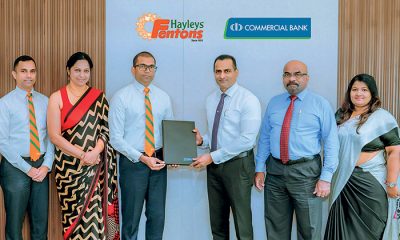
ComBank and Hayleys Mobility redefine sustainable mobility with flexible leasing solutions
-

 Business2 days ago
Autodoc 360 relocates to reinforce commitment to premium auto care
-
 Business6 days ago
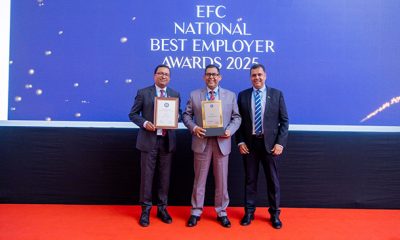
HNB recognized among Top 10 Best Employers of 2025 at the EFC National Best Employer Awards
-
 Midweek Review2 days ago
A question of national pride