
News
“UNDO Doesn’t Work in Real Life”: New campaign launched to tackle harmful speech and promote social cohesion

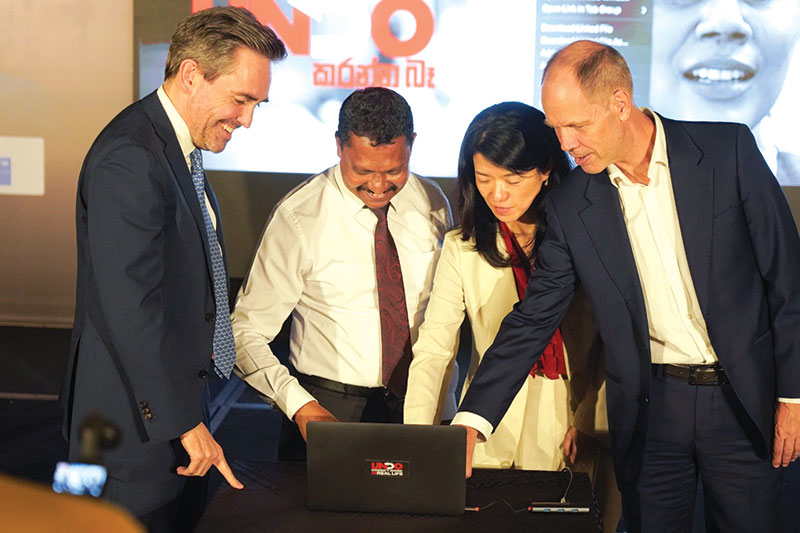
A public awareness campaign, titled “UNDO Doesn’t Work in Real Life,” was launched yesterday to address the growing threat of harmful speech and misinformation, while fostering empathy, accountability, and responsible storytelling in Sri Lanka.
This joint campaign is a collaborative initiative by the United Nations in Sri Lanka together with the Ministry of Health and Mass Media, and is implemented by the United Nations Development Programme (UNDP) and UNICEF in Sri Lanka, with support from the UN Sri Lanka SDG Fund.
Held in Colombo, the launch event saw the participation of Dr. Hansaka Wijemuni, Deputy Minister of Health and Mass Media; Marc-André Franche, Resident Coordinator, United Nations in Sri Lanka; Azusa Kubota, Resident Representative, UNDP Sri Lanka; and Christian Skoog, Representative, UNICEF Sri Lanka, alongside senior ministry officials, journalists, civil society actors, and media professionals.
Commenting on the effects of dangerous speech, Dr. Hansaka Wijemuni, Deputy Minister of Health and Mass Media, noted, “The power to combat hate speech misinformation and disinformation does not lie only with the government, tech companies and journalists, it lies also with the people. Let us work together to strengthen the policies to combat online hate speech and misinformation.”
The centrepiece of the campaign is a series of short videos, developed using real-time data from Sri Lanka’s online and offline spaces. These stories reflect the very real consequences of dangerous speech on individuals and communities, particularly women, youth, and marginalized groups.
Marc-André Franche, the United Nations Resident Coordinator highlighted the UN Secretary General’s Strategy and Plan of Action on Hate Speech which provides a clear framework to counter hate while upholding freedom of expression—a balance that is critical in a rapidly polarizing global and national media landscape in which greater responsibility is placed on governments, civil society, media and individual users to navigate online harm: “The rise in online harmful speech, particularly during politically sensitive periods, is a disturbing trend we must confront together”, stated Franche.
According to the UN Early Warning Brief (February 2025), 46% of online harmful speech still targets women, despite a 22% month-on-month drop in total harmful content. These trends reinforce the urgent need for public awareness, especially around the gendered impacts of disinformation and hate speech. “In the digital world, you can press ‘undo’ — but in real life, the damage caused by harmful speech is ingrained in someone’s hearts and minds, and often irreversible,” said Azusa Kubota, Resident Representative, UNDP in Sri Lanka.
“We hope the media will carry this message forward to enhance awareness amongst the public on the unintended and intended consequences of harmful speech, and promote responsible dialogue towards social cohesion.” “As UNICEF we have taken several actions to empower communities and future generations. We are equipping young minds with skills to engage in safe internet use and nurture critical thinking skills to recognize, challenge, and reject false and harmful language before it takes root”, said Christian Skoog, UNICEF Representative in Sri Lanka.
“In addition, UNICEF is working with grassroots organisations and religious leaders to actively prevent and counter hate speech and misinformation in their communities”, he added. The campaign which will run on mainstream media and digital outlets aims to spark national conversation, build digital literacy, and encourage responsible storytelling with media professionals playing a central role in carrying the message to the public.


Romania, a country that has maintained diplomatic relationship with Sri Lanka for several decades in various fields, has become an increasingly popular destination among Sri Lankan skilled and semi-skilled Labour categories, especially in the fields of construction, manufacturing, hospitality, and services sectors.
At present, the recruitment of Sri Lankan workers to Romania is carried out by licensed private employment agencies under the
supervision of the Sri Lanka Foreign Employment Bureau. However, since both parties have recognized the need of establishing a more organized and sustainable recruitment method due to increasing demand, the Cabinet of Ministers has approved the proposal presented by the Minister of Foreign Affairs, Foreign Employment, and Tourism to enter into a Memorandum of Understanding between the Government of the Democratic Socialist Republic of Sri Lanka and the Government of Romania regarding cooperation in the field of the labour sector with the following objectives.
• Establishment of proper mechanism for recruitment and management of workers.
• Promotion of ethical and transparent recruitment practices.
• Protection of rights and welfare of the migrant workers.
• Facilitation of regular discussions between the formal and relevant authorities ofboth countries.
• Improvement of technical cooperation, skills recognition, and capacity building in the labour sector.
The Cabinet of Ministers has approved the proposal presented by the President, in his capacity as the Minister of Finance,
Planning, and Economic Development to repeal Management Services Circular No. 01/2019 , dated 15-03-2019, issued regarding the implementation of development projects, and to issue a new management services circular including updated provisions instead.

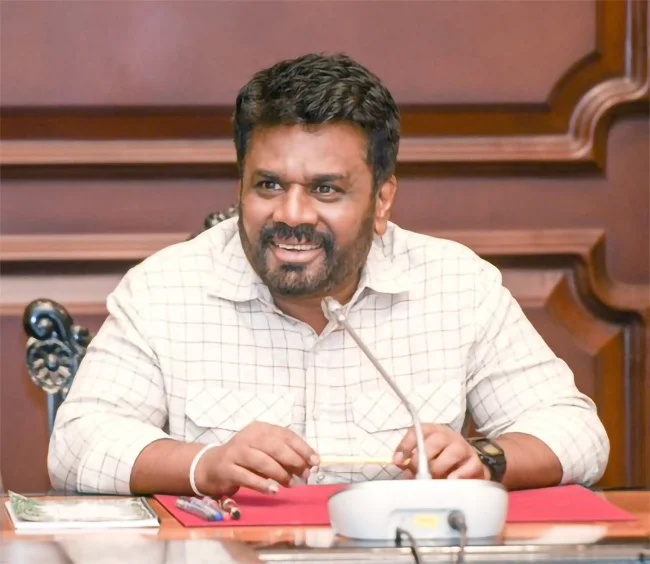
Chief Prelates of the Malwathu, Asgiriya, Amarapura and Ramanna Nikayas, in a joint letter addressed to President Anura Kumara Dissanayake, has expressed concern over the protracted delay in appointing a permanent Auditor General.
The Chief Prelates have said that the appointment of an outsider as the Head of the National Audit Office (NAO) responsible for ensuring transparency and accountability in public finances will be inappropriate.
The Chief Prelates have said that they are of the view that Dharmapala Gammanpila, a senior officer with extensive experience within the Auditor General’s Department, is the ideal candidate for the top post. They have also emphasised that his appointment will strengthen the government’s efforts to promote economic prosperity.
Chulantha Wickramaratne, who served as AG for a period of six years, retired in April 2025. Following his retirement, President Dissanayake nominated H.T.P. Chandana, an audit officer at the Ceylon Petroleum Corporation, as the AG. The CC rejected that nomination. Subsequently, President Dissanayake appointed the next senior-most official at the NAO Dharmapala Gammanpila as Acting Auditor General for a period of six months. Then, the President nominated Senior Deputy Auditor General L.S.I. Jayarathne to serve in an acting capacity, but her nomination, too, was also rejected. Many an eyebrow was raised when the President nominated O.R. Rajasinghe, the Internal Audit Director of the Sri Lanka Army for the top post. That nomination too was rejected. As a result, the vital position remains vacant since 07 December, 2025.

Vintage Markram, clinical Linde headline South Africa’s comfortable win

Cabinet nod for MOU between Sri Lanka and Romania on the cooperation in the Labour Field
New circular to replace Management Services Circular No. 01/2019

The RAPP sheet: Steve Smith, Daryl Mitchell, Umesh Yadav among over 1300 players

U19 World Cup: Pakistan overcome New Zealand by 8 wickets

U19 World Cup: Vihaan Malhotra ton headlines India’s massive win

‘Dates have the highest sugar content to fight Coronavirus’

Sunday Island 27 December – Headlines

#SundayIsland 17th December – Headlines

Sunday Island – 28th March

Sunday Island Headlines – 21 March

Sunday Island – 21st February – Headlines
-
 Business2 days ago
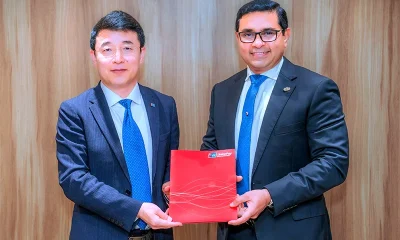
ComBank, UnionPay launch SplendorPlus Card for travelers to China
-
 Business3 days ago
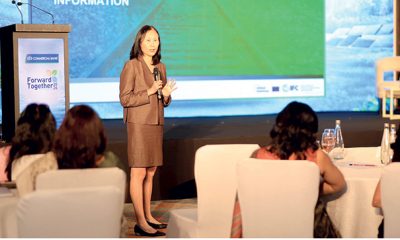
ComBank advances ForwardTogether agenda with event on sustainable business transformation
-
 Opinion6 days ago
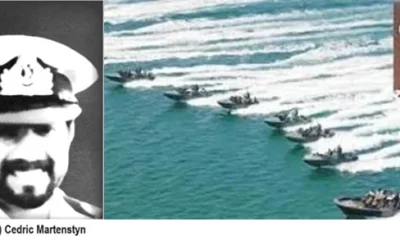
Remembering Cedric, who helped neutralise LTTE terrorism
-
 Business6 days ago
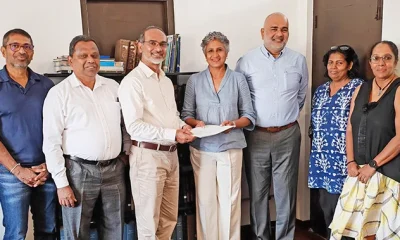
CORALL Conservation Trust Fund – a historic first for SL
-
 Opinion3 days ago
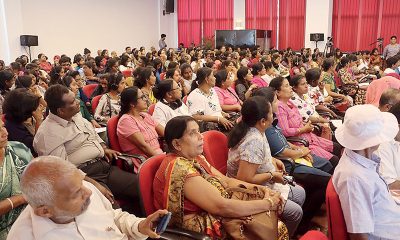
Conference “Microfinance and Credit Regulatory Authority Bill: Neither Here, Nor There”
-

 Opinion5 days ago
A puppet show?
-
 Opinion2 days ago
Luck knocks at your door every day
-
 Features5 days ago
‘Building Blocks’ of early childhood education: Some reflections