
News
UN warns of catastrophic hunger


California [US], June 6 (ANI): Food scarcity, including shortage of wheat a staple for nearly 2.5 billion people, has brought millions, particularly in Africa to the edge of starvation and malnutrition that could plague them for years.
The United Nations is ringing loud alarm bells to warn of catastrophic hunger and deaths in the coming months but to little avail.
Chair of the African Union and President of Senegal Macky Sall made an urgent trip to meet Russia’s Vladimir Putin in person last week to get nearly 20 million tons of wheat out of Ukraine by cargo vessels. But he had to come away without any concrete actions to ease the hunger.
The US is accusing Putin of stealing Ukraine’s wheat and subverting draconian financial sanctions to sell it cheaply to African countries stricken by drought. He is finding ready takers because wheat prices have shot up more than 60 per cent this year mostly because Russia’s invasion of Ukraine has blocked deliveries from those two countries. They usually provide nearly one-third of global wheat exports.
UN chief Antonio Guterres, who also met Putin personally in April, said after a visit to Africa’s poverty-stricken Sahel region, “Severe acute malnutrition – a wasting disease that can kill if left untreated – is rising. Farm animals are already dying of hunger.”
“Leaders told me that because of the war in Ukraine, on top of the other crises they face, they fear this dangerous situation could tip into catastrophe,” he added.
The response from the world’s seven richest countries (G7) at meetings last month was disappointing mostly because their focus remains on blaming Putin in case widespread starvation deaths occur in Africa.
Indian Prime Minister Narendra Modi has promised to supply emergency shipments of wheat to countries requesting help to alleviate hunger. India is the world’s second-largest wheat grower after China but the US Department of Agriculture (USDA) reported that it accounted for only 4.1 percent of total global wheat exports in 2020-21.
The world’s largest wheat exporters are Russia, the EU, Australia, the US, Canada, Argentina, Ukraine, India and Kazakhstan. But the US and its allies are being slow in unblocking large supplies of wheat as humanitarian aid.
Worse, the high costs of helping Ukraine have reduced G7 humanitarian aid pledges to only USD 2.6 billion, well below promises they made in 2021 to commit USD 8.5 billion to end famine.
Indian farm productivity has made huge gains during the past decade because of improved policies and freer markets promoted by Modi’s administration. The country produced 109.6 metric tonnes (mt) of wheat in 2021-22, of which 8.2 metric tons was exported, up from 2.6 metric tons of exports in 2020-21.
Before reforms, no food grains were left over for export because wheat and rice are staples for India’s 1.3 billion population. Shortages and rising prices can bring down governments in both federal and state elections.
Fearing popular unrest, Delhi has temporarily suspended wheat exports citing price pressures stemming from poor harvests caused by life-threatening extreme heat in recent months. However, there is wide public support for waivers to make emergency shipments to alleviate hunger elsewhere.
Expanding exports requires freer internal markets in India but the politics are very difficult. Modi is still negotiating with powerful farmer lobbies that want to slow down his push towards freer markets.
They have long enjoyed guaranteed prices for wheat and other grains, subsidized by the government. In addition, they benefit from heavily discounted prices for water, electricity and grain storage in silos. Now, they fear having to face competitive markets for food.
In global trade negotiations, the US and EU strongly oppose the subsidies but Indian farming lobbies seem to be as politically potent as in those countries. More agricultural cooperation between the West and India as fellow democracies would be helpful since India is one of the few countries capable of efficiently increasing food supplies and exports to alleviate global hunger levels.
The UN says that in just two years, the number of severely food insecure people has doubled to 276 million from 135 million before the COVID-19 pandemic and Russia’s war in Ukraine.
Almost 21 million children are one step away from starvation and about 811 million go to bed hungry each night because they do not get enough food. This is outrageous because there is more than enough food produced in the world to feed everyone.
Another shocking symbol of entrenched inequalities is small farmers, herders and fisherman produce about 70 per cent of global food supply, yet poverty and hunger are most acute among them and other rural populations.






The bodies of 84 Iranian sailors killed in a torpedo attack by a US submarine last week in the Indian Ocean are due to be flown home on Friday, Sri Lanka’s defence ministry has said.
The seamen were among 130 thought to be aboard the Iranian warship, the Iris Dena, when it was sunk on 4 March about 40km (25 miles) from Sri Lanka’s southern coastline.
A police escort transferred bodies to Mattala Rajapaksa International Airport on Friday morning for the repatriation to Iran, after they were stored in two freezers at Galle National Hospital.
Sri Lanka said 32 sailors rescued by its navy after the torpedo attack “will remain in Sri Lanka”, according to news agency AFP.
A magistrate in the Sri Lankan city of Galle ordered that the 84 bodies should be released to the Iranian embassy.
US Defense Secretary Pete Hegseth said shortly after the sinking that the Iranian warship had died a “quiet death”.
Iran’s Foreign Minister Abbas Araghchi said the US had “perpetrated an atrocity at sea, 2,000 miles away from Iran’s shores”, adding that “the US will come to bitterly regret precedent it has set”.
Video released by the US Department of Defense after the incident showed a ship being struck, causing the stern to rise up before exploding.
The Iris Dena had been returning from a military exercise hosted by India when it was attacked.
Its sinking in international waters came during the current US-Israeli war with Iran and marked a dramatic widening of the conflict.
Iran has since launched retaliatory strikes across the Middle East – targeting Gulf countries allied with the US.
Latest News
Safeguarding linguistic heritage is not only a cultural responsibility, but also a shared commitment to preserving the diversity of our world – PM

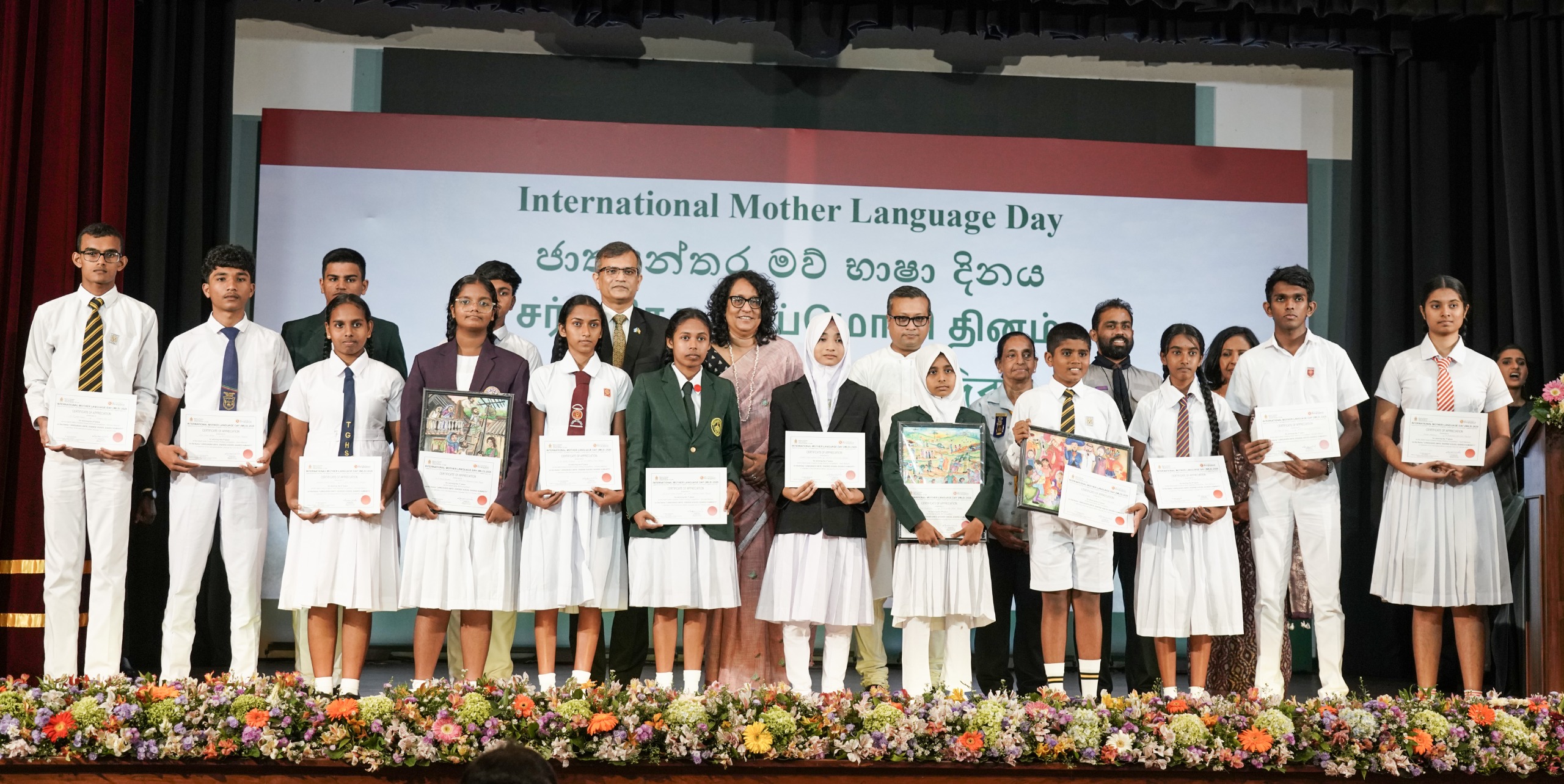
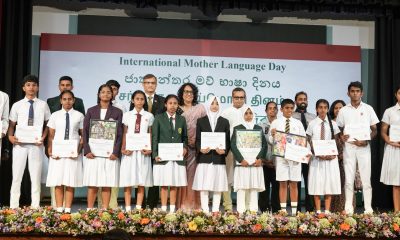
Minister of Education, Higher Education and Vocational Education Prime Minister Dr. Harini Amarasuriya participated as the Chief Guest in the special event organized to commemorate International Mother Languages Day 2026 on 13 March 2026 at the New Arts Theatre of the University of Colombo. The event was held under the theme ’Languages Unite: Diverse Voices, Shared Humanity’.
The event was jointly organized by the High Commission of Bangladesh and the Ministry of Education of Sri Lanka with the support of the United Nations, the Sri Lanka Scout Association, and the Sri Lanka Girl Guides Association.
Certificates and awards were presented to school winners of the painting, essay, and short video creation competitions organized in conjunction with the celebration of International Mother Language Day 2026.
Addressing the occasion, the Prime Minister Dr. Harini Amarasuriya stated:
“International Mother Language Day stands as a powerful reminder of the profound connection between language, identity, and dignity.
This global observance owes its origins to the visionary initiative of the People’s Republic of Bangladesh. Bangladesh’s advocacy transformed a national commemoration into a global movement one that celebrates the rich mosaic of humanity’s linguistic heritage.
Sri Lanka’s language diversity reflects the richness of our pluralistic heritage. This diversity should not be seen as a challenge to be managed, but as a strength to be valued and cherished.
When we protect language rights, we nurture social harmony. When we promote multilingual education, we empower future generations. And when we listen to one another in our own languages, we affirm each other’s humanity. At a time when divisions can easily take root, respect for linguistic diversity can instead serve as a bridge of empathy and cooperation.
In an increasingly digital age, we must also reflect on the importance of preserving linguistic diversity in cyberspace. Thousands of languages around the world remain vulnerable. Without conscious efforts in education, technology, and policy, many risk fading into silence. Safeguarding linguistic heritage is therefore not only a cultural responsibility, but also a shared commitment to preserving the diversity of our world”.
The Prime Minister remarked that the partnership between Sri Lanka and Bangladesh continues to grow in friendship and cooperation with the shared commitment to multilateralism, cultural understanding, and people-to-people engagement strengthens the bonds between the two nations.
The event was attended by the Bangladesh High Commissioner, Andalib Elias, Deputy Speaker Dr. Rizvie Salih, Secretary to the Prime Minister Pradeep Saputhanthri, FAO Country Representative for Sri Lanka and Maldives Vimlendra Sharan, Chief Commissioner of the Sri Lanka Girl Guides Association Dr. Kushantha Herath, diplomatic crops, members of the Sri Lanka Scout Association, and the Sri Lanka Girl Guides Association and students.
[Prime Minister’s media division]
News
This is not an ordinary scholarship programme. It defines the future vision of our country – PM
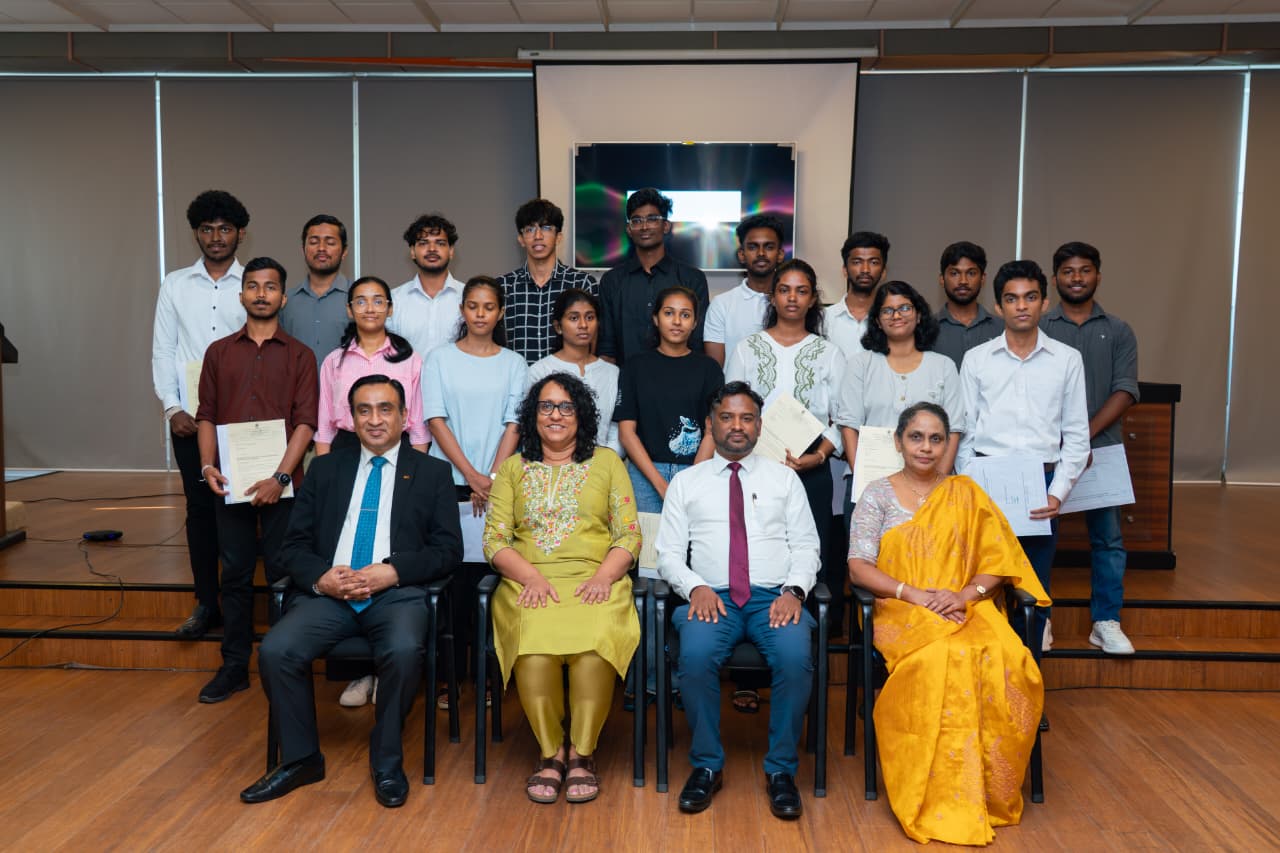
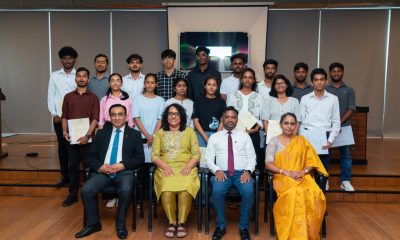
Prime Minister Harini Amarasuriya stated that the Government believes investments in education should be encouraged to develop highly skilled human resources essential for rebuilding the country, adding that the scholarship programme is a national initiative that reflects the country’s future vision.
The Prime Minister made these remarks while attending the inauguration ceremony of the scholarship programme that provides opportunities for students who excelled in the 2024 G.C.E. Advanced Level Examination to pursue their undergraduate studies at the world’s leading universities. The event was held on 12 March 2026 at the Ministry of Education, Isurupaya.
An investment of Rs. 4,001 million is expected to be allocated for this project.
Under this programme, it is planned to award 200 foreign scholarships to students during the period of 2025 and 2033. As the initial phase of the programme, 32 students have been selected for the 2025/26 academic year, and 9 students have already secured admission to some of the world’s leading universities, including those in Sydney, Melbourne, Monash in Australia, and Auckland in New Zealand.
A transparent selection process has been followed in selecting the students. They are required to pursue their studies in universities ranked within the top 500 of global rankings such as QS, THE, or ARWU.
For each selected student, a maximum financial allocation of Rs. 20 million per year will be provided, with a total of up to Rs. 80 million (Rs. 80,000,000) for the full four-year undergraduate programme.
Minister Dr. Harini Amarasuriya stated:
“Today brings a great satisfaction to the Ministry of Education. As the first phase of a promise we made in our policy statement, scholarships have been awarded today to 33 students who achieved outstanding results in the Advanced Level Examination to pursue higher education abroad. Implementing this programme was not easy. We had to engage in extensive discussions regarding student selection, maintaining transparency, and identifying universities with higher academic standards.
This is not an ordinary scholarship programme. It is a programme that defines the future vision of our country. It provides students with the opportunity to study at some of the world’s leading universities. Therefore, students selected for this programme must demonstrate not only academic excellence but also leadership qualities, personality, and resilience.
To build our country, we need good citizens. We must create a human resource capable of taking the country forward. Countries such as Singapore, China, and Malaysia have progressed by investing in human resource development. We must also follow that path.
Beyond becoming graduates, these scholarship recipients should become individuals capable of making a meaningful impact on society and serving as part of the broader social transformation of our country. This is a long-term investment we are making. We expect you to support fellow students, lead teams, and demonstrate strong character.
No matter the challenges you face including the climate changes, cultural differences, or missing loved ones, you must remain determined and not abandon your journey. Use such challenges to develop your leadership qualities. Even difficult experiences can become opportunities. Learn from new cultures, technologies, and systems of knowledge. Become innovative thinkers who can apply that knowledge to the development of our country.
Gain as much experience as possible. Develop communication skills, empathy, teamwork, and the ability to understand others. Thereby you will be able to deliver the change we expect for the nation. We will never be left alone. In any challenging situation, we are ready to intervene and support you. We will facilitate the necessary coordination and assistance through embassies. If we are to take our country toward social transformation, it must be done through collective effort, protecting and supporting one another. We must create leaders who can guide not only Sri Lanka but the entire world toward a more humane future”.
The event was attended by Deputy Minister of Education and Higher Education Dr. Madhura Senevirathna, Secretary to the Ministry of Education, Higher Education and Vocational Education Nalaka Kaluwewa, officials of the Ministry of Education, and the selected students.
[Prime Minister’s Media Division]

Bodies of 84 Iranian sailors killed in US torpedo strike to be repatriated

Four crew members killed after US refuelling plane crashes in Iraq

Safeguarding linguistic heritage is not only a cultural responsibility, but also a shared commitment to preserving the diversity of our world – PM

This is not an ordinary scholarship programme. It defines the future vision of our country – PM

West Indies name unchanged squad for home T20Is against Australia

Duplantis breaks world pole vault record in Uppsala

‘Dates have the highest sugar content to fight Coronavirus’

Sunday Island 27 December – Headlines

#SundayIsland 17th December – Headlines

Sunday Island – 28th March

Sunday Island Headlines – 21 March

Sunday Island – 21st February – Headlines
-

 News7 days ago
Peradeniya Uni issues alert over leopards in its premises
-

 News5 days ago
Repatriation of Iranian naval personnel Sri Lanka’s call: Washington
-

 News7 days ago
Wife raises alarm over Sallay’s detention under PTA
-
 Features5 days ago
Winds of Change:Geopolitics at the crossroads of South and Southeast Asia
-

 News4 days ago
Prof. Dunusinghe warns Lanka at serious risk due to ME war
-

 Latest News7 days ago
Heat Index at ‘Caution Level’ in the Sabaragamuwa province and, Colombo, Gampaha, Kurunegala, Anuradhapura, Vavuniya, Hambanthota and Monaragala districts
-

 Sports3 days ago
Royal start favourites in historic Battle of the Blues
-

 Features6 days ago
The final voyage of the Iranian warship sunk by the US