
Features
Ukraine’s organic agriculture and its looming war

By Chandre Dharmawardana
chandre.dharma@yahoo.ca
When the President of Sri Lanka banned agrochemicals in May 2020 and launched organic agriculture, he may have partly dreamed of the big profits that the country could (in theory) make by selling organic food to elite export markets in Europe and elsewhere, profiting from a growing demand. That the local food needs could be easily satisfied was axiomatic within the uplifting belief that ancient Lanka was the granary of the Orient. In the same vein, it is axiomatic to some that Lanka was where Ravana had a fleet of helicopters and airplanes at a time when men lived to the age of 149 years, as recently re-asserted by a government doctor.
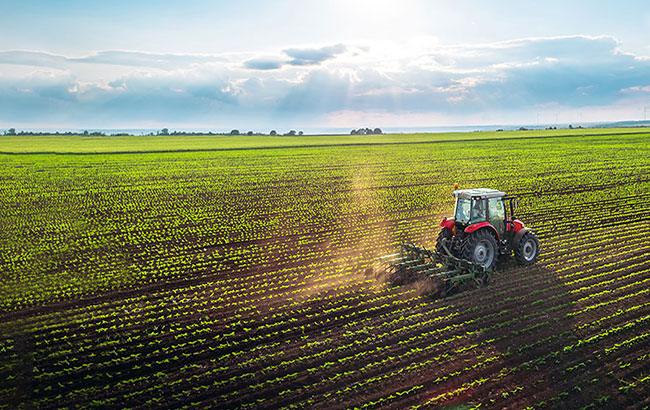
The Ukrainian Minister of Agriculture, Roman Leshenko recently declared that “for centuries, Ukraine has been known as “the breadbasket of Europe.” This title is entirely accurate, given that Ukraine is home to around a quarter of the world’s super-fertile “chernozem” or “black soil”.
Soil scientists recognise “chernozem” as a soil which is essentially nothing but organic manure. The plains of the Steppes had been the land that stayed fallow for millennia, traversed by Nomads who did no agriculture, but provided the soil with the droppings of their beasts of burden. The rich humic soil runs to meters deep. Here then is the perfect natural setting for organic agriculture, WITHOUT having to add organic manure to the soil. If one had chernozem one does not have to resort to the stupidity of importing infected material from China to augment the poor soils of a land that gets battered by two monsoons every year to carry away soil nutrients (and pollutants) into the sea.
So, ever since the collapse of the Soviet Union in the early 1990s, Western agribusiness attempted to move in a big way to buy up Ukraine’s agricultural land at fire-sale prices, or at least to recruit the land owners into production geared for selling to the elite segments of the EU where the rich believed that their good health depends on eating “organic food”. This is food which (they wish) is free of the slightest traces of “industrial agriculture”. Their followers in Sri Lanka call it “Toxin-free” food and they would even prefer to drink bottled Perrier water if they can get at it.
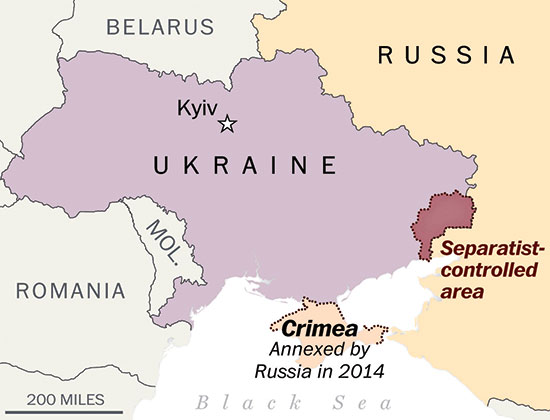
But the Russian move to re-take Ukraine has severely undermined the plans of the European “Organic” agribusiness giants.
The elite classes in Europe have successfully banned the sale of genetically modified food that their activists have labeled “Frankenfood”. Supermarket chains that sell organic food (known in the EU as “bio-food”) have funded political activism that has ensured that “GMO” food remains banned.
However, Ukraine and many parts of Eastern Europe are already sources of soya bean sold in the EU as “GMO free”, although there are no controls on the seeds used in the Ukraine. In fact, most Europeans who think that they are “GM free” do not know how much of GM is in their bodies. Many pharmaceuticals, and the Pfizer-Biotech vaccines are based on GM technology and they have filled the coffers of EU countries, especially that of Germany.
The EU has proposed a “Green Deal” in 2019 to turn the EU into a world leader in green financing and sustainable innovation, and “allow EU diplomats to engage in Green-Deal-diplomacy”, while also creating millions of new jobs. To realize this “grand vision” (the EU version of Gotabhaya’s “Saubagye Daekama”) a true tidal wave of new legislation, political strategies, reduction goals and financing proposals is being planned. The Ukraine and Eastern Europe play an important role in this project.
Even the wild bees used for pollination of farmed tomatoes etc., in Western Europe and the UK are imported annually from Eastern Europe! The decline in natural habitats caused by human encroachment has extinguished wild-bee populations in Western Europe. However, instead of recognizing this, the EU prefers to blame pesticides for the decline in wild bee populations. While pesticides like neo-nicotinoides do play a role, we see that it is not critical since honey-bee populations in urban and farmland areas have in fact increased, as revealed by a study lead by the University of Oxford!
However, unlike the slam-dunk ban introduced in May 2021 by the Gotabaya government, the EU wants to first halve the amount of chemical pesticides used in agriculture in the coming years. Going green leads to low harvests, and so the Green Deal also proposes to quickly increase the acreage of land cultivated by ecological standards to approximately 30 percent – from 8 percent right now. This will unquestionably introduce more human encroachment into natural habitat and go counter-current to good ecology.
Greek diplomat Tassos Haniotis, one of the EU Directors General, has pointed out in an internal EC document: “Because of the limited supply response in arable organic crops (i.e., the amount of organics that EU farmers can actually grow) the Green Deal could even lead to a growing amount of imported food”.
In Sri Lanka, with its more abrupt approach, this need for imports has already become a stark reality.
The EU Green deal with its looming threat of smaller harvests will have international repercussions. Haniotis is an agricultural economist and expert in EU-US trade relations. He was head of the EU cabinet itself and now leads one of the twelve directorates that make up the Directorate-General for Agriculture & Rural Development of the EU.
Haniotis warns that the Green measures currently proposed even at a modest pace would leave the ‘strategically important North African market’ without its usual European wheat supplies leading to price increases in North Africa and leading to these countries becoming dependent on imports from Ukraine and Russia.
However, if Ukraine with its chernozem soils could be retrieved from Putin and made subservient to Western markets, the EU can be supplied with its desired “organic food”, while safeguarding EU’s conventional agriculture for its export market.
That is, the elitist agricultural policy of the EU, in going Green in spite of lower harvests in a world where famine is a reality will limit the world’s capacity to feed itself. The EU itself will become a food importer. Meanwhile, the poorer countries that cannot afford to meet their incessantly increasing import bills will have to turn even more towards products of industrial agriculture, leading to even higher food prices for the conventional produce that they have been buying. This problem will be further compounded into an international tragedy if the elitist interest groups of other countries (e. g, Australia) were to also push to expand their organic agriculture and cut down their harvests.
Unfortunately, feeding the rich with “toxin-free food” and starving the poor are considered to be “environmental justice” by those who fight for organic agriculture.





Further to my earlier letter titled, “Psychology of Greed and Philosophy for a New World Order” (The Island 26.11.2025) it may not be far-fetched to say that the cause of the devastating cyclones that hit Sri Lanka and Indonesia last week could be traced back to human greed. Cyclones of this magnitude are said to be unusual in the equatorial region but, according to experts, the raised sea surface temperatures created the conditions for their occurrence. This is directly due to global warming which is caused by excessive emission of Greenhouse gases due to burning of fossil fuels and other activities. These activities cannot be brought under control as the rich, greedy Western powers do not want to abide by the terms and conditions agreed upon at the Paris Agreement of 2015, as was seen at the COP30 meeting in Brazil recently. Is there hope for third world countries? This is why the Global South must develop a New World Order. For this purpose, the proposed contentment/sufficiency philosophy based on morals like dhana, seela, bhavana, may provide the necessary foundation.
Further, such a philosophy need not be parochial and isolationist. It may not be necessary to adopt systems that existed in the past that suited the times but develop a system that would be practical and also pragmatic in the context of the modern world.
It must be reiterated that without controlling the force of collective greed the present destructive socioeconomic system cannot be changed. Hence the need for a philosophy that incorporates the means of controlling greed. Dhana, seela, bhavana may suit Sri Lanka and most of the East which, as mentioned in my earlier letter, share a similar philosophical heritage. The rest of the world also may have to adopt a contentment / sufficiency philosophy with strong and effective tenets that suit their culture, to bring under control the evil of greed. If not, there is no hope for the existence of the world. Global warming will destroy it with cyclones, forest fires, droughts, floods, crop failure and famine.
Leading economists had commented on the damaging effect of greed on the economy while philosophers, ancient as well as modern, had spoken about its degenerating influence on the inborn human morals. Ancient philosophers like Plato, Aristotle, and Epicurus all spoke about greed, viewing it as a destructive force that hindered a good life. They believed greed was rooted in personal immorality and prevented individuals from achieving true happiness by focusing on endless material accumulation rather than the limited wealth needed for natural needs.
Jeffry Sachs argues that greed is a destructive force that undermines social and environmental well-being, citing it as a major driver of climate change and economic inequality, referencing the ideas of Adam Smith, John Maynard Keynes, etc. Joseph Stiglitz, a Nobel Laureate economist, has criticised neoliberal ideology in similar terms.
In my earlier letter, I have discussed how contentment / sufficiency philosophy could effectively transform the socioeconomic system to one that prioritises collective well-being and sufficiency over rampant consumerism and greed, potentially leading to more sustainable economic models.
Obviously, these changes cannot be brought about without a change of attitude, morals and commitment of the rulers and the government. This cannot be achieved without a mass movement; people must realise the need for change. Such a movement would need leadership. In this regard a critical responsibility lies with the educated middle class. It is they who must give leadership to the movement that would have the goal of getting rid of the evil of excessive greed. It is they who must educate the entire nation about the need for these changes.
The middle class would be the vanguard of change. It is the middle class that has the capacity to bring about change. It is the middle class that perform as a vibrant component of the society for political stability. It is the group which supplies political philosophy, ideology, movements, guidance and leaders for the rest of the society. The poor, who are the majority, need the political wisdom and leadership of the middle class.
Further, the middle class is the font of culture, creativity, literature, art and music. Thinkers, writers, artistes, musicians are fostered by the middle class. Cultural activity of the middle class could pervade down to the poor groups and have an effect on their cultural development as well. Similarly, education of a country depends on how educated the middle class is. It is the responsibility of the middle class to provide education to the poor people.
Most importantly, the morals of a society are imbued in the middle class and it is they who foster them. As morals are crucial in the battle against greed, the middle class assume greater credentials to spearhead the movement against greed and bring in sustainable development and growth. Contentment sufficiency philosophy, based on morals, would form the strong foundation necessary for achieving the goal of a new world order. Thus, it is seen that the middle class is eminently suitable to be the vehicle that could adopt and disseminate a contentment/ sufficiency philosophy and lead the movement against the evil neo-liberal system that is destroying the world.
The Global South, which comprises the majority of the world’s poor, may have to realise, before it is too late, that it is they who are the most vulnerable to climate change though they may not be the greatest offenders who cause it. Yet, if they are to survive, they must get together and help each other to achieve self-sufficiency in the essential needs, like food, energy and medicine. Trade must not be via exploitative and weaponised currency but by means of a barter system, based on purchase power parity (PPP). The union of these countries could be an expansion of organisations,like BRICS, ASEAN, SCO, AU, etc., which already have the trade and financial arrangements though in a rudimentary state but with great potential, if only they could sort out their bilateral issues and work towards a Global South which is neither rich nor poor but sufficient, contented and safe, a lesson to the Global North. China, India and South Africa must play the lead role in this venture. They would need the support of a strong philosophy that has the capacity to fight the evil of greed, for they cannot achieve these goals if fettered by greed. The proposed contentment / sufficient philosophy would form a strong philosophical foundation for the Global South, to unite, fight greed and develop a new world order which, above all, will make it safe for life.
by Prof. N. A. de S. Amaratunga
PHD, DSc, DLITT

When Senior biodiversity scientist Vimukthi Weeratunga speaks of Sinharaja, his voice carries the weight of four decades spent beneath its dripping emerald canopy. To him, Sri Lanka’s last great rainforest is not merely a protected area—it is “a cathedral of life,” a sanctuary where evolution whispers through every leaf, stream and shadow.
“Sinharaja is the largest and most precious tropical rainforest we have,” Weeratunga said.
“Sixty to seventy percent of the plants and animals found here exist nowhere else on Earth. This forest is the heart of endemic biodiversity in Sri Lanka.”
A Magnet for the World’s Naturalists
Sinharaja’s allure lies not in charismatic megafauna but in the world of the small and extraordinary—tiny, jewel-toned frogs; iridescent butterflies; shy serpents; and canopy birds whose songs drift like threads of silver through the mist.
“You must walk slowly in Sinharaja,” Weeratunga smiled.
“Its beauty reveals itself only to those who are patient and observant.”
For global travellers fascinated by natural history, Sinharaja remains a top draw. Nearly 90% of nature-focused visitors to Sri Lanka place Sinharaja at the top of their itinerary, generating a deep economic pulse for surrounding communities.
A Forest Etched in History
Centuries before conservationists championed its cause, Sinharaja captured the imagination of explorers and scholars. British and Dutch botanists, venturing into the island’s interior from the 17th century onward, mapped streams, documented rare orchids, and penned some of the earliest scientific records of Sri Lanka’s natural heritage.

Smallest cat
These chronicles now form the backbone of our understanding of the island’s unique ecology.
The Great Forest War: Saving Sinharaja
But Sinharaja nearly vanished.
In the 1970s, the government—guided by a timber-driven development mindset—greenlit a Canadian-assisted logging project. Forests around Sinharaja fell first; then, the chainsaws approached the ancient core.
“There was very little scientific data to counter the felling,” Weeratunga recalled.
-
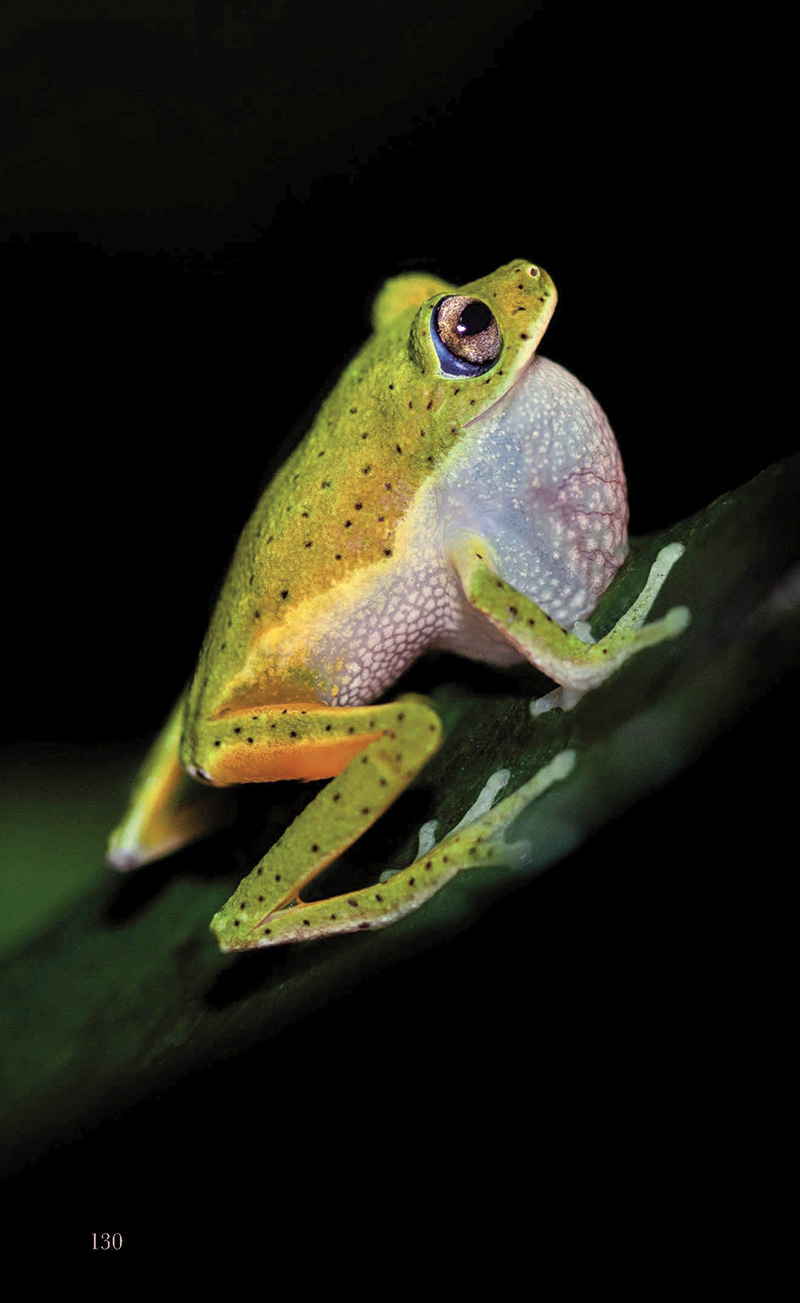
- Poppie’s shrub frog
-

- Endemic Scimitar babblers
-

- Blue Magpie
“But people knew instinctively this was a national treasure.”
The public responded with one of the greatest environmental uprisings in Sri Lankan history. Conservation icons Thilo Hoffmann and Neluwe Gunananda Thera led a national movement. After seven tense years, the new government of 1977 halted the project.
What followed was a scientific renaissance. Leading researchers—including Prof. Savithri Gunathilake and Prof. Nimal Gunathilaka, Prof. Sarath Kottagama, and others—descended into the depths of Sinharaja, documenting every possible facet of its biodiversity.

Thilak
“Those studies paved the way for Sinharaja to become Sri Lanka’s very first natural World Heritage Site,” Weeratunga noted proudly.
-

- Vimukthi
-

- Nadika
-

- Janaka
A Book Woven From 30 Years of Field Wisdom
For Weeratunga, Sinharaja is more than academic terrain—it is home. Since joining the Forest Department in 1985 as a young researcher, he has trekked, photographed, documented and celebrated its secrets.
Now, decades later, he joins Dr. Thilak Jayaratne, the late Dr. Janaka Gallangoda, and Nadika Hapuarachchi in producing, what he calls, the most comprehensive book ever written on Sinharaja.
“This will be the first major publication on Sinharaja since the early 1980s,” he said.
“It covers ecology, history, flora, fauna—and includes rare photographs taken over nearly 30 years.”
Some images were captured after weeks of waiting. Others after years—like the mysterious mass-flowering episodes where clusters of forest giants bloom in synchrony, or the delicate jewels of the understory: tiny jumping spiders, elusive amphibians, and canopy dwellers glimpsed only once in a lifetime.
The book even includes underwater photography from Sinharaja’s crystal-clear streams—worlds unseen by most visitors.
A Tribute to a Departed Friend
Halfway through the project, tragedy struck: co-author Dr. Janaka Gallangoda passed away.
“We stopped the project for a while,” Weeratunga said quietly.
“But Dr. Thilak Jayaratne reminded us that Janaka lived for this forest. So we completed the book in his memory. One of our authors now watches over Sinharaja from above.”

Jumping spide
An Invitation to the Public
A special exhibition, showcasing highlights from the book, will be held on 13–14 December, 2025, in Colombo.
“We cannot show Sinharaja in one gallery,” he laughed.
“But we can show a single drop of its beauty—enough to spark curiosity.”
A Forest That Must Endure
What makes the book special, he emphasises, is its accessibility.
“We wrote it in simple, clear language—no heavy jargon—so that everyone can understand why Sinharaja is irreplaceable,” Weeratunga said.
“If people know its value, they will protect it.”
To him, Sinharaja is more than a rainforest.
It is Sri Lanka’s living heritage.
A sanctuary of evolution.
A sacred, breathing cathedral that must endure for generations to come.
By Ifham Nizam

Leaked RTI Files Reveal Conflicting Approvals, Missing Assessments, and Silent Officials
“This Was Not Mismanagement — It Was a Structured Failure”— CEJ’s Dilena Pathragoda
An investigation, backed by newly released Right to Information (RTI) files, exposes a troubling sequence of events in which multiple state agencies appear to have enabled — or quietly tolerated — unauthorised road construction inside the Knuckles Conservation Forest, a UNESCO World Heritage site.
At the centre of the unfolding scandal is a trail of contradictory letters, unexplained delays, unsigned inspection reports, and sudden reversals by key government offices.
“What these documents show is not confusion or oversight. It is a structured failure,” said Dilena Pathragoda, Executive Director of the Centre for Environmental Justice (CEJ), who has been analysing the leaked records.
“Officials knew the legal requirements. They ignored them. They knew the ecological risks. They dismissed them. The evidence points to a deliberate weakening of safeguards meant to protect one of Sri Lanka’s most fragile ecosystems.”
A Paper Trail of Contradictions
RTI disclosures obtained by activists reveal:
Approvals issued before mandatory field inspections were carried out
Three departments claiming they “did not authorise” the same section of the road
A suspiciously backdated letter clearing a segment already under construction
Internal memos flagging “missing evaluation data” that were never addressed
“No-objection” notes do not hold any legal weight for work inside protected areas, experts say.
One senior officer’s signature appears on two letters with opposing conclusions, sent just three weeks apart — a discrepancy that has raised serious questions within the conservation community.
“This is the kind of documentation that usually surfaces only after damage is done,” Pathragoda said. “It shows a chain of administrative behaviour designed to delay scrutiny until the bulldozers moved in.”
The Silence of the Agencies
Perhaps, more alarming is the behaviour of the regulatory bodies.
Multiple departments — including those legally mandated to halt unauthorised work — acknowledged concerns in internal exchanges but issued no public warnings, took no enforcement action, and allowed machinery to continue operating.
“That silence is the real red flag,” Pathragoda noted.
“Silence is rarely accidental in cases like this. Silence protects someone.”
On the Ground: Damage Already Visible
Independent field teams report:
Fresh erosion scars on steep slopes
Sediment-laden water in downstream streams
Disturbed buffer zones
Workers claiming that they were instructed to “complete the section quickly”
Satellite images from the past two months show accelerated clearing around the contested route.
Environmental experts warn that once the hydrology of the Knuckles slopes is altered, the consequences could be irreversible.
CEJ: “Name Every Official Involved”
CEJ is preparing a formal complaint demanding a multi-agency investigation.
Pathragoda insists that responsibility must be traced along the entire chain — from field officers to approving authorities.
“Every signature, every omission, every backdated approval must be examined,” she said.
“If laws were violated, then prosecutions must follow. Not warnings. Not transfers. Prosecutions.”
A Scandal Still Unfolding
More RTI documents are expected to come out next week, including internal audits and communication logs that could deepen the crisis for several agencies.
As the paper trail widens, one thing is increasingly clear: what happened in Knuckles is not an isolated act — it is an institutional failure, executed quietly, and revealed only because citizens insisted on answers.
by Ifham Nizam

New mpox strain identified in England

Indonesia counts human cost as more climate change warnings sounded

Powerful earthquake strikes off Japan, triggers tsunami warning

Government assures University community of support to rebuild Peradeniya stronger and safer

Thousands flee Thai-Cambodia border after deadly clashes

Henry, Santner, Nathan Smith ruled out of rest of West Indies Test series

‘Dates have the highest sugar content to fight Coronavirus’

Sunday Island 27 December – Headlines

#SundayIsland 17th December – Headlines

Sunday Island – 28th March

Sunday Island Headlines – 21 March

Sunday Island – 21st February – Headlines
-
News6 days ago
Lunuwila tragedy not caused by those videoing Bell 212: SLAF
-

 News20 hours ago
Over 35,000 drug offenders nabbed in 36 days
-
 News5 days ago
Level III landslide early warning continue to be in force in the districts of Kandy, Kegalle, Kurunegala and Matale
-
 Features7 days ago
Ditwah: An unusual cyclone
-
 Business3 days ago
LOLC Finance Factoring powers business growth
-

 News3 days ago
CPC delegation meets JVP for talks on disaster response
-
 News3 days ago
A 6th Year Accolade: The Eternal Opulence of My Fair Lady
-

 News20 hours ago
Rising water level in Malwathu Oya triggers alert in Thanthirimale