
Foreign News
Ukraine drone strikes throw power supplies into disarray in Russian cities

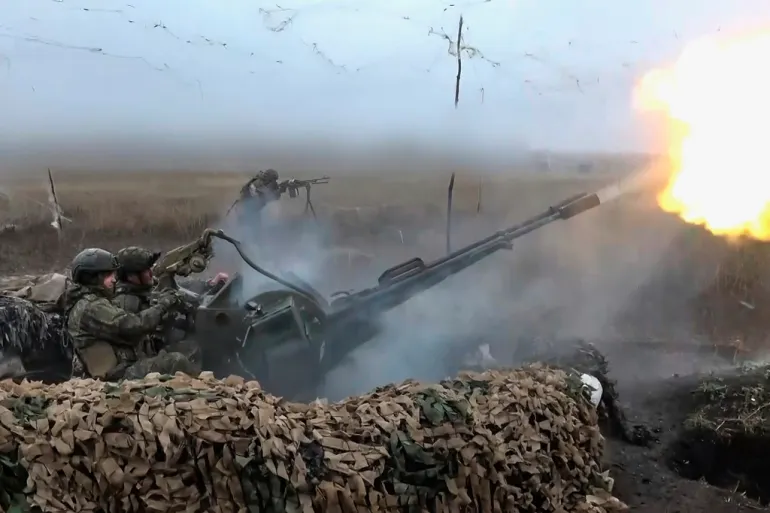
Ukraine has hit back at Russia’s attempts to disable its energy infrastructure with air strikes that succeeded in disrupting power and heating in two cities across the border.
Kyiv’s drone and missile attacks cut power and heating on Sunday in the Russian cities of Belgorod near the border and Voronezh nearly 300km (186 miles) away.
In Belgorod, local Governor Vyacheslav Gladkov said missile strikes caused “serious damage” to power and heating systems supplying the city, affecting some 20,000 households.
Alexander Gusev, regional governor of Voronezh, said several drones were electronically jammed over the city – home to more than one million people – and sparked a fire at a local utility facility that was quickly extinguished.
A Russian Defence Ministry statement made no mention of either the Voronezh or Belgorod areas, reporting 44 Ukrainian drones were destroyed or intercepted by Russian forces during the night.
Local authorities in the Rostov region also reported an hours-long blackout in the city of Taganrog, home to some 240,000 people, blaming it on an emergency shutdown of a power line. Local media reported a nearby transformer substation caught fire.
Meanwhile, Russia launched a barrage of drones and missiles in overnight attacks on Ukraine, targeting substations that supply two nuclear power plants and killing seven people, Ukrainian officials told Reuters news agency.
Russia’s Defence Ministry confirmed on Saturday that it launched “a massive strike with high-precision long-range air, ground and sea-based weapons” on weapons production plants and gas and energy facilities in response to Kyiv’s earlier strikes on Russia.
On Sunday, the northeastern region of Kharkiv was still struggling to recover from Russia’s attacks, which left about 100,000 people without power.
State-owned energy company Tsentrenergo said the attacks were the largest on its facilities since the start of the war in February 2022, and it halted operations at plants in the Kyiv and Kharkiv regions.
Moscow launched 69 drones at energy facilities across Ukraine overnight into Sunday, of which 34 were shot down, according to the Ukrainian air force.
Russia and Ukraine have traded almost daily assaults on each other’s energy infrastructure as United States-led diplomatic efforts to stop the nearly four-year war appear to be leading nowhere fast.
Ukrainian long-range drone strikes on Russian refineries have aimed to deprive Moscow of the oil export revenue it needs to pursue the war.
Meanwhile, Kyiv and its Western allies say Russia is trying to cripple the Ukrainian power grid and deny civilians access to heat, lights, and running water for a fourth consecutive winter in what amounts to a weaponisation of the extreme cold.
Russian Foreign Minister Sergey Lavrov told Russian state news agency RIA Novosti on Sunday that he’s ready to meet US Secretary of State Marco Rubio to discuss the war on Ukraine and mend bilateral ties.
Lavrov repeated that peace can’t be achieved without “taking Russian interests into account” – a phrase Moscow has used to signal it is standing firm in its maximalist demands for Ukraine.
Russian President Vladimir Putin has demanded Kyiv withdraw troops from the entirety of the four regions Moscow claims as part of Russia: Donetsk and Luhansk in eastern Ukraine – which make up the Donbas – plus Kherson and Zaporizhia in the south.
Ukrainian President Volodymyr Zelenskyy has said some Russian-occupied territories might be acknowledged as temporarily seized, but has ruled out any official recognition, saying he does not have a mandate to give away territory.
Lavrov’s move comes weeks after efforts to organise a summit between Putin and US President Donald Trump were abruptly cancelled.
[Aljazeera]


The United States-Israeli war on Iran is estimated to have cost Washington $3.7bn so far in its first 100 hours alone, or nearly $900m a day, driven largely by the huge expenditure of munitions, according to new research.
An analysis by Washington-based think tank the Center for Strategic and International Studies (CSIS) underlined the colossal cost of the war, which entered its seventh day on Friday, as the US attacks Iran with stealth bombers and advanced weapons systems.
Researchers Mark Cancian and Chris Park said only a small amount of the estimated $3.7bn cost of the war in the first 100 hours – or $891.4m each day – was already budgeted for, while most of the costs – $3.5bn – were not.
That meant the Pentagon would likely need to request more funding soon to cover the unbudgeted costs, they said, which was likely to prove a political challenge for the Trump administration and provide “a focal point for opposition to the war,” they said.
Domestic cost-of-living concerns, inflation, and now a knock-on effect of rising gas prices due to the conflict are likely to further diminish support among US citizens for the war. It is also dividing Trump’s “America First” base, which he had promised in his presidential campaigns to not enter “foreign wars”.
Noting that the US Department of Defense had released limited specifics on its operations, the researchers said their analysis drew on Congressional Budget Office (CBO) estimates of the operations and support costs for each unit, adjusting for inflation and unit size, and adding 10 percent for costs of “a higher operational tempo”.
Their analysis said the US had expended more than 2,000 munitions of various types in the first 100 hours of the war, and estimated it would cost $3.1bn to replenish the munitions inventory on a like-for-like basis, with the costs increasing by $758.1m a day.
(Aljazeera)

Britney Spears has been arrested in California under suspicion of driving under the influence.
The singer was detained by California Highway Patrol at around 21:30 local time (05:30 GMT) on Wednesday. A representative for her told the BBC: “This was an unfortunate incident that is completely inexcusable.”
She was released in the early hours of Thursday morning and is due to appear at Ventura County Superior Court on 4 May.
The reason for the singer’s arrest was confirmed to CBS, the BBC’s US partner, by the Ventura County Sheriff’s Office in southern California.
Spears’ representative told the BBC: “Britney is going to take the right steps and comply with the law and hopefully this can be the first step in long overdue change that needs to occur in Britney’s life.
“Hopefully, she can get the help and support she needs during this difficult time.
“Her boys are going to be spending time with her. Her loved ones are going to come up with an overdue needed plan to set her up for success for well being.”
The pop star appeared to have deleted her Instagram account on Thursday as news of her arrest broke.
Spears is one of the most successful pop stars ever, with hits such as Baby One More Time, Toxic, Everytime, Gimme More, Womanizer, and Stronger.
The singer said in January 2024 that she would “never return to the music industry”. Her last song was a duet with Elton John in 2022.
However, in a since-deleted social media post from earlier this year, Spears indicated that, although she would not perform in the US again, she was hoping to play live in the UK and Australia in the near future.
For 13 years until 2021, Spears was in a conservatorship – a legal guardianship that saw her finances and personal life controlled by her father.
The singer published her memoir in 2023 titled The Woman in Me, which saw her reflect on her career and detail her struggles living under the conservatorship.
Her ex-husband, Kevin Federline, released his own memoir, You Thought You Knew, at the end of 2025.
[BBC]

“It’s so good to be home.”
The statement sums up how almost 400 people felt after their flight from Dubai arrived in Dublin on Wednesday night.
The Emirates flight was the first in a number of days after the United States-Israeli attacks on Iran led to the closure of nearly all airspace in the Middle East.
One of the passengers, Norita Geary, said: “Everyone clapped when the plane landed and we all cheered.”
“It was unreal. I mean you see these things on television, you see them in movies but you just don’t think you’ll end up there yourself,” she added.
A second flight directly to Dublin from Dubai is scheduled for Thursday, with a further 400 passengers on it.

Rushali Lakhani said she is feeling “very happy” to be back [BBC]
Rushali Lakhani said she is “very happy” and “very grateful” to be back.
“It was quite a stressful time but grateful and thanking our lucky stars really.”
She said was “it was quite nerve wracking, we couldn’t really sleep much”.
“A lot of sleepless nights, a lot of bangs. There were no airplanes flying so whenever we heard some noises we knew that it wasn’t good news.”

So far 25,000 Irish citizens in the region have registered with the Department of Foreign Affairs – 2,000 of them have said they want to leave.
The Irish government has chartered a flight for Irish citizens from Muscat in Oman on Friday.
The Irish Embassy in the UAE thanked all those had registered but warned that registration is not an expression of interest in a flight.
Meanwhile, a flight chartered by the UK government which had been due to bring back some Britons stranded in the Middle East on Wednesday night did not take off as scheduled..
British citizens stuck in the Middle East have told the BBC there has been a lack of information about available routes to travel home.
The Foreign Office said two more chartered flights would depart by the end of the week.
Foreign Office officials said 138,000 British nationals in the Gulf had registered their presence, of whom 112,000 were in the UAE.
[BBC]

‘No deal with Iran except unconditional surrender,’ Trump says

Tiny possum and glider thought extinct for 6,000 years found in remote West Papua

Maldives Coast Guard Ship Huravee departs island

Cost to US for war on Iran is $3.7bn in first 100 hours, says think tank

More than 120 killed in Israel’s Lebanon attacks as Beirut, south, east hit

Hungary confirms it is holding seven Ukrainian bank workers and $80m

‘Dates have the highest sugar content to fight Coronavirus’

Sunday Island 27 December – Headlines

#SundayIsland 17th December – Headlines

Sunday Island – 28th March

Sunday Island Headlines – 21 March

Sunday Island – 21st February – Headlines
-

 Features5 days ago
Brilliant Navy officer no more
-

 Opinion5 days ago
Sri Lanka – world’s worst facilities for cricket fans
-

 News2 days ago
Legal experts decry move to demolish STC dining hall
-

 Features5 days ago
A life in colour and song: Rajika Gamage’s new bird guide captures Sri Lanka’s avian soul
-

 Business2 days ago
Cabinet nod for the removal of Cess tax imposed on imported good
-

 Features6 days ago
Overseas visits to drum up foreign assistance for Sri Lanka
-

 Features6 days ago
Sri Lanka to Host First-Ever World Congress on Snakes in Landmark Scientific Milestone
-
 Latest News2 days ago
Around 140 people missing after Iranian navy ship sinks off coast of Sri Lanka