
Latest News
Ukraine condemns ‘brutal’ Russian strikes ahead of second day of peace talks

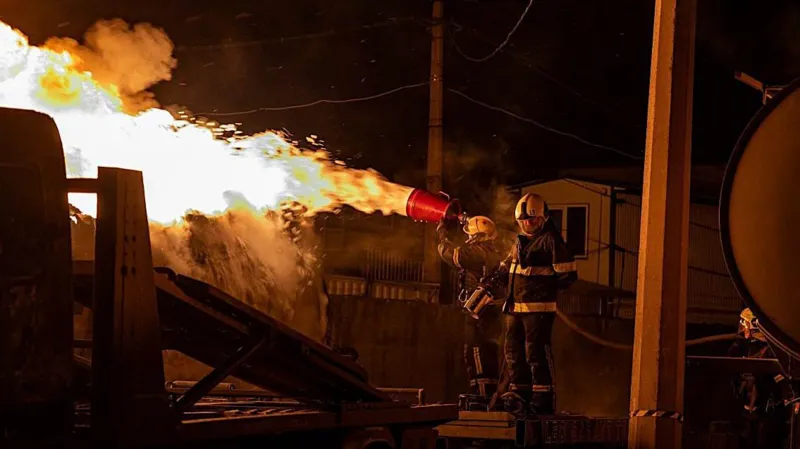
Ukraine has condemned a fresh wave of Russian strikes overnight which killed one person and injured 23 others, as talks with the US aimed at ending the war are set to resume.
Ukraine’s Foreign Minister Andrii Sybiha said the “brutal” attack had “hit not only our people, but also the negotiation table”.
Delegations from Russia, Ukraine and the US have been meeting in Abu Dhabi for the first trilateral talks since the Kremlin launched a full-scale invasion of its neighbour in 2022.
A source told the BBC that some progress had been made but the key issue of territory remains unresolved.
The mayor of Ukrainian capital Kyiv said one person had died and four had been wounded while Kharkiv’s mayor reported that 19 people had been hurt during a sustained assault on the city in the early hours of Saturday morning.
On the second day of the three-way talks in Abu Dhabi, Sybiha said the “barbaric” overnight assault proved “that Putin’s place is not at the board of peace, but at the dock of the special tribunal”.
US President Donald Trump said last week that Russian leader Vladimir Putin had accepted an invitation to join his ‘Board of Peace’ – an organisation focused on ending global conflicts. Putin has not confirmed this.
Kyiv’s mayor Vitali Klitschko said on Telegram that three of the four people who had been injured had been hospitalised.
He added that the capital’s critical infrastructure had been damaged, leaving 6,000 buildings without heating.
Temperatures in Ukraine are at sub-zero levels and in a statement following the assaults, President Volodymyr Zelensky said: “The main target of the Russians was the energy infrastructure.”
In Kharkiv, Mayor Ihor Terekhov said 19 people had been injured during the strikes in the early hours of Saturday morning. A maternity hospital and a hostel for displaced people were damaged.
Russia occupies roughly 20% of Ukraine, including parts of the eastern Donbas region. The Kremlin wants Ukraine to hand over large areas of the territory. Ukraine has ruled this out.
Following the first day of talks, Rustem Umerov, who is leading the Ukrainian delegation, said on social media: “The meeting focused on the parameters for ending Russia’s war and the further logic of the negotiation process aimed at advancing toward a dignified and lasting peace.”
[BBC]

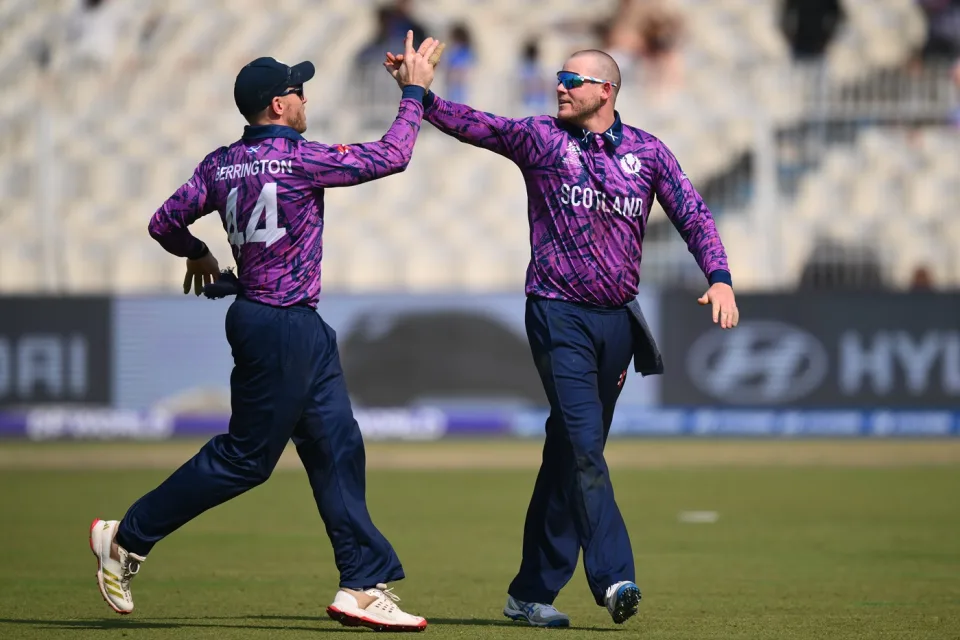
Scotland vs England. The sense of occasion isn’t lost on Scotland captain Richie Berrington. Earlier this week, Berrington dared to dream of the headlines should his side beat England in Kolkata a matter of hours before the Scotland rugby team face England in the Six Nations with the Calcutta Cup on the line.
Both Scotland teams are underdogs but, unlike their rugby counterparts who are licking their wounds after a poor showing against Italy last weekend, Berrington’s men are coming off the back of a resounding 73 run win over an Italian team making their debut at this tournament and ruffling some feathers along the way.
“That rivalry has always been there between Scotland and England, obviously a long history there between the two nations, it’s there in every sport,” Berrington said. “But yeah, next Saturday’s going to be exciting. We’ve also got the Scotland rugby team taking on England the same day, so it would make quite a nice headline if Scotland has two wins on the Saturday.”
As banana skins go, this should be one England back themselves to avoid. But it will be no easy stroll, especially with another unexpected obstacle down the road in Italy, surprise 10 wicket winners against Nepal, who had themselves pushed England to the max in their opening match of this T20 World Cup.
Both of England’s remaining group-stage opponents pose an element of the unknown, a point noted at the start of the tournament by Mark Watt, Scotland’s veteran left-arm spinner making his fifth World Cup appearance. “Quite funny thinking about the England analysis team trying to find club cricket games of some of our youngsters,” Watt said. “We’ve all had a laugh about that.” England have never played Italy and, in their only previous T20I meeting with Scotland – at the last World Cup in Barbados – George Munsey and Michael Jones staged an unbroken opening partnership worth 90 before the match was washed out.
Only Jofra Archer and Adil Rashid remain from the bowling line-up which took the field that day, the latter going at 13 runs an over from his two overs. And while those figures are reminiscent of Rashid’s three wicketless overs at 14.00 against Nepal, he turned that around against West Indies, where he was easily the pick of England’s bowlers in a losing cause on a turning Wankhede pitch.
If they trip up in their first outing in Kolkata, where Scotland have already played their first two matches of this World Cup, England’s last group encounter with Italy becomes crucial. So too does Scotland’s final clash with Nepal. On paper, England’s progression to the Super 8s should be assured, but they absolutely cannot take their Associate opponents lightly.
So far, this campaign has shown England need more consistency from their enviably deep batting line-up. Half-centuries to Jacob Bethell and Harry Brook still required the back-up of Will Jacks’ 18-ball 39 against Nepal and, even then, it took Sam Curran’s sublime death bowling to let them escape with victory. Against West Indies, it was Curran who ran out of partners and captain Brook believed his charges were too careful chasing. For Scotland, they need more than just the few plucky moments they produced in a 35-run loss to West Indies. They need everything to fire, as it did against Italy, and then some, to be in with a shot.
Three consecutive single-figure scores across this tournament and the Sri Lanka series that preceded it leave Tom Banton searching for runs, particularly amid calls for Harry Brook to leapfrog him into the No. 4 spot. An unbeaten 54 in a Player-of-the-Match performance against Sri Lanka in the second of their three games in the lead-up suggests the touch is there. Now he must rediscover it at a time when his side needs it most.
Having managed just one run against West Indies as Munsey too departed cheaply after a promising start, Michael Jones further highlighted the importance of Scotland’s opening duo with a 30-ball 37 in a 126-run stand – Munsey struck 84 off 54 – that set up victory over Italy. With the quality of the opposition now magnified, it is imperative that he supports his partner with an even bigger contribution to a union that could prove critical in getting enough runs on the board against England.
England confirmed an unchanged XI on the eve of the match, with Jamie Overton preferred to Luke Wood in the attack.
England: Phil Salt, Jos Buttler (wk), Jacob Bethell, Tom Banton, Harry Brook (capt), Sam Curran, Will Jacks, Liam Dawson, Jamie Overton, Jofra Archer, Adil Rashid
Brad Wheal, who replaced Safyaan Sharif for the win over Italy, said Scotland had not made any decisions on their side.
Scotland: (possible) George Munsey, Michael Jones, Brandon McMullen, Richie Berrington (capt), Tom Bruce, Michael Leask, Matthew Cross (wk), Mark Watt, Oliver Davidson, Brad Wheal, Brad Currie
[Cricinfo]
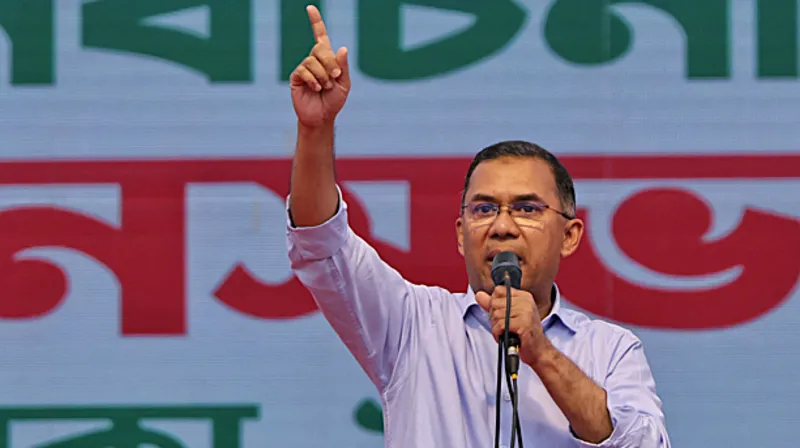
The centre-right Bangladesh Nationalist Party (BNP) has secured a landslide majority in parliament, 18 months after mass protests ousted the country’s longest-serving prime minister Sheikh Hasina.
The party took more than two-thirds of seats in the historic general election, with Jamaat, the country’s main Islamist party, coming second. Hasina’s Awami League was banned from taking part.
BNP leader Tarique Rahman is set to be the next prime minister and faces huge challenges in getting the economy back on its feet and restoring democracy after 15 years of authoritarian rule under Hasina.
Voters also backed sweeping democratic reforms in a referendum held alongside the election.
“I am grateful for the love you have shown me,” Raman told well-wishers in Dhaka as he attended Friday prayers.
His party said there would be no victory procession and he urged supporters to attend prayers instead of street celebrations in memory of his late mother, former PM Khaleda Zia, who died in December.
His formal election as the country’s new leader will happen after new MPs are sworn in, which is expected to take place on Saturday.
Rahman’s family background – his late father was also a leader of Bangladesh – is a reminder that while the BNP have promised change, Rahman, like Hasina, hails from a political dynasty.
The absence of both Sheikh Hasina and Khaleda Zia, who alternated in power over four decades, was one of a number of firsts in this election.
Another was that, with the Awami League banned, Jamaat for the first time ran as one of the main parties vying for power. The alliance it leads took 77 seats, six of which went to the student-led National Citizen Party (NCP) born out of the 2024 protests.
The Awami League has questioned the legitimacy of the election given that it was unable to participate, while Jamaat has questioned the way the vote was conducted. Both it and the BNP have accused the other of voting irregularities.
For Rahman, it is a huge change of fortunes. He spent 17 years in self-imposed exile in London before returning to the country five days before his mother’s death and is seen by many as largely untested.
As well as being on track to become the country’s next leader, is also his first time as an MP. He was elected as member for the Dhaka-17 and Bogra-6 constituencies, and is one of 212 successful BNP candidates, according to the Election Commission, which put voter turnout at 59.44%.
During his campaign, Rahman promised that Bangladesh’s democracy would be restored.
Reviving the country’s economy, bringing rising food prices under control and creating jobs for its huge young population are the big challenges facing the new government.
Repairing strained ties with giant neighbour India is also high on the list of priorities.
Within hours of his win, Rahman had received a call from India’s Prime Minister Narendra Modi who congratulated him on a “remarkable victory”.
“As two close neighbours with deep-rooted historical and cultural ties, I reaffirmed India’s continued commitment to the peace, progress, and prosperity of both our peoples,” Modi wrote on X.
Although the BNP are promising to lead change in the country, the party was criticised for corruption and accused of human rights violations when it was last in government in the early 2000s.
Rahman himself was subject to various criminal investigations while Sheikh Hasina was in power but was later cleared of all charges.
Thursday’s democratic exercise is a moment of huge potential – and risk – for the country, with one of its two main parties winning such a big victory.
Among the constitutional reforms envisaged are prime ministerial term limits, a directly elected upper parliamentary house, stronger presidential powers and increased judicial independence.
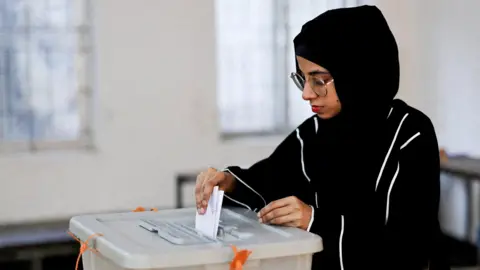
Greater representation of women in parliament is also in the charter but only a tiny number of female candidates were successful in the election, showing there is a long way to go.
Of the main parties, the BNP fielded 10 female candidates, the student-led National Citizen Party (NCP) just two and the Islamist Jamaat-e-Islami none.
Both the BNP and Jamaat have denied sidelining women, instead claiming the number of those standing was a result of Bangladesh’s “social structure”.
One voter, Shima Akhter, was among many women who took part in the student-led protests leading to Hasina’s downfall – paving the way for the election – and dismissed this as “just a patriarchal excuse”.
Rahman will be under great scrutiny to deliver for Akhter and other young people like her who are hungry for change as Bangladesh has one of the youngest demographics in the world.
While there may be mixed feelings among some about the election result and concerns over whether the BNP can deliver, Rashna Mahzabin is among those who are happy they got to “raise their voices” after years of authoritarian rule.
“That’s a huge win,” she told the BBC.
[BBC]

Prosecutors in Paris have opened investigations into five baby formula manufacturers after several issued mass recalls over concerns their product contained a toxin.
Nestle, Lactalis, Danone, Babybio and La Marque en moins will be probed over whether there was any criminal wrongdoing in distributing baby formula that may have been contaminated with cereulide.
French authorities have received complaints from eight individuals who reported their child vomited after consuming baby formula.
Last week, Nestle and Danone issued recalls in more than 60 countries, including the UK, over potentially contaminated batches.
At least 36 infants in the UK have suffered from suspected food poisoning after consuming baby formula, officials have said.
Cereulide is a toxin which is unlikely to be destroyed through cooking or when making baby milk. If consumed, it can cause nausea, vomiting and abdominal cramps.
The toxin in baby formula was linked to an ingredient called arachidonic acid (ARA) oil, which gives it some of the same growth properties as breast milk.
The UK Food Standards Agency (FSA) earlier said a third-party supplier of ARA was the source of the contamination and was no longer being used.
That supplier is now widely thought to be a Chinese firm, which Agence France-Presse identified as Wuhan-based Cabio Biotech. The BBC has approached the company for comment.
On Thursday, China’s national market regulator told domestic baby formula manufacturers to test for cereulide, without mentioning specific companies.
Prosecutors in Paris will seek to establish whether the baby formula producers are liable for distributing a tainted product.
It will be co-ordinated with local probes into whether there was a causal link between the contaminated formula and the deaths of three babies in France. Nestle and France’s health ministry have stressed there was as-yet no evidence to indicate such a link.
So far 28 batches of baby formula produced by Nestle, which makes SMA, and Danone, which makes Aptamil and Cow & Gate, have been recalled.
Danone and Nestle have given assurances to the FSA that recalled batches were produced some time ago and were unlikely still to be on UK shop shelves.
However, they may be in cupboards at home, which is why parents and caregivers are being asked to check their supplies.
Nestle said on Friday that it intended to run five factories around the clock to increase baby formula production after the global recall. Those factories are in France, Spain, Germany, Switzerland and the Netherlands.
“We are focused on increasing the availability of infant formula to meet demand, providing parents and families with high quality products they can trust,” the Swiss firm said.
[BBC]

Kolkata the stage as England, Scotland resume auld rivalry

Showers will occur at times in the Central, Uva, Eastern, Northern and North-central provinces and in Hambantota district

Sajith points to irregularities in coal procurement deals

Lankan Embassy in Washington welcomes ‘Walk for Peace’ Buddhist monks

Committee on High Posts clears four diplomatic appointments

Keheliya’s bribery case fixed for trial

‘Dates have the highest sugar content to fight Coronavirus’

Sunday Island 27 December – Headlines

#SundayIsland 17th December – Headlines

Sunday Island – 28th March

Sunday Island Headlines – 21 March

Sunday Island – 21st February – Headlines
-
 Features6 days ago
My experience in turning around the Merchant Bank of Sri Lanka (MBSL) – Episode 3
-

 Business6 days ago
Remotely conducted Business Forum in Paris attracts reputed French companies
-

 Business6 days ago
Four runs, a thousand dreams: How a small-town school bowled its way into the record books
-

 Business6 days ago
ComBank and Hayleys Mobility redefine sustainable mobility with flexible leasing solutions
-

 Business3 days ago
Autodoc 360 relocates to reinforce commitment to premium auto care
-

 Midweek Review3 days ago
A question of national pride
-
 Opinion2 days ago
Will computers ever be intelligent?
-
 Midweek Review3 days ago
Theatre and Anthropocentrism in the age of Climate Emergency