
Business
Uber contributed LKR 81 billion to Sri Lanka’s economy in 2021: Report

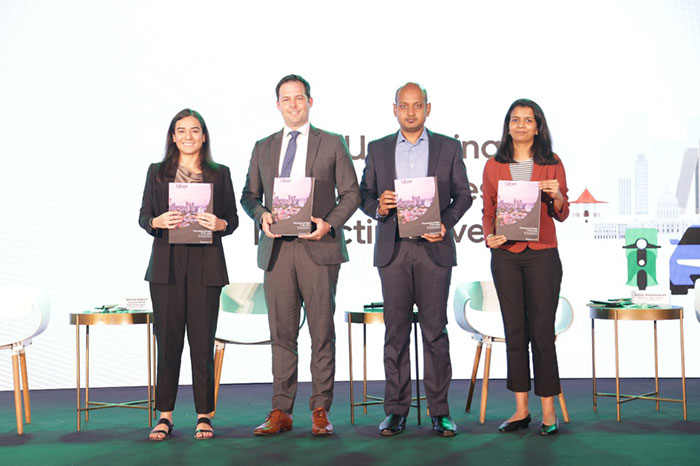
Uber’s 2021 Sri Lanka Economic Impact Report, compiled by Public First, a UK based policy research firm, was launched at an event in the national capital. The report highlights how Uber and Uber Eats have helped transform the on-demand economy for consumers, drivers and delivery-partners, and the wider community by generating LKR 81 billion for the Sri Lankan economy in 2021.
Uber’s Senior Director for Public Policy & Government Relations for the Asia Pacific region, Mike Orgill; Uber’s Director of Regional Operations for India and South Asia region, Shiva Shailendran, along with Uber Sri Lanka’s leadership team members, including Ms. Bhavna Dadlani Jayawardana, Country Manager, Uber Eats; and, Ms. Thanushika Sivanathan, Country Manager, Uber Rides graced the occasion.
Commenting on the report, Mike Orgill, Senior Director, Public Policy & Government Relations, APAC at Uber, said: “Uber has been an important engine of economic growth and opportunity in Sri Lanka since 2015, but we never knew the extent of our contribution. This research shows for the first time the impact on drivers and delivery partners, consumers and the economy as a whole. It reaffirms the importance of flexible work opportunities and spotlights how expanded mobility options and choice as part of the on-demand economy have created critical value for the Sri Lankan economy. It makes our resolve stronger than ever before to continue working for the community and deploying our technology and global expertise to contribute to Sri Lanka’s growth.”
The report takes a deeper look into the factors behind this economic contribution and the enhancement of safety and sustainability of the industry. It highlights how both Uber and Uber Eats have continually evolved to meet changing needs, used technology to save time, helped expand mobility options and choice, supported small businesses, and provided flexible earning opportunities for thousands of drivers and delivery-partners in Sri Lanka.
Key findings of the report include:
Uber’s contribution to the Sri Lankan economy
Uber and Uber Eats created an estimated LKR 81 billion in economic value for the Sri Lankan economy
Together, Uber (27 bn) and Uber Eats (25 bn) produced LKR 52 billion in consumer surplus in 2021, which is equivalent to 0.3% of the country’s GDP.
On-demand services boosted small business recovery
Uber Eats encouraged Sri Lankans to support local restaurants and merchants which they would otherwise not have had access to, leading to LKR 2.1 billion in additional revenue and a gross impact of LKR 51 billion for the Sri Lankan economy as a whole.
88% of Uber Eats users agree that food delivery apps made it easier to discover new restaurants.
74% of users have ordered from restaurants they had never tried before.
Drivers and delivery people value flexibility
In 2021, we estimate that drivers made an additional LKR 775 million a year in earnings through Uber, or an average of 27% more than their next best alternative.
Consumer behavior helped to drive innovation
Consumers are prioritizing convenience and reliability, with Uber estimated to save riders in Sri Lanka over 3.7 million hours a year leaving more time for family and friends.
On average, Uber riders saved 9 minutes per trip compared to the next best alternative, leaving more time for family and friends.
Uber and Uber Eats produced LKR 52 billion in consumer surplus* for Sri Lankans in 2021.
Uber’s trackable point-to-point transport solutions are helping to fill the inevitable gaps in public transport, with 1 in 7 trips taken with the Uber app connecting with public transport.
Safety is a top reason for choosing the platform with 96% of female riders saying that safety is an important factor in their choice to use the Uber app.
Having access to sustainable ride-sharing platforms encouraged users to not own a vehicle.
According to Sri Lankan riders, ridesharing is the most significant transport innovation they have experienced in the last decade.
* One of the most important measures of economic welfare – the amount you would pay someone to voluntarily give up a good or service. If a good has a zero-consumer surplus, that implies we can take or leave it – whereas goods with a high consumer surplus are playing an important role in our lives.











By Ifham Nizam
Sri Lanka’s oceans generate millions of dollars annually through fisheries exports and whale watching tourism, positioning the island as a strategic player in the North Indian Ocean’s blue economy. Yet beneath this revenue stream lies a serious structural weakness: the absence of long-term, tangible scientific data to guide sustainable management.
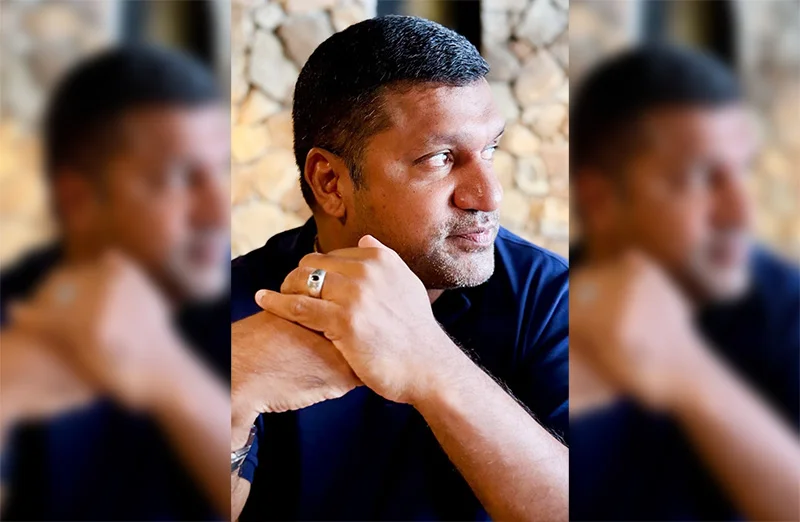
“The single biggest bottleneck in Sri Lanka’s marine sector is the lack of consistent, long-term scientific research,” says Dr. Ranil Nanayakkara, Co-Founder and Principal Scientist of Biodiversity Education and Research (BEAR).
Speaking to The Island Financial Review, he said: “We are commercially exploiting marine resources, but we are not investing proportionately in understanding them.”
A decade ago, whale watching operators off Mirissa confidently guaranteed sightings of the majestic Blue whale, even offering refunds if tourists failed to see one. Today, such guarantees are no longer possible. Sightings in those waters have become increasingly rare, raising concerns not only among conservationists but also among tourism stakeholders who depend on the reliability of these experiences.
In place of Blue whales, researchers are now recording more frequent appearances of Bryde’s whale, a species that feeds on schooling fish rather than krill. The shift may signal deeper ecological changes linked to warming seas, overfishing, altered currents or prey depletion. The economic implications are clear: when flagship species decline or alter migratory patterns, tourism revenue becomes volatile.
“The ocean is not infinite,” Dr. Nanayakkara warns. “We behave as though fish stocks and marine mammals will always replenish themselves. But overfishing disrupts the food chain. When prey availability changes, larger migratory species respond.”
Sri Lanka’s fisheries sector plays a critical role in food security and export earnings. Yet overfishing, particularly of schooling fish, does not only threaten catch volumes but also impacts marine mammals that rely on the same prey base. Without accurate stock assessments and ecosystem-level monitoring, policymakers are navigating blind.
The case of Kalpitiya illustrates the shifting baseline. Until around 2021–2022, researchers documented one of the largest seasonal aggregations of Sperm whale in the eastern half of the Gulf of Mannar. Between mid-March and early April, pods numbering 300 to 400 individuals were observed, including mature males arriving from colder waters to breed.
Today, such large gatherings are rarely seen.
Public discourse often attributes marine disruptions to the 2021 maritime disaster involving the MV X-Press Pearl. While acknowledging localized environmental damage, Dr. Nanayakkara cautions against drawing sweeping conclusions without data.
“The ocean is vast. A spill may cause short-term, localised impacts. But long-term population shifts require long-term monitoring to understand causation.”
Ironically, Sri Lanka does possess institutional capacity. The National Aquatic Resources Research and Development Agency (NARA) operates an ocean-going research vessel and maintains scientific infrastructure. However, sustained offshore surveys and multidisciplinary research missions have been limited.
“We have assets. What we lack is sustained deployment and coordinated national strategy,” Dr. Nanayakkara notes. “Research is often dependent on personal funds, goodwill donors or small grants. That is not how you manage a national economic resource.”
The economic risks of neglect are mounting. International seafood markets increasingly demand sustainability assurances backed by verifiable data.
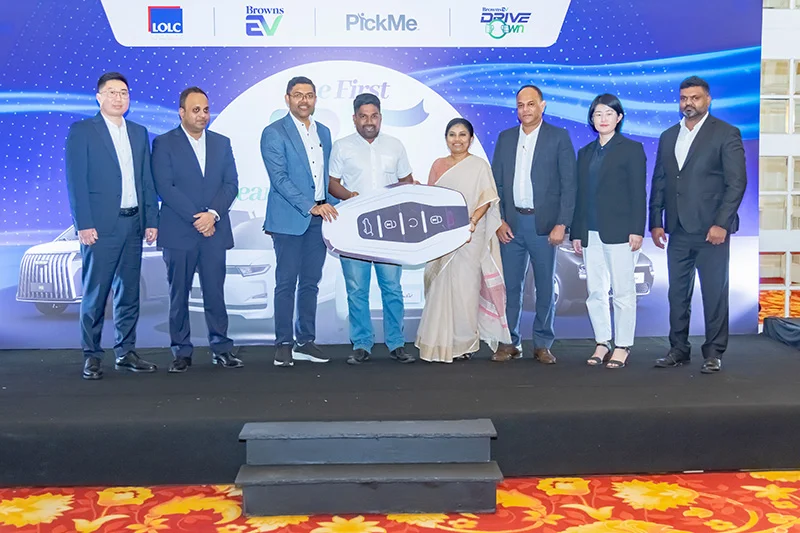
Browns EV, in partnership with PickMe and LOLC Holdings PLC, marked a significant milestone in Sri Lanka’s mobility landscape with the ceremonial handover of 125 electric vehicles under its ‘Drive to Own’ initiative. Held on 20 March 2026 at the Galle Face Hotel, the event highlighted the growing momentum toward accessible, sustainable, and an innovative solution to own a vehicle in Sri Lanka.
This handover reflects the forward-thinking approach and strategic collaboration between Browns EV, LOLC Holdings PLC, and PickMe, particularly in light of the evolving global geopolitical landscape and the potential fuel challenges facing Sri Lanka. By supporting the transition away from fuel dependency, Browns EV is helping to safeguard livelihoods while ensuring reliable and uninterrupted mobility.
The vehicles delivered represent Browns EV’s expanding portfolio, including the Wuling Binguo, Wuling Cloud, and the BAW E series comprising the E6, E7, and the recently introduced E7 Pro models. Each model is designed to meet the demands of local driving conditions while supporting drivers in enhancing their earning potential and overall quality of life. Established to expand access to electric mobility across the country, the initiative is designed with the everyday driver in mind, offering a clear pathway to vehicle ownership through a combination of affordability, flexibility, and long-term financial empowerment.
The event brought together senior representatives from Browns EV, LOLC Holdings PLC, and PickMe, along with media and driver partners who are playing a key role in advancing electric mobility in Sri Lanka. A keynote address by a leading motivational speaker further highlighted the importance of resilience, ambition, and forward-thinking in navigating today’s economic environment.
Under the ‘Drive to Own’ model, customers can begin their ownership journey with an initial deposit of Rs. 400,000, complemented by a competitive daily rental of Rs. 3,614. The model also allows for higher upfront contributions, enabling customers to reduce their repayment period or daily rental commitments. These features are tailored to support PickMe drivers and other independent entrepreneurs who rely on consistent mobility to sustain and grow their income.

Union Assurance, Sri Lanka’s longest-standing private Life Insurer, secured three accolades at The Diamond Chapter of the TAGS Awards 2025 ceremony, held at the Shangri-La, Colombo. Driven by its purpose to protect what matters most, the Company received a Bronze Award in the Insurance Companies (Gross Premium Above LKR 10 Bn) sector category, a Certificate of Recognition for Integrated Reporting, and a Certificate of Recognition for Corporate Governance Disclosure; all in recognition of its Annual Report for 2024, themed “Folds of Value”.
Organised by the Institute of Chartered Accountants of Sri Lanka (CA Sri Lanka), the TAGS Awards mark six decades of continuous commitment to exemplifying Transparency, Accountability, Governance, and Sustainability (TAGS) in corporate reporting among Sri Lankan organisations, and are widely regarded as the nation’s foremost platform for recognising continued efforts to uphold the highest standards in both financial and non-financial reporting. Over the years, the awards have evolved to reflect a holistic framework anchored in these four pillars, mirroring the growing expectation for organisations to demonstrate rigour and integrity across all facets of how they report.
The Bronze Award in the Insurance Companies (Gross Premium Above LKR 10 Bn) sector attests to Union Assurance’s high-calibre annual reporting within Sri Lanka’s large-cap insurance landscape. The Certificates of Recognition for Integrated Reporting and Corporate Governance Disclosure honour, respectively, the cohesive narrative connecting financial performance with strategy and long-term value creation, and the clarity with which the Company has articulated its governance frameworks; reflecting the high standards it upholds in transparency, accountability, and board-level oversight.
“These distinctions at the TAGS Awards 2025 affirm that our Annual Report, ‘Folds of Value’, delivered on its core purpose providing a complete, substantive and well governed account of Union Assurance’s performance and strategic direction,” said Himani Weerasekera, Chief Financial Officer at Union Assurance. “Each recognition speaks to various dimensions of reporting standards: sector standing, integrated thinking, and governance disclosures. Collectively, they represent our commitment to excellence in communication, that our story is as important as the story itself. We remain steadfast in raising the bar on all fronts of annual disclosures, and this milestone inspires us to go further.”
Union Assurance is a subsidiary of John Keells Holdings PLC (JKH), the largest conglomerate listed on the Colombo Stock Exchange, operating with over 80 companies in 7 diverse industry sectors. The Company has completed nearly four decades of success with a Market Capitalisation of Rs. 45.6 Bn and a Life Fund of Rs. 92.8 Bn as of end December 2025. Set to protect lives and enrich the well-being of all Sri Lankans, Union Assurance offers Life Insurance solutions that cover the health, investment, protection, retirement and education needs of Sri Lankans. With an island-wide branch network and a workforce that is over 3000-strong, Union Assurance continues to invest in people, products and processes with a customer-centric focus to be responsive to emerging changes in the Life Insurance industry.

Referendum defeat leaves Italy’s Meloni looking more vulnerable

Pakistan T20 cricket league to be held in empty stadiums amid oil crisis

Showers expected in the Western, Southern, Uva and Sabaragamuwa provinces and in Kandy and Nuwara-Eliya districts after 2.00 pm.

Tehran says Trump’s peace talk claims are ‘fake news’

SJB: China, India taking advantage of Lanka’s unregulated oil market

SL to redevelop Trinco tank farm expeditiously

‘Dates have the highest sugar content to fight Coronavirus’

Sunday Island 27 December – Headlines

#SundayIsland 17th December – Headlines

Sunday Island – 28th March

Sunday Island Headlines – 21 March

Sunday Island – 21st February – Headlines
-

 News6 days ago
CIABOC questions Ex-President GR on house for CJ’s maid
-
 News5 days ago
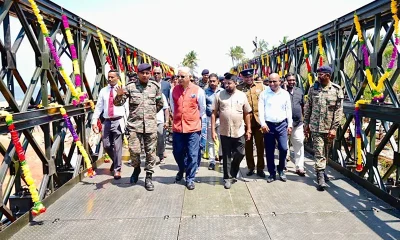
Bailey Bridge inaugurated at Chilaw
-

 News5 days ago
Pay hike demand: CEB workers climb down from 40 % to 15–20%
-

 News4 days ago
CIABOC tells court Kapila gave Rs 60 mn to MR and Rs. 20 mn to Priyankara
-

 Features1 day ago
Trincomalee oil tank farm: An engineering marvel
-

 Editorial6 days ago
Couple QR-based quota with odd-even rationing
-

 Features4 days ago
Science and diplomacy in a changing world
-

 News3 days ago
Colombo, Oslo steps up efforts to strengthen bilateral cooperation in key environmental priority areas