
News
TUs: Launching ECT operations on 01 July an impossible target

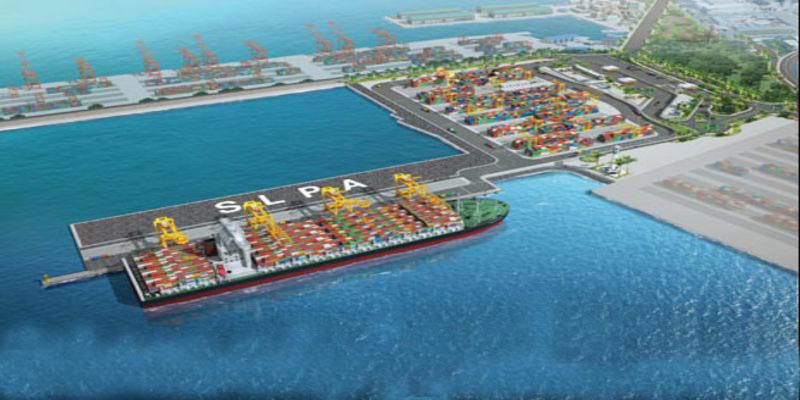
The government’s much-publicised plan to launch operations at the East Container Terminal (ECT) of the Colombo Port on 01 July — the first key development initiative promised by President Anura Kumara Dissanayake — will not be achievable, according to port unionists
The ongoing mismanagement and political interference by NPP appointees at the Sri Lanka Ports Authority (SLPA) have caused major setbacks, rendering the presidential commitment unachievable within the promised timeline, trade unions affiliated to the Opposition have alleged.
The SLPA’s Managing Director earlier informed the SLPA Chairman, Deputy Chairman, and key stakeholders in the maritime sector that ECT operations would commence by June 30. This led President Dissanayake to announce July 1 as the date of the launch. However, union leaders say it was a premature move.
“There is no way this terminal can be launched by July 1. Civil construction is still incomplete. No workers have been recruited. No officers or operational managers have been appointed. Even the key tender to procure straddle carriers — essential equipment for container handling — has been cancelled by the new management, and no new tender has been called,” said Sharmal Sumanaratne, General Secretary of the Ports, Commerce, Industries, and Progressive Workers’ Union.
Sumanaratne further warned that international shipping lines had already been informed of the launch date, but many were now closely monitoring the situation and were aware that the ECT was far from ready. “This uncertainty is harming the credibility of Sri Lanka’s shipping industry on the global stage,” he said.
Chairperson of the Jathika Sevaka Sangmaya’s Colombo Port Branch Thushari Priyanka said: “For a terminal of this scale, credibility is everything. Around USD 1 billion have already been spent, but without proper equipment and a functioning management structure; this project is becoming a financial and reputational liability.”
Priyanka added that the cancellation of the tender for 30 straddle carriers alone would delay the commencement of operations by at least 18 months. “Even if we call for tenders today, it takes over a year for the machines to be delivered, tested, and operational on the ground.”
President of the Sri Lanka Nidahas Sevaka Sangamaya Indika Samarawickrama said the terminal’s masterplan had also been arbitrarily changed by politically appointed managers loyal to the NPP. “Altering the original masterplan without a clear vision or technical expertise will result in more financial losses and future operational crises,” he warned.
President of the Eksath Sevaka Sangamaya Dickson Gomes raised concerns about human resources management within SLPA. “Arbitrary transfers and politically motivated appointments — especially by the current Managing Director, a known JVP/NPP affiliate — have led to chaos within the HR structure. Human capital is the most vital element of port efficiency, and it’s being dismantled.”
He said that under the current conditions and leadership, the ECT was unlikely to be fully operational as a semi-automated terminal for at least another 18 months — and possibly longer.
Attempts to contact SLPA Chairman, retired Admiral S. S. Ranasinghe, were not successful.
by Chaminda Silva






The ongoing military conflict in the Middle East has adversely impacted on the Sri Lankan tea industry as the exporters are unable to supply tea to the region. The exporters estimate the revenue loss at about $ 10-15 million per week. The exporters have orders in hand for supply of tea and it is the logistical issues and war risk preventing them fulfilling such orders, the Tea Exporters Association (TEA) said in a statement.
“In order to mitigate the impact on the industry, the tea industry has jointly requested the government to support it in addressing the cash flow issue and consider absorbing a part of the additional freight and insurance charges. It has also requested government intervention to obtain the balance payment of about $ 50 million due on tea shipments already made to Iran under the barter deal,” TEA said on Friday.
The statement said approximately 52% of Sri Lanka’s tea exports reach the affected region mainly coming from the low grown area of the country dominated by tea smallholder farmers. According to 2025 tea export statistics, about 125 million kilograms of Ceylon tea were exported to the Middle East, with an estimated value of USD 750 million. The major importing countries of Ceylon Tea in the region include Iraq, Iran, Libya, Turkey, Saudi Arabia, Syria, and the United Arab Emirates. Though Libya and Turkey can be reached via Africa, the exorbitant freight charges have prevented the buyers in those countries from importing tea at the moment.
The supply routes to Middle East countries go via Strait of Hormuz and Red sea Suez Canal. Although there is no blockade on Suez Canal, due to the war risk both channels are currently not used by the major shipping lines. The tea exports to the region have almost come to a standstill due to the following reasons:
=All major shipping lines suspended their services to the region immediately after the outbreak of the conflict.
=Several seaports in the region were temporarily closed during the initial stages.
= Although a few shipping lines resumed limited operations from March 4, freight charges have
increased significantly by approximately USD 1,800 for a 20’ container and USD 3,000 for a 40’ container.
= Existing insurance coverage obtained by exporters is no longer valid.
=There is a lack of regular and scheduled vessels operating from Colombo to Middle Eastern destinations.
The tea exporters are experiencing serious cash flow constraints, as payments for shipments already
dispatched have been delayed due to the unsettled situation in the region. This has restricted exporters’
buying capacity and that was evident at this week’s tea auction, where overall prices declined by about Rs. 50/ per kg while low grown tea prices declined by about Rs. 75/ per kg.
If the situation continues for few more weeks it will have a serious impact on the tea auction as buyers may curtail the purchase of tea if the outward movements are restricted. This could directly impact on the income of the tea smallholder farmers.
In January 2026, the country earned $ 121.8 million from tea exports compared to $ 112.7 million in January 2025 (a 5% increase). The figures for February 2026 are not yet available but should be either similar to last year or higher. The disruption to tea exports in March will certainly affect the volume and value of the exports though the exact amounts cannot be estimated at this point.
According to the available data Sri Lanka has settled about 95% of its debt to Iran by supplying tea to Iran under the Tea for Oil mechanism. Even if the military conflict comes to an end, Sri Lanka will find it difficult to continue to supply tea to Iran unless a new mechanism is introduced. Under the prevailing US sanctions on Iran, the exporters may not be able to supply tea to Iran outside the barter system. Iran purchases about 11 million kg of tea from Sri Lanka annually under the barter deal.
The situation was discussed with the Minister of Plantation & Community Infrastructure at a meeting held on March 4, 2026.

Prime Minister Dr Harini Amarasuriya said a salary commission will be established this year to address pay disparities within the principal service and several other segments of the public sector.
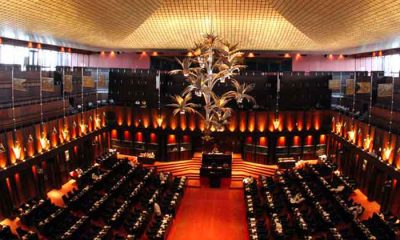
Speaking in Parliament on Friday (6), the Prime Minister said the proposed commission was expected to provide a sustainable solution to existing salary imbalances across public sector institutions.
She said extensive discussions had already been held with principals and principals’ associations regarding salary disparities affecting the principal service, and that the government was continuing consultations in search of a long-term solution.
Amarasuriya said the government policy was to appoint a salary commission this year to develop sustainable recommendations to address the issue.
She noted that recent salary increases had created disparities not only in the education sector but also in other public service sectors, adding that a comprehensive solution was needed.
“We are trying to resolve this through a salary commission. We expect to submit proposals specifically relating to the concerns of principals to the commission,” she said.
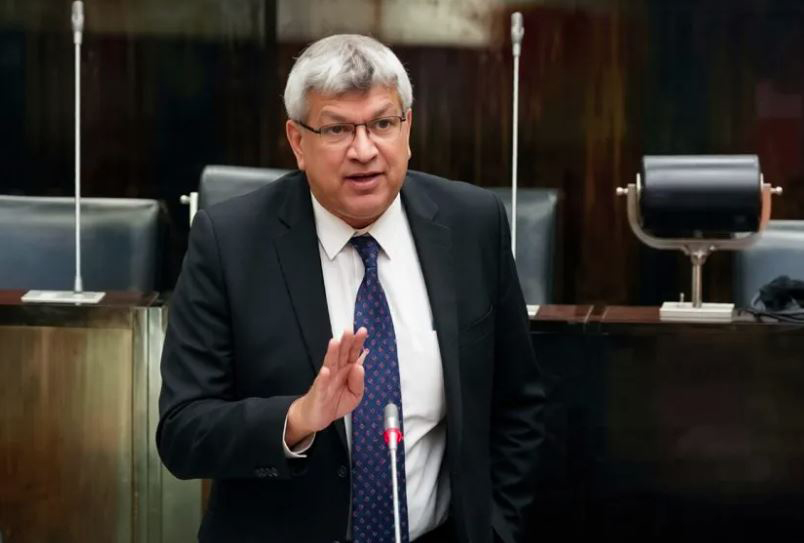
The post of Justice of the Peace will no longer be granted on political grounds, Minister of Justice and National Integration Harshana Nanayakkara said in Parliament on Friday (6).The Minister told the House that a mechanism had been introduced to receive complaints regarding Justices of the Peace (JP) and that an islandwide database of JPs was being developed to enable verification when certifying documents.
He said future appointments to the post would be limited to persons below the age of 75.
Nanayakkara said a system had also been introduced requiring bio-data updates every two years, along with certification through the Grama Niladhari Division – Sri Lanka and the Divisional Secretariat – Sri Lanka.
He added that contact channels, including a WhatsApp number, email address and telephone line, had been established to facilitate the reporting of any JP who commits an offence.
The Minister said authorities had not yet considered cancelling the appointments of existing Justices of the Peace en masse, noting that some had served in the role for five to ten years and had gained experience.
He said a committee had recommended the age ceiling, citing the need for appointees to possess adequate physical and mental capacity to comprehend and certify legal documents.
“I have not received any fair or justifiable reason to reconsider the age limit of 75 years,” he said.

Lanka tea industry may lose $ 10-15 mn per week from ME war

Salary Commission this year to address public sector pay gaps

JP posts to be free of political influence: Minister

Emergency extension approved by 100-vote majority

Lanka reserves cross USD 7 Bn for first time since 2020

MullenLowe Sri Lanka’s Consistency Earns Effie Agency of the Year

‘Dates have the highest sugar content to fight Coronavirus’

Sunday Island 27 December – Headlines

#SundayIsland 17th December – Headlines

Sunday Island – 28th March

Sunday Island Headlines – 21 March

Sunday Island – 21st February – Headlines
-
 Features6 days ago
Brilliant Navy officer no more
-

 News2 days ago
University of Wolverhampton confirms Ranil was officially invited
-

 Opinion6 days ago
Sri Lanka – world’s worst facilities for cricket fans
-

 News3 days ago
Legal experts decry move to demolish STC dining hall
-

 Features6 days ago
A life in colour and song: Rajika Gamage’s new bird guide captures Sri Lanka’s avian soul
-

 Business3 days ago
Cabinet nod for the removal of Cess tax imposed on imported good
-

 News2 days ago
Female lawyer given 12 years RI for preparing forged deeds for Borella land
-

 Business4 days ago
War in Middle East sends shockwaves through Sri Lanka’s export sector