
Latest News
Trump says he’s been assured killings in Iran ‘stopped’


United States President Donald Trump has said he has received assurances that the killings of anti-government protesters in Iran have stopped, as Iranian Foreign Minister Abbas Araghchi stated there is “no plan” for executions by Tehran.
In comments that appeared to signal a more measured approach to the crisis after threatening to attack Iran, Trump told reporters on Wednesday that he had been told that the killings of protesters in Iran had stopped and that planned executions were halted.
Speaking hours after the US began to withdraw some personnel from an airbase in Qatar amid growing fears of a renewed US-Iran conflict, Trump said he had spoken to “very important sources on the other side”, and he would watch how the crisis developed, although he did not rule out potential US military action.
“We are going to watch what the process is”, he said, before noting the US administration received a “very good statement” from Iran.
In an interview with Fox News later on Wednesday, Araghchi said “there is no plan for hanging at all” when asked whether there were plans to execute anti-government protesters.
“Hanging is out of the question,” he said.
Reporting from Washington, DC, Al Jazeera’s Mike Hanna said that the president’s comments on Wednesday signalled a softening of his tone towards Iran.
“It does appear that he’s still mulling over various options; he’s been briefed by his national security council, but these statements we’ve just heard do indicate a potential cooling down of the situation and President Trump backing away from the precipice of imminent action, which he has been threatening,” he said.
Sina Toossi, a senior non-resident fellow at the Center for International Policy, told Al Jazeera that Trump’s claim that he had received information indicating killings in Iran had stopped appears, on the surface, to be a “face-saving way” to avoid military intervention, though it does not entirely rule out such a conflict.
“It’s hard to take what Trump says seriously, but we do know that he’s had an aversion to getting sucked into big, open-ended military conflicts, and with Iran, that risk was on the table,” Toossi told Al Jazeera.
“This remark today suggests he’s looking for a face-saving way out, but I wouldn’t take it as 100 percent ruling that out,” he said, adding that Trump has a track record of negotiating with Iran while simultaneously threatening military action.
Trump has threatened Iran with military strikes in the past as a means of pressuring Tehran into greater alignment with US demands, and has said during the last week that a harsh response by Iranian authorities to the country’s protesters could result in US attacks.
Barbara Slavin, a distinguished fellow at the Stimson Center in Washington, DC, told Al Jazeera that Trump is “probably torn” when it comes to deciding what action to take against Iran.
She said that while the US president would like “another quick victory, I don’t think he wants to be involved in a protracted conflict in the Middle East that goes against all his instincts”.
She added that she expects Trump to carry out limited strikes that enable him to claim he fulfilled his pledge to “help” the Iranian people, without triggering “a wider escalation”.
Earlier on Wednesday, Britain and the US withdrew some personnel from the airbase in Qatar – Al Udeid Air Base, which hosts US troops and other international forces – after a senior Iranian official said Tehran had warned neighbours it would hit US bases if Washington strikes. A number of countries have also issued advisories for protecting their citizens in the region amid fears of a wider regional escalation.
Iran has said it is prepared to retaliate in the event of any US intervention.
The commander of the Islamic Revolutionary Guard Corps (IRGC), Mohammad Pakpour, has said that Iran is ready to respond “decisively” to its foes, Israel and the United States, which he accused of being behind the protests sweeping the country.
IRGC is at “the height of readiness to respond decisively to the miscalculation of the enemy”, said Pakpour in a written statement quoted by state television.
Pakpour went on to accuse Trump and Israeli Prime Minister Benjamin Netanyahu of being the “murderers of the youth of Iran”.
Iran’s Foreign Minister Abbas Araghchi also told US broadcaster Fox News that his government is in full control after a deadly crackdown on protests that had spread across the country since January 8.
“After three days of terrorist operation, now there is a calm. We are in full control,” Araghchi told Fox News’ Special Report programme on Wednesday.
Reporting from Tehran, Al Jazeera’s Tohid Asadi said that people in the city and across the country are anxious because they have psychologically felt the shadow of war since the 12-day conflict with the US and Israel in June.
“Many people feel it, and it is creating anxiety about a possible new round of escalation, which would tangibly impact people’s everyday lives,” he said.
The protest started in December when shopkeepers took to the streets to protest a fall in the value of the local currency and the soaring cost of living, and quickly escalated into widespread anti-government demonstrations.
Iranian state television has acknowledged reports of a high death toll during the nationwide protests, quoting the head of the Martyrs Foundation as saying “armed and terrorist groups” are to blame.
More than 100 security personnel have been killed in two weeks of unrest, according to Iranian state media, while opposition activists say the death toll is higher and includes thousands of protesters.
The US-based Human Rights Activists News Agency has said that it has confirmed the deaths of more than 2,400 protesters, and more than 150 security personnel and government supporters.
Al Jazeera has not been able to independently verify the figures.
Iran is currently in the midst of a near-total telecommunications blackout, with monitor NetBlocks reporting on Wednesday that the shutdown had surpassed 144 hours.
Rights group Amnesty International said on Wednesday it reviewed evidence showing “mass unlawful killings committed on an unprecedented scale” in Iran over the past week, including against “mostly peaceful protesters and bystanders”.
“The evidence gathered by Amnesty International points to a coordinated nationwide escalation in the security forces’ unlawful use of lethal force against mostly peaceful protesters and bystanders since the evening of 8 January,” Amnesty said in a press release.
Verified audiovisual evidence depicted severe and fatal injuries, including gunshot wounds to the head and eyes, and security forces chasing and directly firing at fleeing protesters, the rights group said.
[Aljazeera]

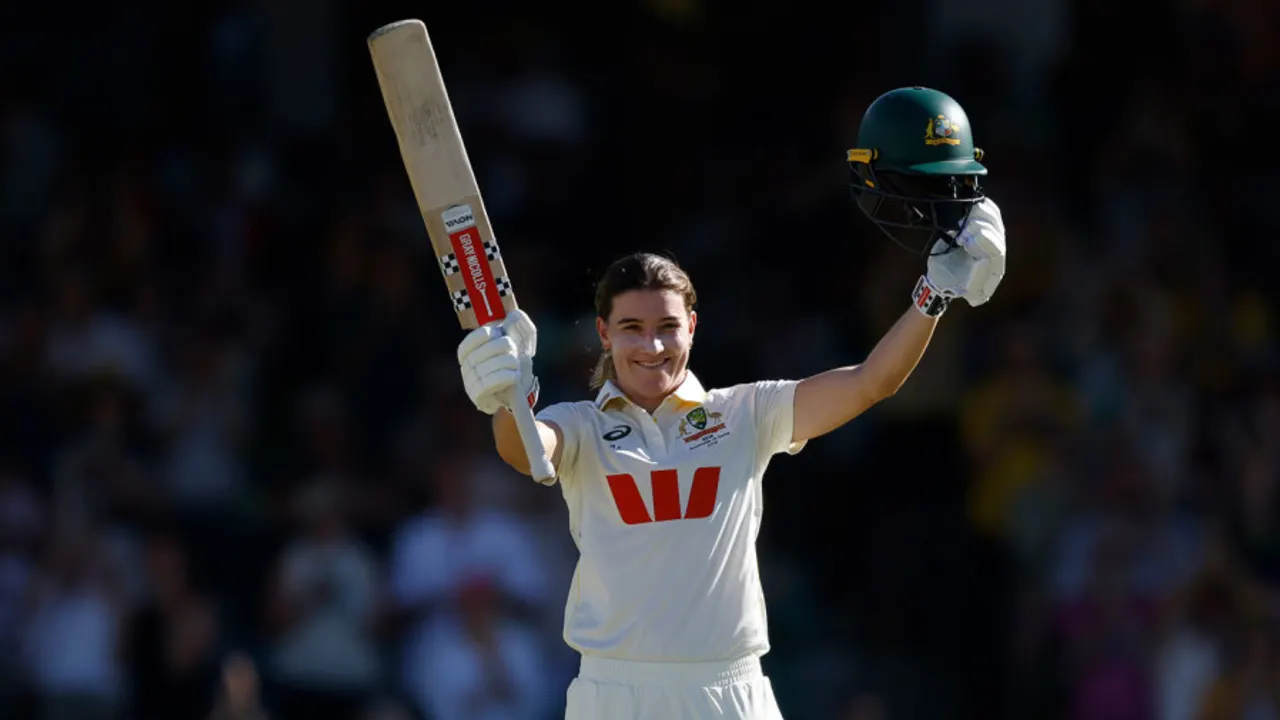
Annabel Sutherland continued to produce heroics on the WACA ground after an imperious century was followed by superb bowling under lights late on day two as Australia moved to the brink of a crushing victory over India in the pink-ball Test.
On what has been a challenging surface, Sutherland made batting look like a breeze with her commanding 129 off 171 balls in Australia’s first innings grinding down India’s attack amid sweltering heat hitting 40 degrees Celsius.
It was her third straight Test ton and continued her affection for the WACA ground having memorably made 210 against South Africa two years ago. Sutherland’s average in Test cricket is now an astonishing 89.37 after 10 innings and her four tons are the most by an Australian.
Australia’s first innings was dominated by Sutherland and Ellyse Perry, with the pair combining for a 128-run fourth-wicket partnership. Perry, playing as a specialist batter after recovering from a quad strain, cracked 76 off 116 balls and in the process became Australia’s all time leading run scorer in Test cricket after passing Karen Rolton, who made 1002 runs from 1995-2009.
She backed up in the final session with the wickets of Jemimah Rodrigues and captain Harmanpreet Kaur as India capitulated in their second innings. There was the slim chance of another two-day Test in this Australian season but debutant Pratika Rawal and Sneh Rana held firm in the last 25 minutes.
Trailing by 125 runs, India’s second innings started disastrously when Darcie Brown claimed a wicket on the second delivery with Smriti Mandhana bowled off the inside edge in shades of her first innings dismissal.
Left-armer Lucy Hamilton continued her outstanding debut when she nicked off Shafali Verma before Rodrigues came out blazing. But she had something of a brain fade after unfurling the ramp shot to disastrous results before Harmpanpreet was caught at third slip.
Hamilton was keen to wrap things up after dismissing Deepti Sharma – a superb set-up with a bouncer followed by a fuller delivery which zipped between bat and pad – and Richa Ghosh within the space of three deliveries.
Even though India hung on to reach stumps, Australia are almost certain to claim victory and a decisive 12-4 triumph in the multi-format series.
There remains an unknown whether skipper Alyssa Healy will bat again in the final match of her legendary international career.
Australia resumed at 96 for 3 at the start of the day’s play and were ominously poised after Sutherland and Perry defied India’s surge under lights on the previous night.
They relished the easier batting conditions under the baking sun as India quickly wilted with their new pace attack unable to conjure the type of rampant swing that troubled the Australia batters late on day one.
Harmanpreet desperately rang the changes, with six bowlers used in the opening hour and she resorted to spin which only accounted for one of the 13 wickets on the first day.
Perry reached a 70-ball half-century in style when she smashed Rana over the deep midwicket boundary for just the second six of her Test career.
She also showed deft touch to pierce gaps in the field and keep a flagging India side feeling flustered. Sutherland also reached her half-century in 70 balls and she was in fine touch with arguably her best stroke of the session being a glorious straight drive that rocketed to the boundary.
It appeared that the pair were in for the very long haul until Perry out of nowhere was hit on the pads by Deepti after playing back to a delivery that didn’t bounce as much as she expected.
India’s catching has been mostly outstanding – the one facet where they’ve bettered their counterparts so far in this match – other than Rana dropping a straightforward chance at slip on Beth Mooney’s second ball.
Mooney was scratchy but still provided support for Sutherland in an important 56-run partnership that soared Australia into a first innings lead. Sutherland went into the tea break unbeaten on 93 and she didn’t have long to wait to reach her milestone although it was reached in ungainly fashion after a top-edge flew to the boundary.
She raised her bat to all parts of the terraces, where her father James Sutherland – the former Cricket Australia chief executive – was beaming with pride just like he did last month at the same ground when Will Sutherland scored a century for Victoria in the Sheffield Shield.
Australia had moved into a commanding position with India looking on the brink of spiralling until they unexpectedly hit back with four quick wickets. Mooney was brilliantly caught at short extra cover by Rodrigues, who snared her third brilliant catch of the innings.
Debutant Kranti Gaud had a tougher time of it in the day conditions after impressing under lights, but her persistence was rewarded when she bowled Ashleigh Gardner.
Sutherland had made batting look far easier than everyone else, but her brilliant knock finally ended when she wearily holed out as Australia were in danger of letting their stranglehold slip.
But Hamilton and Alana King added an important 34-run partnership for the ninth wicket as Australia stretched their innings into the final session. Hamilton showed why she is rated a potential allrounder after making 23 off 54 balls – the third highest score of the innings.
They batted long enough to ensure that India’s batters had to face the music under the lights.
Brief scores:
India Women 198 in 62.4 overs and 105 for 6 in 29 overs (Pratika Rawal 43*; Lucy Hamilton 3-32, Annabel Sutherland 2-15) trail Australia Women 323 in 90.4 overs (Annabel Sutherland 129, Ellyse Perry 76; Sayali Satghare 4-50, Kranti Gaud 2-72. Deepti Sharma 2-67) by 20 runs
[Cricinfo]
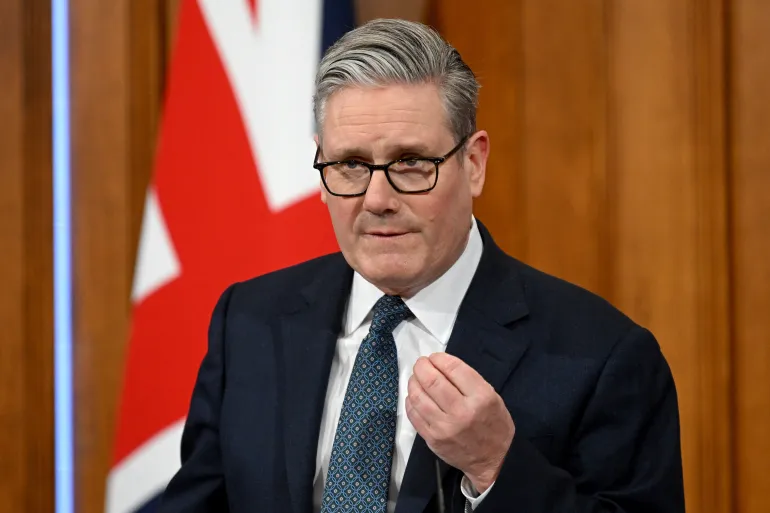
United States President Donald Trump has posted on social media that he does not need the United Kingdom to deploy aircraft carriers to the Middle East, amid the ongoing war with Iran.
Saturday’s post on Truth Social follows a statement from the UK’s Ministry of Defence that one of its two flagship aircraft carriers, the HMS Prince of Wales, has been placed on “high readiness”.
“The United Kingdom, our once Great Ally, maybe the Greatest of them all, is finally giving serious thought to sending two aircraft carriers to the Middle East,” Trump wrote.
“That’s OK, Prime Minister Starmer, we don’t need them any longer — But we will remember. We don’t need people that join Wars after we’ve already won!”
The post, with its reference to the UK as a “once great ally”, signals a deepening rift between the two countries that has emerged since Trump returned to office last year.
The divide appears to have deepened over the past week, as the US and Israel continue to hammer Iran as part of a war they launched on February 28.
The conflict has sparked fears across the Middle East, as retaliatory strikes from Tehran target US allies across the region.
Already, an estimated 1,332 people have been killed in Iran, and the US has confirmed the deaths of six of its service members. More deaths have been reported in countries like Lebanon, Kuwait, the United Arab Emirates and Iraq.
The UK government has increased its involvement in the war on Iran, widely considered illegal under international law.
The UK Defence Ministry, for instance, said on Saturday that the government of Prime Minister Keir Starmer had allowed the US to use its military bases for what it termed “limited defensive purposes”.
The bases include RAF Fairford in Gloucestershire and tbe Diego Garcia site in the Chagos Islands, located in the Indian Ocean. Initially, there had been reports that Starmer had blocked the US use of the bases.
In the immediate aftermath of the initial US-Israeli strike, Starmer appeared to blanche at the prospect of joining the war.
He and the leaders of France and Germany issued a joint statement, underscoring that any actions they might take would be defensive in nature.
“We will take steps to defend our interests and those of our allies in the region, potentially through enabling necessary and proportionate defensive action to destroy Iran’s capability to fire missiles and drones at their source,” the joint statement said.
“We have agreed to work together with the US and allies in the region on this matter.”
But Starmer has had to push back on domestic criticism both for and against joining the war.
On Monday, he told the UK Parliament, “We are not joining the US and Israeli offensive strikes”, citing the need to protect “Britain’s national interest” and “British lives”.
The war in Iran remains largely unpopular in the UK. The polling firm Survation conducted a survey over the last week of 1,045 British adults, and it found that 43 percent of respondents called the war not justifiable.
When asked if they supported Starmer’s initial decision not to allow the US to use British bases, 56 percent of respondents approved. Only 27 percent said it was the wrong choice.
Thousands of protesters gathered outside the US embassy in London on Saturday to call for an end to the ballooning conflict.
But Trump has upped his criticism of Starmer over the past week, further fraying relations with the UK government.
On March 3, for instance, he held an Oval Office meeting with German Chancellor Friedrich Merz where he said repeatedly he was “not happy with the UK”.
Of Starmer, Trump added, “This is not Winston Churchill that we’re dealing with.”
Trump has long admired Churchill and last year installed a bust of the wartime prime minister in the Oval Office, just as he had during his first term.
By contrast, the US president has issued a flood of criticism against Starmer, particularly for his 2024 decision to transfer control of the Chagos Islands to Mauritius.
The transfer comes after the International Court of Justice found the UK acted unlawfully in 1965 by separating the islands from Mauritius to create a separate colony.
The deal with Mauritius, however, allows the US and the UK to maintain a military base on Diego Garcia, part of the archipelago.
Trump has repeatedly slammed the transfer, however, writing on social media that “giving away extremely important land is an act of GREAT STUPIDITY”.
Tensions between the US and UK also rose in January after Trump told Fox News that NATO allies had “stayed a little off the frontlines” during the US war in Afghanistan.
Starmer responded that he found Trump’s comments “to be insulting and frankly appalling”.
The Trump administration, however, has signalled it is pivoting away from its traditional European allies in favour of more politically aligned countries.
At a summit on Saturday with right-wing Latin American leaders, US Secretary of State Marco Rubio appeared to praise the attendees while casting shade on other allies.
“At a time when we have learned that oftentimes an ally, when you need them, maybe may not be there for you, these are countries that have been there for us,” Rubio told the summit.
[Aljazeera]
Latest News
Our goal is to build a “Thriving Nation” where a woman can walk without fear or doubt, where her talents are duly recognized, and where she can lead a life of dignity – PM

The PM’s message:
Women are the true pillar of Sri Lankan society and economy. The role they play within the family and in society has today become a decisive factor in shaping the future of our nation. Through the Government’s policy statement, “A Thriving Nation – A Beautiful Life,” we envision going beyond treating women as mere beneficiaries and recognizing them as active partners in national development, ensuring that they receive the dignity and opportunities they rightfully deserve.
Within our policy framework, special focus has been placed on women. We are committed to recognizing the economic contribution extended by women as housewives, promoting women’s entrepreneurship, and expanding access to the technical and financial support necessary for self-employment alongside strengthening the legal framework required to ensure women’s safety in public transport, workplaces, and within the family environment. Further, we are taking steps to create the environment to increase women’s representation in decision-making bodies at national and regional levels. Special attention is also being given to implementing targeted programmes aimed at improving women’s nutrition, reproductive health, and mental well-being.
Women are not a group seeking sympathy; they are vital social partners endowed with intelligence, resilience, and creativity. Our goal is to build a “Thriving Nation” where a woman can walk without fear or doubt, where her talents are duly recognized, and where she can lead a life of dignity
On this International Women’s Day, I sincerely hope that it marks the beginning of a new era in which the aspirations of all women in our country are realized as they shine before the world.

Sutherland’s sublime century and Hamilton’s night-time burst flatten India

Trump says US does not need UK aircraft carriers for Iran war

Our goal is to build a “Thriving Nation” where a woman can walk without fear or doubt, where her talents are duly recognized, and where she can lead a life of dignity – PM

Dry weather will prevail except for a few showers in the Southern province and Rathnapura district

Heat Index at Caution Level in the Sabaragamuwa, North-western and North-central provinces and in Colombo, Gampaha, Vavuniya, Mannar, Hambantota and Monaragala districts

Lanka tea industry may lose $ 10-15 mn per week from ME war

‘Dates have the highest sugar content to fight Coronavirus’

Sunday Island 27 December – Headlines

#SundayIsland 17th December – Headlines

Sunday Island – 28th March

Sunday Island Headlines – 21 March

Sunday Island – 21st February – Headlines
-

 Features6 days ago
Brilliant Navy officer no more
-

 News2 days ago
University of Wolverhampton confirms Ranil was officially invited
-

 Opinion6 days ago
Sri Lanka – world’s worst facilities for cricket fans
-

 News3 days ago
Legal experts decry move to demolish STC dining hall
-

 Features6 days ago
A life in colour and song: Rajika Gamage’s new bird guide captures Sri Lanka’s avian soul
-

 News2 days ago
Female lawyer given 12 years RI for preparing forged deeds for Borella land
-

 Business4 days ago
Cabinet nod for the removal of Cess tax imposed on imported good
-

 Business4 days ago
War in Middle East sends shockwaves through Sri Lanka’s export sector