
Latest News
Trump at a crossroad in US-Israel war with Iran

Three weeks after the joint US-Israeli war against Iran began, the conflict has reached a fuzzy state of mixed messages and uncertainty, with Donald Trump’s public comments often seemingly contradicted by realities on the ground.
The war is “very complete, pretty much”, Trump has said, but new American ground forces – including a Marine expeditionary unit – are moving into the region. It is “winding down”, but US and Israeli bombing and missile strikes on Iranian targets continue unabated.
Opening the Strait of Hormuz, the geographic choke point through which 20% of the world’s oil export travels, is a “simple military manoeuvre”, but for now only Iranian-approved ships are transiting the waters.
The Iranian military is “gone”, but drones and missiles are still striking targets in the region and targets have extended as far as the joint US-UK base on Diego Garcia.
In a Friday evening Truth Social post published while he was flying from Washington to his Florida resort for the weekend, the US president provided a numbered list of American military objectives for the Iran war, which he said the US was “getting really close” to fulfilling.
The items, comprising his most detailed statement on the subject since the war began, included degrading or destroying Iran’s military, its defence infrastructure and its nuclear weapons programme, as well as protecting American allies in the region.
Not included was the goal of securing the Strait of Hormuz, which Trump said should be the responsibility of other nations that are more dependent on oil exports from the Gulf. The president has frequently noted that the US is a net exporter of energy and does not rely on oil from the Middle East – although such a view glosses over the global nature of the fossil fuel market, where price fluctuations directly impact the price at American gas pumps.
Trump’s Truth Social post also made no call for Iranian regime change. Gone are any references to approving the nation’s next leader or “unconditional surrender”, which Trump had insisted on in the early days of the war.
In Trump’s latest outline of his objectives, it is possible that the US could end its operation with Iran’s current anti-American leadership in power, its oil exports still flowing and its ability to assert some measure of control over the Strait of Hormuz intact.
If that is an unappealing resolution to a war that the president and his aides have said began with the 1979 Iran Revolution and that they would finish, there is an alternative route that involves the US ground forces presently on the way to the Middle East region.
Just over a week ago, US media reported that a Marine expeditionary unit, with about 2,500 combat soldiers and supporting ships and aircraft, had been dispatched from Japan to the Middle East, which it should reach in the coming days. Another Marine force of similar size recently departed its base in California with its arrival expected in mid-April.
Military analysts have suggested that the US could be planning to capture Kharg Island. an 3-sq-km (8-sq-mile) slice of land that contains Iran’s primary oil export terminal. Doing so could, in theory, cut off the nation’s oil shipments, depriving the nation of much-needed revenue and forcing it to make greater concessions to the Americans in exchange for an end to hostilities.
Trump on Friday said that he wasn’t sending ground troops to Iran, but added: “If I were, I certainly wouldn’t tell you”. Clarity, it seems, is not his intention.
The threat of such a move prompted Iran’s state media to report on Saturday that any attack on Kharg Island would lead Iran to cause “insecurity” in the Red Sea, another key global shipping transit point, and “set fire” to energy facilities throughout the region.
Iran’s warning underscores the dangers that would accompany a US escalation that further exposes American military forces to Iranian reprisals.
Earlier this week, US media reported that the Trump administration was preparing to ask Congress for $200bn (£150bn) in emergency funding for the ongoing Iranian military operation. Such a request would suggest that, far from winding down, the White House is preparing for a long, expensive fight.
The initial reaction from Congress, including from Trump’s Republican allies, was cautious at best.
“We’re talking about boots on the ground. We’re talking about that kind of extended activity,” said Republican Congressman Chip Roy of Texas.
“They have got a whole lot more briefing and a whole lot more explaining to do on how we’re going to pay for it, and what’s the mission here.”
The so-called “fog of war” doesn’t just cloud the thinking of military planners, it also affects the perception of politicians and the public.
The Iran war, it seems, is at a pivot. But which direction it takes from here is a puzzle.
(BBC)


The computer system at the Department of Registration of Persons has been rectified and the services are back to normal.

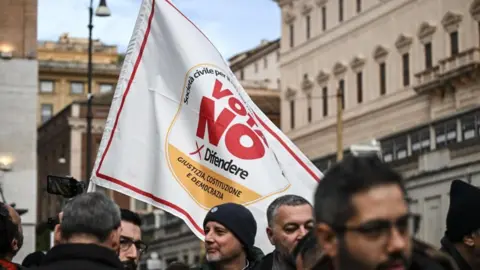
Italy’s Prime Minister Giorgia Meloni has lost a key referendum on a constitutional reform which had turned into a vote on her government.
The result gives around 54% to the “No” campaign and 46% to the “Yes” vote which Meloni had backed.
In a video posted on social media even before all the ballots were counted, Meloni said Italians had voted “with clarity” and she would respect their decision, but she regretted a “lost chance to modernise” the country.
It is the first significant defeat for Meloni and her right-wing coalition, which has overseen a rare period of political stability for Italy. Opposition parties are hailing the result as a sign that voters are looking for change, with a general election due next year.
When the two-day referendum ended on Monday afternoon, exit polls initially showed the “No” vote leading by a small margin, but that grew to a substantial lead as the count progressed.
Despite the complex question on the ballot paper, turnout was almost 60%. A high figure had been expected to favour the government, but it was not enough to swing the vote.
The reform voters rejected would have inscribed a firm separation between judges and prosecutors into the constitution. It also proposed distinct bodies to govern them and a new disciplinary court.
The government argued the change was critical to improving judicial independence.
The opposition countered that it would shatter a careful balance of powers established following the defeat of fascism, and increase political influence over the courts.
Many Italians struggled to understand the technical details – perhaps a communication failure by Team Meloni – and the vote quickly morphed into a plebiscite on her near-record three and half years in office.
[BBC]
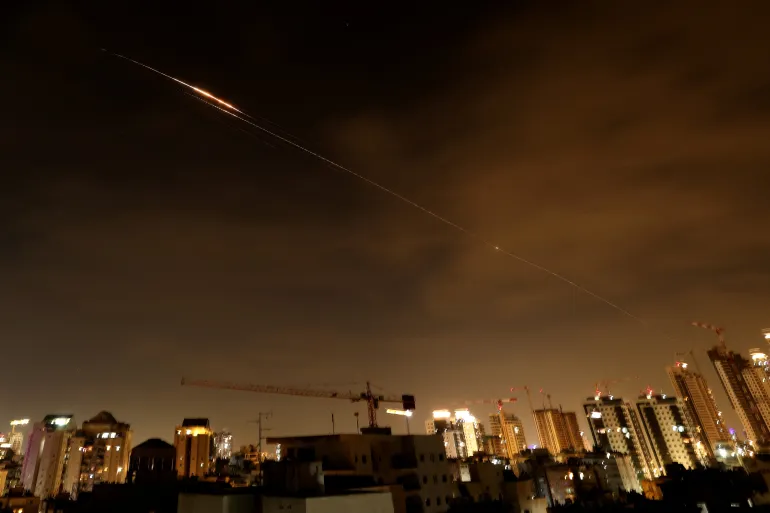
US President Donald Trump announced that discussions are ongoing with Iran to “determine whether a broader agreement can be reached”, saying that “this time, Iran means business; they want to settle. They want peace”.
But Teheran denied that talks with the US are taking place, with Iran’s parliamentary speaker saying such claims are “fake news” and being “used to manipulate financial and oil markets”.
Oil prices dropped by about 11 percent after Trump announced a delay to attacks on Iran’s power plants for five days amid his claims of talks.
Despite Trump’s comments, US Central Command says US forces “continue to aggressively strike” targets in Iran, as Iranian missiles and drones continued to target Gulf countries – including Bahrain, Saudi Arabia and Kuwait – overnight.
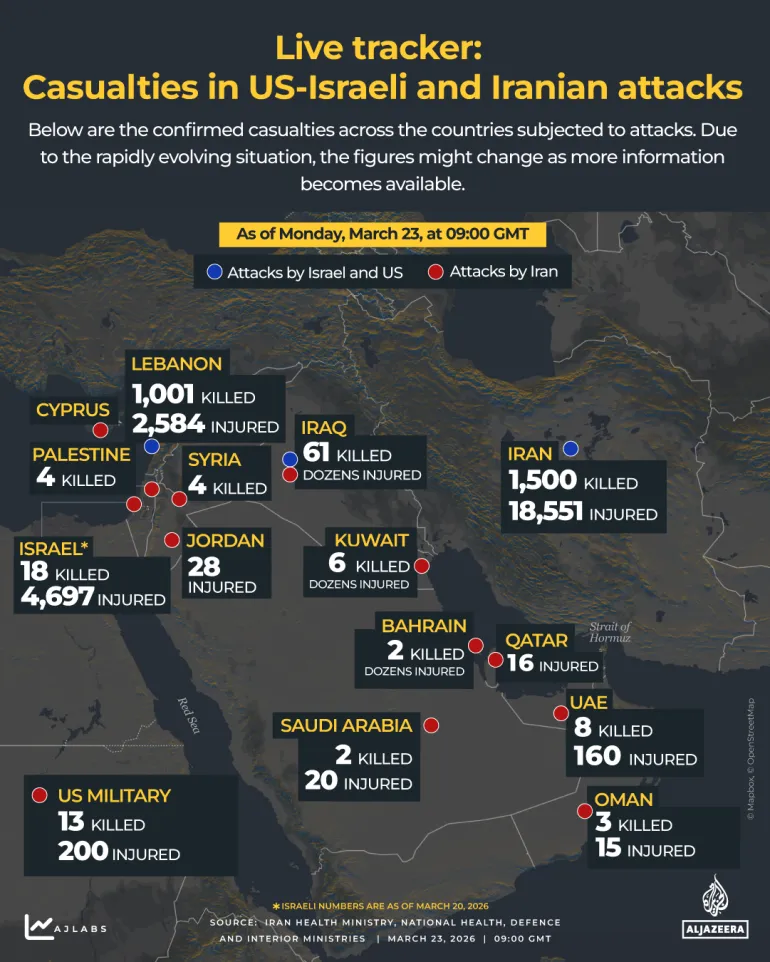
Israeli warplanes bombed Beirut’s southern neighborhood as the Lebanese Health Ministry said the death toll from Israel’s attacks on the country had reached 1,039 people, with 2,786 people injured, since March 23.
[Aljazeera]

Department of Registration of Persons back to normal

Referendum defeat leaves Italy’s Meloni looking more vulnerable

Pakistan T20 cricket league to be held in empty stadiums amid oil crisis

Showers expected in the Western, Southern, Uva and Sabaragamuwa provinces and in Kandy and Nuwara-Eliya districts after 2.00 pm.

Tehran says Trump’s peace talk claims are ‘fake news’

SJB: China, India taking advantage of Lanka’s unregulated oil market

‘Dates have the highest sugar content to fight Coronavirus’

Sunday Island 27 December – Headlines

#SundayIsland 17th December – Headlines

Sunday Island – 28th March

Sunday Island Headlines – 21 March

Sunday Island – 21st February – Headlines
-

 News6 days ago
CIABOC questions Ex-President GR on house for CJ’s maid
-

 News5 days ago
Bailey Bridge inaugurated at Chilaw
-

 Features1 day ago
Trincomalee oil tank farm: An engineering marvel
-

 News4 days ago
CIABOC tells court Kapila gave Rs 60 mn to MR and Rs. 20 mn to Priyankara
-

 News5 days ago
Pay hike demand: CEB workers climb down from 40 % to 15–20%
-

 Editorial6 days ago
Couple QR-based quota with odd-even rationing
-

 Features4 days ago
Science and diplomacy in a changing world
-

 News3 days ago
Colombo, Oslo steps up efforts to strengthen bilateral cooperation in key environmental priority areas