
Latest News
Trump administration launches US military operation in Ecuador

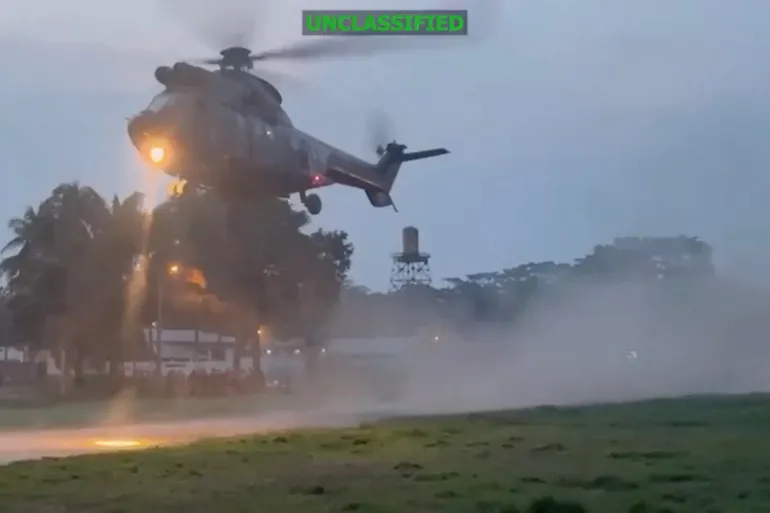
The United States government has announced it is collaborating with Ecuador to combat “terrorists” in the South American country.
On Wednesday, US Southern Command, the military unit overseeing operations in Central and South America, posted that joint efforts had already begun in Ecuador.
“On March 3, Ecuadorian and US military forces launched operations against Designated Terrorist Organizations in Ecuador,” General Francis Donovan said.
“The operations are a powerful example of the commitment of partners in Latin America and the Caribbean to combat the scourge of narco-terrorism.”
The statement was accompanied by video footage of military helicopters taking off, as well as black-and-white aerial surveillance imagery of figures boarding helicopters on the ground.
The announcement appears to be part of US President Donald Trump’s broader push against criminal networks and drug cartels in Latin America.
The scope of the Ecuadorian operation is not yet known, but several US news outlets have reported that it is so far limited to supporting Ecuadorian troops through logistics and intelligence, citing government sources.
At a Wednesday news briefing, White House Press Secretary Karoline Leavitt praised the joint operation.
“Together, we are taking decisive action to confront narco-terrorists who have long inflicted terror, violence and corruption on citizens throughout the hemisphere,” she told reporters.
Since taking office for a second term last year, Trump has moved to label multiple prominent cartels as “foreign terrorist organisations”, a term typically reserved for armed groups with political aims.
His administration has paired those labels with an increasingly militaristic approach to combatting drug trafficking, including through the bombing of suspected smuggling vessels.
Critics have pointed out, however, that drug trafficking is considered a crime under international law, not an act of war, and that such lethal actions can be considered extrajudicial killings.
At least 44 aerial strikes have been carried out against alleged drug-smuggling boats and other maritime vessels in the Caribbean Sea and eastern Pacific Ocean.
The result has been 150 known deaths. The identities of the victims have yet to be confirmed by US officials, and no charges against them have been made public.
Two survivors who were recovered from an October attack on a submarine were quickly repatriated to their home countries, Ecuador and Colombia, where they were subsequently released.
Some families from Colombia and Trinidad and Tobago, meanwhile, have claimed that the deceased were fishermen or informal workers transiting between Venezuela and nearby islands, not drug traffickers.
The Trump administration has also launched military actions on Venezuelan soil, one in late December and a second on January 3. In both cases, it justified the strikes as law enforcement actions against drug traffickers.
The first targeted a dock allegedly used by the transnational gang Tren de Aragua. The second culminated in the abduction of Venezuelan President Nicolas Maduro, who was subsequently imprisoned and charged with drug trafficking and weapons charges in a US federal court.
That operation was likewise condemned as a violation of international law, with experts at the United Nations warning that it was “part of a broader and deeply troubling pattern” of unprovoked military aggression.
The Trump administration, however, has suggested it plans to expand its military operations against suspected drug traffickers to other land-based targets. The announcement from Ecuador suggests a new front for its military offensive.
Wednesday’s announcement comes two days after General Donovan, the head of the US Southern Command, visited Ecuadorian President Daniel Noboa and his defence ministers on March 2 in the capital of Quito.
Since the outbreak of the COVID-19 pandemic in 2020, Ecuador has seen a spike in homicides and other violent crimes, as criminal networks make inroads in the country.
Previously, Ecuador had some of the lowest rates of violent crime in the region, earning the country a reputation as an “island of peace” in Latin America.
But experts say the leap can be attributed to a number of factors, including high youth unemployment during the pandemic, economic instability, and a desire to exploit Ecuador’s strategic location on the Pacific coast, between major cocaine producers like Colombia and Peru.
Noboa, a right-wing leader who has been in office since 2023, campaigned for re-election last year on the pledge that he would tamp down on the uptick in crime. He has become closely associated with the “mano dura” or “iron fist” approach to law enforcement.
Trump too has encouraged Latin American leaders to be more aggressive in their handling of criminal networks, and both Noboa and Trump have threatened Colombia, led by left-wing leader Gustavo Petro, for allegedly failing to comply.
On March 1, for instance, Noboa plans to raise tariffs on Colombian imports to 50 percent as punishment for failing to crack down on cocaine trafficking.
On Wednesday, General Donovan praised the Ecuadorian military for their “unwavering commitment” to the fight “against narco-terrorists in their country”.
“Together, we are taking decisive action to confront narco-terrorists who have long inflicted terror, violence, and corruption on citizens throughout the hemisphere,” he said in a statement.
President Noboa, who has hosted Trump administration officials like Homeland Security Secretary Kristi Noem multiple times over the past year, also welcomed the increased collaboration.
“We are beginning a new phase in the fight against drug trafficking and illegal mining,” Noboa wrote on social media on March 2.
“The security of Ecuadorians is our priority, and we will fight for peace in every corner of the country. To achieve this peace, we must act decisively against criminals, wherever they may be.”
Still, critics responded to Wednesday’s announcement with scepticism and alarm about the increasing US military operations overseas.
Brian Finucane, a senior adviser at the International Crisis Group think tank, wrote on social media that the US has yet to clarify what its role in the joint operations was and what its targets were.
“My sense is that some in the administration have been itching to put US military boots on the ground somewhere for an operation against ‘narco-terrorists’ and then publicly brag about it,” Finucane said.
“Ecuador was more amenable than, say, Mexico.”
[Aljazeera]


Donald Trump has stressed that any deal with Iran must result in the country’s “unconditional surrender”, setting maximalist war objectives for the United States.
The US president’s remarks on his Truth Social platform on Friday appear to reject the prospect of a compromise amid Iranian confirmation of diplomatic mediation to end the conflict.
“There will be no deal with Iran except UNCONDITIONAL SURRENDER!” Trump wrote.
“After that, and the selection of a GREAT & ACCEPTABLE Leader(s), we, and many of our wonderful and very brave allies and partners, will work tirelessly to bring Iran back from the brink of destruction, making it economically bigger, better, and stronger than ever before.”
Iranian President Masoud Pezeshkian had said earlier that some countries are engaging in mediation efforts to end the war, emphasising that Iran is committed to peace in the region but prepared to defend itself.
“Mediation should address those who underestimated the Iranian people and ignited this conflict,” Pezeshkian said in a social media statement.
The conflict has spread across the Middle East, igniting Iranian attacks across the Gulf and a war between Hezbollah and Israel, resulting in a mass displacement crisis in Lebanon.
Iran has been launching missiles and drones at Israel and US interests and assets across the region. Iranian forces have also targeted energy and civilian infrastructure in Gulf countries, straining ties with the Arab world.
The violence, which saw Iran largely succeed in closing down the Strait of Hormuz, has sent oil prices soaring globally.
Iranian officials have expressed defiance since the start of the war, stressing that they are ready for a long conflict and prepared to fend off a US ground invasion should it occur.
Iran’s Foreign Minister Abbas Araghchi said in a message to Trump on Thursday that the US plan for a “clean rapid military victory failed”.
“Your Plan B will be even a bigger failure,” Araghchi wrote on X.
On Friday, Iran’s top diplomat posted a photo of the coffins of a mother and child, the apparent victims of US-Israeli attacks. “Our Brave and Powerful Armed Forces will avenge each and every Iranian mother, father, and child who has been targeted by hostile forces,” Araghchi wrote.
The war has killed at least 1,332 people in Iran, among them 181 children, according to UNICEF.
The deadliest incident was a strike on a girls’ primary school in the southern city of Minab on the opening day of the conflict, which Iranian authorities said killed about 180 pupils and staff.
The Trump administration has pushed to project confidence and dominance over Iran, with top officials saying that the US would “rain missiles”, “death and destruction” on the country.
In recent days, Trump has repeatedly said that he would like to replicate the Venezuela playbook in Iran – keeping the governing system in place but installing a leader who is friendly to US interests.
On Wednesday, Trump said he has to be “involved” in choosing the successor of Supreme Leader Ayatollah Ali Khamenei, who was assassinated in a US-Israeli attack on Saturday.
Trump told CNN later on Thursday that the situation in Iran is going to work “easily” like it did in Venezuela when Delcy Rodigues replaced President Nicolas Maduro after he was abducted by US forces in January.
Rodriguez, who previously served as Maduro’s vice president, has allowed Washington to sell Venezuela’s oil and cut off petroleum supplies to Cuba under the threat of further US strikes.
Trump said he does not mind of the next leader of Iran is a religious figure.
“I’m saying there has to be a leader that’s going be fair and just. Do a great job. Treat the United States and Israel well, and treat the other countries in the Middle East — they’re all our partners,” he told CNN.
The supreme leader of Iran must be a Shia Muslim religious scholar.
Khamenei’s successor will be selected by an elected council of 88 members known as the Assembly of Experts.
[Aljazeera]

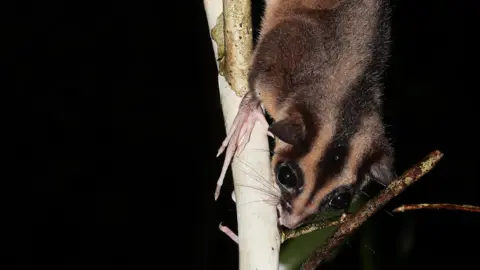
A tiny possum with one extra-long finger on each hand is one of two species thought to have been extinct that have been discovered in West Papua, in what’s been called an “exceptional” scientific discovery.
The other is a a ring-tailed glider with a tail that can grasp branches. Both have been found living in remote rainforests after they were thought to have disappeared 6,000 years ago.
Finding living examples of a lost species is rare, but discovering two is “remarkable,” say scientists who published their findings in the Records of the Australian Museum journal on Friday.
Such discoveries are known as “lazarus taxon”, a term inspired by a biblical figure who was raised from the dead.
“The discovery of one lazarus taxon… is an exceptional discovery,” said Prof Tim Flannery, a prominent Australian scientist best known for his 2005 The Weather Makers book about climate change.
“But the discovery of two species, thought to have been extinct for thousands of years, is remarkable.”
The first rediscovered species was the pygmy long-fingered possum, a striped marsupial weighing about 200g, which is understood to have vanished from Australia during the Ice Age.
A distinguishing feature is that on each hand, the possum’s fourth finger is twice the length of other digits, which scientists say help it dig out wood-boring insect larvae, it’s main source of food.
The second species is the ring-tailed glider, and just like its Australian cousin the greater glider, it lives in the hollows of tall trees.
The discoveries were made by piecing together parts of a puzzle with scientists combing through decades-old fossils, rare photos and old specimens to gather clues before making visits to remote New Guinea locations.
Flannery, along with another of the paper’s co-authors Prof Kris Helgen and researchers from the University of Papau, spoke to local elders from the Tambrauw and Maybrat clans – some of whom have only had contact with the modern world since the 1960s.
Identification of the species would not have been possible without their help, according to Rika Korain, a Maybrat woman and another co-author.
“They’re very traditional people,” Flannery added, and regard the glider as so sacred that “not only won’t they hunt it, they won’t mention its name”.
But the gliders habitat was increasingly coming under threat from logging in the area, Flannery said.
This, in part, has prompted efforts by scientists and wildlife groups to try secure native title for the forests to ensure logging cannot be carried out without consent from locals, he said.

(BBC)
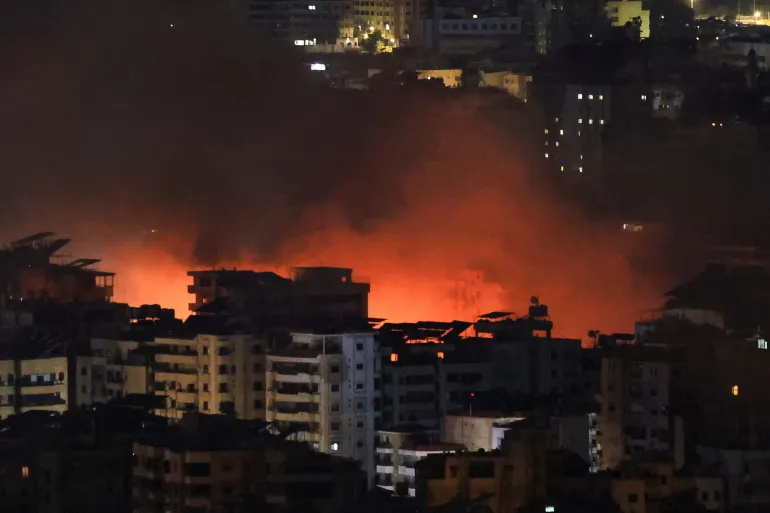
The death toll from Israeli attacks on Lebanon this week has risen to at least 123 people, the Lebanese Ministry of Public Health says, as a new wave of strikes pounded the country and Hezbollah warned Israeli residents to evacuate towns within 5km (3 miles) of their northern border, in one of the fiercest fronts in the wider United States – Israel war on Iran.
“The toll from the Israeli aggression on Monday, increased to 123 martyrs and 683 wounded,” a ministry statement said on Thursday.
Lebanese state media said early on Friday that Israel had launched air strikes on several towns in southern Lebanon.
“Enemy warplanes launched nighttime strikes on the towns of Srifa, Aita al-Shaab, Touline, as-Sawana and Majdal Selem,” the official National News Agency (NNA) reported.
Another strike hit the eastern Lebanese town of Douris at dawn, the NNA said.
The Israeli army also reported a new attack on the suburb of Dahiyeh in Beirut.
It has also continued attacks in southern Lebanon with raids on the area’s biggest city Sidon, according to sources on the ground.
NNA also reported Israeli warplanes over the southern towns of Tyre and Bint Jbeil.
(Aljazeera)

CDS accounts on the increase, crosses one million accounts

Emergency: Jekylls and Hydes

AG’s help to be sought to tackle rampant corruption at Motor Traffic Department

Mujibur Rahuman questions delay over berthing of IRIS Dena

TONIK set to become next Sri Lankan hospitality brand reaching the global stage

SDB bank relocates Warakapola branch to enhance customer experience

‘Dates have the highest sugar content to fight Coronavirus’

Sunday Island 27 December – Headlines

#SundayIsland 17th December – Headlines

Sunday Island – 28th March

Sunday Island Headlines – 21 March

Sunday Island – 21st February – Headlines
-

 Features5 days ago
Brilliant Navy officer no more
-

 Opinion5 days ago
Sri Lanka – world’s worst facilities for cricket fans
-

 News2 days ago
Legal experts decry move to demolish STC dining hall
-

 Features5 days ago
A life in colour and song: Rajika Gamage’s new bird guide captures Sri Lanka’s avian soul
-

 Business2 days ago
Cabinet nod for the removal of Cess tax imposed on imported good
-

 Features6 days ago
Overseas visits to drum up foreign assistance for Sri Lanka
-
 Features6 days ago
Sri Lanka to Host First-Ever World Congress on Snakes in Landmark Scientific Milestone
-
 Latest News2 days ago
Around 140 people missing after Iranian navy ship sinks off coast of Sri Lanka