
News
Transforming Tourism

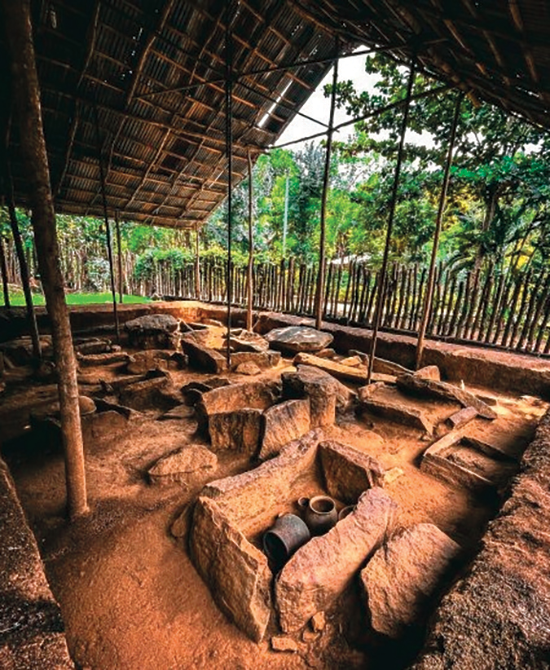
A serene mist envelope an ocean of luscious greenery and hills, deep in the depths of a stillness that is synonymous with the Sri Lanka’s highlands.About 180 kilometers away from the hustle of the capital city Colombo, so lies Riverston, part of the Knuckles Mountain Range—a popular nature trail and hike among the island’s many tourist destinations, and one of the many project sites that falls under the European Union (EU) funded, ‘Transforming Tourism in Sri Lanka: Emerging from crisis as a strong, resurgent and rebranded industry’ project.
Sri Lanka’s tourism sector has been subject to a series of challenges since the 2019 Easter Sunday Attacks, followed by the protracted impacts of the COVID-19 pandemic, and now, the economic crisis. The impacts of these crises, especially the pandemic, brought to light a host of challenges that continue to compound hardships of the most vulnerable populations that engage in the tourism industry. The island does have a penchant for coming together in tough times, for resilience and recovery. However, given the importance of tourism to those at various levels of society across the island and the economy, it was evident that the sector needed more support to sustain and grow.
With the core need of putting people first in mind, the United Nations Development Programme (UNDP) in Sri Lanka with financial assistance from the European Union (EU), conducted a ‘Rapid Assessment on the Impacts of COVID-19 on the Tourism Sector’. The assessment found: a) limited intra-governmental coordination, and sub optimal mechanisms to promote the tourism sector; b) limited priority given to the tourism sector at the provincial and local level; and, c) limited engagement of stakeholders and partners in policy and product development to be some of the key structural issues that prevent the industry from a reaching a faster recovery and increasing resilience of the sector.
In this context, to address the barriers identified in the assessment, with financial support from the EU, and in partnership with the Ministry of Tourism and the Sri Lanka Tourism Development Authority (SLTDA), the ‘Transforming Tourism’ project was launched. The project’s central focus is to support the Government of Sri Lanka to revitalize and reform the core structures that support tourism—governance, institutions, policy mechanisms, tourism products and promotion, sectoral transformation and financing—to create a more sustainable industry for people and the planet. The Project works towards transformative change in the industry, and to create tourism that is resilient, sustainable, inclusive and to be equipped to bounce back swiftly to generate returns across the whole economy, both for the betterment of the two million people that engage in tourism, and the country.
With the Ministry of Tourism and the SLTDA at the helm, and with technical and financial assistance from UNDP and the EU, the policy framework and the institutional capacities of the tourism sector actors were assessed and strengthened. A key output of this intervention was the support provided to the government partners to develop the National Tourism Policy. The implications of these higher-level, technical efforts can be witnessed on the highlands of the island, in the Central Province.
Between the evergreen, mist laden mountain ranges of Riverston-Knuckles and the infamous rock fortress Sigiriya, value chain and carrying capacity assessments, analysis on product diversification and upgrading potential, and the pilot testing of innovative and upgraded tourism products are underway to establish gender-sensitive experiences and services. The interventions are also being reinforced by a promotional campaign that characterizes the myriad of attractions within the Central Province.
In Sigiriya alone, apart from the rock fortress that is known the world over, there is an abundance of lesser-known attractions that hold promise of drawing in more tourists. Across the province, there are around forty attractions including Pathana, Sera Ella, Bambarakiri Ella, Weddapeni Ella, surrounding Riverston. And, more closer to Sigiriya, there is a plethora of sites like the Ibbankatuwa Burial Site, Kaludiya Pokuna, Ritigala and much more that can increase visitations and augment tourism income for the province.
The ‘Transforming Tourism’ Project works towards building a transformed, competitive and resilient tourism sector, with requisite polices and institutional capacities to deliver unique and sustainable tourism experiences. With two million people depending on the island’s beaches, mountains and unique biodiversity to sustain their livelihoods, the support provided helps address structural governance issues that lays the foundation for more resources to be mobilized for the betterment of the industry, across the island. Particularly, the ongoing economic crisis further calls for more innovative approaches to tourism, to leverage the benefits that Sri Lanka’s natural resources offer. The gender-sensitive tourism products in the Central Province serves as a blueprint for the rest of the island to transition to sustainable tourism that promotes environmental conservation and also bring sustainable development gains to local communities.
Tourism has the incredible power and potential to advance prosperity and drive inclusive, sustainable development. The tourism sector touches almost every part of our economies and societies, enabling historically marginalized people and those at risk of being left behind to benefit from development that is local and direct. Sri Lanka is at a critical juncture, and, leveraging the current crisis to bounce back towards a greener, sustainable and environmentally conscious tourism offering outlines the country’s pathway to green development.

Business
Sri Lanka Customs exceeds revenue targets to enters 2026 with a surplus of Rs. 300 billion – Director General


The year 2025 has been recorded as the highest revenue-earning year in the history of Sri Lanka Customs, stated Director General of Sri Lanka Customs, Mr. S.P. Arukgoda, noting that the Department had surpassed its expected revenue target of Rs. 2,115 billion, enabling it to enter 2026 with an additional surplus of approximately Rs. 300 billion.
The Director General made these remarks at a discussion held on Tuesday (30) morning at the Sri Lanka Customs Auditorium, chaired by President Anura Kumara Dissanayake.
The President visited the Sri Lanka Customs Department this to review the performance achieved in 2025 and to scrutinize the new plans proposed for 2026. During the visit, the President engaged in extensive discussions with the Director General, Directors and senior officials of the Department.
Commending the vital role played by Sri Lanka Customs in generating much-needed state revenue and contributing to economic and social stability, the President expressed his appreciation to the entire Customs employees for their commitment and service.
Emphasizing that Sri Lanka Customs is one of the country’s key revenue-generating institutions, the President highlighted the importance of maintaining operations in an efficient, transparent and accountable manner. The President also called upon all officers to work collectively, with renewed plans and strategies, to lead the country towards economic success in 2026.
The President further stressed that the economic collapse in 2022 was largely due to the government’s inability at the time to generate sufficient rupee revenue and secure adequate foreign exchange. He pointed out that the government has successfully restored economic stability by achieving revenue targets, a capability that has also been vital in addressing recent disaster situations.
A comprehensive discussion was also held on the overall performance and progress of Sri Lanka Customs in 2025, as well as the new strategic plans for 2026, with several new ideas and proposals being presented.
Sri Lanka Customs currently operates under four main pillars, revenue collection, trade facilitation, social protection and institutional development. The President inquired into the progress achieved under each of these areas.
It was revealed that the Internal Affairs Unit, established to prevent corruption and promote an ethical institutional culture, is functioning effectively.
The President also sought updates on measures taken to address long-standing allegations related to congestion, delays and corruption in Customs operations, as well as on plans to modernize cargo inspection systems.
The discussion further covered Sri Lanka Customs’ digitalization programme planned for 2026, along with issues related to recruitment, promotions, training and salaries and allowances of the staff.
Highlighting the strategic importance of airports in preventing attempts to create instability within the country, the President underscored the necessity for Sri Lanka Customs to operate with a comprehensive awareness of its duty to uphold the stability of the State, while also being ready to face upcoming challenges.
The discussion was attended by Minister of Labour and Deputy Minister of Finance and Planning, Dr. Anil Jayanta Fernando, Deputy Minister of Economic Development, Nishantha Jayaweera, Secretary to the President, Dr. Nandika Sanath Kumanayake, Deputy Secretary to the Treasury, A.N.Hapugala, Director General of Sri Lanka Customs, S.P.Arukgoda, members of the Board of Directors and senior officials of the Department.

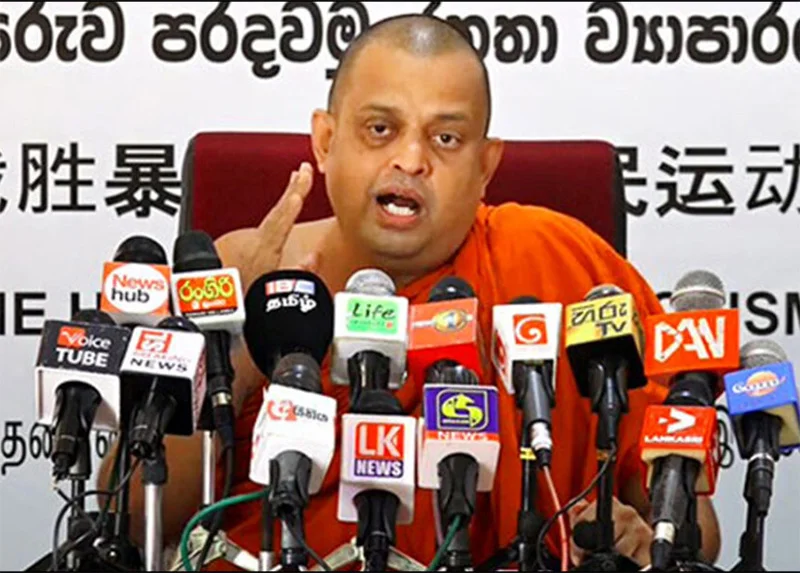
Teachers, principals and education professionals have said the government is unprepared to roll out proposed education reforms scheduled to take effect from next week, and warned of nationwide trade union action if the plans are implemented without adequate consultation and preparation.
Addressing a press conference in Colombo, President of the Association of Education Professionals, Ven. Ulapane Sumangala Thera, said Ministry officials had indicated that the reforms would be implemented from Monday, 05 January, but claimed that the vast majority of educators were opposed to the move.
“More than 90 percent of teachers say they have not received proper training on the new syllabus or the proposed reforms,” Ven. Sumangala Thera said. He alleged that the government was attempting to suppress opposition from teachers and principals by declaring school holidays, instead of addressing their concerns.
“If the government continues with these tactics, we will have no option but to resort to trade union action at a national level,” he warned.
Meanwhile, representatives of 16 teachers’ and principals’ unions who visited the Ministry of Education at Isurupaya on Monday to seek clarification on the reforms were turned away by security officials, reportedly on the grounds that prior appointments were required.
Speaking to the media outside the Ministry, Amila Sandaruwan of the Teacher Principals’ Collective said the delegation had attempted to raise their concerns during the Public Day allocated for visitors. “We wanted to know how these reforms are to be implemented and sought to meet the Secretary to the Ministry of Education, but we were barred,” he said.
Sandaruwan accused the Government of proceeding in an “adamant” manner and claimed the reforms were being driven by a handful of non-governmental organisations closely associated with senior ministry officials. “We will not allow this to happen,” he said.
Graded Principals’ Association representative Nimal Mudunkotuwa said widespread confusion prevailed among teachers and school administrators regarding the practical aspects of implementing the reforms. “There is no clarity on school hours—whether schools are to close at 1.30 p.m. as before, or continue until 2.00 p.m. as proposed,” he said.
He added that uncertainty also remained over the number of daily teaching periods, with conflicting statements suggesting either seven or eight periods. “Schools have yet to receive syllabus modules from the Ministry, and many schools lack smart boards and internet connectivity required to implement these reforms,” Mudunkotuwa said.
Ven. Ulapane Sumangala Thera strongly criticised the proposed reforms, describing them as “bastard reforms,” and accused the NPP Government of undermining the education system. He also raised objections to a unit in the proposed Grade Six English syllabus dealing with gay and lesbian relationships, claiming that senior Buddhist prelates, the Catholic Cardinal and other religious leaders had opposed its inclusion.
“The Government refuses to listen even to religious leaders,” he said.
Concerns were also raised at a National Sangha Council meeting held in Colombo on Monday evening at the Colombo Foundation Institute, organised to discuss the objectives of the proposed reforms. Addressing the gathering, Professor Venerable Induragare Dhammaratana Thera said the reforms required extensive discussion, consultation with subject experts and consideration of the experience of senior administrators.
He warned that the proposed changes could trigger the biggest crisis currently facing the country. “Implementing these reforms in this manner will harm future generations and could even destroy the present Government,” he said, likening the process to “forcing a round peg into a square hole.”

SLT-MOBITEL’s post-Cyclone Ditwah response reinforces its role as the National ICT Solutions Provider
In the aftermath of Cyclone Ditwah, SLT-MOBITEL led one of the most extraordinary national connectivity restoration efforts in recent years, mobilising the full breadth of its operational network, technical expertise, and emergency response systems to safeguard Sri Lanka’s digital lifeline.
The cyclone caused extensive flooding, landslides, and infrastructure damage throughout several districts, disrupting multiple layers of the national network. Yet within days, SLT-MOBITEL mounted one of the fastest and most comprehensive recovery operations in the company’s history, reaffirming the organisation’s role as the country’s telecommunications backbone.
From the earliest hours of the disaster, SLT-MOBITEL activated a coordinated national response, drawing on its regional operational structure, specialised engineering teams, and emergency governance mechanisms. The Sri Lanka Backbone Network (SLBN), the country’s most critical digital artery, signalled excellent resilience, with only a handful of nodes affected and restored within 24 hours. As the National ICT Solutions Provider, SLT-MOBITEL prioritised restoring connectivity for other network operators and users, while simultaneously extending comprehensive support to its own customers, ensuring that mobile services were swiftly re-established across the country.
The rapid restoration of SLT-MOBITEL’s islandwide core network served as a critical catalyst in accelerating the recovery of both fixed and mobile services across nearly all disaster-affected areas. This swift action also enabled other operators affiliated with SLT-MOBITEL to speedily restore their services, reinforcing the continuity of nationwide connectivity. To drive this effort, SLT-MOBITEL established a centralised ‘War Room’, operating under close management oversight, to coordinate telecommunication network restoration and rehabilitation across the country. Initial assessments indicate recovery and network upgrade costs of approximately LKR 5 to 6 billion.
SLT-MOBITEL teams worked around the clock to repair damaged fibre routes, recover flooded cabinets, and restore thousands of access nodes affected by the cyclone. In areas where fibre infrastructure was severely damaged, the company deployed temporary Fixed Wireless Access (FWA) facilities, helping communities, emergency responders, and essential services stay connected. Priority restoration was extended to hospitals, government agencies, and enterprise customers, helping with the continuity of critical national operations during the emergency.
SLT-MOBITEL also launched the 247 National Medical Helpline, a dedicated, round-the-clock support service introduced in collaboration with the University of Colombo. Within the first week of the launch, the medical helpline received a large volume of calls as the initiative provided immediate initial medical guidance to individuals facing injuries, infections, waterborne diseases, and other health complications. The service was powered by SLT-MOBITEL’s national connectivity backbone and a team of medical professionals arranged by the University of Colombo. The helpline became a vital public service, demonstrating the company’s commitment to supporting Sri Lankans in crisis and recovery through resilient infrastructure and accessible, people-centred communication. More importantly, the service was made available to all network providers, guaranteeing no one was excluded from receiving medical assistance islandwide.
SLT-MOBITEL worked closely with the Ministry of Defence, serving as the connectivity solutions provider for national disaster response efforts. With the support of the Sri Lanka Army, field teams were able to swiftly access affected sites, enabling faster repairs, safer operations, and the restoration of services in some of the most challenging terrains. The partnership highlighted the critical role of telecommunications in national security, emergency coordination, and public safety, with the Army’s contributions acknowledged with gratitude.
In addition to network restoration, SLT-MOBITEL extended critical national-level support to various government institutes, sustaining essential public services during the disaster period. As a result of the services provided, SLT-MOBITEL secured uninterrupted operations and dependable connectivity for these vital national institutes.
Within one week of the cyclone, SLT-MOBITEL had successfully restored over 98 percent of the sites impacted by the cyclone, with only a small number of locations in the most severely affected districts, pending access clearance. The company continues to address individual customer connections and any remaining access nodes, despite significant human resource and environmental challenges. Throughout the recovery period, customers demonstrated commendable patience and understanding, which greatly supported the restoration efforts.
The disaster has also highlighted the urgent need for long-term national network resilience. SLT-MOBITEL is advocating for the accelerated undergrounding of high-risk fibre routes, prioritised access to bridge ducts, and fast-tracked power restoration protocols during emergencies. The company is also advancing the migration of copper-based access networks to fibre.
As Sri Lanka’s National ICT Solutions Provider, SLT-MOBITEL is committed to keeping the nation connected in every crisis. The rapid restoration efforts, cross-government support, and dedication to public service reiterates the company’s mission to rise above commercial operations, upholding the role as the country’s trusted digital lifeline.

Showers or thundershowers will occur at times in the Northern, Eastern, Central, North-central, North-western and Uva provinces

Israel to bar 37 aid groups from Gaza

Protests spread across Iran for third day after currency hits record low

Sri Lanka Customs exceeds revenue targets to enters 2026 with a surplus of Rs. 300 billion – Director General

Harmanpreet Kaur leads the way as India complete 5-0 sweep over Sri Lanka

Educators slam govt. for ‘unprepared’ education reforms

‘Dates have the highest sugar content to fight Coronavirus’

Sunday Island 27 December – Headlines

#SundayIsland 17th December – Headlines

Sunday Island – 28th March

Sunday Island Headlines – 21 March

Sunday Island – 21st February – Headlines
-

 News6 days ago
British MP calls on Foreign Secretary to expand sanction package against ‘Sri Lankan war criminals’
-
 News5 days ago
Street vendors banned from Kandy City
-

 Sports6 days ago
Chief selector’s remarks disappointing says Mickey Arthur
-

 Opinion6 days ago
Disasters do not destroy nations; the refusal to change does
-

 Sports2 days ago
Gurusinha’s Boxing Day hundred celebrated in Melbourne
-

 News5 days ago
Lankan aircrew fly daring UN Medevac in hostile conditions in Africa
-

 Sports3 days ago
Time to close the Dickwella chapter
-
 Sports6 days ago
Royal record crushing innings win against Nalanda