
Latest News
Total government expenditure for 2026 is Rs. 8,980 billion President

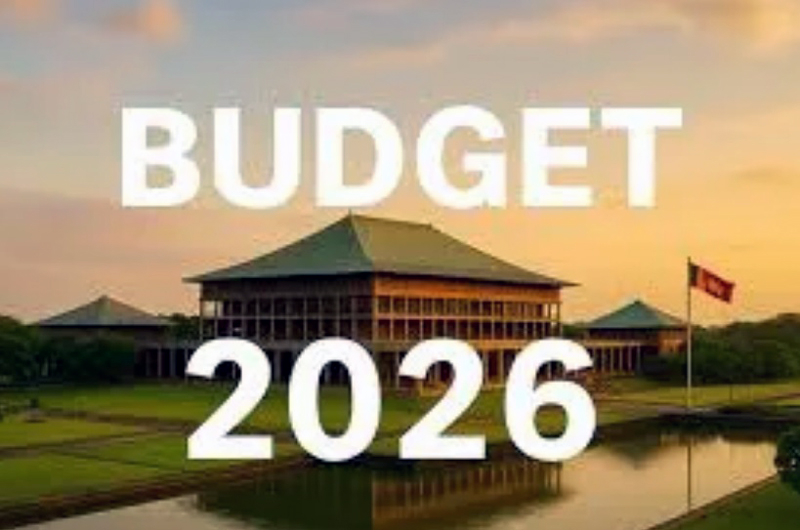
President Anura Kumara Dissanayake delivering the 2026 Budget, said that the government expenditure for the year 2026, including debt servicing, is Rs. 8,980 billion.
Of this a sum of Rs. 4,495 billion has been allocated for debt servicing. It includes Rs. 2,617 billion for loan interest payments and discounts, while Rs. 1,878 billion for loan repayment.
Also, the primary expenditure is estimated at Rs. 4,485 billion. Primary expenditure includes all government expenses, excluding debt repayment and interest.
The primary expenditure consists of salaries and wages (Rs. 1,464 billion), Pensions (Rs. 510 billion), other recurrent (Rs. 1,131 billion) and capital expenditure (Rs. 1,380 billion).


The US and Venezuela have agreed to re-establish diplomatic and consular relations.
The agency said in a statement that the two sides would make joint efforts to promote stability, support economic recovery and advance political reconciliation.
While their diplomatic relations have been improving since the US military captured Venezuelan President Nicolás Maduro in January in a surprise raid, the announcement of formal bilateral ties marks a hugely symbolic step.
President Donald Trump ordered troops to seize Maduro and his wife, bringing them to a Manhattan court to face allegations of weapon and drug offences, which they deny.
(BBC)
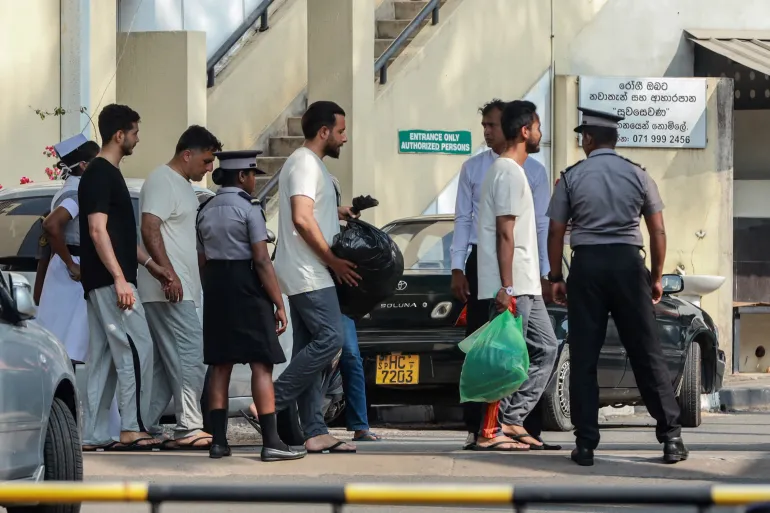
Sri Lanka has evacuated more than 200 crew members from a second Iranian naval vessel off its coast, a day after a US submarine sank an Iranian frigate in the same waters, leaving 87 sailors dead.
President Anura Kumara Dissanayake announced on Thursday that his navy would take custody of the second ship and move it to the northeastern port of Trincomalee for safekeeping, amid fears it could be targeted. He said his government held discussions with Iranian officials and the captain of the ship.
Sri Lankan officials say 87 bodies were recovered and 32 people rescued from the roughly 180 people believed to have been on board IRIS Dena sunk on Wednesday.
US Defense Secretary Pete Hegseth on Wednesday confirmed that a US submarine sank the vessel amid US-Israeli attacks on Iran.
Cabinet spokesperson Nalinda Jayatissa told parliament the vessel was positioned near Colombo, inside Sri Lanka’s exclusive economic zone but beyond its territorial waters, adding that authorities were doing “their utmost to safeguard lives”.
The developments came as Washington confirmed it had torpedoed the IRIS Dena, an Iranian frigate returning from a peacetime naval exercise hosted by India, marking the first time a US submarine has sunk an enemy warship by torpedo since the second world war.
Sri Lankan coastguards received a distress call from the IRIS Dena at 5:08am on Wednesday (23:28 GMT on Tuesday), with surviving crew describing an explosion. Rescue vessels arrived to find the frigate already gone, navy spokesperson Buddhika Sampath said, with only an oil slick and floating life rafts remaining at the scene.
Thirty-two survivors, all seriously injured, were taken to Galle National Hospital. Eighty-seven bodies were recovered from the sea, Sri Lanka’s Foreign Minister Vijitha Herath said. More than 10 sailors remain missing.
The frigate, which was carrying about 180 crew, had been sailing home after participating in a major multinational naval exercise in the Bay of Bengal involving ships from 74 countries when it was struck roughly 44 nautical miles (81km) off Sri Lanka’s southern coast.
US Defense Secretary Pete Hegseth confirmed the strike at a Pentagon briefing, releasing black-and-white footage of a Mark 48 torpedo hitting the frigate’s stern. “An American submarine sank an Iranian warship that thought it was safe in international waters,” he said. “Quiet death.”
Iranian Foreign Minister Abbas Araghchi called it “an atrocity at sea, 2,000 miles [3,219km] from Iran’s shores,” noting the ship had been a guest of India’s navy when struck without warning.
“The US will come to bitterly regret the precedent it has set,” he wrote on social media. He later fired back at Trump’s claim that the operation was running ahead of schedule, “Plan A for a clean rapid military victory failed, Mr President.”
The IRIS Dena was one of more than 20 Iranian navy vessels destroyed since the United States and Israel launched coordinated strikes on Iran on February 28, targeting the country’s leadership, missile arsenals and nuclear infrastructure in an operation aimed at dislodging the current government.
Iranian Supreme Leader Ayatollah Ali Khamenei was killed on the second day of the attacks, triggering protests in the country and beyond.
As of Tuesday, not a single Iranian warship remained under way in the the Gulf, the Strait of Hormuz or the Gulf of Oman, US Central Command chief Admiral Brad Cooper said.
Questions have also been raised about the legality of the attack in international waters.
The Israeli-US attacks have killed more than 1,000 people in Iran and displaced more than 100,000 from Tehran, according to the UN.
In a striking illustration of how far Washington’s war aims have stretched, Trump told Reuters on Thursday that the US intended to play a role in choosing Iran’s next supreme leader.
“We want to be involved in the process of choosing the person who is going to lead Iran into the future,” he said.
Sri Lanka, which has declared neutrality and called for “restraint and immediate de-escalation,” now finds itself hosting the human wreckage from a war being fought on its doorstep.

A flight chartered by the UK government to bring back some Britons stranded in the Middle East has departed after being delayed.
Problems with getting passengers on board meant the plane, due to leave Oman’s capital Muscat on Wednesday, had remained grounded.
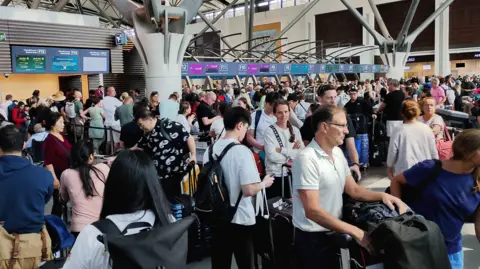
Thousands of British nationals are stuck in the Middle East, after US-Israeli strikes on Iran prompted retaliatory strikes by Iran across the region.
Giving an update on the situation on Thursday afternoon, Prime Minister Sir Keir Starmer confirmed the chartered flight had departed Oman.
Shadow Foreign Secretary Priti Patel said returning UK nationals was “an enormous exercise and ministers must be honest about all their actions”.
She asked what was being done to get British nationals home and questioned why “Britain was so woefully unprepared” for the war.
More than 130,000 Britons in the region have registered for updates from the UK government.
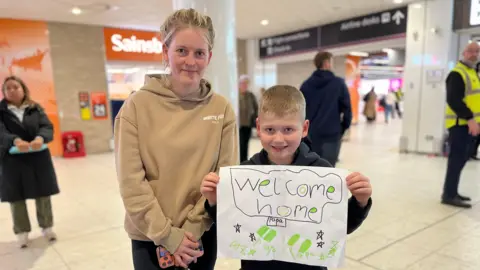
Sir Keir said more than 4,000 people have arrived back in the UK on commercial flights from the UAE, including “vulnerable Brits”.
A further seven flights are due to leave the UAE for the UK on Thursday, he said, adding that the government will lay on additional charter flights in the coming days.
He said British Airways is putting on daily flights from Oman, and the government will keep working with partners to “increase the speed and capacity of this airlift”.
Foreign Office minister Hamish Falconer described the situation as “a consular challenge on a scale not seen since Covid” and said there were “no instant solutions”.
Britons in Oman will be contacted as soon as the additional government-organised flights from Muscat become available, Falconer said.
However, he said commercial flights becoming available were “by far the most likely and the most rapid routes back to the UK”.
In response, the shadow foreign secretary criticised the government’s position on the conflict, calling Foreign Secretary Yvette Cooper “weak and feeble”.
Patel said the US, Cyprus, the UAE and Bahrain felt let down by the UK’s lack of involvement.
Cooper had “failed in her duty to stand up for Britain’s place in the world” and had not provided the leadership needed to protect military personnel, British bases and British nationals, she added.
Regarding the delayed flight, Home Office minister Alex Norris earlier told LBC: “It didn’t take off because there are operational reasons… about getting passengers on board, and it wasn’t able to happen in the time that it had to happen.”
On Thursday evening, a plane sent by France to Dubai to repatriate its citizens reportedly had to turn back because of missile fire.
French Transport Minister Philippe Tabarot said the turning round of the French plane underscored the instability in the region and the complexity of safely carrying out repatriation operations.
Those eligible for government flights are being asked to pay for seats. When announcing the initial flight, the Foreign Office said it would prioritise the most vulnerable people, and that only British nationals, their spouse or partner, and children under 18 would be offered a seat.



US and Venezuela agree to resume diplomatic ties after Maduro capture

Jamie Siddons appointed Sri Lanka Women head coach

Showers or thundershowers are likely at a few places in the Southern province and in Rathnapura, and Kaluthara districts during evening or night.

‘IRIS Dena was Indian Navy guest, hit without warning’, Iran warns US of bitter regret

Risk of power cuts due to use of low-quality coal,PUCSL warns

Sajith demands clear statement from govt. about Iranian vessel sunk close to Galle and another located near Colombo port

‘Dates have the highest sugar content to fight Coronavirus’

Sunday Island 27 December – Headlines

#SundayIsland 17th December – Headlines

Sunday Island – 28th March

Sunday Island Headlines – 21 March

Sunday Island – 21st February – Headlines
-
 Features4 days ago
Brilliant Navy officer no more
-

 Opinion4 days ago
Sri Lanka – world’s worst facilities for cricket fans
-

 Features4 days ago
A life in colour and song: Rajika Gamage’s new bird guide captures Sri Lanka’s avian soul
-

 Business2 days ago
Cabinet nod for the removal of Cess tax imposed on imported good
-

 Features5 days ago
Overseas visits to drum up foreign assistance for Sri Lanka
-

 Features5 days ago
Sri Lanka to Host First-Ever World Congress on Snakes in Landmark Scientific Milestone
-

 News1 day ago
Legal experts decry move to demolish STC dining hall
-
 Latest News2 days ago
Around 140 people missing after Iranian navy ship sinks off coast of Sri Lanka