
Opinion
To Seeya with our love

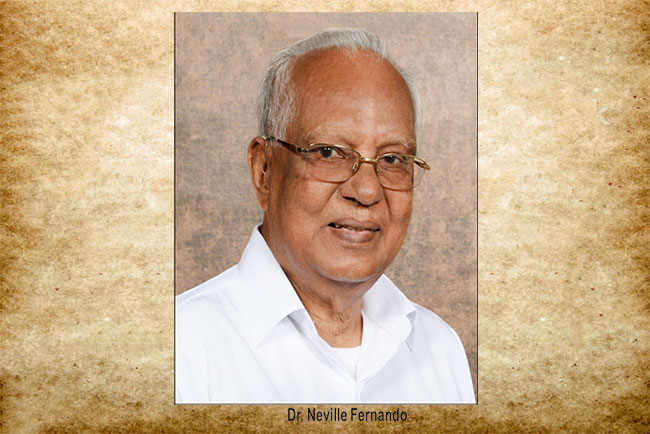
In loving memory of Dr Neville Fernando on his 91st Birth Anniversary
As I struggled to find the right words to do justice, on the remembrance of your 91st Birth Anniversary, I realise that I can hardly do justice to a person as extraordinary as you were. To everyone else you were a visionary, an entrepreneur, a medical practitioner, an educationist, a statesman, a philanthropist -but to my two sisters and I, you seeya, was our much loved grandfather.
Each of us in our own way has a person who would have had a big influence when growing up and in essence it is he who made the biggest impact in my life. His simple way of life, his undaunting nature, his kindness and generosity towards people are what I am left with the most today.
Growing up, my sisters and I were unaware of his political or business affiliations. His love for the three of us were so profound and most of my childhood memories linger at their house in Nawala where we often used to spend time. Bombay toast as he called it, was his specialty, which he made with much enthusiasm whenever we stayed over. From time to time he developed various hobbies and to the irk of my grandmother his attempt at cooking was one such stint. True to his entrepreneurial nature, he would buy a dozen books on cookery and much to our dismay we were his guinea pigs! I still remember with laughter how he made us a meat dish and none of us at the table, including him, could barely chew it.
I remember being amazed by his knowledge of world affairs, history and politics. Our greatest times were spent on shopping for books when he used to take us to the bookshops around Colombo. From the time we were children, he encouraged us to read and develop a thirst for knowledge which we did, with him as our role model.
Politicians are always looked upon as rouges which is why I prefer to call my grandfather a statesman. In 1977 when he had won the Panadura seat with a majority votes over Leslie Gunawardena, it had been the first UNP victory in the electorate since 1952. Many a times he would remember with gratitude his patients who came to vote for him at the election. To this day people in his era remember his service to the public in setting up the Kethumathi Maternity hospital in Panadura, the Industrial zone in Modarawila, establishing schools such as Presidents College (now known as Royal College –Panadura) and Agamathi Balika Vidyalaya. Although clashes with the executive presidency at that time led to his resignation from Parliament, his love to serve people remained.
His venture into the field of business started with the construction of a 35-room hotel named Swanee in Beruwala. After the sale of the hotel to a private enterprise, he moved on to the printing industry and established JF&I Printers. He was never afraid to venture into an unknown field and in 1995 started a Porcelain Factory in Kosgama known as Royal Fernwood Porcelain, with a Japanese partner. After his exit from the porcelain sector he ventured in to the private hospital sector through the purchase of Asha Central Hospital in 1998. He was very proud to have turned over the hospital during his 10 year tenure, until he sold it to the Asiri group of Hospitals.
He was never emotionally attached to his business ventures and knew when it was time to exit. However the same cannot be said about his most precious brainchild, SAITM- The South Asian Institute of Technology and Medicine Ltd. He created SAITM to be a gift for the youth of this country and was devoted to establishing it, along with his team of finest Professors. By 2011, I had finished my undergraduate studies at the University of Sri Jayewardenepura and it was with great pride he asked me to join SAITM. I had the privilege to work with him thereon. It is then that I saw him not through the eyes of a grandchild but as the true visionary he was. The establishment of Dr Neville Fernando Teaching Hospital (NFTH) at Malabe followed and was the teaching hospital for SAITM medical students.
To build a higher education institution and a 1,000-bed hospital, at the age of 78 when most would have happily retired, was his greatest achievement. His vision was to educate and create young men and women of character. I have had the opportunity to accompany him on his tireless journey to establish SAITM and have witnessed first-hand how he faced many obstacles and adversity with his bold and courageous spirit. His story will always be one of courage, conviction and perseverance.
To those who knew and associated him will remember the kindness with which he would greet a person. Any member of the family or any acquaintance would be welcomed with much love and compassion. His greatest love, was feeding people, whether friends, family, colleagues, staff or students. Every occasion to him was a good enough reason to celebrate with a lunch or dinner and his birthdays in particular were always a special occasion where everyone gathered to wish him well.
For our family members, immediate and extended, he was always the one to give a supporting hand, whether financially or advisory and never uttered a word about it. When he passed away we were humbled by the many messages of appreciations that were made acknowledging his kind generosity. During my time with him, I was surprised to witness the number of letters people send seeking for financial help and in true giving spirit he responded whenever he could. I remember vividly how he responded to the numerous appeals of help at the Dr Neville Fernando Teaching Hospital (NFTH) whenever patients could not afford to pay.
His simple lifestyle with his love for ‘kos’, ‘del’ or ‘manioc with katta sambal’ and his love for nature and all living creatures made him such an endearing person to us all. He once put a board outside the wall of his house saying not to pluck the flowers as it is for the birds and butterflies to feed on.
My heartfelt gratitude goes out to him for paving me the path to understand the impermanence nature of life and enabling me to accept insult, loss and pain with the same strength as praise, gain and happiness. Although at times I have questioned his decisions, today, I know much of it is because he was a visionary who saw the future 10 to 20 years ahead. Sri Lanka would have undoubtedly progressed further if not for decisions made by opportunists we know as ‘politicians’ today.
Today, the 9th of March 2022 marks his 91st Birth Anniversary and needless to say our family misses him each day. Our only wish is that his Sansaric journey be short and that may he attain the Supreme bliss of Nibbana.
Dayabara seeye, obata niwan suwa pathami.
Himali Jayatilake


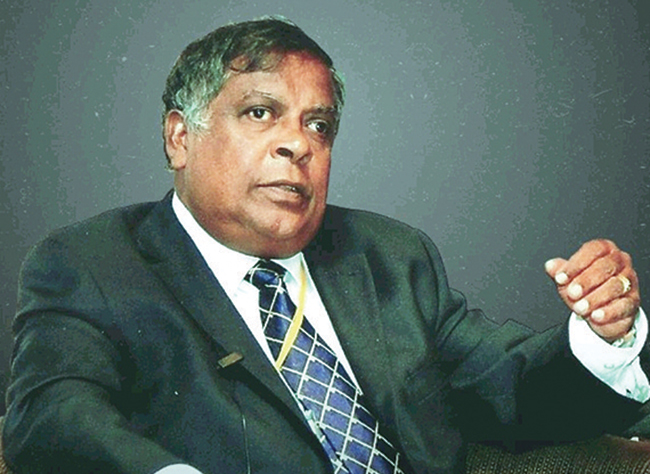
Mr. Tuli Cooray, former Deputy Director General of the Board of Investment of Sri Lanka (BOI) and former Secretary General of the Joint Apparel Association Forum (JAAF), passed away three months ago, leaving a distinguished legacy of public service and dedication to national economic development.
An alumnus of the University of Colombo, Mr. Cooray graduated with a Special Degree in Economics. He began his career as a Planning Officer at the Ministry of Plan Implementation and later served as an Assistant Director in the Ministry of Finance (Planning Division).
He subsequently joined the Greater Colombo Economic Commission (GCEC), where he rose from Manager to Senior Manager and later Director. During this period, he also served at the Treasury as an Assistant Director. With the transformation of the GCEC into the BOI, he was appointed Executive Director of the Investment Department and later elevated to the position of Deputy Director General.
In recognition of his vast experience and expertise, he was appointed Director General of the Budget Implementation and Policy Coordination Division at the Ministry of Finance and Planning. Following his retirement from government service, he continued to contribute to the national economy through his work with JAAF.
Mr. Cooray was widely respected as a seasoned professional with exceptional expertise in attracting foreign direct investment (FDI) and facilitating investor relations. His commitment, leadership, and humane qualities earned him the admiration and affection of colleagues across institutions.
He was also one of the pioneers of the BOI Past Officers’ Association, and his passing is deeply felt by its members. His demise has created a void that is difficult to fill, particularly within the BOI, where his contributions remain invaluable.
Mr. Cooray will be remembered not only for his professional excellence but also for his integrity, humility, and the lasting impact he made on those who had the privilege of working with him.
The BOI Past Officers’ Association
jagathcds@gmail.com
“As a small and open country, Singapore will always be vulnerable to what happens around us. As Lee Kuan Yew used to say: “when elephants fight, the grass suffers, but when elephants make love, the grass also suffers“. Therefore, we must be aware of what is happening around us, and prepare ourselves for changes and surprises.” – Prime Minister Lee Hsien Loong, during the debate on the President’s Address in Singapore Parliament on 16 May, 2018, commenting on the uncertain external environment during the first Trump Administration.
“When elephants fight, it is the grass that suffers”
is a well-known African proverb commonly used in geopolitics to describe smaller nations caught in the crossfire of conflicts between major powers. At the 1981 Commonwealth conference, when Tanzanian President Julius Nyerere quoted this Swahili proverb, the Prime Minister Lee Kuan Yew famously retorted, “When elephants make love, the grass suffers, too”. In other words, not only when big powers (such as the US, Russia, EU, China or India) clash, the surrounding “grass” (smaller nations) get “trampled” or suffer collateral damage but even when big powers collaborate or enter into friendly agreements, small nations can still be disadvantaged through unintended consequences of those deals. Since then, Singaporean leaders have often quoted this proverb to highlight the broader reality for smaller states, during great power rivalry and from their alliances. They did this to underline the need to prepare Singapore for challenges stemming from the uncertain external environment and to maintain high resilience against global crises.
Like Singapore, as a small and open country, Sri Lanka too is always vulnerable to what happens around us. Hence, we must be alert to what is happening around us, and be ready not only to face challenges but to explore opportunities.
When Elephants Fight
To begin with, President Trump’s “Operation Epic Fury”.
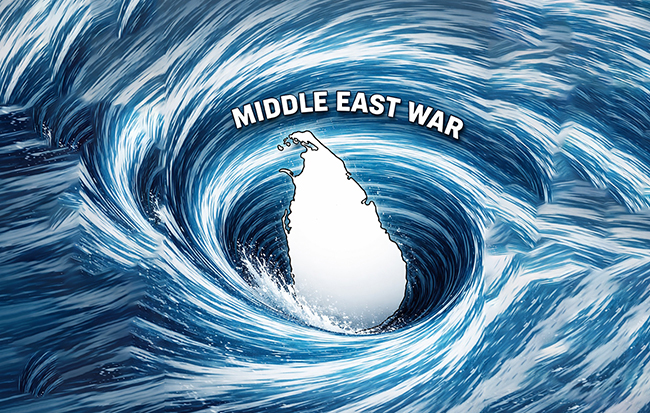
Did we prepare adequately for changes and surprises that could arise from the deteriorating situation in the Gulf region? For example, the impact the conflict has on the safety and welfare of Sri Lankans living in West Asia or on our petroleum and LNG imports. The situation in the Gulf remains fluid with potential for further escalation, with the possibility of a long-term conflict.
The region, which is the GCC, Iraq, Iran, Israel, Jordan, Syria and Azerbaijan (I believe exports to Azerbaijan are through Iran), accounts for slightly over $1 billion of our exports. The region is one of the most important markets for tea (US$546 million out of US$1,408 million in 2024. According to some estimates, this could even be higher). As we export mostly low-grown teas to these countries, the impact of the conflict on low-grown tea producers, who are mainly smallholders, would be extremely strong. Then there are other sectors like fruits and vegetables where the impact would be immediate, unless of course exporters manage to divert these perishable products to other markets. If the conflict continues for a few more weeks or months, managing these challenges will be a difficult task for the nation, not simply for the government. It is also necessary to remember the Russia – Ukraine war, now on to its fifth year, and its impact on Sri Lanka’s economy.
Mother of all bad timing
What is more unfortunate is that the Gulf conflict is occurring on top of an already intensifying global trade war. One observer called it the “mother of all bad timing”. The combination is deadly.
Early last year, when President Trump announced his intention to weaponise tariffs and use them as bargaining tools for his geopolitical goals, most observers anticipated that he would mainly use tariffs to limit imports from the countries with which the United States had large trade deficits: China, Mexico, Vietnam, the European Union, Japan and Canada. The main elephants, who export to the United States. But when reciprocal tariffs were declared on 2nd April, some of the highest reciprocal tariffs were on Saint Pierre and Miquelon (50%), a French territory off Canada with a population of 6000 people, and Lesotho (50%), one of the poorest countries in Southern Africa. Sri Lanka was hit with a 44% reciprocal tariff. In dollar terms, Sri Lanka’s goods trade deficit with the United States was very small (US$ 2.9 billion in 2025) when compared to those of China (US$ 295 billion in 2024) or Vietnam (US$ 123 billion in 2024).
Though the adverse impact of US additional ad valorem duty has substantially reduced due to the recent US Supreme Court decision on reciprocal tariffs, the turbulence in the US market would continue for the foreseeable future. The United States of America is the largest market for Sri Lanka and accounts for nearly 25% of our exports. Yet, Sri Lanka’s exports to the United States had remained almost stagnant (around the US $ 3 billion range) during the last ten years, due to the dilution of the competitive advantage of some of our main export products in that market. The continued instability in our largest market, where Sri Lanka is not very competitive, doesn’t bode well for Sri Lanka’s economy.
When Elephants Make Love
In rapidly shifting geopolitical environments, countries use proactive anticipatory diplomacy to minimise the adverse implications from possible disruptions and conflicts. Recently concluded Free Trade Agreement (FTA) negotiations between India and the EU (January 2026) and India and the UK (May 2025) are very good examples for such proactive diplomacy. These negotiations were formally launched in June 2007 and were on the back burner for many years. These were expedited as strategic responses to growing U.S. protectionism. Implementation of these agreements would commence during this year.
When negotiations for a free trade agreement between India and the European Union (which included the United Kingdom) were formally launched, anticipating far-reaching consequences of such an agreement on other developing countries, the Commonwealth Secretariat requested the University of Sussex to undertake a study on a possible implication of such an agreement on other low-income developing countries. The authors of that study had considered the impact of an EU–India Free Trade Agreement on the trade of excluded countries and had underlined, “The SAARC countries are, by a long way, the most vulnerable to negative impacts from the FTA. Their exports are more similar to India’s…. Bangladesh is most exposed in the EU market, followed by Pakistan and Sri Lanka.”
So, now these agreements are finalised; what will be the implications of these FTAs between India and the UK and the EU on Sri Lanka? According to available information, the FTA will be a game-changer for the Indian apparel exporters, as it would provide a nearly ten per cent tariff advantage to them. That would level the playing field for India, vis-à-vis their regional competitors. As a result, apparel exports from India to the UK and the EU are projected to increase significantly by 2030. As the sizes of the EU’s and the UK’s apparel markets are not going to expand proportionately, these growths need to come from the market shares of other main exporters like Sri Lanka.
So, “also, when elephants make love, the grass suffers.”
Impact on Sri Lanka
As a small, export dependent country with limited product and market diversification, Sri Lanka will always be vulnerable to what happens in our main markets. Therefore, we must be aware of what is happening in those markets, and prepare ourselves to face the challenges proactively. Today, amid intense geopolitical conflicts, tensions and tariff shifts, countries adopt high agility and strategic planning. If we look at what our neighbours have been doing in London, Brussels and Tokyo, we can learn some lessons on how to navigate through these turbulences.
(The writer is a retired public servant and can be reached at senadhiragomi@gmail.com)
by Gomi Senadhira

The introduction of the QR code–based fuel quota system can be seen as a timely and necessary measure, implemented as part of broader austerity efforts to manage limited fuel resources. In the face of ongoing global fuel instability and economic challenges, such a system is aimed at ensuring equitable distribution and preventing excessive consumption. While it is undeniable that this policy may disrupt the daily routines of certain segments of the population, it is important for citizens to recognize the larger national interest at stake and cooperate with these temporary measures until stability returns to the global fuel market.
At the same time, this initiative presents an important opportunity for the Government to address long-standing gaps in regulatory enforcement. In particular, the implementation of the QR code system could have been strategically linked to the issuance of valid revenue licenses for vehicles. Restricting QR code access only to vehicles that are properly registered and have paid their revenue dues would have helped strengthen compliance and improve state revenue collection.
Available data from the relevant authorities indicate that a significant number of vehicles—especially three-wheelers and motorcycles—continue to operate without valid revenue licences. This represents a substantial loss of income to the State and highlights a weakness in enforcement mechanisms. By integrating the fuel quota system with revenue license verification, the government could have effectively encouraged vehicle owners to regularise their documentation while simultaneously improving fiscal discipline.
In summary, while the QR code fuel system is a commendable step toward managing scarce resources, aligning it with existing regulatory requirements would have amplified its benefits. Such an approach would not only support fuel conservation but also enhance government revenue and promote greater accountability among vehicle owners.
Sariputhra
Colombo 05

A QR code system to be introduced for agricultural lands and other sectors requiring fuel

Rickelton, Rohit, Shardul break Mumbai’s first-game jinx

Oil tops $116 a barrel as Iran accuses US of preparing invasion

Iranian attack damages Kuwait power and desalination plant, kills worker

Warm weather conditions prevailing over the island are expected to continue

Inquiry into female employee’s complaint: Retired HC Judge’s recommendations ignored

‘Dates have the highest sugar content to fight Coronavirus’

Sunday Island 27 December – Headlines

#SundayIsland 17th December – Headlines

Sunday Island – 28th March

Sunday Island Headlines – 21 March

Sunday Island – 21st February – Headlines
-

 News5 days ago
Senior citizens above 70 years to receive March allowances on Thursday (26)
-

 Features2 days ago
A World Order in Crisis: War, Power, and Resistance
-

 News3 days ago
Energy Minister indicted on corruption charges ahead of no-faith motion against him
-

 News4 days ago
US dodges question on AKD’s claim SL denied permission for military aircraft to land
-

 Business4 days ago
Dialog Unveils Dialog Play Mini with Netflix and Apple TV
-

 Sports3 days ago
SLC to hold EGM in April
-

 News5 days ago
CEB Engineers warn public to be prepared for power cuts after New Year
-
 Business6 days ago
Postponement of Sri Lanka Investment Forum 2026