
Features
The VFS Visa Deal – The Anatomy of a Scam


by Rohan Pethiyagoda
In 2012, the Department of Immigration & Emigration (DIE) contracted Mobitel, which is in effect a state-owned enterprise, to establish and operate an online gateway for foreigners wishing to apply for visas to Sri Lanka. For the next twelve years, from 2012 to 2024, the system operated flawlessly. Better still, Mobitel offered the service free of charge to the DIE while recovering part of its costs from advertising and promoting its services to tourists. In all those 12 years, Mobitel didn’t receive a single letter from DIE complaining that the service was in any way less than perfect.
By 2018, however, it became clear to Mobitel that in order to keep up with technology and also the growing number of tourists, both the hardware and software of the system needed upgrading. Finally, after protracted negotiations with DIE, on December 14, 2020, Mobitel submitted a proposal offering to invest in upgrading the system as required by DIE. All it asked in return was US$ 1 per applicant. Thereafter, Mobitel and DIE engaged in technical discussions to precisely define the new system and finally, on August 23, 2023, submitted a final, comprehensive proposal. Meanwhile, the system continued to work perfectly, entirely for free.
Divorce Proceedings
At 3.07 p.m. on April 5, 2024, Mobitel’s management was astonished to receive an email from the Assistant Director (Information Technology) of DIE, a junior fourth-rung officer, directing Mobitel to cease processing applications from 11:59 pm on 5 April 2024. No reason was given. However, at 3.30 pm the same day, Mobitel received another email from DIE cancelling the former email. Again, no explanation. To this day, despite repeated requests from Mobitel, DIE has never explained what was going on.
Finally, at 2:32 pm on 16 April 2024, DIE’s Assistant Controller (IT) sent a further email directing Mobitel to switch of the system at midnight. Mobitel responded by asking for a written direction from the Commissioner General of DIE, which was received shortly thereafter. At midnight on April 16, the 12-year collaboration between Mobitel and DIE came to an end. The reasons for the termination remained a mystery until finally, on July 12, Harsha de Silva, the chairman of the Parliamentary Committee on Public Finance issued a damning 640-page report: “Outsourcing Online Visa and Passport Application Services between the Consortium and the Department of Immigration and Emigration of Sri Lanka”. By ‘consortium’, it meant GBS Technology Services & IVS Global-FZCO (IVS-GBS) and VF Worldwide Holdings LTD (VFS Global). While the beneficial owners of these companies remain shrouded in mystery, the companies themselves are located in Dubai, notoriously a tax haven. Here, for short, I will refer to these entities collectively as VFS, which is the largest and best known among them.
Opaque Process
Unknown to Mobitel, in June 2023 a Dubai-based entity known as IVS-GBS Global Services had submitted to the Ministry of Public Security an unsolicited proposal titled “Comprehensive Proposal on E-Visa, Consular Services, Visa Services, Biometric Services and Tourism Promotion”.
VFS’s unsolicited proposal gave the fee structure as $30 for the ETA plus a $25 fee for IVS-GBS-VFS, basically for providing the same service that Mobitel provided free of charge from 2012 to 2024. What is surprising is that the service fee demanded by IVS was staggering 83% of the revenue that the government would get from visa fees.
Cabinet Approval
Nevertheless, Tiran Alles, the Minister of Public Security, submitted the IVS-GBS proposal to cabinet on September 8, 2023, noting “I observe that this Institution is an internationally renowned company” even though, for practical purposes, it essentially services only India. By way of justification for abandoning the $1 Mobitel system and transferring to the very expensive IVS system, the Minister provided several ‘justifications’. First is that because the IVS user interface is “designed in the languages of each country, foreigners may provide more opportunities to apply for visa to visit this country”. This, however, is not true: the site operates entirely in English. You can check for yourself: https://online.srilankaevisa.lk/
The Minister goes on to state, without any justification, that IVS will charge a service fee of USD 18.50 from each visa applicant. Finally, he adds, “the Government does not have to bear any cost in implementing this Programme”. However, given that the USD 18.50 paid to IVS is a mandatory condition of applying for a Sri Lankan visa, it is in effect a levy made by the government and paid to IVS, though bypassing the Consolidated Fund and without any transparent procurement procedure. This is arguably a violation of Article 148 of the Constitution.
$200 million ‘evaporates’
The cabinet memorandum continues, “IVS -GBS global Services has proposed to invest a sum of 200 million USD to provide the relevant technical equipment, software and knowledge for the system integration to be made with the Department of Immigration and Emigration in rendering the relevant services by this Company.” Nowhere in the final Outsourcing Agreement signed between Controller General of DIE and IVS-GBS-VHS is this $200 million mentioned. It has simply evaporated.
Amazingly, on 11 September 2023, the Cabinet passed the proposal through on the nod, appointing an Evaluation Committee comprising of five individuals drawn from the administrative service who evidently have no background in IT. They were T.V.D. Damayanthi S. Karunaratne (Additional Secretary, Development & Planning of the Ministry of Public Security); I.S.H.J. Ilukpitiya, Commissioner General of Immigration & Emigration; Mr Champika Ramawickrema, Senior Assistant Secretary, Ministry of Public Administration, Home Affairs, Provincial Councils and Local Government; M.P.D.P. Pathirana, Chief Financial Officer, Ministry of Public Security; and Mr M.R.G.A. Muthukuda, Additional Director General, Department of Fiscal Policy (representing the Secretary to the Treasury). Given that none of these people is a software expert (this is, after all, a software services procurement), it is astonishing that no Technical Committee was appointed. Neither was there a Cabinet Appointed Negotiating Committee, to assess whether the $18.50 fee was reasonable. It was simply passed through on the nod.
It seems astonishing that President Ranil Wickremesinghe did not suggest that before farming this massive project out to a foreign entity who had submitted an unsolicited bid, a local tender should be floated. After all, Mobitel had already demonstrated its ability to design and operate the necessary system not just flawlessly but at just $1 per applicant. Besides, Sri Lankan software companies are outstanding by even world standards. It is their software that drives the stock exchanges of London, Italy and South Africa, among others. More importantly, perhaps, the president himself has been endlessly touting the need to “enrich, empower and enable” Sri Lankans to develop local IT capacity, going on and on about “the importance of digitalization”, the “digital public economy”, “creating a Digital Transformation Agency” with a budget of Rs 1 billion, etc etc (see this release by the President’s Media Division: https://pmd.gov.lk/news/president-wickremesinghe-pledges-digital-transformation-for-poverty-reduction-and-educational-reform/). Clearly, Wickremesinghe is better at talking the talk than walking the walk.
The ‘Evaluation’
Amazingly for an ‘evaluation committee’, the committee made no evaluation of the most crucial factor in the VFS proposal, namely, the $18.50 service fee. How was this calculated? Was it justified? Was it competitive? No comment. With 1.4 million tourists coming into Sri Lanka, this adds up to a staggering $26 million, or Rs 8 billion per year. And the contract is for 16 years, with provision for 10% hike every two years. Someone is laughing all the way to the bank.
As it happened, the Evaluation Committee made no comment on, or comparison of Mobitel’s $1 offer against VFS’s $18.50 price. It acted purely as a rubber stamp. Indeed, it is open to question as to whether its members had the technical or negotiating skills needed to effectively evaluate VFS’s unsolicited offer.
Attorney General
Agreements signed by government agencies are usually vetted by the Attorney General, and this one was no exception. On 15.11.2023, the AG’s observations, signed by Senior Deputy Solicitor General Mahen Gopallawa, were issued. These were confined to purely semantic issues, with no recommendations on process. A disclaimer at the end makes this explicit: “It is assumed that the financial and technical implications of the agreement have been carefully considered and that all necessary approvals have been or will be obtained prior to its execution.” That, however, was an assumption too far. Neither the cabinet nor the Evaluation Committee had paid the slightest attention to the biggest financial implication, namely, the exorbitant fee of $18.50 being charged by IVS-GBS-VFS. In fact, there is no mention in any document that the USD 18.50 service charge was ever justified or even queried.
Cabinet Approval
Then, with the reports of the Evaluation Committee and the Attorney General in hand, on 4 December 2023 the Minister of Public Security sought cabinet approval to sign the contract with the consortium. In his capacity as Minister of Finance, President Wickremesinghe endorsed the Evaluation Committee’s report, noting only that “Prior to entering into an Agreement, the Ministry of Public Security must ensure strict compliance with all the recommendations made by the Attorney General’s Department on the Agreement.” Astonishingly, he made no mention of the USD 18.50 service charge, which both the Evaluation Committee and the Attorney General had deftly sidestepped. Thus it was that the elephant sneaked into the room with the Evaluation Committee, the Attorney General, the minister and the president all studiously looking the other way even as $18.50 per tourist came to be siphoned into an offshore account. This is money that should properly come into the Consolidated Fund.
Tourism on the Rocks
What is more, the activity of promoting inbound tourism to Sri Lanka has now been awarded to this consortium on an exclusive basis, in effect making the Sri Lanka Tourism Promotion Bureau and its staff redundant. DIE Controller General Harsha Ilukpitiya, with no authority from cabinet, with no consultation with the tourism industry, and possibly without the consent of Tourism Minister Harin Fernando, signed away the rights to tourism promotion in Sri Lanka for the next 16 years to GBS-IVS-VFS, which has no known capacity in this highly specialized field. In this context, it is noteworthy that a co-owner of VFS is the giant tourism operator Kuoni, with immediate conflict-of-interest issues. So much for the zeal of the Evaluation Committee.
The Outsourcing Agreement also notes that VFS’s service fee of USD 18.50 per visa application “will be exclusive of any payment gateway, local taxes as applicable and other transaction fees”. All these are unspecified, and the consortium is therefore open to fleece tourists coming to Sri Lanka for as much as they want for the next 16 years.
AG vs COPF
On 9 May 2024, the Parliamentary Committee on Public Finance (COPF) requested the Attorney General to clarify whether the fees of USD 18.50 was a levy that would have to be authorised by Parliament under Article 148 of the Constitution. That is, whether like visa fees, this fee requires approval by parliament. The AG responded that no such parliamentary approval was needed. In doing so, the AG, no doubt unwittingly, misled COPF, writing, “The fee charged by the Service Providers (i.e. IVSGBS and VFS) is a “service fee” charged from applicants for on line visas for the service provided to them by the Service Provider and does not form part of the Visa Fees that are approved by Parliament. In the circumstances, Parliamentary approval for them does not arise”. The question then arises, if parliament does not approve the $18.50 fee, who does? It is entirely arbitrary.
The AG further justified this stance on the basis that it is not compulsory for foreigners to obtain their visas from IVS-GBS-VFS (if it were compulsory, the USD 18.50 would be a compulsory fee and hence subject to parliamentary approval), writing: “According to the Controller General, after the Outsourcing Agreement, an applicant has the following options: (a) Apply to the respective Sri Lankan Embassies; (b) Obtain visas through IVSGBS and VFS; (c) Obtain “on arrival” visas for 30 day tourist and business visas”.
Sadly, it appears that the Controller General of DIE had misled the AG. Any foreigner wishing to get a tourist visa to Sri Lanka and viewing the web portal of the Department of Immigration & Emigration (https://www.immigration.gov.lk/pages_e.php?id=14) gets the following message, in bold red letters: “IMPORTANT NOTICE: With effect from 17th April 2024, all Tourist or Business travelers to Sri Lanka must have e-Visa for entering in to Sri Lanka. Please visit https://www.srilankaevisa.lk for more information.” Nowhere on this site does it say that “on arrival” visas are available, or that Sri Lanka missions or embassies issue visas. In fact, nowhere on the page does the word ‘embassy’ even appear. Therefore, as far as tourists are concerned, it is compulsory that they get their visas from the IVS-GBS-VFS site https://www.srilankaevisa.lk/. What’s more, that site itself boldly announces, “ALL visitors MUST complete an eVisa application prior to their arrival in the country”. No doubt, after reading this article, DIE may seek to hastily amend their web page. If so, too late: I see that the entire DIE website has already been archived at https://web.archive.org/web/20240713021620/https://www.immigration.gov.lk/pages_e.php?id=14
It is now incontrovertible that, presumably because he himself was misled by the Controller General of DIE, the AG misled parliament.
Public Interest
Why should anyone care that VHS pockets a hefty $18.50 from every tourist who visits Sri Lanka? After all, it isn’t ‘our’ money. First off, it SHOULD be our money. This is money that the government of Sri Lanka forces every person wishing to visit Sri Lanka to pay to VFS. In fact, as the DIE and VFS websites make clear, if you don’t pay it, you can’t get a visa. Therefore, it is a levy charged by the government and siphoned off to VFS in Dubai without going through the Consolidated Fund and being subject to parliamentary oversight as required by Article 148 of the Constitution.
Second, the so-called service fee of $18.50 is arbitrary. It was not negotiated or evaluated by the Evaluation Committee, the Cabinet, the DIE or the Ministry of Public Security. What, if instead of $18.50 it was $1000? Whose job was it to say, ‘Hang on a minute, that’s too much’? No one, not the Evaluation Committee, the Cabinet or the DIE have said anywhere that that figure is reasonable.
COPF Chairman Harsha de Silva is already on record as saying that the Auditor General’s report on this matter should be handed over to the CID and the Bribery Commission. This is particularly apt because VFS is partly owned by Blackstone, a New York based financial giant. And thus, VFS falls under the purview of the US FCPA or Foreign Corrupt Practices Act. The FCPA requires companies whose securities are listed in the USA to meet stringent accounting and anti-bribery provisions. It remains to be seen whether COPF will forward the Auditor General’s report to the US Department of Justice, requesting an FCPA investigation. Who knows, Sri Lanka might just get enough compensation to pay off its national debt.


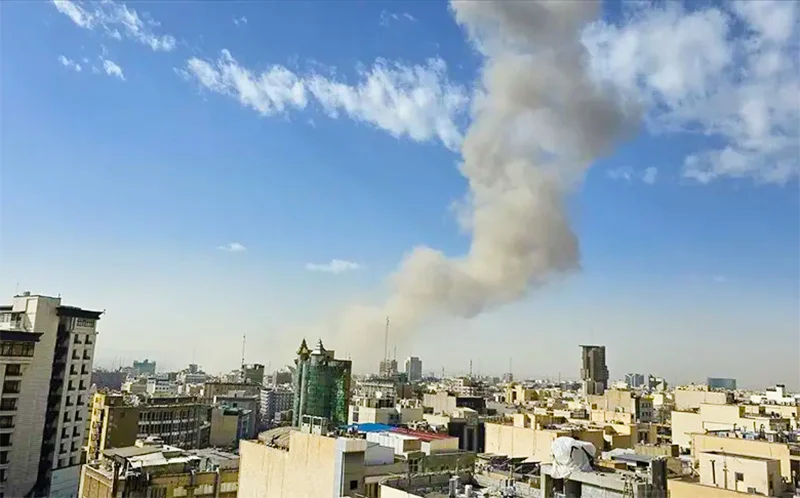
 The recent humanly costly torpedoing of an Iranian naval vessel in Sri Lanka’s Exclusive Economic Zone by a US submarine has raised a number of issues of great importance to international political discourse and law that call for elucidation. It is best that enlightened commentary is brought to bear in such discussions because at present misleading and uninformed speculation on questions arising from the incident are being aired by particularly jingoistic politicians of Sri Lanka’s South which could prove deleterious.
As matters stand, there seems to be no credible evidence that the Indian state was aware of the impending torpedoing of the Iranian vessel but these acerbic-tongued politicians of Sri Lanka’s South would have the local public believe that the tragedy was triggered with India’s connivance. Likewise, India is accused of ‘embroiling’ Sri Lanka in the incident on account of seemingly having prior knowledge of it and not warning Sri Lanka about the impending disaster.
It is plain that a process is once again afoot to raise anti-India hysteria in Sri Lanka. An obligation is cast on the Sri Lankan government to ensure that incendiary speculation of the above kind is defeated and India-Sri Lanka relations are prevented from being in any way harmed. Proactive measures are needed by the Sri Lankan government and well meaning quarters to ensure that public discourse in such matters have a factual and rational basis. ‘Knowledge gaps’ could prove hazardous.
Meanwhile, there could be no doubt that Sri Lanka’s sovereignty was violated by the US because the sinking of the Iranian vessel took place in Sri Lanka’s Exclusive Economic Zone. While there is no international decrying of the incident, and this is to be regretted, Sri Lanka’s helplessness and small player status would enable the US to ‘get away with it’.
Could anything be done by the international community to hold the US to account over the act of lawlessness in question? None is the answer at present. This is because in the current ‘Global Disorder’ major powers could commit the gravest international irregularities with impunity. As the threadbare cliché declares, ‘Might is Right’….. or so it seems.
Unfortunately, the UN could only merely verbally denounce any violations of International Law by the world’s foremost powers. It cannot use countervailing force against violators of the law, for example, on account of the divided nature of the UN Security Council, whose permanent members have shown incapability of seeing eye-to-eye on grave matters relating to International Law and order over the decades.
The foregoing considerations could force the conclusion on uncritical sections that Political Realism or Realpolitik has won out in the end. A basic premise of the school of thought known as Political Realism is that power or force wielded by states and international actors determine the shape, direction and substance of international relations. This school stands in marked contrast to political idealists who essentially proclaim that moral norms and values determine the nature of local and international politics.
While, British political scientist Thomas Hobbes, for instance, was a proponent of Political Realism, political idealism has its roots in the teachings of Socrates, Plato and latterly Friedrich Hegel of Germany, to name just few such notables.
On the face of it, therefore, there is no getting way from the conclusion that coercive force is the deciding factor in international politics. If this were not so, US President Donald Trump in collaboration with Israeli Rightist Premier Benjamin Natanyahu could not have wielded the ‘big stick’, so to speak, on Iran, killed its Supreme Head of State, terrorized the Iranian public and gone ‘scot-free’. That is, currently, the US’ impunity seems to be limitless.
Moreover, the evidence is that the Western bloc is reuniting in the face of Iran’s threats to stymie the flow of oil from West Asia to the rest of the world. The recent G7 summit witnessed a coming together of the foremost powers of the global North to ensure that the West does not suffer grave negative consequences from any future blocking of western oil supplies.
Meanwhile, Israel is having a ‘free run’ of the Middle East, so to speak, picking out perceived adversarial powers, such as Lebanon, and militarily neutralizing them; once again with impunity. On the other hand, Iran has been bringing under assault, with no questions asked, Gulf states that are seen as allying with the US and Israel. West Asia is facing a compounded crisis and International Law seems to be helplessly silent.
Wittingly or unwittingly, matters at the heart of International Law and peace are being obfuscated by some pro-Trump administration commentators meanwhile. For example, retired US Navy Captain Brent Sadler has cited Article 51 of the UN Charter, which provides for the right to self or collective self-defence of UN member states in the face of armed attacks, as justifying the US sinking of the Iranian vessel (See page 2 of The Island of March 10, 2026). But the Article makes it clear that such measures could be resorted to by UN members only ‘ if an armed attack occurs’ against them and under no other circumstances. But no such thing happened in the incident in question and the US acted under a sheer threat perception.
Clearly, the US has violated the Article through its action and has once again demonstrated its tendency to arbitrarily use military might. The general drift of Sadler’s thinking is that in the face of pressing national priorities, obligations of a state under International Law could be side-stepped. This is a sure recipe for international anarchy because in such a policy environment states could pursue their national interests, irrespective of their merits, disregarding in the process their obligations towards the international community.
Moreover, Article 51 repeatedly reiterates the authority of the UN Security Council and the obligation of those states that act in self-defence to report to the Council and be guided by it. Sadler, therefore, could be said to have cited the Article very selectively, whereas, right along member states’ commitments to the UNSC are stressed.
However, it is beyond doubt that international anarchy has strengthened its grip over the world. While the US set destabilizing precedents after the crumbling of the Cold War that paved the way for the current anarchic situation, Russia further aggravated these degenerative trends through its invasion of Ukraine. Stepping back from anarchy has thus emerged as the prime challenge for the world community.

A Living Legend of the Peradeniya Tradition:
(First part of this article appeared yesterday)
H.L. Seneviratne’s tenure at the University of Virginia was marked not only by his ethnographic rigour but also by his profound dedication to the preservation and study of South Asian film culture. Recognising that cinema is often the most vital expression of a society’s aspirations and anxieties, he played a central role in curating what is now one of the most significant Indian film collections in the United States. His approach to curation was never merely archival; it was informed by his anthropological work, treating films as primary texts for understanding the ideological shifts within the subcontinent
The collection he helped build at the UVA Library, particularly within the Clemons Library holdings, serves as a comprehensive survey of the Indian ‘Parallel Cinema’ movement and the works of legendary auteurs. This includes the filmographies of directors such as Satyajit Ray, whose nuanced portrayals of the Indian middle class and rural poverty provided a cinematic counterpart to H.L. Seneviratne’s own academic interests in social change. By prioritising the works of figures such as Mrinal Sen and Ritwik Ghatak, H.L. Seneviratne ensured that students and scholars had access to films that wrestled with the complex legacies of colonialism, partition, and the struggle for national identity.
These films represent the ‘Parallel Cinema’ movement of West Bengal rather than the commercial Hindi industry of Mumbai. H.L. Seneviratne’s focus initially cantered on those world-renowned Bengali masters; it eventually broadened to encompass the distinct cinematic languages of the South. These films refer to the specific masterpieces from the Malayalam and Tamil regions—such as the meditative realism of Adoor Gopalakrishnan or the stylistic innovations of Mani Ratnam—which are culturally and linguistically distinct from the Bengali works. Essentially, H.L. Seneviratne is moving from the specific (Bengal) to the panoramic, ensuring that the curatorial work of H.L. Seneviratne was not just a ‘Greatest Hits of Kolkata’ but a truly national representation of Indian artistry. These films were selected for their ability to articulate internal critiques of Indian society, often focusing on issues of caste, gender, and the impact of modernisation on traditional life. Through this collection, H.L. Seneviratne positioned cinema as a tool for exposing the social dynamics that often remain hidden in traditional historical records, much like the hidden political rituals he uncovered in his early research.
Beyond the films themselves, H.L. Seneviratne integrated these visual resources into his curriculum, fostering a generation of scholars who understood the power of the image in South Asian politics. He frequently used these screenings to illustrate the conflation of past and present, showing how modern cinema often reworks ancient myths to serve contemporary political agendas. His legacy at the University of Virginia therefore encompasses both a rigorous body of writing that deconstructed the work of the kings and a vivid archive of films that continues to document the work of culture in a rapidly changing world.
In his lectures on Sri Lankan cinema, H.L. Seneviratne has frequently championed Lester James Peries as the ‘father of authentic Sinhala cinema.’ He views Peries’s 1956 film Rekava (Line of Destiny) as a watershed moment that liberated the local industry from the formulaic influence of South Indian commercial films. For H.L. Seneviratne, Peries was not just a filmmaker but an ethnographer of the screen. He often points to Peries’s ability to capture the subtle rhythms of rural life and the decline of the feudal elite, most notably in his masterpiece Gamperaliya, as a visual parallel to his own research into the transformation of traditional authority. H.L. Seneviratne argues that Peries provided a realistic way of seeing for the nation, one that eschewed nationalist caricature in favour of complex human emotion.
However, H.L. Seneviratne’s praise for Peries is often tempered by a critique of the broader visual nationalism that followed. He has expressed concern that later filmmakers sometimes misappropriated Peries’s indigenous style to promote a narrow, majoritarian view of history. In his view, while Peries opened the door to an authentic Sri Lankan identity, the state and subsequent commercial interests often used that same door to usher in a simplified, heroic past. This critique aligns with his broader academic stance against the rationalization of culture for political ends.
Constitutional Governance:
H.L. Seneviratne’s support for independent commissions is best described as a hopeful pragmatism; he views them as essential, albeit fragile, instruments for diffusing the hyper-concentration of executive power. Writing to Colombo Page and several news tabloids, H.L. Seneviratne addresses the democratic deficit by creating a structural buffer between partisan interests and public institutions, theoretically ensuring that the judiciary, police, and civil service operate on merit rather than political whim. However, he remains deeply aware that these commissions are not a panacea and are indeed inherently susceptible to the ‘politics of patronage.’
In cultures where power is traditionally exercised through personal loyalties, there is a constant risk that these bodies will be subverted through the appointment of hidden partisans or rendered toothless through administrative sabotage. Thus, while H.L. Seneviratne advocates for them as a means to transition a state from a patron-client culture to a rule-of-law framework, his anthropological lens suggests that the success of such commissions depends less on the law itself and more on the sustained pressure of civil society to keep them honest.
Whether discussing the nuances of a film’s narrative or the complexities of a constitutional clause, H.L. Seneviratne’s approach remains consistent in its focus on the spirit behind the institution. He maintains that a healthy democracy requires more than just the right laws or the right symbols; it requires a citizenry and a clergy capable of critical self-reflection. His career at the University of Virginia and his continued engagement with Sri Lankan public life stand as a testament to the idea that the intellectual’s work is never truly finished until the work of the people is fully realized.
In the context of H.L. Seneviratne’s philosophy, as discussed in his work of the kings ‘the work of the people’ is far more than a populist catchphrase; it represents the practical application of critical consciousness within a democracy. Rather than defining ‘work’ as labour or voting, H.L. Seneviratne views it as the transition of a population from passive subjects to an active, self-reflective citizenry. This means that a democracy is only truly ‘realized’ when the public possesses the intellectual autonomy to look beyond the ‘right laws’ or ‘right symbols’ and instead engage with the underlying spirit of their institutions. For H.L. Seneviratne, this work is specifically tied to the ability of the people—including influential groups like the clergy—to perform rigorous self-critique, ensuring that they are not merely following tradition or authority, but are actively sustaining the ethical health of the nation. It is a perpetual process of civic education and moral vigilance that moves a society from the ‘paper’ democracy of a constitution to a lived reality of accountability and insight.
This decline of the ‘intellectual monk’ had a catastrophic impact on the political landscape, particularly surrounding the watershed moment of 1956 and the ‘Sinhala Only’ movement. H.L. Seneviratne posits that when the Sangha exchanged their role as impartial moral advisors for that of political kingmakers, they became the primary obstacle to ethnic reconciliation. He suggests that politicians, fearing the immense grassroots influence of the monks, entered a state of monachophobia, where they felt unable to propose pluralistic or fair policies toward minority communities for fear of being branded as traitors to the faith. In H.L. Seneviratne’s framework, the monk’s transition from a social servant to a political vanguard effectively trapped the state in a cycle of majoritarian nationalism from which it has yet to escape.
H.L. Seneviratne’s work serves as a multifaceted critique of the modern Sri Lankan state and its cultural foundations. Whether he is dissecting what he sees as the betrayal of the monastic ideal or celebrating the humanistic vision of an Indian filmmaker, his goal remains the same: to champion a world where intellect and compassion are not sacrificed on the altar of political power. His legacy at the University of Virginia and his continued voice in Sri Lankan discourse remind us that the work of the intellectual is to provide a moral compass even, indeed especially, when the nation has lost its way.
(Concluded)
by Professor
M. W. Amarasiri de Silva

 Nilanka Anjalee Wickramasinghe is, in fact, a reputed doctor, but the plus factor is that she has an awesome singing voice, as well., which stands as a reminder that music and intellect can harmonise beautifully.
Well, our spotlight today is on ‘Nilanka – the Singer,’ and not ‘Nilanka – the Singing Doctor!’
Nilanka’s journey in music began at an early age, nurtured by an ear finely tuned to nuance and a heart that sought expression beyond words.
Under the tutelage of her singing teachers, she went on to achieve the A.T.C.L. Diploma in Piano and the L.T.C.L. Diploma in Vocals from Trinity College, London – qualifications recognised internationally for their rigor and artistry.
These achievements formally certified her as a teacher and performer in both opera singing and piano music, while her Performer’s Certificate for singing attested to her flair on stage.
Nilanka believes that music must move the listener, not merely impress them, emphasising that “technique is a language, but emotion is the message,” and that conviction shines through in her stage presence –serene yet powerful, intimate yet commanding.
Her YouTube channel, Facebook and Instagram pages, “Nilanka Anjalee,” have become a window into her evolving artistry.
Here, audiences find not only her elegant renditions of local and international pieces but also her original songs, which reveal a reflective and modern voice with a timeless sensibility.
Each performance – whether a haunting ballad or a jubilant interpretation of a traditional hymn – carries her signature blend of technical finesse and emotional depth.
Beyond the concert hall and digital stage, Nilanka’s music is driven by a deep commitment to meaning.
Her work often reflects her belief in empathy, inner balance, and the beauty of simplicity—values that give her performances their quiet strength.
She says she continues to collaborate with musicians across genres, composing and performing pieces that reflect both her classical discipline and her contemporary outlook.
Widely acclaimed for her ability to adapt to both formal and modern stages, with equal grace, and with her growing repertoire, Nilanka has become a sought-after soloist at concerts and special events,
For those who seek to experience her artistry, firsthand, Nilanka Anjalee says she can be contacted for live performances and collaborations through her official channels.
Her voice – refined, resonant, and resolutely her own – reminds us that music, at its core, is not about perfection, but truth.
Dr. Nilanka Anjalee Wickramasinghe also indicated that her newest single, an original, titled ‘Koloba Ahasa Yata,’ with lyrics, melody and singing all done by her, is scheduled for release this month (March)

Jemimah Rodrigues, Harmanpreet Kaur, Mitchell Starc and Kuldeep Yadav among ESPNcricinfo award winners for 2025

China approves ‘ethnic unity’ law requiring minorities to learn Mandarin

Nasa spacecraft weighing 1,300lb due to re-enter Earth’s atmosphere

Chinese national arrested over attempt to smuggle 2,000 queen ants from Kenya

Attacks reported on three more cargo ships in Gulf, with oil price back near $100

PM Visits the International Rice Research Institute (IRRI)

‘Dates have the highest sugar content to fight Coronavirus’

Sunday Island 27 December – Headlines

#SundayIsland 17th December – Headlines

Sunday Island – 28th March

Sunday Island Headlines – 21 March

Sunday Island – 21st February – Headlines
-

 News7 days ago
University of Wolverhampton confirms Ranil was officially invited
-

 News6 days ago
Peradeniya Uni issues alert over leopards in its premises
-

 News7 days ago
Female lawyer given 12 years RI for preparing forged deeds for Borella land
-

 News4 days ago
Repatriation of Iranian naval personnel Sri Lanka’s call: Washington
-

 News7 days ago
Library crisis hits Pera university
-

 News6 days ago
Wife raises alarm over Sallay’s detention under PTA
-

 News7 days ago
‘IRIS Dena was Indian Navy guest, hit without warning’, Iran warns US of bitter regret
-
 Latest News7 days ago
Sri Lanka evacuates crew of second Iranian vessel after US sunk IRIS Dena