
News
The success story behind developing Rathna Ella as an eco-tourism venture


By Ifham Nizam
Rathna Ella, the 14th highest waterfall in Sri Lanka, has been developed as an eco-tourism venture by the National Ethnic Unity Foundation (NEUF) with GEF-SGP/UNDP funding.
Situated within the 345-hectare Rathna Ella Conservation forest at Hasalaka in the Kandy district, the waterfall is formed by the Hasalaka Oya, the only water source available for drinking and agricultural purposes to around 2,000 families.
On average, around 5,000 people visit the waterfall annually, of which 80% are local tourists.
“As the first step, we mobilized villagers to conserve the Rathna Ella forest by forming Soba Mithuro of Rathna Ella (Nature Friends of Rathna Ella) to regularize eco-tourism activities in the area by ensuring the safe disposal of waste, improvement of facilities available to visitors, and in general, formalize eco-tourism, while offering the villagers an opportunity to enhance their livelihoods”, says NEUF Chairman, B. W. Gunasekara.
Soba Mithuro, headed by its president and an executive committee, has a membership of 37 persons representing families of the village. It collaborates local residents, especially the youth, who are one of the main beneficiaries of the project.
 Initially, the CBO (Community-based Organization) identified key issues in the Rathna Ella village due to unplanned tourism. As the project proponent, the NEUF was able to effectively mobilize villagers to conserve the environment, while giving them the opportunity to benefit from eco-tourism related activities.
The Sri Jayewardenepura University carried out water and soil analysis of the entire landscape. They collected water and soil samples for analysis to determine the health of the ecosystem of the project area.
The Mahaweli Authority supported the initiative by providing training to villagers on livelihood development activities and self-employment. It also contributed towards providing sewing machines to them.
The Department of Agriculture provided training on organic agriculture to the farmers through agricultural instructors.
As the project was an eco-tourism development venture, it was very attractive to youth and many were keen to get involved. At present, about 20 youth are actively involved in its activities. The project facilitated capacity building of youth in enhancing their ability to undertake small-scale business ventures, Gunasekara noted.
The key objectives of the project are to conserve the Rathna Ella, Kaluwawatuna Ella falls and Rathna Ella Conservation forest through the empowerment and involvement of the community and to improve the livelihoods of 20 families in the village by developing eco-tourism related income generating activities.
The initiatives of the project is to offer benefits to villagers, offer a memorable experience to tourists and contribute effectively towards the sustainability of the pristine environment and its biodiversity.
Among the work undertaken under the project include the establishment of an information outlet on the Rathna Ella village and the surrounding ecosystem. Visitors will be advised on how to behave in a manner that would preserve the environment and also on taking necessary precautions to avoid accidents.
A sales outlet was established to display locally made handicraft and food items by villagers, which helps to strengthen their livelihoods considerably.
The project has also supported the development of traditional reed handicrafts and train women to continue the traditional artisan work. Boots, torches and ropes needed for hiking are also provided to visitors.
A waste management plan is also in place with many trash bins in various places. The waste collected is recycled or safely disposed to prevent pollution and prevent injury to visitors. The project also promoted organic farming in the village, which was a relatively new concept for the farmers.
Organic farming activities promoted by the project have emphasized the production of organic fertilizer with the dual objective of safeguarding the environment and promoting eco-friendly farming practices. Promotion and familiarization of organic farming and home gardening have helped minimize chemical pollution of soil and water in the downstream area. The project has trained 15 families to make their own organic fertilizer.
Rathna Ella Conservation forest was the primary source of income for some villagers. In the past, illegal activities such as logging, gem mining and cutting trees for firewood were widespread within the forest. The eco-tourism project promoted sustainable income generating opportunities to ensure that the pressure on the forest for livelihoods was minimized.
Other products sold to visitors include dairy products, paper bags, garments, disposable masks, reed-based products, traditional foods and value added agricultural products.
Moreover, the beneficiaries also operate home-stays and camping sites, undertake grain milling, sell potted plants, paper bags and clothing items. At present, 44 individuals are engaged in home gardening, which has been introduced as an optional livelihood activity. The average monthly household income of the villagers was around Rs. 23,500 at the beginning of the project. This has now increased to Rs. 40,000 as a result of related activities.
Seed paddy varieties were also distributed among 15 families to start their own cultivation. These varieties enjoy a high demand among consumers and can fetch a good price compared to more common varieties of rice in the local market.
During the height of Covid-19 pandemic, the tourism industry collapsed, and the villagers had few opportunities to make a living. The CBO stepped in by providing fertilizer, vegetables and grains to 43 needy families.
The possibility of marketing products at hotels, restaurants, eating houses, grocery stores and in supermarkets in the Hasalaka and Mahiyangana areas is also being explored.
The project facilitated several self-employment opportunities and small businesses for the women in the village. At present, 37 women who had been previously confined to doing household chores are self-employed, adding to the household income. They are now able to earn an average monthly income of Rs. 40,000 through their business ventures.
As there are no foreign tourists visiting the site now due to the Covid-19 pandemic, the women have started to make disposable masks to support their families, Project Coordinator, Thilina Madushanka, said.



The Royal Navy of Oman Vessel “SADH” arrived at the Port of Colombo on a logistics replenishment visit on Tuesday (10 Feb 26). The Sri Lanka Navy welcomed the visiting ship in
compliance with naval traditions.
The 75m – long ship is commanded by Lieutenant Commander Shaheen Saud Abdul Rahman AI Balushi.
The port call will facilitate professional interaction and goodwill exchanges between the two navies.
During the stay in Colombo, crew members of the ship are expected to visit some tourist attractions in the city of Colombo.
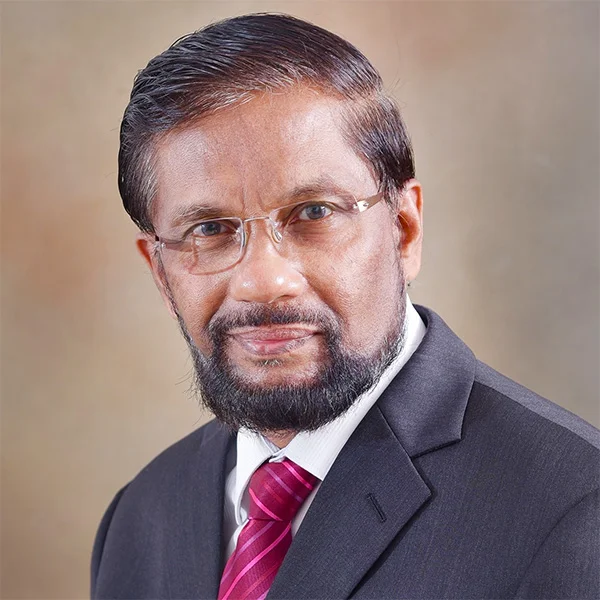
* New Auditor General should not have been sworn in before Speaker – Opp.
* Suspended House Dy. Sec. Gen. Chaminda Kularatne takes his case to CA today
General Secretary of the National People’s Power (NPP) Dr. Nihal Abeysinghe yesterday said that there was no need for Speaker Dr. Jagath Wickramaratne to step down in view of the complaint lodged against him with the CIABOC (Commission to Investigate Allegations of Bribery or Corruption).
NPP General Secretary said so in response to The Island query whether the parliamentary group of the ruling party discussed the growing Opposition calls for the Speaker, who is also the Chairman of the Constitutional Council, to step down to facilitate the investigation.
The NPP parliamentary group consists of 159 MPs, including 18 National List (NL) members.
NL member Dr. Abeysinghe asked whether any other person, who had been investigated by the CIABOC, stepped down from his or her position to facilitate the inquiry.
The top official emphasised that the CIABOC could go ahead with its investigation without any hindrance.

Chamindra and Dr. Jagath
Opposition sources said that there hadn’t been a similar situation before and the CIABOC investigation into Speaker Dr. Wickramaratne is unprecedented as he heads the 10-member CC responsible and directly involved in all key appointments, including that of members to the CIABOC.
Sources pointed out that the newly appointed Auditor General, Ms. Samudrika Jayaratne, took the oath of secrecy before the Speaker on 5 February in Parliament after suspended Deputy General Secretary of Parliament Chaminda Kularatne complained to CIABOC.
In accordance with Section 9 of the National Audit Act, No. 19 of 2018, Jayaratne took the oath of secrecy in her capacity as the Auditor General of the National Audit Office and Chairperson of the Audit Service Commission.
Sources said that Kularatne would move the Court of Appeal today (10) against his removal at the behest of the Staff Advisory Committee, headed by the Speaker.
By Shamindra Ferdinando

The Trincomalee Magistrate’s Court yesterday (09) further remanded 10 persons, including four Buddhist monks, arrested on 19 January, 2026, for allegedly placing a Buddha statue in the coastal reservation, on 16 January.
The Buddhist monks, including Ven. Balangoda Kassapa Thera, and six other individuals, were further remanded until 11 February.
They have been accused of violating the Coast Conservation Act by placing a Buddha statue on a block of land belonging to the Trincomalee Bodhiraja Temple.
Of the four monks, Ven Balangoda Kassapa Thera and Ven Trincomalee Kalyanawansa Tissa Thera moved the Court of Appeal against the Magistrate’s Court decision. The case was heard on 22 January before a Bench comprising the President of the Court of Appeal, Justice Rohantha Abeysuriya, and Justice K. Priyantha Fernando.
Manohara de Silva, PC, and President’s Counsel Uditha Igalahewa, PC, appearing for the petitioners, urged the Court to take up the matter urgently, describing it as a case of exceptional importance.
However, the Court of Appeal on 3 February dismissed the petitions against the remanding of Ven Balangoda Kassapa Thera and Ven Trincomalee Kalyanawansa Tissa Thera.
The order was issued by the Court of Appeal bench consisting of the President of the Court of Appeal, Justice Rohantha Abesuriya and Justice Priyantha Fernando.

Seifert, Allen fifties help New Zealand gallop to record-breaking win against UAE
All-round de Leede leads Netherlands to thumping win over Namibia

Wanindu Hasaranga ruled out of T20 World Cup with injury

Royal Navy of Oman Vessel “SADH” arrives at Port of Colombo

Spirited USA seek Pakistan scalp after opening day heartbreak

New Zealand brace for unfamiliar opponents UAE

‘Dates have the highest sugar content to fight Coronavirus’

Sunday Island 27 December – Headlines

#SundayIsland 17th December – Headlines

Sunday Island – 28th March

Sunday Island Headlines – 21 March

Sunday Island – 21st February – Headlines
-

 Features3 days ago
My experience in turning around the Merchant Bank of Sri Lanka (MBSL) – Episode 3
-

 Business4 days ago
Zone24x7 enters 2026 with strong momentum, reinforcing its role as an enterprise AI and automation partner
-

 Business3 days ago
Remotely conducted Business Forum in Paris attracts reputed French companies
-
 Business3 days ago
Four runs, a thousand dreams: How a small-town school bowled its way into the record books
-

 Business3 days ago
ComBank and Hayleys Mobility redefine sustainable mobility with flexible leasing solutions
-
 Business4 days ago
HNB recognized among Top 10 Best Employers of 2025 at the EFC National Best Employer Awards
-

 Business4 days ago
GREAT 2025–2030: Sri Lanka’s Green ambition meets a grid reality check
-

 Editorial6 days ago
All’s not well that ends well?