
Editorial
The return of Trump


Readers who had the opportunity of watching the YouTube report of the concession speech of Kamala Harris, defeated by Donald Trump at the Nov. 5 U.S. Presidential election, would have been treated to an exceptional performance by an exceptional woman, her voice hoarse from the whirlwind 13-week campaign during which she sought what is arguably the world’s most powerful job. Immaculately dressed and groomed as she always was during her term as Vice President to Joe Biden as well as during the campaign, she delivered a rousing speech at her Washington alma mater, Howard University, that moved many listeners, particularly young people to tears. She declared: “While I concede this election, I do not concede the fight that fueled this campaign. Hear me when I say the lights of America’s promise will always burn bright, as long as we never give up.”
Commentators and pollsters using the most advanced technology available were unanimous that the race was too tight to call. But they were terribly wrong though the authoritative The Economist has ex post facto pronounced Trump’s victory “no fluke.” Dead heat was the common prediction as the first Tuesday in November, four years after the last U.S. presidential election when Joe Biden defeated Trump decisively, approached. The American constitution mandates the holding of a presidential election on the first Tuesday in November every four years, an ironclad requirement. Both contenders had loyal, sometimes fanatical support with the liberal establishment and many more strongly backing Harris while the super rich led by billionaire Elon Musk threw their weight behind Trump. The winner also drew the support of those labeled “white supremacists” while the loser had to contend with the negative economic effect during the early years of the Biden administration not yet overcome.
Trump narrowly escaped death when a gunshot fired by a sniper from a rooftop grazed his right ear during the election campaign. The gunman was shot dead but the head of the U.S. Secret Service, Kimberly Cheatle, was forced to resign admitting a massive security failure. A second attempt some weeks later at a Florida golf course where Trump was playing was aborted with no damage done. The dangerously close shooting incident which united Trump’s supporters was effectively used by his campaign to maximum effect.
Trump won the election with a comfortable majority in the Electoral College as well as on the popular vote. This was unlike 2016 when he defeated Hillary Clinton in the Electoral College while losing the popular vote, something that had happened only once before in recent times (Al Gore vs. George. W. Bush in 2000). But it was different this time round and Trump’s victory at both the Electoral College and on the popular vote was convincing despite the heavy artillery he had to fight. These included dozens of indictments and a conviction in the courts for which he awaits sentence, two impeachment resolutions and barrels of sleaze flung at him. His rambling unfocused style of speech, ‘I know best’ attitude and vulgarity were all factors that weighed heavily against him. Despite Harris’ good looks and attractive demeanor, oratorical skills and much more, plus the wide endorsement of liberal America, she was roundly defeated by a rival strongly opposed by much of the American media with the exception of Fox News that threw considerable weight behind the Trump campaign.
The Democrats may have paid a price for Harris’ late entry to the race. Despite strident demands by his party and friends to stand down, the 81-year old Biden insisted on seeking re-election with Vice-President Kamala Harris as his running mate. As senator from California, Harris herself had sought the Democratic ticket for 2020 but stood down citing lack of funds. Candidate Biden named her his running mate and carried that election. But with the 2024 campaign taking off, Biden who would have been 85-years old at the end of a second term, was forced to stand down as his cognitive degeneration became increasingly visible even during a debate with his rival Donald Trump. Thus Kamala Harris, without the benefit of a primary of the Democratic Party, became its candidate for the just concluded election.
Harris scored brownie points in her concession speech saying that there will be a peaceful transition unlike four years ago when Trump, claiming that the election was “stolen” had his supporters march on Capitol Hill. His own Vice-President Mike Pence refused to be bludgeoned by his boss to refuse to certify the 2020 election result. In contrast, Harris as incumbent President of the Senate will certify these results in January enabling Donald Trump’s return to the White House. His election will affect people globally, wherever they may live. The Economist has called Trump “the most consequential American president since Frankly. D. Roosevelt.” How the self-proclaimed anti-war president will handle global conflicts in Ukraine and the Middle East are questions that hang tantalizingly over the whole world.



Tuesday 30th December, 2025
Sri Lanka Customs is on cloud nine, boasting that it has set a revenue record. It says it has raised more than Rs. 2,497 million, which is in excess of the targets set by the government for the current year. An increase in state revenue is certainly a very positive development, but how that goal has been achieved should be revealed to the public.
There have been exponential tax increases and they have enabled the government to boost its revenue significantly. The Customs Department has been able to meet its revenue targets thanks to the lifting of restrictions on vehicle imports after a lapse of several years and tax hikes. The Customs has admitted that taxes on imported vehicles have amounted to about Rs. 870 billion in 2025. Thus, one can argue that vehicle imports have created a revenue bubble, which may not last long. An increase in the Customs’ revenue has come at the expense of the rupee, which is depreciating. So, there is no cause for celebration, and the government has to tread cautiously.
Spokesman for the Customs Chandana Punchihewa, addressing the media yesterday, blamed cargo clearance delays on a container backlog created by Cyclone Ditwah. Extreme weather events no doubt cause delays in ports, but in this country port delays occur even during long spells of fine weather. Protracted delays in the Colombo Port, in January 2025, led to the release of 323 red-flagged containers without Customs inspection. What they carried is anybody’s guess.
Excuses are of no use where port delays are concerned. Delays ruin ports, for they drive away major shipping lines. It has been reported that several international shipping lines have opted to bypass the Colombo Port, which is facing escalating congestion due to various factors related mainly to capacity and efficiency—not adverse weather as such. The Customs cannot absolve itself of responsibility for this sorry state of affairs in the Colombo Port, which has also been facing strategic neglect.
As we argued in a previous comment on port congestion, the Ports Authority, the government and the Customs must formulate a strategy to eliminate delays. If the Customs cannot cope with the situation, the Coast Guard personnel can be called in to help clear cargo; they are qualified to handle such tasks. The government ought to take cognisance of formidable challenges Sri Lanka faces from the other ports in the region, especially India’s newly built Vizhinjam port, which is becoming a major attraction for international shippers who are averse to delays. In global logistics, shipping lines place very high value on on-time delivery, reliability and efficient operations.
The government must make a serious effort to enhance the efficiency and capacity of the Colombo Port to retain the transshipment traffic historically routed via Colombo. There is a strong possibility of shipping lines rerouting feeder services away from Colombo to Vizhinjam, adversely impacting Colombo’s network role, as we have said previously, quoting shipping experts.
Vizhinjam has several key advantages over Colombo. It advertises itself as a deep-water port with a 24 m natural draft, which enables it to accommodate ultra-large container vessels without dredging; its proximity to the main east–west shipping route helps vessels to call without significant deviation, reducing voyage time and costs. Automation, modern cranes, faster turnaround times, enhanced operational efficiency and attractiveness to shipping lines are other advantages India’s new port has over Colombo.
Sri Lanka Customs may brag about its ‘revenue record’, but it must not lose sight of the need to enhance its productivity in view of challenges from other ports in the region to Colombo. It should reveal how it is going to meet the revenue targets set by the government when vehicle imports decrease, causing the current revenue bubble to burst.
Monday 29th December, 2025
Sri Lankan politicians love the media dearly and take up the cudgels for the rights of journalists when they are out of power. The JVP/NPP leaders also defended the media to the hilt while they were languishing in the Opposition. Jekylls become Hydes after being ensconced in power, with the media exposing their failures and malpractices. Those who can, do; those who cannot, attack the media, one may say of the governments in this country, with apologies to Bernard Shaw.
The JVP-led NPP government, angered by bad press, is all out to intimidate the media it cannot control. Previous governments had the police on a string and used them to attack and harass independent journalists. The incumbent administration has gone a step further; the police have reportedly written to the Telecommunications Regulatory Commission (TRC), asking for action against Hiru TV for what they describe as broadcasting unverified, misleading news. Thus, the government has used the police to give Hiru a choice between toeing the official line and losing its licence. Thankfully, its efforts have run into stiff resistance, with media institutions and various associations circling the wagons around Hiru.
If the government thinks Hiru or any other media institution disseminates false information to the detriment of its interests, legal avenues are available for it to seek redress. The police must not be used as a political tool to intimidate the media.
Among the current defenders of the media are the SLPP, the UNP, the SLFP, etc. Their leaders are shedding copious tears for Hiru. But it was while the UNP and SLPP leaders were in power that the suppression of media freedom and violence against journalists became institutionalised for all intents and purposes. UNP governments not only throttled media freedom but also murdered journalists. SLFP regimes had media institutions attacked and journalists killed. An SLFP-led government, with the current SLPP leaders at the helm, had media institutions torched and journalists abducted, assaulted and murdered. These sinners currently in the political wilderness are condemning other sinners in power for suppressing media freedom.
The government deserves the bad press it gets. The police have been reduced to a mere appendage of the JVP/NPP. Two of the NPP’s Retired Police Collective members, namely former Senior DIG Ravi Seneviratne and former SSP Shani Abeysekera, have been appointed Secretary to the Public Security Ministry and CID Director, respectively. Absurd claims the police make in defence of the government remind us of Matilda, whose dreadful lies made one gasp and stretch one’s eyes.
When the police were asked why NPP MP Asoka Ranwala had not been subjected to a breathalyser test immediately after a recent road accident he caused, they had the chutzpah to claim they had run out of test kits. They transferred two of their officers over the incident to enable the government to save face. They arrested one of their own men assaulted by an NPP MP following a recent police raid on a cannabis cultivation in Suriyakanda. Acting just like legendary King Kekille, they let the MP off the hook and arrested the policeman, who was bailed out; they went on to suspend him from service. A few months ago, they unashamedly sided with a group of JVP cadres who stormed a Frontline Socialist Party office in Yakkala and forcibly occupied it. They go out of their way to ensure that the arrests of drug dealers with links to the Opposition get maximum possible publicity, but they do their best to keep the media in the dark when narcotics dealers with ruling party connections are taken into custody. They crack down on Opposition politicians and activists but steer clear of government members and their supporters. The despicable manner in which they are doing political work for the government reminds us of the Gestapo. Now, they are zeroing in on Hiru TV at the behest of their political masters for exposing their sordid actions.
The only way the NPP government can overcome problems and challenges on the political front and shore up its crumbling image is to mend its ways and fulfil its election pledges while taking action against its errant members who have brought it into disrepute and turned public opinion against it. Shooting the messenger is not the way to set about the task.
Pressure is mounting on President Anura Kumara Dissanayake to ensure that an Auditor General is appointed without further delay. But he has remained unmoved. He is determined to wear down the Constitutional Council (CC) and appoint one of his party loyalists as Auditor General. The CC has rejected his nominees—and rightly so; they are not eligible. Former Executive Presidents went all out to railroad the CC into rubber-stamping their decisions. They had no qualms about doing so while claiming to uphold the independence of the public service. President Dissanayake has failed to be different. His refusal to compromise amounts to brinkmanship; he is waiting until the CC blinks.
The NPP’s election manifesto, A Thriving Nation: A Beautiful Life, attributes the deterioration of the public service to ‘political appointments’ and state workers making political decisions. Among the steps the NPP has promised to take to straighten up the public service are ‘merit-based appointments and promotions’. This principle has fallen by the wayside where the question of appointing the Auditor General is concerned.
The government should take cognisance of the possible negative effects of the prolonged delay in appointing the Auditor General during a period of disaster response and international relief and rebuilding support.
The Bar Association of Sri Lanka has called upon President Dissanayake to appoint a person with proven competence, integrity, and independence, who commands wide acceptance as Auditor General forthwith. It has stressed the need to appoint a nonpartisan professional as the Auditor General to safeguard the integrity of the National Audit Office and inspire the confidence of both citizens and international partners in the financial governance of the State.
Transparency International Sri Lanka, the Civil Society Organizations (CSOs) and the other good governance activists, too, have faulted President Dissanayake and his government for the inordinate delay in appointing the Auditor General. They are of the view that a strong, independent Auditor General enables Parliament and the public to scrutinise government expenditure, identify irregularities, prevent misuse of funds, and ensure that those entrusted with public resources are held to account. The delay in appointing the Auditor General has weakened the effectiveness, authority, and the independence of the entire public audit system and created space for inefficiency, mismanagement, and corruption, they have noted. The situation will take a turn for the worse if the government succeeds in having one of its cronies appointed Auditor General.
The government is apparently playing a waiting game in the hope that the reconstitution of the CC due next year will provide a window of opportunity for it to appoint one of its loyalists as Auditor General.
Why the government is so desperate to place a malleable person at the helm of the National Audit Office is not hard to understand. If it succeeds in its endeavour, the next Auditor General will be beholden to the JVP/NPP. When an ineligible person is elevated to a high post, he or she naturally becomes subservient to the appointing authority. Such officials go out of their way to safeguard the interests of their political masters in case of irregularities involving state funds and other accountability issues.
A protracted delay in appointing the Auditor General or the appointment of a government supporter to that post will increase the risk of mismanagement of state funds and corruption, lead to the erosion of public trust and confidence in the National Audit Office, undermine legislative oversight and impair fiscal discipline. Most of all, the government’s failure to appoint a competent, independent person of integrity as Auditor General will diminish donor confidence especially at a time when the country is seeking disaster relief funds from the international community. There is no way the government can justify its refusal to appoint the current Acting Auditor General as the head of the supreme audit institution. He is obviously the most eligible candidate.

Bangladesh’s first female prime minister Khaleda Zia dies aged 80

Ukraine denies drone attack on Putin’s residence

Showers expected at times in the Northern, Eastern, Central, North-central and Uva provinces

Dr. Bellana: “I was removed as NHSL Deputy Director for exposing Rs. 900 mn fraud”

BIA unions demand bonuses equal to five months’ basic salaries

People warned of rising water levels at Kotmale reservoir

‘Dates have the highest sugar content to fight Coronavirus’

Sunday Island 27 December – Headlines

#SundayIsland 17th December – Headlines

Sunday Island – 28th March

Sunday Island Headlines – 21 March

Sunday Island – 21st February – Headlines
-

 News5 days ago
British MP calls on Foreign Secretary to expand sanction package against ‘Sri Lankan war criminals’
-
 Sports5 days ago
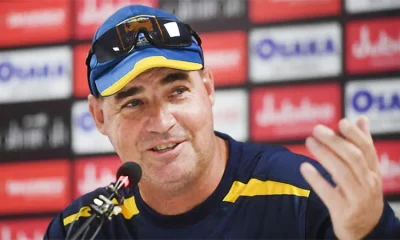
Chief selector’s remarks disappointing says Mickey Arthur
-
 News4 days ago
Street vendors banned from Kandy City
-

 News6 days ago
Sri Lanka’s coastline faces unfolding catastrophe: Expert
-

 Opinion5 days ago
Disasters do not destroy nations; the refusal to change does
-

 News4 days ago
Lankan aircrew fly daring UN Medevac in hostile conditions in Africa
-
 Midweek Review6 days ago
Year ends with the NPP govt. on the back foot
-
 Sports6 days ago
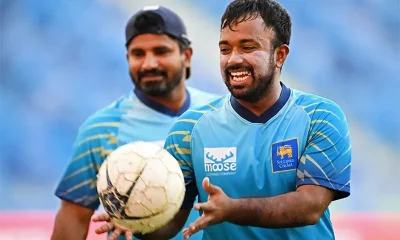
Life after the armband for Asalanka