
Business
The material and human costs of war


Book Review
A collection of war time memoirs published by the International Centre for Ethnic Studies; Translated by Miriam Naveendran, Reviewed by Lynn Ockersz
Although the financial and material costs of Sri Lanka’s ethnic conflict have received a reasonable degree of attention by the Sri Lankan state and other relevant sections over the years, the same cannot be said for the human costs of the war. Approximate figures of war casualties have occasionally surfaced from concerned quarters but such statistics are no reliable pointer to the staggering suffering that the war entailed over those 30 years or more for the civilian public of North-East Sri Lanka.
The latter inadequacy could only be rectified by credible qualitative commentary and analyses on the emotional and physical pain those civilian sections that were directly exposed to the harsh realities of war endured, mostly in silence. ‘Memories from Kilinochchi’, an ICES publication translated by Miriam Naveendran fills this lacuna most adequately and admirably.
A special merit of this publication is that it brings together first person memoirs of the civilian survivors of the war from no less a district of importance in Northern Sri Lanka than Kilinochchi, where some of the bloodiest and concluding battles of the North-East conflict took place. The victims are allowed to speak for themselves and we are justified in stating that the singularly mind-numbing tragedy which is war is presented to us in the most engaging and graphic fashion in this timely collection of memoirs.
The collection could be described as a veritable mirror to the Longsuffering the people of Kilinochchi were made to endure for no fault of theirs. Their life was a heart-rending saga of aerial bombardments, displacements, hunger and homelessness and such harrowing experiences are driven home to the reader with a freshness and cogency hardly encountered in the discourse and literature focused on the civilian victims of war and their suffering; also insensitively and glibly referred to by some as ‘collateral damage’.
We are informed that families were bombed in bunkers where they were forced to take shelter. Children lose their parents in blitzkriegs and vice versa and in almost a split second, happy homesteads are reduced to embers. Survivors of such horrors are compelled to trudge long distances in search of succor. Likewise, livelihoods are dramatically disrupted along with the wrecking of the future of the young on account of the endemic destabilization that war brings. Simply told, their lives are reduced to a living-death.
Hopefully, this collection of memoirs would be read by particularly those governing sections that are on record that they are ushering in a Sri Lanka where national harmony and unity will be enduring realities. For, although the battles have ended and the guns have seemingly fallen silent, many are the minds in the North-East that have been brutally scarred. So much so, we are compelled to say along with a suffering survivor: ‘The war on the outside has ended, but the war in the mind continues…’



National Airport Exit Survey tells quite a story
Australia’s role here is strategic, not charitable
In a quiet but significant shift, Sri Lanka’s tourism sector is moving beyond traditional destination marketing and instinct-based planning. The recent launch of the “From Data to Decisions” initiative jointly backed by Australia’s Market Development Facility and the Sri Lanka Tourism Development Authority, sent an unambiguous message: sentiment is out, statistics are in.
The initiative is anchored by a 12-month National Airport Exit Survey, a trove of data covering 16,000 travellers. The findings sketch a new traveller profile: nearly half are young (20–35), independent, and book online. Galle, Ella, and Sigiriya are the hotspots; women travellers outnumber men; and a promising 45% plan to return. This isn’t just trivia. It’s a strategic blueprint. If Sri Lanka Tourism listens, it can tailor everything from infrastructure to marketing, moving from guesswork to precision.

Tourists have a real sense of achievement after hiking the trail to Ella Rock
The keynote speaker, Deputy Minister Prof. Ruwan Ranasinghe called data “a vital pillar of tourism transformation.” Yet the unspoken truth is that Sri Lanka has long relied on generic appeals -beaches, heritage, smiles. In today’s crowded market, that’s no longer enough. As SLTDA Chairman Buddhika Hewawasam noted, this partnership is about “elevating how we collect, analyse, and use data.”
Australia’s role here is strategic, not charitable. By funding research and advocating for a Tourism Satellite Account, it is helping Sri Lanka build a tourism sector that is both sustainable and measurable. Australian High Commissioner Matthew Duckworth linked this support to “global standards of environmental protection” – a clear nod to the growing demand for green travel. This isn’t just aid; it’s influence through insight.
“The real test lies ahead,” a tourism expert told The Island. “Data is only as good as the decisions it drives. Will these insights overcome bureaucratic inertia? Will marketing budgets actually follow the evidence toward younger, independent, female travellers?,” he asked.
“The comprehensive report promised for early 2026 must move swiftly from recommendation to action. In an era where destinations are discovered on Instagram and planned with algorithms, intuition alone is a high-stakes gamble. This forum made one thing clear: Sri Lanka is finally building its future on what visitors actually do – not just what we hope they’ll do. The numbers are in. Now, the industry must dare to follow them,” he said.
By Sanath Nanayakkare

In his inaugural address as the new Chairman of the Asia Tea Alliance (ATA), Nimal Udugampola placed the region’s millions of smallholders at the core of the global tea industry’s future, asserting they are the “indispensable engine” of a sector that produces over 90% of the world’s tea.
Udugampola, who is also Chairman of Sri Lanka’s Tea Smallholdings Development Authority, used his speech at the 6th ATA Summit held in Colombo on Nov. 27 to declare that the prosperity of Asian tea is “entirely contingent” on the resilience of its small-scale farmers, who have historically been overlooked by premium global markets.
“In Sri Lanka, smallholders account for over 75% of our national production. Across Asia, millions of families maintain the quality and character of our regional teas,” he stated, accepting the chairmanship for the 2025-2027 term.
To empower this vital community, Udugampola unveiled a vision focused on Sustainability, Equity, and Digital Transformation. The strategic agenda includes:
Climate Resilience: Promoting climate-smart agriculture and regenerative farming to protect smallholdings from environmental disruption.
Digital Equity: Leveraging technology like blockchain to create farm-to-cup traceability, connecting smallholders directly with premium consumers and ensuring fair value.
Market Expansion: Driving innovation in tea products and marketing to attract younger consumers and enter non-traditional markets.
Standard Harmonization: Establishing common regional quality and sustainability standards to protect the “Asian Tea” brand and push for stable, fair pricing.
Linking the alliance’s goals to national ambition, Udugampola highlighted Sri Lanka’s target of producing 400 million kilograms of tea by 2030. He presented the country’s “Pivithuru Tea Initiative” as a model for other ATA nations, designed to achieve this through smallholder empowerment, digitalization, and aligned policy objectives.
By Sanath Nanayakkare

Brandix Apparel Solutions was recognised as the Green Brand of the Year at the Sri Lanka Institute of Marketing (SLIM) Brand Excellence Awards 2025, taking home Silver, the highest award presented in the category this year.
The ‘Green Brand of the Year’ recognises the brand that drives measurable environmental impact through sustainable practices, climate-aligned goals and long-term commitment to protecting natural resources.
A pioneer in responsible apparel manufacturing for over two decades, Brandix has championed best practices in the sphere of sustainable manufacturing covering environmental, social, and governance aspects. The company built the world’s first Net Zero Carbon-certified apparel manufacturing facility (across Scope 1 and Scope 2) and meets over 60% of its energy requirement in Sri Lanka via renewable sources.
Head of ESG at Brandix, Nirmal Perera, said: “Being recognised as Green Brand of the Year is an encouraging milestone for our teams working across sustainability.”

Henry, Santner, Nathan Smith ruled out of rest of West Indies Test series

Level III landslide early warnings issued to the Districts of Kandy, Kegalle, Kurunegala and Matale extended till 1600 hrs on Tuesday [09]

President chairs Nuwara Eliya District Special Coordinating Committee Meeting

Jetstar to launch Australia’s only low-cost direct flights to Sri Lanka, with fares from just $315^

Starmer to host Zelensky for Ukraine talks in London

Benin coup thwarted by loyalist troops, president tells nation

‘Dates have the highest sugar content to fight Coronavirus’

Sunday Island 27 December – Headlines

#SundayIsland 17th December – Headlines

Sunday Island – 28th March

Sunday Island Headlines – 21 March

Sunday Island – 21st February – Headlines
-
News6 days ago
Lunuwila tragedy not caused by those videoing Bell 212: SLAF
-

 News14 hours ago
Over 35,000 drug offenders nabbed in 36 days
-
 News4 days ago
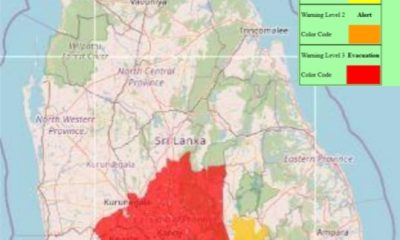
Level III landslide early warning continue to be in force in the districts of Kandy, Kegalle, Kurunegala and Matale
-
 Latest News7 days ago
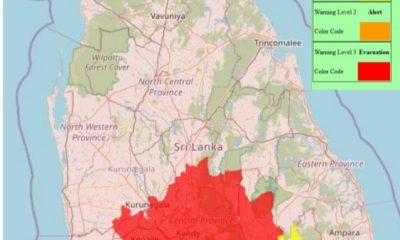
Level III landslide early warnings issued to the districts of Badulla, Kandy, Kegalle, Kurunegala, Matale and Nuwara-Eliya
-
 Features7 days ago
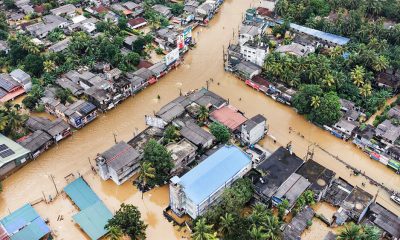
Ditwah: An unusual cyclone
-

 Business3 days ago
LOLC Finance Factoring powers business growth
-

 News3 days ago
CPC delegation meets JVP for talks on disaster response
-

 News3 days ago
A 6th Year Accolade: The Eternal Opulence of My Fair Lady