
Features
The Clash of the Titanic egos for American leadership: Trump v. Musk


by Vijaya Chandrasoma
The traditions of the Presidential elections in the United States are different in a few significant ways from the elections to the Heads of State in other countries, based as they are on a constitution framed and ratified in the latter part of the 18th century.
The USA elects its new president on the first Tuesday of November once every four years. But on the following Wednesday, or soon after his electoral victory is confirmed, he is just the President-elect, an ordinary citizen, with none of the powers of the Commander-in-Chief. All presidential power continues to reside with the defeated, incumbent President, until his official presidential term is over, when the transition of power takes place with the inauguration of the President-elect on January 20 of the following year, a full 11 weeks after the election.
Traditionally, the defeated and outgoing president is called a Lame Duck, a president “whose successor has already been selected, leaving him politically weakened”. To emphasize, weakened traditionally, though still carrying the full powers of the Commander-in-Chief.
The framers certainly did not predict that the good people of the USA would ever elect a president like Donald Trump, who not only defied all oaths taken to uphold the constitution during his first presidential term. He actually used his “Lame Duck” presidential powers in an attempt to overthrow a legally elected government and to violently prevent the peaceful transfer of power after the 2020 election.
Four years later, the good people of the USA, in a recurrence of white-blindness combined with a severe case of amnesia, have re-elected the same convicted felon for another four years – to complete the job he started on that fateful day in 2015, when he climbed down that golden escalator in Trump Tower with the promise to Make America White Again.
This time, however, eight years older at age 78, he is definitely behaving more like a weakened Lame Duck President. His mind, never blessed with an IQ much higher than that of a moron, is evidently unhinged, on the slippery slope to dementia. His absolute dominance of his Republican cult also seems to be waning. His decisions are being questioned for the lunacy they clearly represent by a few of the more principled members of his party, who appear, amazingly, no longer threatened by the loss of their careers if they don’t toe the Trump line. Even his leadership is being overtly challenged by the richest man in the world, Elon Musk, whose finances were largely responsible for his re-election.
One of the main functions of the President-elect during the transition period is to submit, for Senate approval, nominations for members of his future cabinet. Seemingly a mere formality, as the Republican Party will have a 53/47 majority in the new Senate to be sworn in on January 3, 2025.
However, some of the nominations submitted for the key positions in the cabinet seem destined for rejection even by the lick-spittle Senate. One, Trump’s nomination for Attorney-General, former Congressman Matt Gaetz, which also had the unqualified supporter of his “Co-President”, Elon Musk and his Vice-President-elect, JD Vance, has already bitten the dust.
Gaetz was forced to withdraw his candidacy in the swirl of criminal allegations of illegal drug use and trafficking, statutory rape of a 17-year-old girl and sex trafficking. A recent report released by the Ethics Committee of the House gives detailed evidence of these crimes. The report was released to the public despite objections by Trump, Musk and the most pious Speaker Johnson, showing some defiance by Republican congressmen – not that difficult to predict, as Gaetz is mightily despised on a bipartisan basis in the House. Rather like Ted Cruz in the Senate.
Of course, there is a valid argument that even a criminal like Gaetz is eminently qualified to act as the chief law enforcement officer of the land in an administration headed by a felon convicted of many more felonies, 91 to be exact. In fact, such criminal behavior may actually be deemed to be a qualification in that sort of an administration.
I have already written about the other dangerous and totally unqualified Trump nominations for key positions in his Cabinet. Vital appointments which include:
Defense Secretary – Pete Hegseth, alcoholic Fox news presenter and sexual predator, guilty of financial mismanagement in non-profit Veterans organizations; Attorney-General – Pam Bondi, nominated after the withdrawal of Matt Gaetz; Bondi, a long-time Trump loyalist, famously dropped the case of fraud against Trump University in her capacity as Attorney General of Florida, after receipt of a bribe of $25,000 from the Trump Organization; Secretary, Health and Human Services – Robert F. Kennedy Jr, anti-vaxxer and health nut, whose brain was eaten by a worm in 2008 – the worm was said to have died of starvation; Kennedy has vowed to Make America Healthy Again by taking FDA approval away from all vaccinations, including polio and measles, and removing fluoride from drinking water; Director of National Intelligence – Tulsi Gabbard, Russian asset – if appointed, American allies will be requested to cut the red tape and send all top-secret information direct to Putin; Secretary, Homeland Security – Kristi Noem, self-confessed puppy killer, who will keep the southern border personally secure from dangerous puppies and goats; Education Secretary – Linda McMahon, ex pro-wrestler, who has promised to add another R – ‘Restlin’ – to America’s three traditional educational goals of three Rs – Readin’, ‘Ritin’ and ‘Rithmetic; Head of Medicare and Medicaid Services, with a budget of over $1 trillion – Dr. Mehmet Oz, who has won nine Daytime Emmy Awards for a medical show he uses to promote magic weight-loss coffee beans and other types of snake-oils to ward off Parkinson’s etc.; FBI Director, to replace current Director Christopher Wray, who resigned last week three years before the end of his tenure, in anticipation of being summarily fired by Trump – Kash Patel, Trump’s Retribution Czar, who has vowed to come after all Trump’s opponents, political, media, leftists and other enemies in the deep recesses of his Fuhrer’s hallucinations; Border Czar – Tom Homan, who will be in charge of implementing Trump’s “Greatest Mass Deportation Program in history”, family separations, concentration camps and all; Surgeon General – Dr. Jeanette Nesheiwat, Fox News medical contributor, who runs a chain of urgent care clinics, and like her aforementioned cabinet colleague, Dr Oz, is also a snake-oils saleslady, peddling pills for weight loss and anti-aging supplements on her Fox medical shows.
There are more, but these are perhaps the most spectacularly unqualified nominations for Trump’s cabinet, which seemed certain to be confirmed by the Republican majority Senate, when Trump was elected in November.
However, recent developments indicate that some Republican members are beginning to locate the whereabouts of their spines and testicles. And a few especially horrendous and dangerous nominations – Hegseth, Gabbard, Kennedy, Patel to name just four – may actually fail to get the necessary Senate confirmations.
Both Elon Musk and Trump have threatened any such dissenting Republican Senators and Congressmen that they will be primaried at the next election, which would mean the end of their political careers. In spite of such threats, some of these Republicans are showing signs of defiance. Perhaps the hitherto iron grip Trump and the MAGA (Make America Great Again) cult had on the Republican Party is weakening?
One such development was the recent death blow dealt by both Musk and Trump on the bipartisan congressional budget bill, negotiated with the Democrats by Speaker Johnson. This episode highlighted the growing political influence of Elon Musk, who first urged the cancellation of the bill with a volley of tweets, followed only two hours later by Trump. In fact, Musk took credit for the scuttling of the bill when he tweeted: “The voice of the people was heard. This was a great day for America”.
Actually, it wasn’t.
The result of the budget bill failing meant that the government faced a shutdown the Friday before Christmas, when millions of Americans would have faced a bleak, paycheck-free Christmas. Fortunately, much to the chagrin of the Co-Presidents, a compromise was found. Within hours of the deadline, a bipartisan short-term spending bill to fund the government till March 14, was signed by President Biden, with overwhelming bipartisan support in both chambers.
The last-minute chaos caused by the intervention of Co-Presidents Musk and Trump, who wanted the debt ceiling removed as an integral factor in the bill, was averted. Trump wanted the debt ceiling removed during the Biden administration to accommodate his multi-trillion dollar plans for a tax cut for the super wealthy and to fund his Mass Deportation Program.
The 34 Republican members who thwarted Trump’s plans by voting against the removal of the debt ceiling have incurred the ire of the Co-Presidents, who have already threatened them with certain loss of their congressional seats at the next midterms.
At least, there is hope that our “Dictator for a Day” may not have his own way once he becomes, in his eyes, “The King of all he Surveys” on January 20, 2025.
Trump talks little about the main issues on which he won the election, when he promised to reduce inflation and prices on the day he was inaugurated. In fact, he has claimed that the economy is already the strongest in the world, inflation and prices are already coming down. He attributes these successes solely to the confidence caused by his re-election and the inevitability of the future greatness of the United States of America, now that he is, once again, at the helm.
The economic policies of the Biden administration over the past few years to rescue the near-recession left by him in 2021 had, according to Trump, nothing to do with this recovery.
Trump has decided that there are other matters that need his immediate attention and action.
He has once again renewed his call to purchase Greenland from Denmark, stating “For purposes of National Security and Freedom throughout the World, the United States of America feels that the ownership and control of Greenland is an absolute necessity”. Greenland, the world’s largest island with a population of 56,000, is an autonomous territory of the Kingdom Denmark, a sovereign state within NATO. Denmark has no intention of “selling” Greenland.
He intends to “retake the control of the Panama Canal if something isn’t done to ease rising shipping costs, and curb China’s rising influence in the region”, which he considers America’s backyard. He posted a picture of the United States flag with the caption: “Welcome to the United States Canal”.
He suggests that Canada becomes the 51st state of the United States of America, and referred to Prime Minister Justin Trudeau as “Governor of the Great State of Canada”.
Not a word about the wars raging in Ukraine and the Gaza, which he said he would settle before Inauguration Day.
Trump’s territorially aggressive bluster is typically symbolic, delusions of grandeur to provide distraction to the fact that the Republican Party has no new plans for the control of inflation, high prices, income and wealth inequality, abortion, gun violence and other problems that plague the nation.
Trump will merely take credit for the gradual improvements brought about by the legislative and economic policies of the Biden administration. And carry on with his stated policies of spending trillions of dollars in tax cuts to benefit the super wealthy, to cozy up to the nation’s adversaries and to steal the country blind to make himself the richest man in the world, second to none. Not even Musk and Putin.
I hope you are all enjoying a wonderful holiday season and wish you the very best for many happy, healthy years ahead. In spite of Trump.



THE GREAT DIGITAL RETHINK : PART III OF V
The Teenage Battleground
Secondary school has always been a battlefield of sorts, competing loyalties, volatile friendships, the daily theatre of adolescent identity. But in the past decade it acquired a new and uniquely modern dimension: the smartphone in the pocket, the social media feed refreshing every few minutes, the group chat that never sleeps.
The numbers, when they arrived, were not subtle. PISA 2022 data, drawn from students in over 80 countries, found that around 65 percent of students reported being distracted by their own digital devices in mathematics lessons, and 59 percent said a classmate’s device had pulled their attention away. Students who reported being distracted by peers’ phones scored, on average, 15 points lower in mathematics than those who said it never happened. Fifteen points is not a rounding error. It is a meaningful, measurable, recurring gap that appears consistently across countries with very different education systems.
Governments took notice of the situation. In a pattern that will be familiar to readers of this series, a number of them reached for the most visible, most politically satisfying tool available – the ban in Finland, Sweden, Australia, and France. The UK, in a characteristically chaotic way, involving years of guidance, and pilots, eventually legalised. One by one, secondary schools across the wealthy world have begun confiscating phones at the gate, storing them in pouches, locking them up in boxes, and discovering, somewhat to their own surprise, that this works.
When the Ban Actually Works
A 2025 survey of nearly a thousand principals in New South Wales found that 87 percent reported students were less distracted after the ban was introduced, and 81 percent said learning had improved. South Australia recorded a 63 percent decline in critical incidents involving social media and a 54 percent reduction in behavioural issues. These are striking figures, and they align with what common sense would predict: if you remove the distraction, concentration improves.
What is also emerging from Australian, Finnish and Swedish schools is something less expected and more interesting: the character of break times has changed. Teachers and principals report that when phones disappear from pockets, something older reappears in their place. Students talk to each other. They play. They argue, resolve disputes, make and lose friendships in the ancient, messy, face-to-face way that adolescence has always demanded but that the smartphone had been quietly crowding out. The playground, it turns out, was not broken. It was just occupied.
Sweden’s nationwide policy, coming into effect in autumn 2026, will require schools to collect phones for the full day, not just during lessons. This is the more ambitious intervention, and the one that addresses what the Australian experience has already demonstrated: that the damage done by constant connectivity is not confined to the classroom. It happens at lunch. It happens between periods. It happens in the 10 minutes before the bell when a group of 14-year-olds are supposedly in the building but are actually, in every meaningful sense, somewhere else entirely.
87% of Australian principals said students were less distracted after the ban. The other 13% presumably hadn’t tried it yet.
But Here Is What Nobody Wants to Talk About
Here is the part that the ministers’ press releases do not mention. While the smartphone, the device the student owns, controls and carries, has been banned from the secondary classroom, the institution’s own digital apparatus has been expanding at an impressive pace throughout the same period. Learning management systems now mediate most of secondary school life in high-income countries. Assignments are distributed digitally. Work is submitted digitally. Attendance is recorded digitally. Grades are published on portals that students, parents and administrators can access in real time. The school that bans your personal phone may simultaneously be recording precisely how long you spent on each page of the online reading assignment last Tuesday.
Learning analytics, the practice of harvesting data from student interactions with digital platforms to inform teaching and school management, has moved from a niche research curiosity to a mainstream tool. PISA 2022 data show that virtually all 15-year-olds in OECD countries attend schools with some form of digital infrastructure. Behind that infrastructure sits a layer of data collection that most students and many parents are only dimly aware of: log-in times, click patterns, quiz scores, time-on-task measures, platform engagement metrics. These are assembled into dashboards, fed into algorithms, and used, with genuinely good intentions, in most cases, to identify struggling students early.
The genuinely good intentions do not resolve the underlying problem. Research on learning analytics raises serious concerns about privacy, about the opacity of algorithmic decision-making, and about what happens when a teenager is quietly flagged as ‘at risk’ by a system they never knew was watching. The irony of secondary de-digitalisation is not lost on those paying attention: we have removed the device the student controls, while expanding the systems that observe and score them.
The AI Proctor in the Room
 During the pandemic, when exams moved online, a number of education authorities adopted software that monitored students through their webcams, flagging unusual eye movements, background sounds, or the presence of other people in the room as potential signs of cheating. The systems were sold as efficient, scalable and objective. They were, in practice, frequently absurd.
The software flagged students who looked away from the screen to think. It penalised students whose rooms were small, shared or noisy, disproportionately those from less privileged backgrounds. It struggled with students of colour, whose features were less well-represented in the training data. It was contested, appealed, gamed, and eventually abandoned by a significant number of institutions that had initially adopted it with enthusiasm. By 2024 and 2025, the rollback was visible. Universities and some school systems were returning, with minimal fanfare, to supervised in-person examinations, handwritten, on paper, in a room with a human invigilator, partly to solve the AI cheating problem, partly to solve the AI proctoring problem. The wheel had, somewhat dizzingly, turned full circle.
We banned the student’s phone. We kept the webcam that monitors their eye movements during exams. Progress.
The Equity Problem That Bans Cannot Solve
Beneath the headline politics of phone bans lies a more uncomfortable question about who, exactly, benefits from secondary school de-digitalisation, and who pays a cost that is rarely acknowledged. The argument for phone bans on equity grounds is real: unrestricted phone use in schools amplifies social hierarchies. The student with the latest device, the most followers, the most compelling social media presence occupies a different social universe from the student without. Removing phones during the school day levels that particular playing field.
But the equity argument runs the other way, too, once you look beyond school hours. Secondary schools in high-income systems have steadily increased their dependence on digital platforms for homework, assessment preparation and communication. If a school bans phones during the day and then sends students home to complete digitally-mediated assignments, the burden of that homework falls unequally.
There is also the growing phenomenon of what researchers are beginning to call ‘shadow digital education’: the private online tutoring platforms, AI-powered study tools and exam preparation services that affluent families use to supplement and extend what school provides. While secondary schools debate whether students should be allowed to use AI for essay drafts, some of those students’ wealthier peers are already using it, skillfully, privately and with considerable academic advantage. The phone ban, whatever its merits in the classroom, does not touch this market. It may even quietly accelerate it.
Two Worlds, Still Diverging
In Finland, Sweden and Australia, the policy conversation is about how to manage the excesses of a generation that grew up digitally saturated, how to restore concentration, how to protect wellbeing, how to ensure that institutional platforms serve learning rather than merely monitor it.
Elsewhere, across much of Southeast Asia, Sub-Saharan Africa, Latin America and parts of the Middle East, the secondary school conversation remains anchored to a different set of concerns: how to get enough devices into enough classrooms, how to train enough teachers to use them, how to ensure that the smartboard contract does not expire before the teachers learn to turn it on. Vendors are present, helpful and commercially motivated. Development banks are funding rollouts. Government ministers are visiting showrooms. The playbook being followed is the one that Finland and Sweden wrote in 2010 and are now revising.
SERIES ROADMAP:
Part I: From Ed-Tech Enthusiasm to De-Digitalisation | Part II: Phones, Pens & Early Literacy | Part III: Attention, Algorithms & Adolescents (this article) | Part IV: Universities, AI & the Handwritten Exam | Part V: A Critical Theory of Educational De-Digitalisation

Buddhism is renowned for its profound insights into ageing and decay, known as jara in Pali. Through its teachings and practices, Buddhism cultivates the wisdom and mental clarity necessary to accept and prepare for the inevitability of ageing. The formula jati paccayaā jaraāmaranaṃ translates to “dependent on birth arise ageing and death,” clearly illustrating that birth inevitably leads to ageing and death, accompanied by sorrow, lamentation, pain, grief, and despair. Without birth, there would be no ageing and death. Therefore, ageing is a fundamental aspect of suffering as outlined in the Four Noble Truths.
Buddhism encourages us to confront the realities of ageing, illness, and mortality head-on. Old age is recognised as an unavoidable aspect of dukkha (suffering). Old age is fundamentally and inextricably entwined with the concept of impermanence(annicca), serving as the most visible, undeniable evidence that all conditioned things are in a state of flux and decay. Ageing, illness and death create in us an awareness not only of dukkha but also impermanence. The Buddha taught, “I teach suffering and the way out of suffering.” Here, “suffering” encompasses not only physical pain but also the profound discomfort that arises when our attempts to escape or remedy pain stemming from old age are thwarted. Instead of fearing old age, Buddhists are encouraged to embrace it, release attachments to youth, and cultivate wisdom, gratitude, and inner peace.
Ageing is a complex process shaped by both genetic and environmental factors. From a Buddhist viewpoint, we should perceive the body realistically. Fundamentally, the human body can be seen as a vessel of impurities, subject to old age, disease, decay, and death. The natural process of ageing is gradual, irreversible, and inevitable. Every individual must ultimately come to terms with the reality of growing old, as change is an essential fact of life.
In Buddhism, impermanence (anicca) holds a central position. Everything that exists is unstable and transient; nothing endures forever—including our bodies and all conditioned phenomena. Thus, anicca, dukkha, and anattaā (non-self or selflessness) are the three characteristics common to all conditioned existence. The reality of impermanence can often evoke pain, yet a wise Buddhist fully understands and appreciates this simple yet profound truth.
The Greek philosopher Heraclitus encapsulated this notion when he stated, “No man ever steps in the same river twice, for it is not the same river, and he is not the same man.” Old age was one of the four sights that prompted Prince Siddhartha Gautama to seek enlightenment, alongside sickness, death, and the wandering ascetic. Coming to terms with these aspects of existence was pivotal in his transformation into the Buddha.
At Sāvatthi, King Pasenadi of Kosala once asked the Buddha, “Venerable sir, is there anyone who is born who is free from old age and death?” The Buddha replied, “Great King, no one who is born is free from ageing and death. Even those affluent khattiyas—rich in wealth and property, with abundant gold and silver—are not exempt from ageing and death simply because they have been born.” This interaction underscores the universal challenge of ageing, transcending societal divisions of wealth or status.
Ageing presents one of the greatest challenges in human experience. Physically, the body begins to deteriorate; socially, we may find ourselves marginalised or discounted, sometimes subtly and sometimes explicitly. Some may encounter dismissal or condescension. Ageism remains one of the most persistent forms of discrimination. The physical and social difficulties associated with ageism can undermine our self-image and sense of self-worth. Common perceptions often portray old age as a stage where the best years are behind us, reducing the remaining years to a form of “bonus years” frequently presented in sentimental or patronising ways.
The suffering associated with ageing can serve as a powerful motivation to engage in practices that directly address this suffering, allowing us to gradually transform it or, at the very least, make it more bearable and manageable. We must recognise that this principle applies equally to our own bodies. The human body undergoes countless subtle changes every moment from the time you are born, never remaining the same even for two consecutive moments, as it is subject to the universal law of impermanence.
Whatever your age. However young-looking you try to remain through external means, the truth is that you are getting older every minute. Every minute, every second, our lives are getting shorter and closer to death. Since you were conceived in your mother’s womb, your life is getting shorter. We see external things going by rapidly, but never reflect on our own lives. No matter what we do, we cannot fully control what happens in our lives or to our bodies. With time, we all develop lines and wrinkles. We become frail, and our skin becomes thinner and drier. We lose teeth. Our physical strength and sometimes our mental faculties decline. In old age, we are subject to multiple diseases.
Many people live under the illusion that the body remains constant and is inherently attractive and desirable. Modern society, in particular, has become increasingly obsessed with the quest for eternal youth and the reversal of the ageing process. Many women feel inadequate about their physical appearance and constantly think about how to look younger and more attractive. Enormous sums of money are spent on cosmetic procedures, skincare, and grooming products to remain presentable and desirable. The global beauty and cosmetics industries thrive on this ideal, often promoting unrealistic standards of beauty and youthfulness. But no amount of products available in the world can truly restore lost youth, as time inevitably leaves its mark.
Therefore, in Buddhism, mindful reflection on ageing and the human body is considered essential for overall well-being. This contemplation provides insight into impermanence as we navigate life. Reflecting on the nature of the body—its true condition and its delicate, changing state—is a fundamental aspect of the Buddha’s teachings. By understanding the body accurately, we support both wisdom and peace of mind.
Buddhism recognises forty subjects of meditation which can differ according to the temperaments of persons. Contemplation of the human body is one of them. Of all the subjects of meditation, reflection on the human body as a subject is not popular among certain people particularly in the western world as they think such contemplation would lead to a melancholic morbid and pessimistic outlook on life. They regard it as a subject that may be somewhat unpleasant and not conducive to human wellbeing. Normally, people who are infatuated and intoxicated with sensual pleasures develop an aversion towards this subject of meditation. In Buddhism this mode of contemplation is called asuba bhavana or mindfulness of the impurities of the body. It is all about our physiology and individual body parts and organs internal as well as external. This subject of meditation is unique to the Buddhist teachings.
To appreciate the body as it truly is, we must set aside preconceived notions and engage in a calm and honest inquiry: Is this body genuinely attractive or not? What is it composed of? Is it lasting or subject to decay?
In embracing the teachings of Buddhism, we find the wisdom to navigate the journey of ageing with grace, transforming our understanding of this natural process into an opportunity for growth and acceptance.
When our fears centre on ageing, decay, and disease, we cannot overcome them by pretending they do not exist. True relief comes only from facing these realities directly.
Reflecting on the body’s unattractive and impermanent nature can help us gain a realistic perspective. In an age when the mass media constantly bombards people with sensual images, stimulating lust, greed, and attachment, contemplation of the body’s true nature can bring calm and clarity.
All beings that are born must eventually die. Every creature on earth, regardless of status, shares this common fate. After death, the body undergoes a series of biological changes and decomposes, returning to the earth as organic matter. It is part of the earth and ultimately dissolves back into it.

Understanding this, we can meet ageing, decay, and death with greater wisdom, less fear, and a deeper sense of peace.
by Dr. Justice Chandradasa Nanayakkara
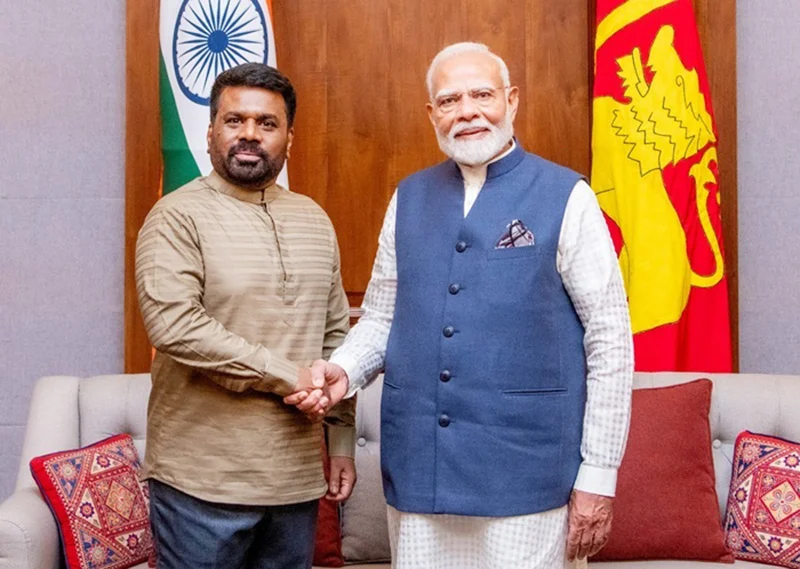
Indian Prime Minister Narendra Modi once again signaled the priority India places on Sri Lanka by swiftly dispatching a shipload of petrol following a telephone conversation with President Anura Kumara Dissanayake. The Indian Prime Minister’s gesture came at a cost to India, where there have been periodic supply constraints and regional imbalances in fuel distribution, even if not a countrywide shortage. Under Prime Minister Modi, India has demonstrated to Sri Lanka an abundance of goodwill, whether it be the USD 4 billion it extended in assistance to Sri Lanka when it faced international bankruptcy in 2022 or its support in the aftermath of the Ditwah cyclone disaster that affected large parts of the country four months ago. India’s assistance in 2022 was widely acknowledged as critical in stabilising Sri Lanka at a moment of acute crisis.
This record of assistance suggests that India sees Sri Lanka not merely as a neighbour but as a partner whose stability is in its own interest. In contrast to Sri Lanka’s roughly USD 90 billion economy, India’s USD 4,500 billion economy, growing at over 6 percent, underlines the vast asymmetry in economic scale and the importance of Sri Lanka engaging India. A study by the Germany-based Kiel Institute for the World Economy identifies Sri Lanka as the second most vulnerable country in the world to severe food price surges due to its heavy reliance on imported energy and fertilisers. Income per capita remains around the 2018 level after the economic collapse of 2022. The poverty level has risen sharply and includes a quarter of the population. These indicators underline the urgency of sustained economic recovery and the importance of external partnerships, including with India.
It is, however, important for Sri Lanka not to abdicate its own responsibilities for improving the lives of its people or become dependent and take this Indian assistance for granted. A long unresolved issue that Sri Lanka has been content to leave the burden to India concerns the approximately 90,000 Sri Lankan refugees who continue to live in India, many of them for over three decades. Only recently has a government leader, Minister Bimal Rathnayake, publicly acknowledged their existence and called on them to return. This is a reminder that even as Sri Lanka receives support, it must also take ownership of its own unfinished responsibilities.
Missing Investment
A missing factor in Sri Lanka’s economic development has long been the paucity of foreign investment. In the past this was due to political instability caused by internal conflict, weaknesses in the rule of law, and high levels of corruption. There are now significant improvements in this regard. There is now a window to attract investment from development partners, including India. In his discussions with President Dissanayake, Prime Minister Modi is reported to have referred to the British era oil storage tanks in Trincomalee. These were originally constructed to service the British naval fleet in the Indian Ocean. In 1987, under the Indo Lanka Peace Accord, Sri Lanka agreed to develop these tanks in partnership with India. A further agreement was signed in 2022 involving the Ceylon Petroleum Corporation and the Lanka Indian Oil Corporation to jointly develop the facility.
However, progress has been slow and the project remains only partially implemented. The value of these oil storage tanks has become clearer in the context of global energy uncertainty and tensions in the Middle East. Energy analysts have pointed out that strategic storage facilities can provide countries with greater resilience in times of supply disruption. The Trincomalee tanks could become a significant strategic asset not only for Sri Lanka but also for regional energy security. However, historical baggage continues to stand in the way of Sri Lanka’s deeper economic linkage with India. Both ancient and modern history shape perceptions on both sides.
The asymmetry in size and power between the two countries is a persistent concern within Sri Lanka. India is a regional power, while Sri Lanka is a small country. This imbalance creates both opportunities for partnership and anxieties about overdependence. The present government too has entered into economic and infrastructure agreements with India, but many of these have yet to move beyond initial stages. This has caused frustration to the Indian government, which sees its efforts to support Sri Lanka’s development as not being sufficiently appreciated or effectively utilised. From India’s perspective, delays and hesitation can appear as a lack of commitment. From Sri Lanka’s perspective, caution is often driven by domestic political sensitivities and concerns about sovereignty.
Power Imbalance
At the same time, global developments offer a cautionary lesson. The behaviour of major powers in the contemporary international system shows that states often act in their own interests, sometimes at the expense of smaller partners. What is being seen in the world today is that past friendships and commitments can be abandoned if a bigger and more powerful country can see an opportunity for itself. The plight of Denmark (Greenland) and Canada (51st state) give disturbing messages. Analysts in the field of International Relations frequently point out that power asymmetries shape outcomes in bilateral relations. As one widely cited observation by Lord Parlmeston, a 19th century prime minister of Great Britain is that “nations have no permanent friends or allies, they only have permanent interests.” While this may be an overly stark formulation, it captures an underlying reality that small states must navigate carefully.
For Sri Lanka, this means maintaining a balance. It needs to clearly acknowledge the partnership that India is offering in the area of economic development, as well as in education, connectivity, and technological advancement. India has extended scholarships, supported digital infrastructure, and promoted cross border links that can contribute to Sri Lanka’s long term growth. These are tangible benefits that should not be undervalued. At the same time, Sri Lanka needs to ensure that it does not become overly dependent on Indian largesse or drift into a position where it functions as an appendage of its much larger neighbour. Economic dependence can translate into political vulnerability if not carefully managed. The appropriate response is not to distance itself from India, but to broaden its partnerships. Engaging with a diverse range of countries and institutions can provide Sri Lanka with greater autonomy and resilience.
A hard headed assessment would recognise that India’s support is both genuine and interest driven. India has a clear stake in ensuring that Sri Lanka remains stable, prosperous, and aligned with its broader regional outlook. Sri Lanka needs to move forward with agreed projects such as the Trincomalee oil tanks, improve implementation capacity, and demonstrate reliability as a partner. This does not preclude it from actively seeking investment and cooperation from other partners in Asia and beyond. The path ahead is therefore one of balanced engagement. Sri Lanka can and should welcome India’s partnership while strengthening its own institutions, fulfilling its domestic responsibilities, and diversifying its external relations. This approach can transform a relationship shaped by asymmetry into one defined by mutual benefit and confidence.
by Jehan Perera

Punjab Kings fined for slow over-rate

Ice-cool Connolly leads nervy Punjab Kings home on IPL debut

Showers expected in the Western, Sabaragamuwa and Southern provinces in the evening or night

Heat Index at Caution Level in the Western, Sabaragamuwa, Southern, Eastern, North-western, Northern and North-central provinces and in Monaragala district

Urea shortage threatens Yala harvest: Experts

2025 property grab: Court orders JVP to hand back Yakkala office to FSP

‘Dates have the highest sugar content to fight Coronavirus’

Sunday Island 27 December – Headlines

#SundayIsland 17th December – Headlines

Sunday Island – 28th March

Sunday Island Headlines – 21 March

Sunday Island – 21st February – Headlines
-

 Features4 days ago
A World Order in Crisis: War, Power, and Resistance
-

 News5 days ago
Energy Minister indicted on corruption charges ahead of no-faith motion against him
-

 News6 days ago
US dodges question on AKD’s claim SL denied permission for military aircraft to land
-

 Business6 days ago
Dialog Unveils Dialog Play Mini with Netflix and Apple TV
-

 Sports5 days ago
SLC to hold EGM in April
-

 Latest News6 days ago
A strong Technical and Vocational Education and Training (TVET) system equips individuals with practical, relevant, and future-oriented skills helping to innovate responsibly towards a greener and sustainable future – PM
-

 Opinion5 days ago
When elephants fight, it is the grass that suffers
-

 Features5 days ago
Lest we forget