
News
The Caste System


by Vijaya Chandrasoma
Sri Lanka has been long considered a caste-blind society on the basis that it is a predominantly Buddhist country, and the Buddha himself denounced the caste system which was the accepted social stratification system in India.
However, the Sinhalese caste system certainly prevails today, perhaps not to the same degree it existed 100 years ago.
Though the significance of castes may depend on social and educational standing, it still plays an important role in matrimony. Personals in today’s newspapers abound with matrimonial advertisements, which, rather like the dating sites of the west, remain the best way to contract a marriage in a country where open and casual dating is still, by and large, frowned upon. And, unlike the dating sites of the west, requirements of race, religion, caste and often horoscopes are almost always specified.
Whether it’s a marriage based on caste, social and financial standing, or other criteria of compatibility; or the “love marriage” preferred by the progressives, the institution remains a crapshoot. The odds of divorce in the west currently stand at even money, because divorce is both easy and subject to no stigma. Divorce in Sri Lanka is rarer, as it has a social infrastructure to hold a marriage together, but the odds of a happy marriage, without divorce entering the equation, are also about even money.
Caste has never been an issue in our family. For those of us in the lower, or horrors of horrors, mixed lower castes, we proudly say that we do not care about caste. Rather like the billionaire who says he does not care about money. Or the lady married to an Adonis who says she doesn’t care for looks.
There is an interesting story about one of my aunts, which may throw some light on the caste system prevalent in Sri Lanka (Ceylon) in the mid-20th century. The social injustice this system represents prevails, to a lesser degree, even today.
My aunt was a most attractive lady, who met a gentleman at the university. They had a romantic relationship, and were planning to get married. There was one huge problem, however. My father was from the Karawa (fisher) caste, while the prospective groom was of the ‘high’ Goyigama (farmer) caste. Or was he even from the so-called aristocratic Radala caste? I don’t know, my knowledge of the caste system is just about non-existent, constrained as it is by an explanation given by my father, which I will relate at the end of this anecdote. They were planning nuptials, without first getting the blessing of the groom’s parents.
When the father of the prospective groom heard about the impending social disaster to his family, he immediately took a train to Hikkaduwa and imperiously told a villager to summon my grandfather to meet him at the railway station. The villager came back with the response from my grandfather, that if the honorable gentleman wishes to meet him, he’s welcome to do so at his residence.
So the noble gentleman humiliated himself by proceeding to my ‘low-caste’ grandfather’s house. Shunning traditional formalities, he told the old man that his son and my aunt were planning on getting married, which was unacceptable because of the difference in caste. To which my grandfather replied, I am sorry, sir, but you must get your son to stop this marriage. I am unable to do so, as I already have agreed to the marriage of my oldest son (my father) to a lady of an even ‘lower’ caste. My mother was of the ‘low’ Durawa caste, traditionally toddy-tappers, a caste I suspect didn’t even make the top ten. So the high-caste gentleman went back to his aristocratic mountains, and prevailed on his son to desist. Which was the end of that romance.
Time went by. My aunt, obviously a glutton for punishment, fell in love with another of these ‘high-caste’ types. His father, too, objected to the marriage, and made the same trek to Hikkaduwa, meeting with the same response from my grandfather.
My grandfather used to break into English when he was excited. So when his daughter came home for her vacation from the university, he exclaimed, “Your second father-in law also came”.
That particular high-caste gentleman disregarded his parents’ objections and married my aunt. Actually, he was a nice guy, and he was trading up. They enjoyed a long and very happy marriage.
My father’s attitude to the caste system is best illustrated by his answer to a question I think my younger brother Praki asked him when he was about seven years old. He said that the kids at school were talking about their castes, and wanted to know to which caste we belonged. My father said, Well, son, your mother is Durawa, I am Karawa, so you must be Jarawa (filth or trash in Sinhala).


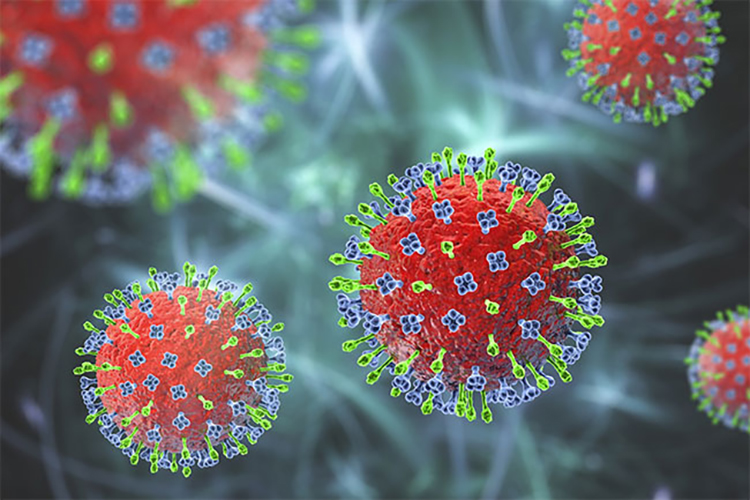
Sri Lanka has stepped up efforts to detect and respond to a potential outbreak of the deadly Nipah virus (NiV), with health authorities enhancing surveillance and laboratory readiness amid growing concerns in the region.
The Medical Research Institute (MRI), the country’s premier laboratory, has upgraded its testing capacity with the latest technology to identify the Nipah virus, enabling early detection of suspected cases, an MRI source said.
Nipah virus is a highly infectious zoonotic disease that can spread from animals
to humans and also through human-to-human contact. Fruit bats are the natural hosts of the virus.
First identified in Malaysia in 1988, the virus has since caused deadly outbreaks in countries including India and Bangladesh. Experts warn that Sri Lanka, with its close human-animal interactions and tropical climate, must remain vigilant against such emerging infectious diseases.
The case fatality rate of Nipah virus ranges from 40% to 75%, making it one of the most lethal viral infections affecting humans. There are currently no specific drugs or vaccines, with treatment relying mainly on intensive supportive care, health specialists say.
Symptoms of infection initially include fever, headaches, muscle pain, vomiting, and sore throat, followed by dizziness, drowsiness, altered consciousness, and neurological signs indicating acute encephalitis. Severe cases may progress to atypical pneumonia, acute respiratory distress, seizures, and coma within 24 to 48 hours.Authorities continue to urge heightened awareness and precautionary measures, emphasizing that early detection and rapid response are key to preventing outbreaks.
by Chaminda Silva ✍️
The Free Media Movement (FMM) has demanded government accountability on many freedom of expression issues referred to in a statement issued by the Human Rights Commission in a statement issued last week.
The statement under the hands of FMM Convener Lasantha De Silva and Secretary Dileesha Abeysundera says FMM has paid close attention to the statement issued by the Human Rights Commission (HRC) under reference number HRC/S/i/E/03/02/26. It has also informed that global stakeholders, including the International Federation of Journalists—of which it is a member—that are already closely monitoring this matter.
In its statement, HRC has elaborated at length on the issues that have arisen in Sri Lanka concerning freedom of expression and online safety. It specifically points out that the actions of the Sri Lanka Police have been a major contributing factor to these concerns. The Commission notes that recent conduct of the police has indirectly interfered even with the professional activities of journalists.
HRC has also drawn attention to the practice of summoning journalists and other activists before the police without providing clear reasons, in violation of circulars issued by the IGP. In certain instances, the police have stated that journalists were summoned due to alleged defamation arising from media activities.
However, freedom of expression guaranteed by the Constitution is restricted only within constitutionally prescribed limits. Accordingly, defamation that is no longer a criminal offence cannot be acted upon by the police. Such matters constitute civil offences that must be resolved before courts of law. The Commission further observes that attempts by politicians and others to lodge complaints with the Criminal Investigation Department regarding defamation are efforts to portray defamation as a criminal offence.
The HRC statement also addresses the Online Safety Act. While emphasizing the need to be mindful of online safety, the Commission points out that the current law does not address genuine needs. Therefore, as already demanded by many stakeholders, the government has the option to repeal this Act.
In addition, HRC has outlined a three-pronged approach that should be adopted to safeguard freedom of expression, as guaranteed by the Constitution and in line with Sri Lanka’s commitments under the Universal Declaration of Human Rights of the United Nations.
FMM said it is of the view that the Government of Sri Lanka must give serious consideration to this statement and to the recommendations emphasized therein. “This is a moment in which the accountability of the Sri Lankan government is being questioned. Accordingly, the Free Media Movement urges the government to take immediate steps to implement the recommendations set out in this statement,” it said.
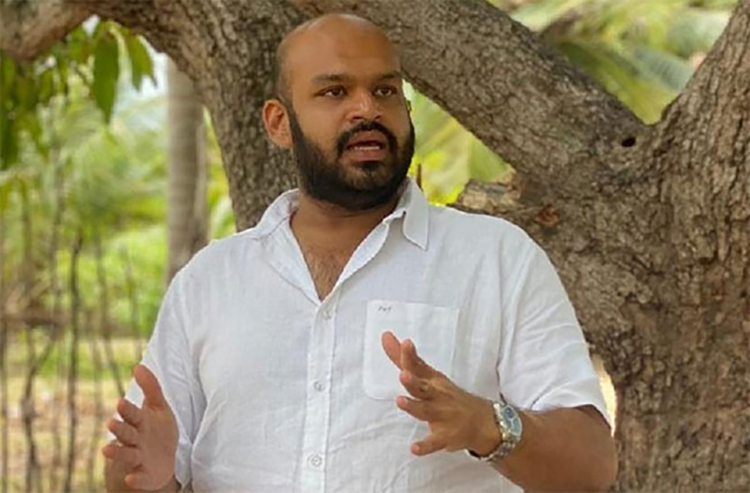
ITAK Batticaloa District MP Shanakiyan Rasamanickam accused the government in Parliament on Friday of deliberately delaying Provincial Council elections, pointing to its failure to nominate members to a Parliamentary Select Committee.
The committee, tasked with considering matters related to Provincial Council polls, was announced on 6 January 2026. Opposition parties submitted their nominees promptly.
However, a month later, the government has yet to name its eight members, preventing the committee from being constituted and from commencing its work, Rasamanickam alleged.
Opposition representatives argue that this delay represents intentional inaction aimed at postponing elections. They urged the government to appoint its nominees without further delay to allow the committee to proceed.

Ireland opt for an extra batter as they ask Sri Lanka to bat

England bat; Nepal hand debut to Sher Malla

Seifert and Phillips conquer Afghanistan spin to script convincing New Zealand win

Thailand votes as reformists, conservatives vie for power

Afghanistan to bat first against New Zealand

‘I’d like to play on flat tracks’ – Shanaka links Sri Lanka’s batting woes to spin-friendly pitches at home

‘Dates have the highest sugar content to fight Coronavirus’

Sunday Island 27 December – Headlines

#SundayIsland 17th December – Headlines

Sunday Island – 28th March

Sunday Island Headlines – 21 March

Sunday Island – 21st February – Headlines
-

 Business2 days ago
Zone24x7 enters 2026 with strong momentum, reinforcing its role as an enterprise AI and automation partner
-
 Business6 days ago
SLIM-Kantar People’s Awards 2026 to recognise Sri Lanka’s most trusted brands and personalities
-

 Business7 days ago
All set for Global Synergy Awards 2026 at Waters Edge
-
 Business6 days ago
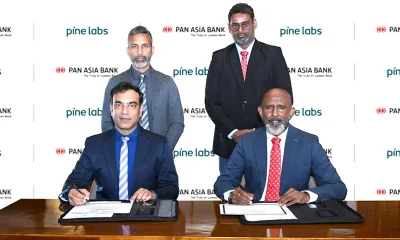
API-first card issuing and processing platform for Pan Asia Bank
-
 Business2 days ago
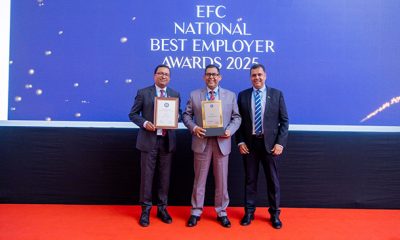
HNB recognized among Top 10 Best Employers of 2025 at the EFC National Best Employer Awards
-

 Business2 days ago
GREAT 2025–2030: Sri Lanka’s Green ambition meets a grid reality check
-

 Editorial4 days ago
All’s not well that ends well?
-

 Features4 days ago
Phew! The heat …