
Opinion
The battle to claim Covid-19!

Leave the battle to those that are genuinely fighting it!
By Romesh Fernando
Covid 19 is here. We’ve known that for a while! The fact remains that each of us are vulnerable. Never mind the origin of the virus; whether it came from China, India or the US or if it was man-made or a natural occurrence.
The crux of the matter is that it is here to stay.
The Military apparatus under General Shavendra and the medical armory are wielding their might, fighting a battle day and night to keep us safe.
While all this is going on, the blame game has begun.
The pundits, Covid gurus and self-anointed investigative journalists putting pen to paper; some making sense but most others exposing their cheap brand of journalism, lacking in value and relevance.
We also have the electronic media exploiting the freedom of expression that has allowed a myriad opportunities for those seeking to spread fake news. Yes, there are a lot of these opinionated characters out there who spew out their far-fetched theories based on nothing but unjustified assumptions & factually incorrect information, which are doing the rounds. Why? Your guess is as good as mine. One thing is for sure – they’re only making the communication service providers rich!
In this day and age, people don’t need education or intelligence to know where this wanton brand of reporting originates from. A little bit of common sense will tell us it originates from the gutter. The language is poor, the information is false and the so-called freedom of expression is that of an ill-informed individual, fit only for the waste paper basket.
While the country is struggling, the misinformed population is judging and the politicians are playing the only game they know! – politics!! All while the economy is in the balance, teetering on the verge of a crash!
My humble request to all those involved in publicizing their thoughts and sharing their opinions is to take a good look in the mirror and ask, ‘What have I done to help the cause of those suffering after contracting this deadly virus?’
If nothing much comes to mind, then that says it all. It would be prudent to stay home safe and let those that are battling this war work unhindered.
Let us be realistic in terms of our responsibilities as the public.
People never took the numerous warnings seriously. That’s the hard and brutal truth.
Politicians wanted elections held to get into parliament, so they could have access to state machinery and resources to run the country!. The industry had to run in order to turn the wheels of production and give life to an already ailing economy. Thousands of employees needed to feed their families. Everyone did what they thought was needed. We heard the words “Covid is no more”. With such a mentality, It was no surprise that the health warnings and preventative efforts slipped through the public’s fingers. The result is a recurrence on the scale we now see.
Let us honestly answer these questions: How many of us attended political meetings and rallies without masks? Disregarded washing hands and sanitizing? How many of us went out shopping freely and to exhibitions, book fairs and what not, caring nought for the virus or the repercussions? How many more still attended funerals, alms-givings, weddings and mass gatherings? The list of events of exposure is endless!
Then, who do we blame? AND IS IT FAIR?
The woman from Minuwangoda was not patient zero. That’s for sure!
The government had to bring in our stranded workers from all over the world: Europe, Middle East, US and across Asia, from wherever they toiled and contributed to our economy. In that process, couldn’t we have imported virtually all strains of the virus?
This is something we couldn’t avoid. We can’t ignore the cries of our people when they are suffering and stranded in a foreign land. Our culture, our humility our nature is not one that shuns our fellow beings when in distress. Many are the stories of drowning of the hero that dived in to save another. Many are those that died in the war fighting for you and for me.
So, is it fair we blame Brandix or the Military or the Health Services or the Government or anyone else for that matter? Instead, don’t you think we need to unite, stand firm and fight this battle for one and all?
Human error and neglect are paramount in this dilemma. Let us refrain from conveniently palming off the blame to others.
Brandix, which has now hit the news for all the wrong reasons, did what they ought to.
They’re a corporate and socially responsible organisation responding to a global problem. They took it upon themselves to charter aircraft to repatriate their own staff from the Brandix industrial park in Visakapatnam. Sadly, this has been twisted and distorted to no end.
The many stories alleging bribing the government, bringing in Indians to teach us how to sew underwear, charter flights that have brought in cheap Indian labour, circumventing quarantine procedures – the list goes on and seems to be pure nonsense.
The demand for answers to questions on passenger manifests bringing in Brandix employees and their families, proof of quarantining them in designated centres, PHI union demands for proof of PHI participation in the quarantine process of monitoring, etc. are the main highlights in this theatrical enactment of twisting and distorting facts, trying to blame a corporate for the mishap of a possible community spread – a ridiculous thought to say the least.
If only each one of them spent some quality time silently checking on the facts via available media and information services- would actually help all concerned to focus more on the need of the hour – looking after our people, our country and doing what is right.
Brandix, with their unparalleled efforts in CSR, ensured their entire might was put into motion to assist in this issue of unimaginable sadness. They continue to do their part day and night and have vouched to continue to ensure they see their staff out of danger.
Their contributions to the cause are immeasurable. From giving over their plants from the word go when the pandemic hit our shores, and certainly long before the Minuwangoda case, to the many funded programmes managing our sick and affected, to continued support to the cause is exemplary to say the least. Let us hold our fire and take a step back and reflect – If you and I manage to contract the virus, we too may end up in one of the quarantine centres facilitated and supported by Brandix.
They have continued to do all this, while trying to keep their focus amidst the often baseless media slandering.
In no civilized world do we blame a pandemic on a corporate entity. This is certainly a first! Yes! corporates can have slip ups, negligence, mishaps, accidents – especially when they are of the magnitude of Brandix. But what matters is how they manage the crisis. Every corporate in today’s world has mitigation plans in place and I’m sure theirs is next to none.
While the battle rages through, with efforts to combat the pandemic from getting out of hand, there still seems to be the critiques, the politics, the raging arguments, the blame games, stories, debates, YouTube journalists and unions all with vested interests! – they will all be there! All judgmental, with conclusions to pin the blame on the culprit or scapegoat, whoever is more convenient to get a hold of! Sadly, to say the least – that’s what our culture has become in recent times.
So let’s stop the blame games, finger pointing and making this a playground for various gains. Let the authorities and the specialists do their job.
It is sheer neglect on our part as citizens. It is our foolishness. It is our failure to adhere to the repeated calls for safety. The culprit is you and me!
Many the sinks in place for washing. And many a tap without water and many an empty bottle of detergent or soap. Stylish foot pedals no longer work. Many a mask, only for the protection of our chins! Why? Because we cared less.
Let us pause for a moment to ponder on the agony that would run through the mind of the individual that has been exposed. Let us pause to ponder on the agony of those who see their loved ones being driven away in an ambulance with beacons of red or blue into centres for quarantine. Have you had the chance to ask a mother, father, brother, or sister, whose loved one got taken away, what runs through their minds living this nightmare?
Do you have the slightest feel of what runs through a parent’s mind, whose child is taken in for treatment to a centre with no visitation? Or, know what traumatic thoughts run through the mind of a child being taken away for treatment?
While we’re at it reading our Sunday paper, we know that there’s a massive effort in operation to care for the sick and their families.
As business associates of Brandix for many years, we’re certain our fellow associates are not alone. Much is being done to ensure those affected are cared for. The organisation is working round the clock. Let us rally around the corporate in support and solidarity to cope with this situation at hand. After all, we’re all a part of the family that work and live contributing to our economy which continue to be fueled by the likes of corporates like Brandix.
Currently, the global pandemic figures are worrying, yet recoveries are many and deaths sadly still high;
Globally:
38,806,674 cases, 1,097,966 deaths, 29,158,331 recoveries.
In Sri Lanka to date:
5,170 cases, 13 deaths, 3,380 recoveries.
So, let us be thankful for small mercies and those that have recovered.
Let’s continue to pray that those affected will recover fast and return home soon. For our part, let’s be compassionate and humane and refrain from dabbling in words and expressions that are at the expense of others or detrimental to the cause. Instead let’s support the fight in every way possible for the safety and well-being of society.

When we come to it
We, this people, on this wayward, floating body
Created on this earth, of this earth
Have the power to fashion for this earth
A climate where every man and every woman
Can live freely without sanctimonious piety
Without crippling fearWhen we come to it
We must confess that we are the possible
We are the miraculous, the true wonder of this world
That is when, and only when
We come to it.
· Concluding lines of the poem ‘A brave and startling truth’
(1995)
– Maya Angelou
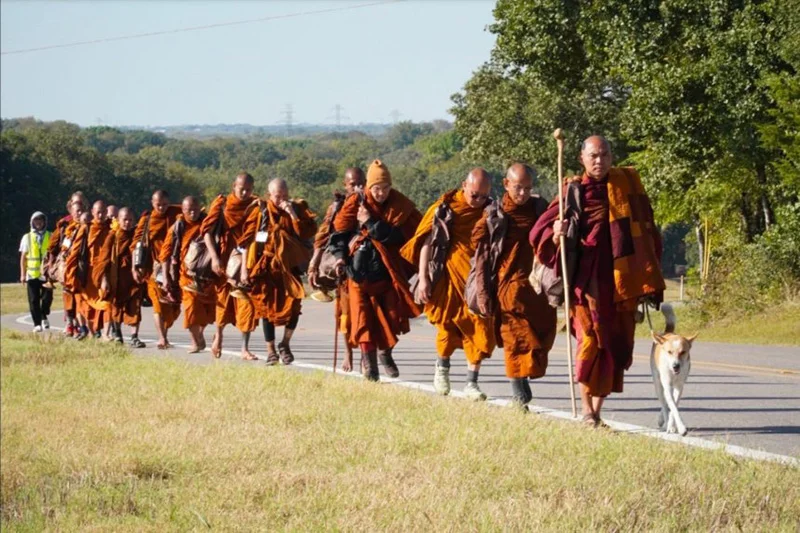
Ven. Dr Melpitiye Wimalakitti Nayake Thera, Head Monk of the Wijesundararamaya, Asgiriya, Kandy, and the Chief Incumbent of the Gotama Viharaya Monastery, Fort Worth, Texas, USA, claims that the ongoing Texas to Washington Walk for Peace march led by the American monk of Vietnam origin Ven. Pannakara is ‘an initiative of ours’ (ape wedak). He made this claim during a recent podcast hosted by the well-known YouTuber and journalist Chamuditha Samarawickrema (CNB/February 5, 2026). The Huong Dao Monastery of Bhante Pannakara, who is leading the peace walk is close to the Gotama Viharaya Monastery of Wimalakitti Thera, who tells us that he has had a strong connection with Vietnamese monks and has already collaborated with them in many Buddhist activities.
Talking about Ven. Pannakara, Ven. Wimalakitti says that he is a pupil of senior Vietnamese bhikkhu Ven. Ratanaguna of the same Huong Dao Monastery in Fort Worth Texas. He is leading a team of 24 Buddhist monks from different countries in the (Southeast Asian) region including Vietnam, Cambodia, Thailand, Bangladesh, Laos, etc., taking part in the Walk for Peace (from Fort Worth in Texas to Washington D.C.). It is going to be 2723 miles long according to Wimalakitti Thera. The Walk for Peace started on October 26, 2025 and is due to pass through 4 time zones and 10 states, braving extremes of weather and trekking through patches of harsh terrain.
It was 40 degrees Celsius in Texas, when they started. In seven days, the Peace Walkers reached Georgia in Atlanta. It was raining there. Then, they arrived in South Carolina, where it was cold, the temperature usually being under 20 degrees Celsius. By the time of the podcast with Chamuditha, the Walk for Peace was proceeding through the even colder North Carolina, the temperature barely rising above 1 or 2 degrees Celsius. Then, they reached Virginia with heavy snowfall, but the Walk went ahead nonstop.
The original plan was to walk 8 hours and cover 20 miles in a day. Now they want to do 10 hours a day and cover a targeted 40 miles. They hoped to have at least 20 participants in the Walk at any time. The whole Walk is expected to take 120 days and end on February 13, 2026.
America is a big democratic country, the monk says. The ordinary people are more interested in inner peace than in politics. There are 125 Sri Lankan Buddhist pansalas in America, 15 of which stand on the route of the continuing Walk for Peace. Sri Lankan monks resident in these monasteries, in partnership with monks from other countries, provide the Walkers with essential food, temporary lodgings, and hygienic facilities. They also work out security arrangements for the peace-walking monks in coordination with government and municipal authorities and Police.
Ven. Wimalakitti provides this information as a member and a director of the organising committee responsible for the Walk for Peace project. According to him, Ven. Pannakara takes part in an annual walk in India from Buddha Gaya to Kolkata (the capital city of India’s West Bengal state) as a dhutanga practice (one of the 13 strict ascetic practices recommended for bhikkhus in Theravada Buddhism that aim at perfecting austerity, mental purification, and renunciation). About 200 Buddhist monks join Bhikkhu Pannakara on this walk.
The dog now celebrated as Aloka started following Ven. Pannakara at Buddha Gaya and reached Kolkata with him. He followed the monk even to the airport. Bhikkhu Pannakara could not leave the dog behind in India and fly back to America. So, he canceled his flight and stayed back in India for eight months, during which he trained the dog and completed the paperwork necessary to take him to America with him. Once in America, Aloka sometimes started growling at people at first, because he was not used to the new environment. So, they put a pet cone around his neck to calm him while on the move. Now he participates in the Walk without the pet cone and walks beside Bhikkhu Pannakara at the head of the column of Walkers. The monk usually takes Aloka on a leash and occasionally, off-leash. Aloka had a paw injury during the walk and had to be hospitalised for a few days for surgery. He has rejoined the walk now. The dog has a car reserved for him to move with the walking party whenever he is unable to walk.
Ven. Wimalakitti Thera says he took part in six discussions held at the Huong Dao pansala when the peace walk was being planned. They had to discuss security matters with the Police. Concerns were raised about possible assassination attempts on Bhikkhu Pannakara. The dedicated monk said that he was ready to lay down his life for the cause of the Walk. Wimalakitti Thera said Bhikkhu Pannakara is only 37 years old.
At the beginning of the fourth week into the Walk, there was a serious traffic accident. The monks were walking along the shoulder of the road (near Dayton, Texas, east of Houston, on November 19, 2025) guided by a slow-moving escort vehicle (with hazard lights on). A truck hit the rear of the pilot car pushing it into the monks. The impact left two monks injured, one of them (Phra Ajarn Maha Dam Phommasan, aka Bhante Dam Phommasan) very seriously. The injured monks were airlifted to Houston for medical attention. Bhante Dam Phommasan had to undergo multiple surgeries, including the amputation of his leg. (The information given within parentheses in this piece of writing is added by me for clarity.)
On another occasion (in early January 2026, in Walton County, near Good Hope, Georgia) an unidentified protestor accompanied by a group of his supporters blocked the monks’ path (holding signs like ‘JESUS SAVES’, ‘Turn to Christ’; WARNING: ‘walking to hell’, ‘Hell awaits’, etc., but the people gathered there cheered on the monks, and asked the protestors to just move on). Ven. Wimalakitti (who was presumably on the scene) says that the police diverted them onto an alternative route. The unperturbed monks did not react to the disruptors and continued their walk in silence. The night routes were decided by the Police. The initial hostility petered out gradually, as thousands gathered on the roadsides to watch the monks walking and to listen to the sermons in the night.
(On Christmas Day 2025, the monks stopped at a church in Alabama, before entering into Georgia the next day.) Ven. Wimalakitti says that when Bhikkhu Pannakara made an address in the church that evening, it was filled to capacity, and his speech had to be broadcast on outdoor screens.
The Walk actually began as a dhutanga (please, see above) observance as Ven. Wimalakitti explains during the discursive podcast, which forms the basis of this essay. But, on the third day, the name was changed to ‘Walk for Peace’. Its purpose is non-religious and non-political. ‘Today is my day of peace’ is the theme. (Ven. Pannakara exhorts) “When you get up in the morning, say to yourself ‘Today is going to be my day of peace’”. When Wimalakitti Thera says “Ordinary Americans are really interested in Meditation (bhavana). They are much less interested in the dhamma”, he is making an obvious oversimplification that seems to be limited exclusively to the current Walk for Peace context.
WimalakittiThera claims that a single Pakistani individual from Texas ‘provides security for the Walk’. However much I tried, I couldn’t catch his name as the monk pronounced it. So I sought AI help. AI clarifies that ‘Based on the results of the 2025-2026 Walk for Peace from Texas to Washington D.C., the security and the logistics for the Buddhist monks are primarily handled by local law enforcement agencies (sheriffs and police departments) who secure the roads as the group walks’.(So, there is no mention of a Pakistani (American) providing security for the walk). The monk might be mistaken about the matter. But that piece of information is not so important. Though the monks have absolutely no political motives, the Sri Lankan monk thinks they expect (US President Donald) Trump to be there when they reach Washington, near the White House. A reception for the monks is scheduled to take place on that occasion with the participation of the Sri Lankan ambassador.
The highlight of the Chamuditha News Brief (CNB) podcast featuring Ven. Dr Melpitiye Wimalakitti uploaded on February 5, 2026 is his revelation of a well-kept secret, which is that the Sri Lankan monks living in America played the major pioneering role in organising the Walk for Peace across America project and that they wanted the Sri Lankan government to support it. The 17-member organising committee under the leadership of Ven. Wimalakitti, including the Vietnamese American bhikkhu Ven. Pannakara (who is now leading the Walk for Peace march) visited Sri Lanka in this connection in May 2025, that is, nine months ago. Ven. Wimalakitti showed the group photographs that the visiting monks took with prime minister Harini Amarasuriya, some ministers and other dignitaries. Still, ordinary Sri Lankans are unaware of this momentous event, it seems.
Unfortunately, there had not been any response to the monks’ request up to the day that Chamuditha did the podcast with Ven. Wimalakitti. The monk said that he broke off his participation in the Walk in order to visit Sri Lanka again for the express purpose of urging the Sri Lankan government’s participation in the Vesak celebration at Walk team leader Ven. Pannakara’s monastery in Texas in May. Ven. Wimalakitti said he gave the president and the prime minister (as I think he claimed) formal invitation cards requesting them to arrange for government delegates to attend the Vesak ceremony set to be held at the Huong Dao Monastery of Ven. Bhante Pannakara in Dallas, Fort Worth, Texas on May 26 this year (2026). He also wants them to grace the transport of relics from Sri Lanka. The monk was due to leave for America the night following the day of the programme with Chamuditha; but he had still got no reply from those important invitees. However,the Sri Lankan Ambassador in Washington is taking a great interest in this event, according to Ven. Wimalakitti.
At the end of the podcast, Ven. Wimalakitti voiced two important messages: “I want to say a word of diplomatic importance. This is a great opportunity for Sri Lanka, diplomatically speaking. This is a moment of awakening, not only for America but also for the whole world. All of you citizens of the Democratic Socialist Republic of Sri Lanka as a Theravada Buddhist state, can make your contribution to this global awakening. I urgently request that this great opportunity be not missed”. (The Walk for Peace, the peace pilgrimage across America, from Texas to Washington D.C., is performed by a group of Theravada Buddhist monks. It showcases the key Buddhist spiritual values of compassion, loving-kindness, non-violence, and peace that underlie Sri Lanka’s dominant religious culture. These values are a source of soft power for Sri Lanka in its diplomatic and cultural relations with the powerful United States of America.)
“Secondly, as Buddhists of Sri Lanka, please don’t criticise our monks or the Buddhist religion, simply because others do so. Please, think about this (insulting the monks and the Dhamma) with great equanimity. Both Buddhist monks and laypersons must keep updated about current trends. Some of our monks often attract criticism because they fail to adjust to changing times.”
By Rohana R. Wasala
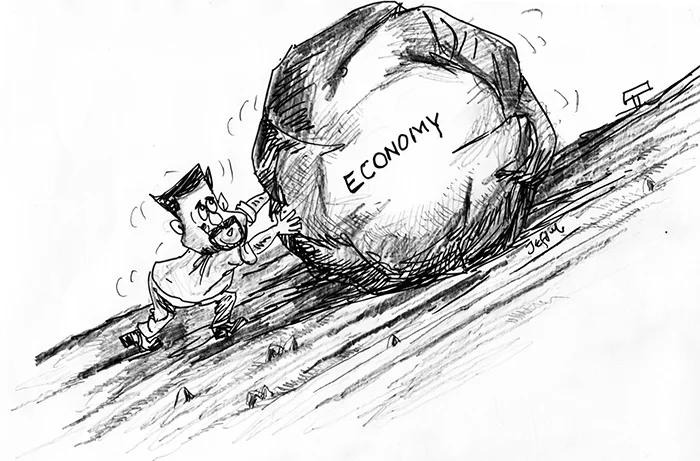
The Central Bank Governor’s recent remarks projecting 4–5 percent growth in 2026 and highlighting improving reserves, lower inflation, and financial stability have been widely welcomed. After the trauma of Sri Lanka’s economic crisis, any sign of normalcy is understandably reassuring. Yet, this optimism needs to be read carefully. What is being presented is largely a story of stabilisation and recovery, framed in the familiar IMF language of macroeconomic management. That is necessary, but it is not the same as a pathway to durable growth.
The first issue is the nature of the projected growth itself. A 4–5 percent expansion can occur for many reasons, not all of which strengthen an economy in the long run. In this case, a significant part of the momentum is expected to come from post-cyclone reconstruction and public investment. This will boost activity in construction and related services and create jobs in the short term. But such growth is typically demand-led and temporary. It raises GDP without necessarily expanding the country’s productive capacity, technological capability, or export competitiveness. Once the reconstruction cycle fades, so may the growth.
This points to a crucial distinction that often gets blurred in public debate: economic recovery and durable growth are not the same thing. Recovery means returning to a more normal macro environment—lower inflation, a more stable exchange rate, some rebuilding of reserves, and a functioning financial system. Durable growth, by contrast, requires rising productivity, structural change, and a stronger export base. Sri Lanka can achieve the first without securing the second. Indeed, that is precisely what happened in earlier post-crisis episodes, where short-lived recoveries were followed by renewed external stress.
The Central Governor’s narrative is best understood as an IMF-style stabilisation narrative. Its centre of gravity is macro control: inflation targets, policy rates, reserves, debt service, and financial-sector resilience. These are the right tools for preventing another crisis. But they are not a strategy for accelerating development. IMF programmes are designed primarily to restore confidence, manage risk, and stabilise the macroeconomy. They are not designed to answer the core development questions: What will Sri Lanka produce? What will it export? How will productivity rise? Which sectors will drive long-term growth?
Seen in this light, a projected 4–5 per cent growth rate is best described as moderate recovery growth. It may be entirely plausible—especially if driven by reconstruction and public spending—but it is not the kind of growth that closes income gaps, absorbs underemployment at scale, creates sustained fiscal space, or materially reduces debt burdens. Countries that have successfully caught up in Asia typically sustained 7–8 per cent (or higher) growth for long periods, powered by export expansion, industrial upgrading, and continuous learning.
If the current government’s development agenda is genuinely ambitious, then there is a clear mismatch between the growth implied by that ambition and the growth described in the Central Bank’s outlook. A strategy that settles for 4–5 per cent risks normalising mediocrity rather than mobilising the economy for take-off. Reconstruction-led and consumption-led expansions can lift GDP in the short run, but they do not, by themselves, deliver the productivity and export breakthroughs needed for sustained 7–8 per cent growth.
There is also a risk that reconstruction-driven growth will recreate old external vulnerabilities. Large-scale rebuilding increases demand for cement, steel, fuel, machinery, and transport services—many of which are import-intensive in Sri Lanka. This means higher growth can go hand in hand with a widening trade deficit, renewed pressure on foreign exchange, and imported inflation. The Governor has rightly warned about inflationary and external pressures, but the deeper issue is structural: without a parallel expansion of export capacity and domestic production of tradables, stimulus-driven growth can quickly collide with the same constraints that caused past crises.
The improvement in reserves and the claim that debt service is “manageable” are positive developments. But they should be treated as buffers, not proof of long-term security. Sri Lanka’s recent history shows how quickly reserves can be run down when imports surge, exports disappoint, or global conditions tighten. Reserves buy time. They do not, by themselves, change the underlying growth model.
Similarly, the focus on bringing inflation back towards target and maintaining steady policy rates reflects sound central banking. Price stability and financial-sector resilience are public goods. But an inflation target is not a growth strategy. Durable growth comes from investment in productive capacity, from learning and technological upgrading, from moving into higher-value activities, and from building competitive export sectors. Without these, macro stability becomes an exercise in maintenance rather than transformation.
The repeated reference to “structural reforms” also needs to be treated with care. In policy practice, this often means reforms to pricing, state-owned enterprises, taxation, and public finance management. These may improve efficiency and governance, and they matter. But in development economics, structural transformation means something more demanding: a change in what the country produces, how it produces, and what it sells to the world. It means shifting resources into higher-productivity, more technologically advanced, and more export-oriented activities. Without that shift, an economy can be well-managed and still remain fragile.
What is striking in the Governor’s statement is not that it is wrong, but that it is incomplete. We hear a great deal about stability, recovery, and resilience. We hear much less about the growth strategy itself. Which sectors are expected to lead the next phase of growth beyond construction and consumption? How will exports be diversified and upgraded? What is the plan for skills, technology, and productivity? How will private investment be steered toward tradable, foreign-exchange-earning activities?
These are not academic questions. They go to the heart of whether Sri Lanka is merely staging another rebound or beginning a genuine breakthrough. The country’s repeated crises have shown that returning to “normal” is not enough if the underlying growth model remains unchanged.
In sum, the Central Bank Governor’s optimism should be understood for what it is: a stabilisation narrative, not yet a development strategy. It tells us that the economy is becoming calmer, more predictable, and less crisis-prone—and that is a real and necessary achievement. But it does not yet tell us how Sri Lanka will grow fast enough, long enough, and differently enough to escape its long-standing cycle of weak exports, external vulnerability, and stop–go growth.
A recovery built on reconstruction, consumption, and macro control can deliver 4–5 per cent growth. But the government’s own ambitions—and Sri Lanka’s development needs—require 7–8 per cent sustained growth driven by productivity, exports, and structural transformation. That kind of growth does not emerge automatically from stability. It must be designed, coordinated, and pursued through a clear strategy for production, learning, and upgrading.
Stability is essential. Without it, nothing else is possible. But stability is not a development strategy. It is the foundation on which a strategy must be built. The real test for policymakers now is not whether they can keep the economy stable, but whether they can articulate and implement a credible growth strategy that turns stability into momentum and recovery into transformation. Until that strategy is clearly on the table, Sri Lanka’s current optimism—welcome as it is—should be read with caution, not complacency.
by Prof. Ranjith Bandara

Quiet flows another don. The aging fraternity of Peradeniya Engineering alumni has lost another one of its beloved teachers. V. Shanmuganayagam, an exceptionally affable and popular lecturer for nearly two decades at the Peradeniya Engineering Faculty, passed away on 15 January 2026, in Markham, Toronto, Canada. Shan, as he was universally known, graduated with First Class Honours in Civil Engineering, in 1962, when the Faculty was located in Colombo. He taught at Peradeniya from 1967 to 1984, and later at the Nanyang Technological University in Singapore, before retiring to live in Canada.
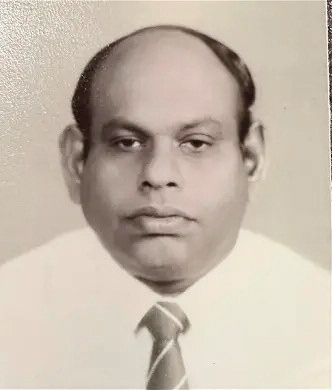
V. Shanmuganayagam
In October last year, one of our colleagues, Engineer P. Balasundram, organized a lunch in Toronto to felicitate Shan. It was very well attended and Shan was in good spirits. At 85 he was looking as young as any of us, except for using a wheelchair to facilitate his movement. The gathering was remarkable for the outpouring of warmth and gratitude by nearly 40 or 50 Engineers, who had graduated in the early 1970s and now in their own seventies. One by one every one who was there spoke and thanked Shan for making a difference in their lives as a teacher and a mentor, not only in their professional lives but by extension in their personal lives as well.
As we were leaving the luncheon gathering there were suggestions to have more such events and to have Shan with us for more reminiscing. That was not to be. Within three months, a sudden turn for the worse in his condition proved to be irreversible. He passed away peacefully, far away across the world from the little corner of little Sri Lanka where he was born and raised, and raised in a manner to make a mark in his life and to make a difference in the lives of others who were his family, friends and several hundreds of engineering professionals whom he taught.
V. Shanmuganayagam was born on May 30, 1940, in Point Pedro, to Culanthavel and Sellam Venayagampillai. His family touchingly noted in the obituary that he was raised in humble beginnings, but more consequentially his values were cast in the finest of moulds. He studied at Hartley College, Point Pedro, and was one of the four outstanding Hartleyites to study engineering, get their first class and join the academia. Shan was preceded by Prof. A. Thurairajah, easily Sri Lanka’s most gifted academic engineering mind, and was followed by David Guanaratnam and A.S. Rajendra. All of them did Civil Engineering, and years later Hartley would send a new pair of outstanding students, M. Sritharan and K. Ramathas who would go on to become highly accomplished Electrical Engineers.
Shan graduated in 1962 with First Class Honours and may have been one of a very few if not the only first class that year. Shan worked for a short while at the Ceylon Electricity Board before proceeding to Cambridge for postgraduate studies specializing in Structures. His dissertation on the Ultimate Strength of Encased Beams is listed in the publications of the Cambridge Structures Group. He returned to his job at CEB and then joined the Faculty in 1967. At that time, Shan may have been one of the more senior lecturers in Structures after Milton Amaratunga who too passed away late last year in Southampton, England.
When we were students in the early 1970s, there was an academic debate at the Faculty as to whether a university or specific faculties should give greater priority to teaching or research. Shan was on the side of teaching and he was quite open about it in his classes. He would supplement his lectures with cyclostyled sheets of notes and the students naturally loved it. It was also a time when Shan and many of his colleagues were young bachelors at Peradeniya, and their lives as academic bachelors have been delightfully recounted in a number of online circulations.
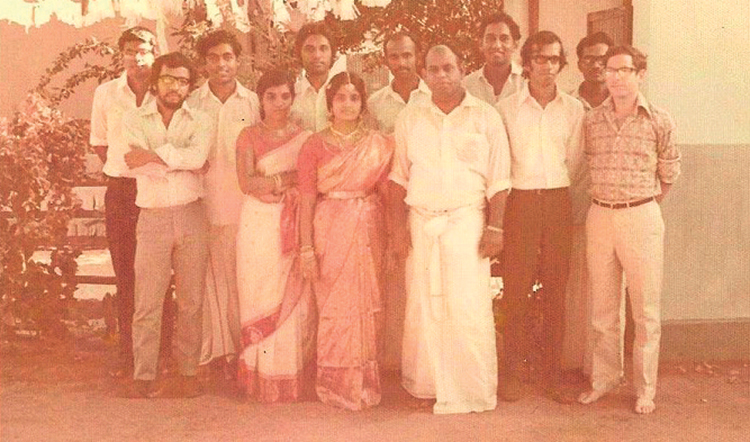
The cross-sectional camaraderie at the Faculty in those days is well captured in one of the photographs taken at Shan’s wedding at Point Pedro, in 1974, which too has been doing the rounds and which I have inserted above. Flanking Shan and his bride Kalamathy, from Left to Right are, M. Dhanendran, Nandana Rambukwella, K. Jeyapalan, Wickrama Bahu Karunaratne, A.S. Rajendra, Lal Tennekoon, Tusit Weerasooria, and R. Srikantha. Sadly, Rambukwella, Karunaratne (Bahu), Tennekoon and now Shan himself, are no longer with us.
Like other faculty members, Shan kept contact with his former students turned practising engineers and they would reach out to him to solicit his expertise in their projects. In the early 1980s, when I was working as Resident Project Manager with my Peradeniya contemporaries, JM Samoon and K. Balasundram, at the Hanthana Housing Scheme undertaken by the National Development Housing Authority (NHDA), Shan was one of the project consultants helping us with concrete technology involving mix design and in situ strength testing using the testing facilities at the Faculty.
The Hanthana Team Looking back, the Hanthana housing scheme construction was the engineering externalization of the architectural imaginings of Tanya Iousova and Suren Wickremesinghe, for building houses on hill slopes without flattening the hills. The project involved the construction of hundreds of housing units with supporting infrastructure comprising roads and drainage, water supply and sanitary, and electricity distribution using underground cables. Tanya & Suren Wickremasinghe were the Architects with an Italian construction company as contractors.
To their credit, Tanya and Suren assembled quite a team of Consulting Engineers that was a cross-section of E’Fac alumni, viz., Siripala Kodikkara and Siripala Jayasinghe (Contract Administration); Prof. Thurairajah (Foundations & Soil Mechanics); S.A. Karunaratne (Structures); V. Shanmuganyagam (Concrete Technology); Neville Kottagama and DLO Mendis (Roads & Drainage); K. Suntharalingam (Water Supply & Sanitary); and Chris Ratnayake (Electrical).
As esoteric gossip goes, DLO Mendis had an informal periodization of engineering graduates, identifying them as either Before-Thurai or After-Thurai, centered on 1957 – the year Prof. Thurairajah graduated with supreme distinction and went on to do groundbreaking theoretical research in Soil Mechanics at Cambridge. Of the Hanthana consultant team, Neville Kottagama and DLO Mendis were before Thurai by six years, Shan was five years after, and all the others came later. Sadly though, only Tanya and Chris are with us today from the 1980s group named above.
After Hanthana came 1983 when all hell broke loose and hundreds of professionals and their families were forced to leave Sri Lanka. Shan left Peradeniya and joined Nanyang Technological University in Singapore, encouraged by his Cambridge contemporaries from Singapore. He taught at Nanyang for twelve years (1984-1996) before moving to Canada with his wife and three sons who were by then ready for university education.
All three children have done exceptionally well in their studies and professional careers. The oldest, Dhanansayan, is a Medical Doctor and a Professor at the University of Wisconsin School of Medicine and Public Health, in Madison, United States. That was where India’s Jayaprakash Narayan and Sri Lanka’s Philip Gunawardena had their university education a hundred years ago.
The younger two sons took to Engineering. The second son, Kalaichelvan, is Program Manager at Creation Technologies, an award-winning global electronics manufacturing service provider. And the youngest, Dhaksayan, is the Chief Information Officer (CIO) at the Toronto Transit Commission (TTC), which is North America’s third-largest urban transit system.
All three have done their parents proud and Shan would have been gratified to see them achieve exemplary success in their chosen fields. A first class Engineer and a first class teacher, Shan was also a great father and a loving grandfather. As we remember Professor Shanmuganyagam, we extend our thoughts and sympathies to his beloved wife Kalamathy, his sons and their young families
by Rajan Philips

Heartbreak for Gurbaz and Afghanistan as South Africa win after double Super Over

Amendment of the Inland Revenue Act No. 24 of 2017

Cabinet nod for “National Mineral Policy” – 2026

Twelve sentenced to death by Gampaha High Court
Ten new buses with facilities for people with special needs

Ghosts of 2016 writ large as England, West Indies meet again

‘Dates have the highest sugar content to fight Coronavirus’

Sunday Island 27 December – Headlines

#SundayIsland 17th December – Headlines

Sunday Island – 28th March

Sunday Island Headlines – 21 March

Sunday Island – 21st February – Headlines
-
 Features4 days ago
My experience in turning around the Merchant Bank of Sri Lanka (MBSL) – Episode 3
-

 Business5 days ago
Zone24x7 enters 2026 with strong momentum, reinforcing its role as an enterprise AI and automation partner
-
 Business4 days ago
Remotely conducted Business Forum in Paris attracts reputed French companies
-
 Business4 days ago
Four runs, a thousand dreams: How a small-town school bowled its way into the record books
-
 Business4 days ago
ComBank and Hayleys Mobility redefine sustainable mobility with flexible leasing solutions
-
 Business5 days ago
HNB recognized among Top 10 Best Employers of 2025 at the EFC National Best Employer Awards
-

 Editorial7 days ago
All’s not well that ends well?
-

 Business5 days ago
GREAT 2025–2030: Sri Lanka’s Green ambition meets a grid reality check