
News
The antibody treatment cocktail that can help Sri Lanka combat Covid-19 in high-risk patients

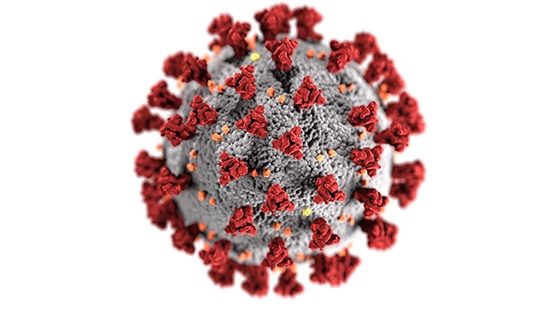
REGN-COV2, an antibody drug cocktail for the treatment of coronavirus patients by pharmaceutical giant Roche, has received Emergency Use Authorization and approval in the US, Europe, Switzerland, India and Japan. This antibody treatment was successfully administered to former US President Donald Trump after he contracted Covid-19 in October last year. The drug cocktail is projected to reduce Covid-19 hospitalizations by 70%.
REGN-COV2 is a cocktail of two monoclonal antibodies, Casirivimab and Imdevimab, and is used for the treatment of mild-to-moderate Covid-19 in high-risk patients. Monoclonal antibodies are two laboratory-made proteins that mimic the immune system’s ability to fight off harmful pathogens such as a virus. Antibodies Casirivimab and Imdevimab were specifically designed against the spike protein of SARS-CoV-2, directed to block the virus’s attachment and entry into the human cells.
“Latest clinical trials results show the important medical benefit casirivimab and imdevimab (Roche antibody cocktail) may provide to people with Covid-19 by significantly reducing their risk of hospitalization and death. This is very important for us to manage our patients as well”, said Dr. Chintaka De Silva, Senior Consultant Physician, Sri Jayewardenepura Hospital.
Due to the distinct engineering of the two neutralising antibodies, the REGN-COV2 remains effective against widest spread variants and reduces the risk of losing its neutralising potency against any new emerging coronavirus variants.
The two-drug cocktail is to be administered for the treatment of mild-to-moderate Covid-19 in adults and paediatric patients (12 or older) who are at high risk of developing severe disease. High risk patients include those over 60 or those who are immunosuppressed, undergoing cancer treatment, bone marrow or organ transplant or having multiple illnesses such as cardiovascular disease, chronic lung or kidney disease, diabetes etc.
Roche’s phase III global trial using over 4,500 high-risk, non-hospitalised Covid-19 patients, met its primary target, showing that its approved combined dose of 1200 mg (600 mg of each drug) significantly reduced the risk of hospitalization or death by 70% and also shortened the duration of symptoms within one week. Further results showed that the cocktail reduced risk of symptomatic coronavirus infections by 81% and reduced asymptomatic patients progressing to symptomatic Covid-19 by 31%.
Former US President Donald Trump was given a higher dose of REGN-COV2 in its experimental stages back in October 2020 when he contracted the virus and was reported to have completed the infusion successfully without incident.
The cocktail has received Emergency Use Authorization (EUA) in several countries. USA was the first to grant approval to this drug in November 2020, where the antibody cocktail was authorized by the US Food and Drug Administration (FDA) under an EUA. This was followed by the scientific opinion of the European Medicines Agency’s Committee for Medicinal Products for Human Use (CHMP) in February 2021 that confirmed REGN-COV2 as a treatment option for patients with confirmed Covid-19 who do not require oxygen supplementation and who are at high risk of progressing to severe Covid-19. Switzerland also received the go-ahead by Swissmedic for distribution of the two-drug cocktail in April 2021.
India, the second worst affected country in the world, announced in early May that the Central Drugs Standards Control Organisation (CDSCO) has provided an EUA for Roche’s antibody cocktail in India and that the drug will be made available through leading hospitals and Covid treatment centres to curb the country’s rising and staggering numbers of coronavirus positive cases and deaths. Japan also confirmed that it has concluded agreements with Roche for the purchase of doses of the antibody cocktail, pending approval by health ministry, as a new effective addition to Japan’s Covid-19 treatment plan.
Experts believe that monoclonal antibodies would prove to be a game changer in the treatment of Covid-19 in the coming days and opines that the antibody cocktail drug is an excellent combination drug to check severe manifestations of the disease and the administration of it would only complement the ongoing vaccination drives in the country.



The National Water Supply and Drainage Board (NWSDB) on Friday said the largest groundwater source discovered in Sri Lanka so far had been identified during tube-well drilling near the Pitabeddara Police Station.
Indrajith Gamage, geologist in charge of the Southern Province, said the source recorded a continuous flow of about 10,000 litres (10 cubic metres) per minute, marking the first instance in the country where a groundwater source of that magnitude had been found.
He noted that the previous largest groundwater source was discovered in the Madhu area, which recorded a flow of about 7,000 litres per minute.
According to the NWSDB, the tube well was drilled following geological studies of rock layers and the identification of underground water through fractures in rock strata using specialised technical instruments.
The Board said steps would be taken to distribute water from the newly discovered source to residents facing shortages in Pitabeddara, Morawaka and surrounding areas.

The Ceylon Chamber of Commerce has formally handed over its historical records to the National Archives Department, entrusting over a century of the nation’s commercial history to the country’s official custodians of heritage.
The archive, spanning from the CCC’s founding in 1839 to 1973, includes correspondence, meeting minutes, reports, ledgers, and publications that chronicle the development of trade, enterprise, and industry in Sri Lanka. Together, the records provide a rare and detailed account of the island’s economic evolution and the role of its business community in shaping national progress.

The Ministry of Defence said on Friday (13) that arrangements had been made to repatriate to Iran the bodies of 84 sailors who died aboard the IRIS Dena, which sank in the southern seas off Sri Lanka.
A special aircraft carrying the bodies departed from Mattala Rajapaksa International Airport on Friday, the Ministry said, adding that the repatriation was carried out in coordination with the Embassy of Iran in Sri Lanka.
The remains had been kept in two mobile cold-storage units at the Galle National Hospital before being transported to Mattala by lorry following a court order. Forty-five bodies were moved in the morning, while the remaining 39 were transported later in the day.
Earlier this month, the Iranian naval vessel suffered an incident about 40 nautical miles off Port of Galle while carrying around 180 personnel. Thirty-five rescued sailors were admitted to the Karapitiya Teaching Hospital, while 84 bodies were subsequently recovered.
Following the incident, Pete Hegseth confirmed that the Iranian vessel had been sunk in international waters by a torpedo fired from a submarine of the United States Navy.

Showers will occur at several places in the Western, Sabaragamuwa, Central, North-western and Uva provinces and in Galle, Matara, Mannar and Anuradhapura districts after 2.00 pm.

Lanka discovers largest groundwater source

Lanka’s commercial legacy preserved in National Archives

Bodies of 84 Iranian sailors flown home

Kirsten brings pedigree, but Sri Lanka must fix the system

Barrels vs bombs

‘Dates have the highest sugar content to fight Coronavirus’

Sunday Island 27 December – Headlines

#SundayIsland 17th December – Headlines

Sunday Island – 28th March

Sunday Island Headlines – 21 March

Sunday Island – 21st February – Headlines
-

 News6 days ago
Repatriation of Iranian naval personnel Sri Lanka’s call: Washington
-
 Features6 days ago
Winds of Change:Geopolitics at the crossroads of South and Southeast Asia
-

 News5 days ago
Prof. Dunusinghe warns Lanka at serious risk due to ME war
-

 Sports4 days ago
Royal start favourites in historic Battle of the Blues
-

 Sports3 days ago
The 147th Royal–Thomian and 175 Years of the School by the Sea
-

 News3 days ago
Historic address by BASL President at the Supreme Court of India
-
 Business4 days ago
BOI launches ‘Invest in Sri Lanka’ forum
-

 News4 days ago
CEBEU warns of operational disruptions amid uncertainty over CEB restructuring