
Business
TAMAP workshop on e-Agriculture and Digital Market Platforms to strengthen knowledge and initiatives for digital transformation


To provide stakeholders a platform to gain further understanding of current applications and initiatives of e-agriculture systems, the European Union-funded ‘Technical Assistance to the Modernisation of Agriculture Programme’ (TAMAP) conducted a workshop on e-Agriculture and Digital Market Platforms in Colombo .
TAMAP in collaboration with the Hector Kobbekaduwa Agrarian Research and Training Institute (HARTI) brought together private and public sector entities to discuss digital solutions for farmers. Participants were provided with information regarding new agricultural technology applications to expand markets and market opportunities. The current COVID-19 crisis underscored the need to harness e-agriculture solutions to provide real-time information while practicing physical distancing.
Welcoming the participants both at the venue and those joining the workshop online, Dr Christof Batzlen, TAMAP Team Leader indicated that, “TAMAP has started to analyse the demand for e-agriculture solutions in Sri Lanka. TAMAP and HARTI have initiated this discussion to take stock of who is doing what and to examine the nature of the long term plans. The workshop is an entry point for further discussions, regarding the facilitation of e-agriculture and intended to provide direction and recommendations for e-agriculture and digital market platforms in Sri Lanka.”
Joining the workshop via Zoom, Sebastian Balcerak of TAMAP provided a market perspective on What is e-Agriculture? Overview on Various e-Agriculture Systems and Applications in the Global World. He elaborated on the EU’s existing support for e-agriculture, current players, large and small, and interactions between both buyers and sellers.
Explaining FAO’s Digital Agriculture Strategy, Approach and Plan for e-Agriculture in Sri Lanka, Dr Xuebing Sun, FAO Representative in Sri Lanka and Maldives, said, “e-Agriculture is one of the major strategies used by the FAO to promote transformational change in the agricultural sector. FAO is committed to assist the government and its partners to support an emerging digital society. The goal is to develop a national approach: A holistic digital-agriculture approach with a national vision and overall strategic objectives. This to be achieved by identifying the digital-agricultural priorities of the nation and defining the areas of intervention, as well as stakeholders’ responsibilities and necessary resources.”
As the agency responsible for dissemination of appropriate agriculture technologies to farming communities, the National Agriculture Information & Communication Centre, Department of Agriculture’s representative at the workshop, S. Periyasamy, Director, elaborated on What are GoSL’s requirements for an e-agriculture system in Sri Lanka.
 He stated that although NAICC encountered challenges to engage stakeholders in an action plan, several ICT initiatives designed by the Department of Agriculture are being successfully implemented. These include management information systems, mobile applications, sharing information through websites, radio broadcasting, call center solutions, social media-based solutions, and digital and printed publications.
Prof. Ranjith Premalal De Silva, Director/CEO, HARTI, while expressing his views on Digital Market Platforms – Issues and Expectations, asked if farmers are prepared to undertake this change and move towards virtual interaction. He considered that, “From farm-gate to food plate, the length of the supply chain can be minimized through digital market platforms”. Prof De Silva elaborated on some constraints to the introduction of the platforms such as farmers’ perspectives, buyer/consumer concerns, retaining the middleman’s legacy, e-product deliverables and the technological backdrop.
Subsequently several digital market platforms for the agricultural sector in Sri Lanka were presented. Mr H.M.J.K. Herath of the GIS Unit of HARTI, presented the HARTI platform and Govipola of Croptronix, Helaviru of Epic and Govi Mithuru of Dialog provided information about their platforms and product offerings. The participants were also updated on the development challenges of these platforms and the future directions for strengthening their user value.
This was followed by a vibrant panel discussion looking into strategies to unlock key bottlenecks for e-agriculture development. Prof Buddhi Marambe of Peradeniya University of Agriculture facilitated the entire workshop and the panel discussions.
Dr Olaf Heidelbach, Programme Manager at the EU Delegation concluded the workshop by stating: “It is amazing to see what has been developed over the past years by the private sector while working in cooperation with the government. My main recommendation for the future – on the country’s e-agriculture strategy – is to identify the comparative advantages of different stakeholders by establishing who is doing what, best. The development of e-Agriculture in Sri Lanka depends to a large extent on private sector initiatives. Dr Heidelbach expressed his satisfaction over the view from the government that “it wishes to play an enabling role as a regulator and ensuring a level playing field.”

Business
JAT Holdings celebrates the 6th Pintharu Abhiman Convocation, uplifting over 800 painters through NVQ certification

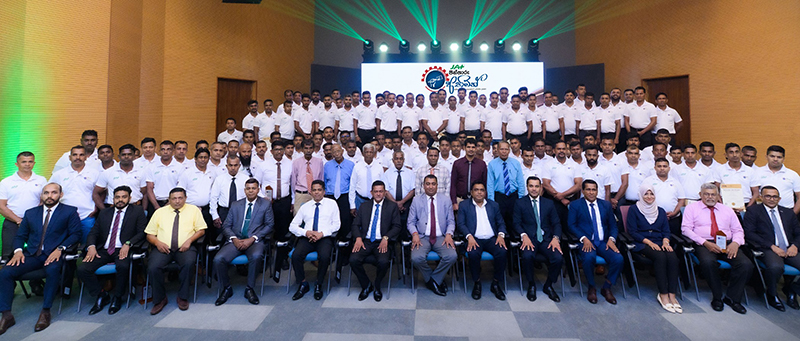
JAT Holdings PLC marked a significant milestone with the successful conclusion of the 6th JAT Pintharu Abhiman Convocation, recognising more than 800 painters who have earned their NVQ Level 3 qualification, an internationally recognised professional certification delivered in partnership with the National Apprentice and Industrial Training Authority (NAITA).
JAT Pintharu Abhiman was established to uplift Sri Lanka’s painter community through structured skills development, professional recognition and stronger earning potential. This year’s graduating cohort reflects the programme’s expanding reach and the tangible changes it continues to deliver for individuals, families and communities.JAT in collaboration with NAITA has streamlined the certification process such that what would traditionally take up to six months has been refined into an efficient and high-impact three-day assessment model. This approach ensures painters can obtain their qualification without sacrificing extended periods of work, while JAT fully absorbs the certification cost, removing financial barriers and enabling wider access to formal recognition.
Research conducted amongst NVQ qualified participants shows meaningful improvements in livelihoods, with 90 percent reporting increased personal confidence and 76 percent noting an improvement in their overall standard of living. This uplift demonstrates the long-term value of industry-aligned professional training.
A noteworthy moment at this year’s convocation was the recognition of four female painters who received their NVQ certifications. Their achievement marks an important step in broadening female participation in a field that has historically been male dominated, reinforcing JAT Holdings’ commitment to creating inclusive pathways for technical development and sustainable employment.
Speaking at the ceremony, Mr. Wasantha Gunaratne, Director Sales and Technical (South Asia) of JAT Holdings PLC, said:
“Pintharu Abhiman is fundamentally about development, giving painters the knowledge, structure and recognition they need to progress in their careers. By equipping over 800 painters with an internationally recognised NVQ qualification, we are not only strengthening the technical standards of the industry but also creating real pathways for entrepreneurship and financial independence. It is especially encouraging to see that one in five certified painters have already begun building their own businesses. These are the outcomes that matter because they show that when we invest in skills, we unlock opportunity. JAT remains committed to expanding these avenues so every painter has the chance to grow, lead and build a sustainable future.”
The 6th JAT Pintharu Abhiman Convocation underscores JAT’s continued dedication to uplifting the painter community, enhancing industry standards and supporting national skills development through accessible, professionally recognised qualifications.

The Ceylon Chamber of Commerce, together with the American Chamber of Commerce, Exporters Association of Sri Lanka, Federation of Renewable Energy Developers, Joint Apparel Association Forum, National Chamber of Commerce of Sri Lanka and Sri Lanka Association for Software and Services Companies, has submitted joint observations on the Draft National Electricity Policy, highlighting that several key issues have not been adequately addressed.
Whilst recognizing the need for reform in the electricity sector, the submission flags several gaps in the draft policy that require closer attention. Key areas such as affordability, decarbonisation commitments, incentives for renewable energy, competition, and the long-term financial health of the sector are either missing or not addressed in sufficient depth.
The proposed tariff revisions outlined in the draft energy policy raise concerns, particularly regarding the removal of cross-subsidies and the proposal to restrict subsidies exclusively to households consuming less than 30 kWh per month. Without detailed analysis, these measures could weaken access to sustainable and affordable energy and potentially lead to fiscal risks.
The provisions allowing uncompensated curtailment, removing feed-in tariffs, and imposing mandatory time-of-use tariffs on rooftop solar users could make renewable energy projects un-bankable for international lenders, thereby increasing the cost of capital for Sri Lanka.
Calling for a more future-focused approach, the submission stresses the need for a policy that reflects modern electricity systems, including planning for the energy transition, energy storage, market competition, cross-border electricity trading, and emerging technologies.
The Chambers and Associations request a comprehensive revision of the Draft National Electricity Policy, alignment with the Electricity Act, and resubmission following substantive consultation, and reiterate support to engage constructively with policymakers to shape a policy that supports affordability, investment confidence, and Sri Lanka’s long-term energy security.
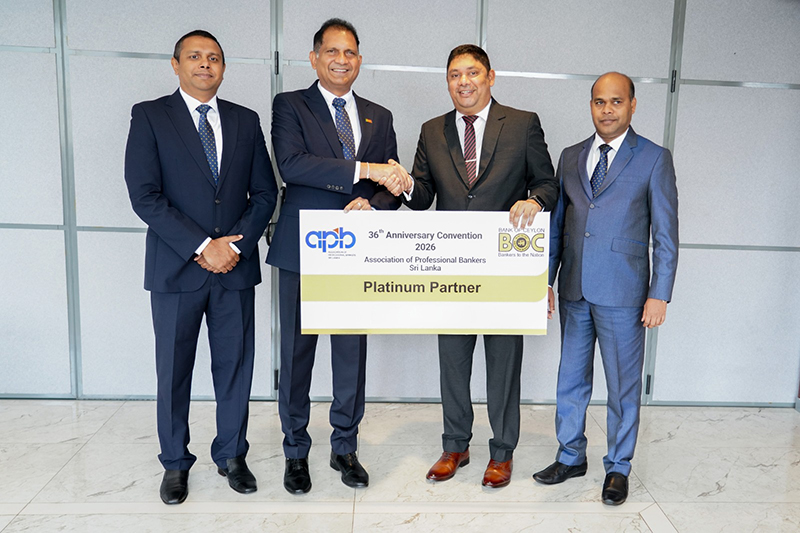
Bank of Ceylon (BOC) partnered with the 36th Annual Convention of the Association of Professional Bankers (APB) Sri Lanka, reaffirming its commitment to promoting professional excellence and knowledge sharing within the banking sector. The partnership was officially handed over by Sameera D. Liyanage, Chief Marketing Officer of Bank of Ceylon and M. R. N. Rohana Kumara, Deputy General Manager Business Revival Unit of Bank of Ceylon, reflecting BOC’s focus on empowering banking professionals and supporting the sustainable growth of Sri Lanka’s financial services industry.

National ThaiPongal Celebration held at Temple Trees.

U19 World Cup: Zimbabwe U-19 vs Scotland U-19: Match abandoned

U-19 World Cup: Francis, Bell, Andrew help West Indies thump Tanzania

U-19 World Cup: Henil, Kundu secure India’s first win

Deol, Tryon power Warriorz to first win of season

Fair weather will prevail in most parts of the island.

‘Dates have the highest sugar content to fight Coronavirus’

Sunday Island 27 December – Headlines

#SundayIsland 17th December – Headlines

Sunday Island – 28th March

Sunday Island Headlines – 21 March

Sunday Island – 21st February – Headlines
-

 Business1 day ago
Koaloo.Fi and Stredge forge strategic partnership to offer businesses sustainable supply chain solutions
-

 Business5 days ago
Dialog and UnionPay International Join Forces to Elevate Sri Lanka’s Digital Payment Landscape
-

 News5 days ago
Sajith: Ashoka Chakra replaces Dharmachakra in Buddhism textbook
-

 Features5 days ago
The Paradox of Trump Power: Contested Authoritarian at Home, Uncontested Bully Abroad
-

 Features5 days ago
Subject:Whatever happened to (my) three million dollars?
-
 Business1 day ago
SLT MOBITEL and Fintelex empower farmers with the launch of Yaya Agro App
-
 Business1 day ago
Hayleys Mobility unveils Premium Delivery Centre
-

 News5 days ago
Level I landslide early warnings issued to the Districts of Badulla, Kandy, Matale and Nuwara-Eliya extended