
Opinion
Take Human Rights seriously, not so much the council or office

By Dr Laksiri Fernando
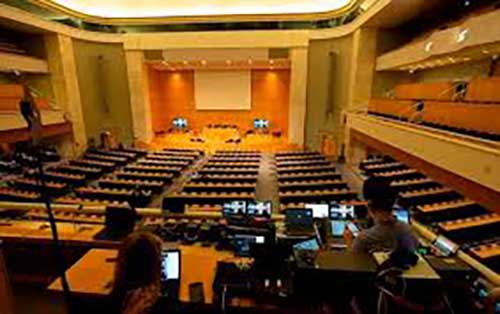
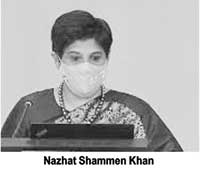
The 46th Session of the UN Human Rights Council started on 22 February morning with obvious hiccups. The Office, to mean the Office of the UN High Commissioner for Human Rights, finally decided to hold all sessions virtually online, only the President of the Council and the assistants in the high table sitting at the UN Assembly Hall in Geneva. The President, Ms. Nazhat Shammen Khan, Ambassador from Fiji in Geneva, wearing a saree, was graceful in the chair with empty seats surrounding.
In the opening session, the UN General Assembly President, UN General Secretary, UN High Commissioner for Human Rights, and Head of Foreign Affairs, Switzerland (as the host country), addressed remotely the session. In fact, there was no need for Switzerland to have a special place, as the UN is independent from any host country. Switzerland is fairly ok, however, if this tradition is followed, the UN General Assembly may have to give a special place to the US in New York.
Initial Addresses
UN General Secretary, Antonio Guterres’ address could have been quite exemplary if he gave a proper balance to the developed and developing countries. He talked about racism and fight against racism but did not mention where racism is overwhelmingly rampant (US and Europe) and what to do about it. Outlining the human rights implications of Covid-19 pandemic, he made quite a good analysis. It was nice for him to say, ‘human rights are our blood line (equality), our lifeline (for peace) and our frontline (to fight against violations).’ However, in the fight against violations, he apparently forgot about the ‘blood line’ or the ‘lifeline’ quite necessary not to aggravate situations through partiality and bias. He never talked about the importance of human rights education or promoting human rights awareness in all countries.
His final assault was on Myanmar. Although he did not call ‘genocide,’ he denounced the treatment of Rohingyas as ethnic cleansing without mentioning any terrorist group/s within. His call for the release of Aung San Suu Kyi and other civilian leaders undoubtedly should be a common call of all. However, he did not leave any opening for a dialogue with the military leaders or bring back a dialogue between Aung San and Min Aung, the military leader. With a proper mediation, it is not impossible. Calling for a complete overhaul as the young demonstrators idealistically claim might not be realistic.
 High Commissioner Michelle Bachelet’s address was brief and uncontroversial this time without mentioning any country or region. It is clear by now perhaps she is not the real author of the Report against Sri Lanka, but someone probably hired by the so-called core-group led by Britain. Her major points were related to the coronavirus pandemic trying to highlight some of the socio-economic disparities and imbalances of policy making that have emerged as a result. The neglect of women, minorities, and the marginalized sections of society were emphasized. But the poor was not mentioned. As a former medical doctor, she also opted to highlight some of the medical issues underpinning the crisis.
Then came the statements from different countries in the first meeting in the following order: Uzbekistan, Colombia, Lithuania, Afghanistan, Poland, Venezuela, Finland, Fiji, Moldova, Georgia, Kazakhstan, Equatorial Guinea, Vietnam, Belgium, and Morocco. The obvious purposes of these statements were different. Some countries were apparently canvassing for getting into the Human Rights Council at the next turn perhaps for the purpose of prestige. Some others were playing regional politics against their perceived enemies. This was very clear when Lithuania and Poland started attacking Russia.
But there were very sincere human rights presentations as well. One was the statement by the President of Afghanistan, Mohammad Ashraf Ghani. He outlined the devastating effects that Afghanistan had to undergo during the last 40 years, because of foreign interferences. The initial support to Taliban by big powers was hinted. His kind appeal was to the UN was to go ‘beyond discourse to practice’ giving equal chance to the poor and the developing countries to involve without discrimination.
Controversial Presentations
China’s Foreign Affairs Minister, Wang Yi, made his presentation almost at the end of the first day. This is apparently the first time that China had directly addressed the Human Rights Council. Beginning with outlining the devastating repercussions of the coronavirus pandemic he stressed that the world should face the challenges through ‘solidarity and cooperation.’ He broadened the concept to human rights solidarity and cooperation. His expressed views were quite different to the others, particularly to the Western ones.
He frankly said that what he expresses are the views of China on human rights without claiming those are absolute truths or forcing others to believe or implement them. There were four main concepts that he put forward before the member countries. First, he said, “We should embrace a human rights philosophy that centres on the people. The people’s interests are where the human rights cause starts and ends.” Second, he said, “we should uphold both universality and particularity of human rights. Peace, development, equity, justice, democracy, and freedom are common values shared by all humanity and recognized by all countries.” “On the other hand,” he said, “countries must promote and protect human rights in light of their national realities and the needs of their people.”
“Third,” he said, “we should systemically advance all aspects of human rights. Human rights are an all-encompassing concept. They include civil and political rights as well as economic, social, and cultural rights.” He then emphasized, “Among them, the rights to subsistence and development are the basic human rights of paramount importance.” Fourth, “we should continue to promote international dialogue and cooperation on human rights. Global human rights governance should be advanced through consultation among all countries.”
It was on the same first day before China, that the United Kingdom launched its barrage against several countries not sparing Sri Lanka. The Foreign Secretary, Dominic Raab, delivered the statement from top to bottom attacking alleged violating countries on human rights. But there was no mentioning of Israel for the repression of Palestinians or the systemic racism rampaging in the United States, including the 6 January attacks on the Capitol by extremist/terrorist groups.
His first sermon was on Myanmar without acknowledging the British atrocities or mismanagement of this poor and diverse country during the colonial period. He was quite jubilant over implementing sanctions and other restrictions over the country. Many sanctions, in my opinion, are extortions. Undoubtedly, Aung San Suu Kyi and other leaders should be released, and democracy restored. This is a task of the whole council and when one or two countries try to grab the credit, there can be obvious reservations of others.
His further scathing attacks were against Belarus, Russia, and China. Some appeared factually correct but not necessarily the approach or the motives genuine. The following is the way he came around Sri Lanka. He said,
“Finally, we will continue to lead action in this Council: on Syria, as we do at each session; on South Sudan; and on Sri Lanka, where we will present a new resolution to maintain the focus on reconciliation and on accountability.”
‘Action’ to him basically means repeatedly passing resolutions, of course imposing economic and other sanctions. He said, “as we do at each session”; like bullying poor or weak countries at each session. Can there be a resolution against Russia or China? I doubt it.
What would be the purpose of presenting a resolution against Sri Lanka? As he said, “to maintain the focus on reconciliation and on accountability.” This will satisfy neither the Tamil militants nor the Sinhalese masses. But it might satisfy the crafty Opposition (proxy of the defeated last government). This is not going to be based on any of the actual measures that Sri Lanka has taken or not taken on reconciliation or accountability. But based on the ‘Authoritarian and Hypocritical Report’ that some anti-Sri Lankans have drafted within the Office of the High Commissioner for Human Rights. This what I have discussed in my last article.
In this context, successful or not, the statement made by the Sri Lanka’s Minister of External Affairs, Dinesh Gunawardena, in rejecting any resolution based on the foxy Report of the Office of the UN High Commissioner for Human Rights, in my concerned opinion, is absolutely correct.


Reference ,the Indian High Commissioner’s recent comments ( The Island, 9th Jan. ) on strong India-Sri Lanka relationship and the assistance granted on recovering from the financial collapse of Sri Lanka and yet again for cyclone recovery., Sri Lankans should express their thanks to India for standing up as a friendly neighbour.
On the Defence Cooperation agreement, the Indian High Commissioner’s assertion was that there was nothing beyond that which had been included in the text. But, dear High Commissioner, we Sri Lankans have burnt our fingers when we signed agreements with the European nations who invaded our country; they took our leaders around the Mulberry bush and made our nation pay a very high price by controlling our destiny for hundreds of years. When the Opposition parties in the Parliament requested the Sri Lankan government to reveal the contents of the Defence agreements signed with India as per the prevalent common practice, the government’s strange response was that India did not want them disclosed.
Even the terms of the one-sided infamous Indo-Sri Lanka agreement, signed in 1987, were disclosed to the public.
Mr. High Commissioner, we are not satisfied with your reply as we are weak, economically, and unable to clearly understand your “India’s Neighbourhood First and Mahasagar policies” . We need the details of the defence agreements signed with our government, early.
RANJITH SOYSA
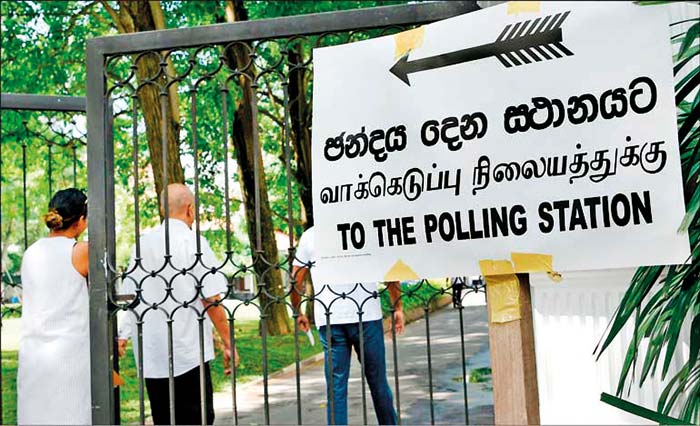
At every election—general or presidential—we do not truly vote, we simply outvote. We push out the incumbent and bring in another, whether recycled from the past or presented as “fresh.” The last time, we chose a newcomer who had spent years criticising others, conveniently ignoring the centuries of damage they inflicted during successive governments. Only now do we realise that governing is far more difficult than criticising.
There is a saying: “Even with elephants, you cannot bring back the wisdom that has passed.” But are we learning? Among our legislators, there have been individuals accused of murder, fraud, and countless illegal acts. True, the courts did not punish them—but are we so blind as to remain naive in the face of such allegations? These fraudsters and criminals, and any sane citizen living in this decade, cannot deny those realities.
Meanwhile, many of our compatriots abroad, living comfortably with their families, ignore these past crimes with blind devotion and campaign for different parties. For most of us, the wish during an election is not the welfare of the country, but simply to send our personal favourite to the council. The clearest example was the election of a teledrama actress—someone who did not even understand the Constitution—over experienced and honest politicians.
It is time to stop this bogus hero worship. Vote not for personalities, but for the country. Vote for integrity, for competence, and for the future we deserve.
Deshapriya Rajapaksha

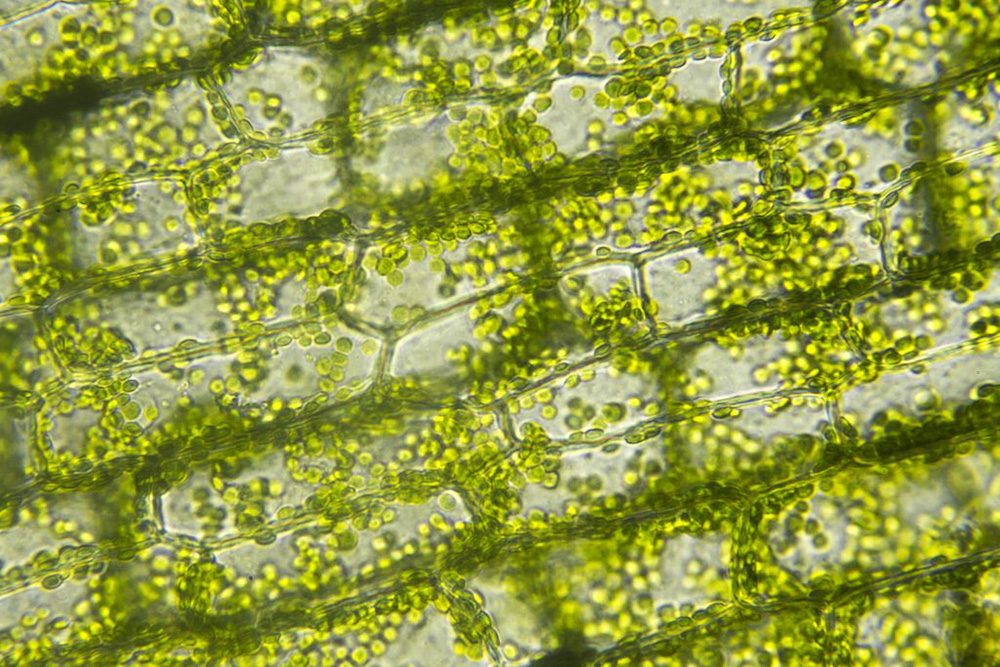
Chlorophyll is the green pigment found in plants, algae, and cyanobacteria. It is essential for photosynthesis, the process by which light energy is converted into chemical energy to sustain life on Earth. As it is green it reflects Green of the sunlight spectrum and absorbs its Red and Blue ranges. The energy in these rays are used to produce carbohydrates utilising water and carbon dioxide and releasing oxygen in the process. Thus, it performs, in this reaction, three functions essential for life on earth; it produces food and oxygen and removes carbon dioxide from the atmosphere to maintain equilibrium in our environment. It is one of the wonders of nature that are in peril today. It is essential for life on earth, at least for the present, as there are no suitable alternatives. While chlorophyll can be produced in a lab, it cannot be produced using simple, everyday chemicals in a straightforward process. The total synthesis of chlorophyll is an extremely complex multi-step organic chemistry process that requires specialized knowledge, advanced laboratory equipment, and numerous complex intermediary compounds and catalysts.
Chlorophyll probably evolved inside bacteria in water and migrated to land with plants that preceded animals who also evolved in water. Plants had to come on land first to oxygenate the atmosphere and make it possible for animals to follow. There was very little oxygen in the ocean or on the surface before chlorophyll carrying bacteria and algae started photosynthesis. Now 70% of our atmospheric oxygen is produced by sea phytoplankton and algae, hence the importance of the sea as a source of oxygen.
Chemically, chlorophyll is a porphyrin compound with a central magnesium (Mg²⁺) ion. Factors that affect its production and function are light intensity, availability of nutrients, especially nitrogen and magnesium, water supply and temperature. Availability of nutrients and temperature could be adversely affected due to sea pollution and global warming respectively.
Temperature range for optimum chlorophyll function is 25 – 35 C depending on the types of plants. Plants in temperate climates are adopted to function at lower temperatures and those in tropical regions prefer higher temperatures. Chlorophyll in most plants work most efficiently at 30 C. At lower temperatures it could slow down and become dormant. At temperatures above 40 C chlorophyll enzymes begin to denature and protein complexes can be damaged. Photosynthesis would decline sharply at these high temperatures.
Global warming therefore could affect chlorophyll function and threaten its very existence. Already there is a qualitative as well as quantitative decline of chlorophyll particularly in the sea. The last decade has been the hottest ten years and 2024 the hottest year since recording had started. The ocean absorbs 90% of the excess heat that reaches the Earth due to the greenhouse effect. Global warming has caused sea surface temperatures to rise significantly, leading to record-breaking temperatures in recent years (like 2023-2024), a faster warming rate (four times faster than 40 years ago), and more frequent, intense marine heatwaves, disrupting marine life and weather patterns. The ocean’s surface is heating up much faster, about four times quicker than in the late 1980s, with the last decade being the warmest on record. 2023 and 2024 saw unprecedented high sea surface temperatures, with some periods exceeding previous records by large margins, potentially becoming the new normal.
Half of the global sea surface has gradually changed in colour indicating chlorophyll decline (Frankie Adkins, 2024, Z Hong, 2025). Sea is blue in colour due to the absorption of Red of the sunlight spectrum by water and reflecting Blue. When the green chlorophyll of the phytoplankton is decreased the sea becomes bluer. Researchers from MIT and Georgia Tech found these color changes are global, affecting over half the ocean’s surface in the last two decades, and are consistent with climate model predictions. Sea phytoplankton and algae produce more than 70% of the atmospheric oxygen, replenishing what is consumed by animals. Danger to the life of these animals including humans due to decline of sea chlorophyll is obvious. Unless this trend is reversed there would be irreparable damage and irreversible changes in the ecosystems that involve chlorophyll function as a vital component.
The balance 30% of oxygen is supplied mainly by terrestrial plants which are lost due mainly to human action, either by felling and clearing or due to global warming. Since 2000, approximately 100 million hectares of forest area was lost globally by 2018 due to permanent deforestation. More recent estimates from the UN’s Food and Agriculture Organization (FAO) indicate that an estimated 420 million hectares of forest have been lost through deforestation since 1990, with a net loss of approximately 4.7 million hectares per year between 2010 and 2020 (accounting for forest gains by reforestation). From 2001 to 2024, there had been a total of 520 million hectares of tree cover loss globally. This figure includes both temporary loss (e.g., due to fires or logging where forests regrow) and permanent deforestation. Roughly 37% of tree cover loss since 2000 was likely permanent deforestation, resulting in conversion to non-forest land uses such as agriculture, mining, or urban development. Tropical forests account for the vast majority (nearly 94%) of permanent deforestation, largely driven by agricultural expansion. Limiting warming to 1.5°C significantly reduces risks, but without strong action, widespread plant loss and biodiversity decline are projected, making climate change a dominant threat to nature, notes the World Economic Forum. Tropical trees are Earth’s climate regulators—they cool the planet, store massive amounts of carbon, control rainfall, and stabilize global climate systems. Losing them would make climate change faster, hotter, and harder to reverse.
Another vital function of chlorophyll is carbon fixing. Carbon fixation by plants is crucial because it converts atmospheric carbon dioxide into organic compounds, forming the base of the food web, providing energy/building blocks for life, regulating Earth’s climate by removing greenhouse gases, and driving the global carbon cycle, making life as we know it possible. Plants use carbon fixation (photosynthesis) to create their own food (sugars), providing energy and organic matter that sustains all other life forms. By absorbing vast amounts of CO2 (a greenhouse gas) from the atmosphere, plants help control its concentration, mitigating global warming. Chlorophyll drives the Carbon Cycle, it’s the primary natural mechanism for moving inorganic carbon into the biosphere, making it available for all living organisms.
In essence, carbon fixation turns the air we breathe out (carbon dioxide) into the food we eat and the air we breathe in (oxygen), sustaining ecosystems and regulating our planet’s climate.
While land plants store much more total carbon in their biomass, marine plants (like phytoplankton) and algae fix nearly the same amount of carbon annually as all terrestrial plants combined, making the ocean a massive and highly efficient carbon sink, especially coastal ecosystems that sequester carbon far faster than forests. Coastal marine plants (mangroves, salt marshes, seagrasses) are extremely efficient carbon sequesters, absorbing carbon at rates up to 50 times faster than terrestrial forests.
If Chlorophyll decline, which is mainly due to human action driven by uncontrolled greed, is not arrested as soon as possible life on Earth would not be possible.
(Some information was obtained from Wikipedia)
by N. A. de S. Amaratunga ✍️

Showers in the Northern, North-central, Uva, Western, Eastern, Sabaragamuwa, North-western and Central provinces and Galle and Matara districts

Govt. extends ban on LTTE

Police obtain court order banning Wimal’s protest

Chinese Foreign Minister Wang Yi expresses optimism that Sri Lanka is on the right path to progres

India plans to restore northern regular train services to pre-Ditwah frequencies before traditional New Year 2026

Inauguration of first Bailey Bridge under Indian assistance package for post-Ditwah reconstruction

‘Dates have the highest sugar content to fight Coronavirus’

Sunday Island 27 December – Headlines

#SundayIsland 17th December – Headlines

Sunday Island – 28th March

Sunday Island Headlines – 21 March

Sunday Island – 21st February – Headlines
-

 News2 days ago
Sajith: Ashoka Chakra replaces Dharmachakra in Buddhism textbook
-

 Business2 days ago
Dialog and UnionPay International Join Forces to Elevate Sri Lanka’s Digital Payment Landscape
-

 Features2 days ago
The Paradox of Trump Power: Contested Authoritarian at Home, Uncontested Bully Abroad
-

 Features2 days ago
Subject:Whatever happened to (my) three million dollars?
-

 News2 days ago
Level I landslide early warnings issued to the Districts of Badulla, Kandy, Matale and Nuwara-Eliya extended
-

 News2 days ago
National Communication Programme for Child Health Promotion (SBCC) has been launched. – PM
-

 News2 days ago
65 withdrawn cases re-filed by Govt, PM tells Parliament
-

 Opinion4 days ago
The minstrel monk and Rafiki, the old mandrill in The Lion King – II