
News
Sugar scams continue: COPA reveals govt. yet to introduce licensing system

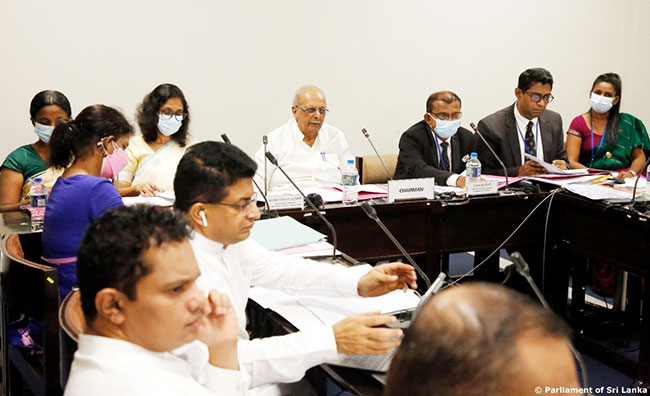
Customs caused over Rs 114 mn in losses
The Committee on Public Accounts (COPA) has recently discussed how the Finance Ministry directive, issued in Oct 2020, resulted in a massive loss of revenue and the failure on the part of those in authority to take remedial measures in the wake of the media exposure of the scam.
The Parliament, in a media statement issued yesterday, said that the COPA examined a special audit of the reduction in the excise duty on a kilo of sugar from Rs. 50 to Rs. 25 cents. The watchdog admitted that the relief had not been passed on to the consumer and that the inordinate delay in introducing a licence system for sugar imports caused heavy osses to the state coffers.
The COPA would take up the failure to issue licences on 21 June.
The statement dealt with several other issues. The text of the statement: “The Committee on Public Accounts held recently drew special attention to the quantity of ethanol imported for use in Sri Lanka and the lack of proper regulation with importing institutions.
The Import and Export Control Department officials were instructed to submit a report to the Committee within two weeks containing the procedure for issuing licenses for the importation of ethanol into the country by various companies, information on each of these companies and the quantity of ethanol imported by those companies. It was also emphasised that the quantity of ethanol imported for other products, including pharmaceuticals, other than alcohol, and the proper use of ethanol for those products, should be taken into consideration.
Furthermore, the Committee inquired into the issuance of licenses for the importation of vehicles and spare parts to Sri Lanka. Although it had previously instructed to take the necessary steps to formulate a proper procedure in coordination with the Department of Motor Traffic, the Committee expressed its displeasure that no action had been taken in this regard. In addition, it was further requested that a suitable methodology be prepared to maintain the relevant activities in a more efficient and transparent manner and submit a report to the Committee within a period of four months.
The Committee also noted the lack of a standardised computer system to carry out the activities of the Department of Import and Export Control.
The Committee pointed out that the lack of proper coordination with the Direct Liaison Institutions, such as the Excise Department, the Department of Motor Traffic and the Sri Lanka Customs, is very problematic in conducting the activities of the Department and was instructed to take the necessary steps to do computer networking immediately.
To this end, the importance of liaising with institutions such as the Information and Communication Technology Agency of Sri Lanka (ICTA) and the Telecommunications Regulatory Commission was also emphasised.
Although the officials of the Department of Import and Export Control were informed about this matter in the year 2016, the Committee expressed its displeasure that this work has not been done so far and considering the importance of this, the Chairman of the Committee decided to appoint a Sub-Committee to inquire into its progress. Also, attention was drawn to the subsequent transfer of vehicles imported under the prize scheme to various parties. Accordingly, after the vehicles were imported under the gift scheme, the officers present were asked about the transfer of the vehicles to other parties.
The officials informed the Committee that the vehicles so imported on a tax concession basis could not be transferred to another party until five years have elapsed. They stated that even after five years of such transfers, the necessary procedures have been put in place to recover the normal tax value of the relevant vehicles.
The Committee also emphasised the importance of proper follow-up and regulation of licenses for vehicles imported under the gift scheme.
The Committee inquired about the loss of customs duty of 114.6 million rupees due to incorrect customs associated classification numbering of 33 used cars in the year 2017 contrary to the provisions of Gazette Notification No. 1933/13 dated 21st September 2015, Gazette Notifications for Vehicles subject to Licensing Control and Instructions given by the Minister of Development Strategies and the Minister of International Trade and the Minister of State to the Controller of Imports and Exports. It was also informed that the full investigation has been handed over to the CID. The Chairman of the Committee instructed to submit a report on its progress to the Committee within two weeks.
Members of Parliament Lasantha Alagiyawanna, Tissa Attanayake, Duminda Dissanayake, Udaya Gammanpila, Dr. Sudarshini Fernandopulle, Mohomad Muzammil, Niroshan Perera, Ashok Abeysinghe, Hesha Withanage, Sivagnanam Shritharan, Weerasumana Weerasinghe, (Prof.) Ranjith Bandara, B.Y.G Rathnasekara, and Dr. Upul Galappaththi, were present at the Committee meeting.




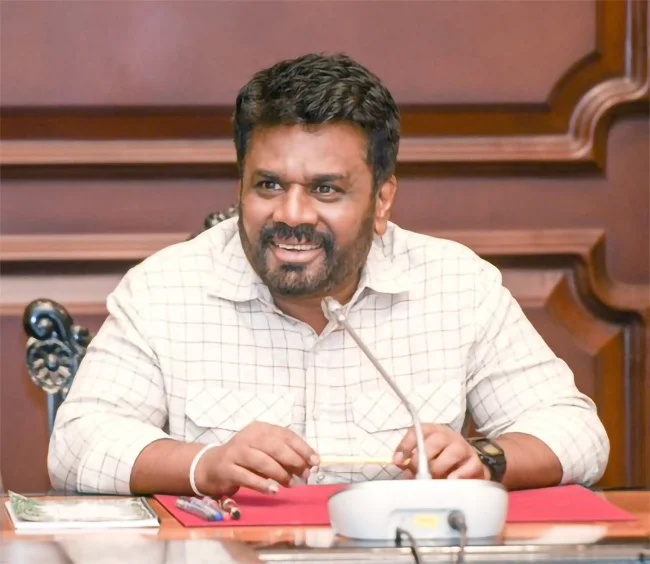
Chief Prelates of the Malwathu, Asgiriya, Amarapura and Ramanna Nikayas, in a joint letter addressed to President Anura Kumara Dissanayake, has expressed concern over the protracted delay in appointing a permanent Auditor General.
The Chief Prelates have said that the appointment of an outsider as the Head of the National Audit Office (NAO) responsible for ensuring transparency and accountability in public finances will be inappropriate.
The Chief Prelates have said that they are of the view that Dharmapala Gammanpila, a senior officer with extensive experience within the Auditor General’s Department, is the ideal candidate for the top post. They have also emphasised that his appointment will strengthen the government’s efforts to promote economic prosperity.
Chulantha Wickramaratne, who served as AG for a period of six years, retired in April 2025. Following his retirement, President Dissanayake nominated H.T.P. Chandana, an audit officer at the Ceylon Petroleum Corporation, as the AG. The CC rejected that nomination. Subsequently, President Dissanayake appointed the next senior-most official at the NAO Dharmapala Gammanpila as Acting Auditor General for a period of six months. Then, the President nominated Senior Deputy Auditor General L.S.I. Jayarathne to serve in an acting capacity, but her nomination, too, was also rejected. Many an eyebrow was raised when the President nominated O.R. Rajasinghe, the Internal Audit Director of the Sri Lanka Army for the top post. That nomination too was rejected. As a result, the vital position remains vacant since 07 December, 2025.
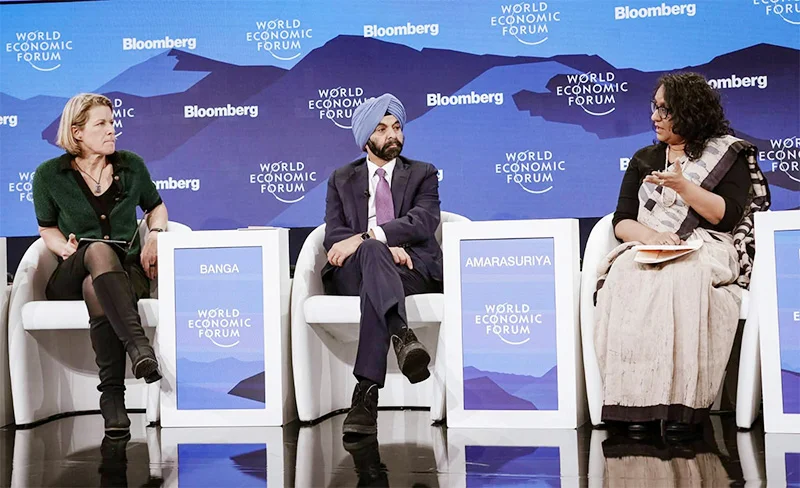
Prime Minister Dr. Harini Amarasuriya shared her views on how the emerging economies over the next decade should close the gap in employment models through expansion of skills and training. She was speaking at the “Stakeholder Dialogue – A Coming Jobs Crisis in Emerging Markets?” on the sidelines of the annual meeting of the World Economic Forum in Davos. She also highlighted the vital importance of recognising the contribution of different categories of workers to bring social stability and dignity of work.
The text of the statement issued by the Sri Lankan mission in Geneva: “The Prime Minister attended the 56th Annual Meeting of the World Economic Forum held in Davos, Switzerland, from 19 to 22 January 2026 at the invitation of the President and Chief Executive Officer of the World Economic Forum, Børge Brende. Over 60 world leaders from government, businesses, civil society and academia attended the Forum in 2026 held under the theme “A Spirit of Dialogue”.
The Prime Minister participated in a panel discussion and high-level dialogue at the Forum while also holding bilateral meetings, addressing high-level platforms on women leaders and tourism, and holding business engagements. She shared Sri Lanka’s experience of resilience and recovery, following Cyclone Ditwah and Government measures to establish economic stability, build investor confidence and commitment to removing inequalities.
Prime Minister Amarasuriya also joined a dialogue at the “Strategy Session – Reskilling Revolution: Shaping the Future of Global Talent” at the Forum, which discussed the challenges posed by technological advancements to the world of work.
On the sidelines of the WEF 2026, the Prime Minister delivered the keynote address at the “World Women Davos Agenda 2026,” organised by the World Woman Foundation, and highlighted the importance of creating a political culture where women can engage in decision-making, at policy level, with confidence and dignity.
Joining the high-level dialogue at the Global Tourism Forum in Euronews Hub, under the theme “Tourism as Soft Power and Diplomatic Capital”, Prime Minister Amarasuriya highlighted Sri Lanka as an example of hope, resilience and recovery in an increasingly unstable world with multiple conflicts. She also underscored the diversity of attractions making Sri Lanka a unique experience and a place to build connections and relationships.
The Prime Minister held a bilateral meeting with the President of Singapore Tharman Shanmugaratnam who shared Singapore’s experience in restructuring the country’ s education model giving greater focus to vocational education. Prime Minister Amarasuriya also met with the President of the Asian Development Bank (ADB); Masato Kanda and Managing Director of the International Monetary Fund (IMF); Kristalina Georgieva, and discussed Sri Lanka’s engagement with these two institutions particularly following the devastation and damage caused by cyclone Ditwah.
Discussions were also held with EU Commissioners for International Partnerships and for Preparedness and Crisis Management. During a meeting with the recently appointed Administrator of the United Nations Development Programme (UNDP) Alexander De Croo, Prime Minister Amarasuriya expressed gratitude for the continued support of UNDP in various social development activities in Sri Lanka.
The Prime Minister’s business engagements included Chairman of A.P. Moller Holding (MAERSK); Robert M. Uggala, Chairman of Menzies Aviation; Hassan El Houry, and separate meetings with the Swiss business community, convened by the Swiss Asian Chamber of Commerce and the Sri Lankan business community in Switzerland.
On the sidelines of the Forum, Prime Minister Amarasuriya was able to visit the Hamiltan Medical AG; a key medical production company specialising in ventilators, and Variosystems; a leading global partner for electronic solutions, with a presence in Sri Lanka. The visits focused on studying their business model that includes providing apprenticeships for vocational and technical education.
The Prime Minister was accompanied by the Minister of Labour and Deputy Minister of Finance and Planning, Dr. Anil Jayantha Fernando, and Ambassador and the Permanent Representative of Sri Lanka to the United Nations in Geneva, Himalee Arunatilaka.”
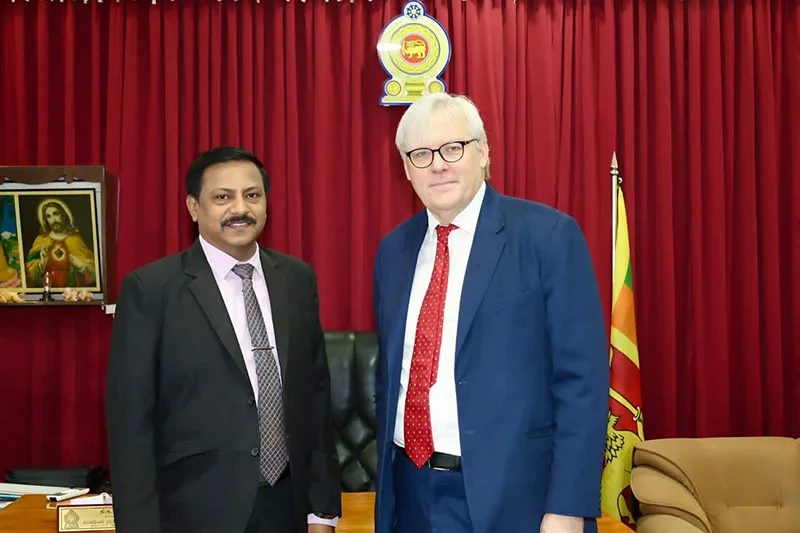
British High Commissioner to Sri Lanka, Andrew Patrick, visited Jaffna last week, meeting families of the disappeared, civil society organisations, and district officials, as longstanding demands for truth and accountability over enforced disappearances remain unresolved.
During his visit, Patrick met families of those disappeared in Chemmani, a site synonymous with some of the most notorious allegations of mass killings and enforced disappearances carried out by Sri Lankan security forces in the late 1990s. Following the meeting, the High Commissioner wrote on social media, “Grateful for the opportunity to meet with the families of those disappeared in Chemmani. Hearing their stories firsthand was a powerful reminder of their unwavering search for answers and their decades long pursuit of justice.”
The Tamil Guardian reported that Chemmani has long stood as a stark symbol of the Tamils demand for accountability, with families continuing to seek answers decades after their loved ones were abducted, amid persistent delays and obstruction in investigations. A mass grave uncovered in the area last year has unearthed 240 bodies so far.
Patrick also held discussions with grassroots organisations and civil society actors in Jaffna. Commenting on these engagements, he stated: “I had interesting discussions with grassroots groups in Jaffna. Civil society organisations continue to tackle a wide range of critical issues on the ground, and their unwavering commitment to justice, equality, and reconciliation is vital for shaping Sri Lanka’s future.”
The British High Commissioner also met Jaffna District Secretary Maruthalingam Pradeepan at the District Secretariat, where a detailed discussion was held on post-cyclone recovery and development challenges in the district. During the meeting, Patrick inquired about the impact of Cyclone Ditwah on the Jaffna District.
In response, the District Secretary explained that 20,023 families had been affected by the cyclone. He stated that a payment of 25,000 rupees had been provided to 13,168 families to assist with cleaning their homes, while 15,000 rupees per student had been granted to 15,260 affected schoolchildren to support the purchase of educational materials.
Commenting on the recovery efforts, Patrick said that funds for those affected by Cyclone Ditwah were being provided to the Sri Lankan government and implemented through the Red Cross.
The High Commissioner also highlighted the importance of employment opportunities for young people in the Jaffna District, noting that local youth possess strong skills in information technology and productivity-related sectors. He observed that the implementation of appropriate employment programmes would contribute significantly to the economic development of both the district and the country.
In addition, Patrick reiterated his belief that Tamil expatriates living in the United Kingdom would invest in Jaffna, and sought information from the District Secretary on the district’s current socio-economic development, the Kankesanthurai Investment Zone, and other available investment opportunities.
Also present at the meeting were Raman Chettiar, Second Secretary for Political Affairs at the British High Commission, and Farah Firdous, Political Officer.

The RAPP sheet: Steve Smith, Daryl Mitchell, Umesh Yadav among over 1300 players

U19 World Cup: Pakistan overcome New Zealand by 8 wickets

U19 World Cup: Vihaan Malhotra ton headlines India’s massive win

Dry weather will prevail in most parts of the island

Nigeria president ‘in great shape’ after falling at Turkey reception

Spain plans to give half a million undocumented migrants legal status

‘Dates have the highest sugar content to fight Coronavirus’

Sunday Island 27 December – Headlines

#SundayIsland 17th December – Headlines

Sunday Island – 28th March

Sunday Island Headlines – 21 March

Sunday Island – 21st February – Headlines
-
 Business2 days ago
ComBank, UnionPay launch SplendorPlus Card for travelers to China
-
 Business3 days ago
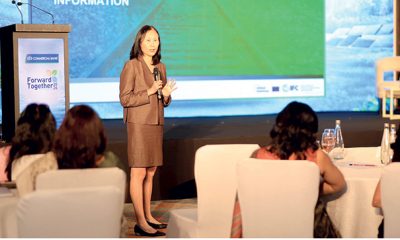
ComBank advances ForwardTogether agenda with event on sustainable business transformation
-
 Opinion6 days ago
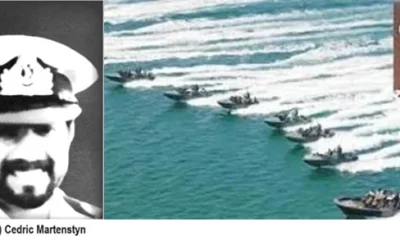
Remembering Cedric, who helped neutralise LTTE terrorism
-
 Business6 days ago
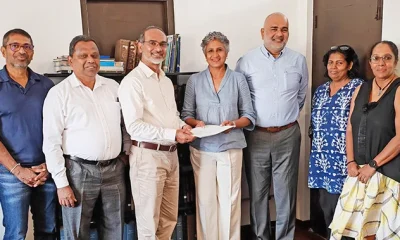
CORALL Conservation Trust Fund – a historic first for SL
-
 Opinion3 days ago
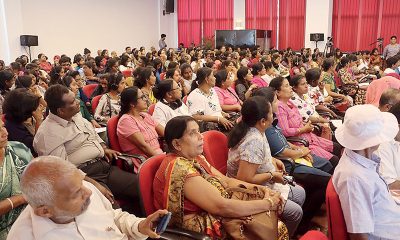
Conference “Microfinance and Credit Regulatory Authority Bill: Neither Here, Nor There”
-

 Opinion5 days ago
A puppet show?
-

 Opinion2 days ago
Luck knocks at your door every day
-
 Features5 days ago
‘Building Blocks’ of early childhood education: Some reflections