
News
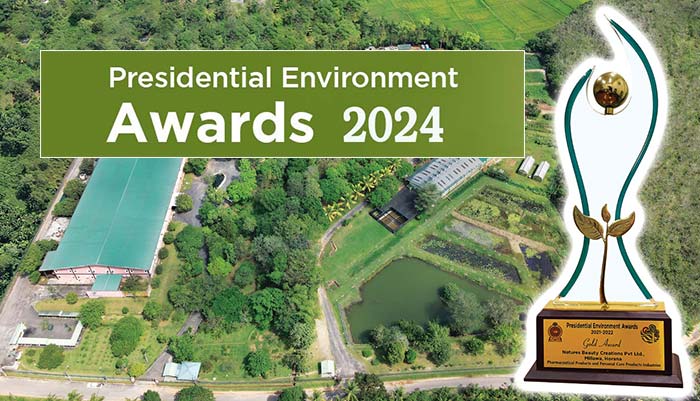
Submit applications for “Presidential Environment Awards – 2024” before March 15

By Ifham Nizam
The acceptance of applications for the “Presidential Environment Awards – 2024” program has commenced and will be closed on March 15th, 2024.
Director General Central Environmental Authority P. B. Hemantha Jayasinghe said that applications can be forwarded under the two main categories, namely “industries, businesses and project category” and “institutions, media, and social category”.
There are sixteen (16) sub-categories under the “industries, businesses and project category” Solid waste recovery/ recycling/ disposing and processing plants, Chemical industries, Vehicle service centers, Food and beverages industries, Hotels, Textile and textile processing industries, Pharmaceutical products and personal care product industries, Hospitals, Rubber-based production industries, Animal farms, Apparel industries, Tea factories, Packaging industry with printing, Mineral-related manufacturing industries, Renewable energy generating projects (Small scale hydropower projects/solar power projects/wind power generating projects) and Waste management projects of local authorities are the sub-categories of the “industries, businesses, and project category”.
Eight sectors will be evaluated under the “Institutional, mass media, and social categories”. Those are Schools, Environmental friendly public institutions, Environmental friendly private institutions, Individuals who are committed to environmental conservation, The best NGO that is committed to environment conservation and promotion, Eco-friendly innovations (Schools/ Universities and Tertiary educational Institutions/ Open Section), and Media category (There are two sub-categories as “individual” and “newspapers, radio, and television channels”).
Applications and more information can be obtained by logging in to the official website of the Central Environmental Authority www.cea.lk or by calling 0112873447, 0112872278, or hotline 0112888999. Further details can be obtained by calling Assistant Director Dr. Lakmini Radhika on 0706725222 and Senior Environment Officer Arsha Kumari on 0713486339. Acceptance of applications for the awards ceremony will be closed on March 15.
Evaluation of different categories will be carried out by experts of the relevant field and the decision of the expert committee shall be final and conclusive.
At the “Presidential Environment Awards”, contestants have the opportunity to win awards such as Presidential Environment Awards (Gold Awards), Silver Environment Awards, Bronze Environment Awards, and Merit Awards. The award ceremony, which is held with the aim of protecting Sri Lanka’s environmental security, has been arranged to be held at the Bandaranaike Memorial International Conference Hall under the patronage of President Ranil Wickremesinghe.





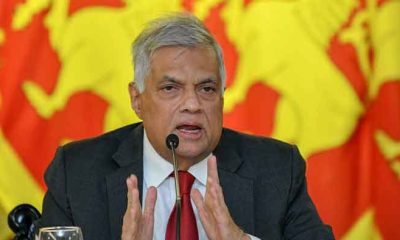

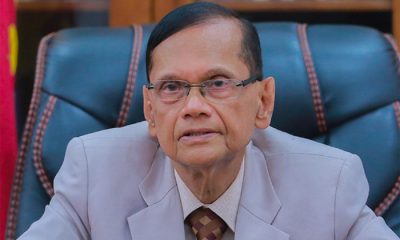


The Commissioner General of Essential Services, Prabath Chandrakeerthi has announced that, after taking into consideration the current fuel situation in Sri Lanka, the Government has decided to declare Wednesdays of every week as a holiday for government sector employees, all government schools, universities, and courts with effect from March 18, 2026, until further notice
The holiday will not apply to essential service sectors including Healthcare, Ports, Water Supply and Customs.
Prime Minister Dr. Harini Amarasuriya stated that leisure had long been limited to only a privileged segment of society, and that the government’s objective is to create opportunities for all citizens to equally experience and enjoy that leisure.
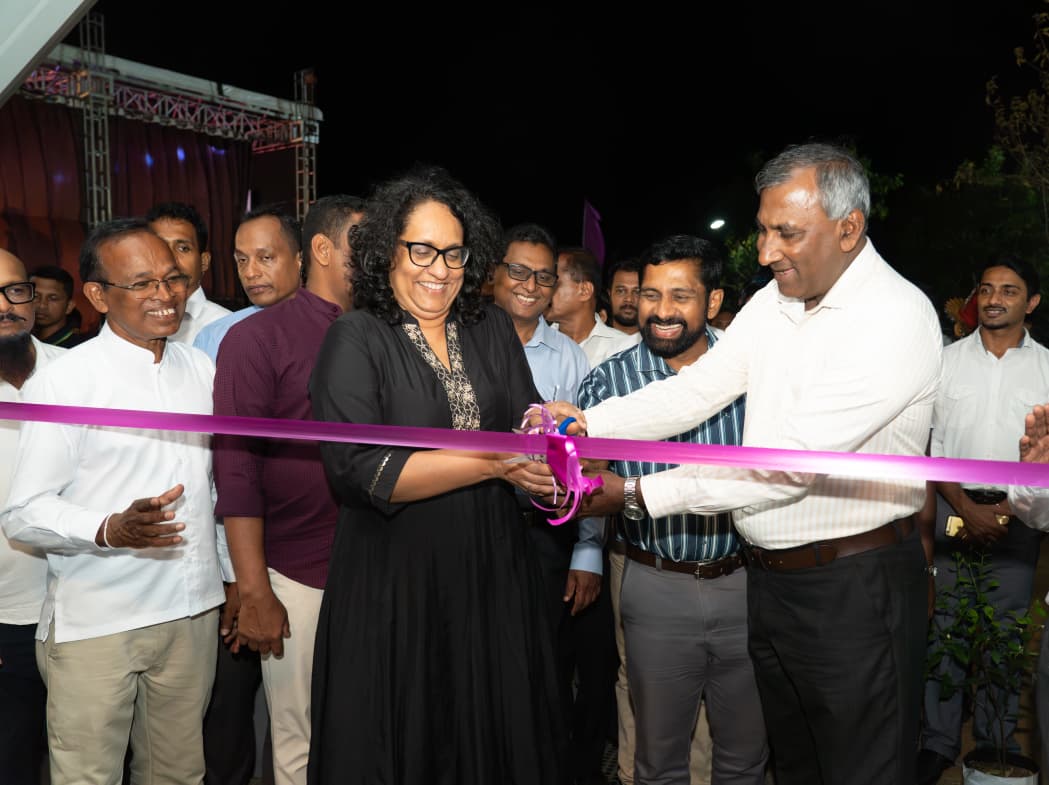
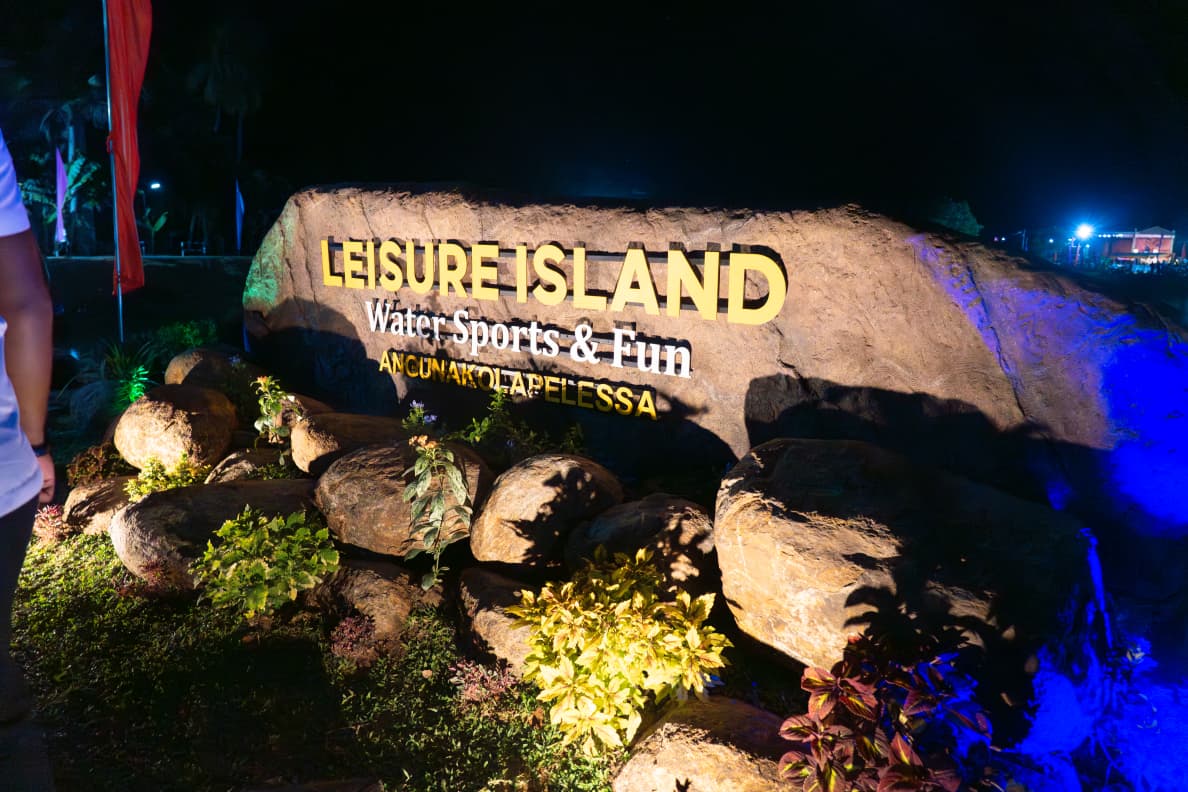
The Prime Minister made these remarks on Sunday (15th of March) while opening the multi-purpose development project associated with the Angunakolapelessa Tank, developed under the “Pohosath Gamak” programme of the Ministry of Rural Development, Social Security and Community Empowerment for the public.
In parallel with the multi-purpose development project carried out associating the Angunakolapelessa Leisure Island, a boating facility and the Leisure Island cafeteria were also officially opened.
Addressing the gathering the Prime Minister stated:
“The multi-purpose development project associated with the Angunakolapelessa Tank has received voluntary support from the community of more than 700 days.
With the funding from the Ministry of Rural Development, Social Security and Community Empowerment, the Angunakolapelessa Pradeshiya Sabha, together with the divisional councils, public safety committees, youth societies, trade associations, and many others in the community, was able to transform this site into a major development project within a remarkably short period of time.
This project serves as a powerful example of what can be achieved when people unite collectively for a noble purpose. Developing a country is not a task that the government alone can accomplish.
When intellectuals, religious leaders, youth, entrepreneurs, and the public come together with strong and responsible leadership, we can build a nation so resilient that no hostile force will be able to weaken it.
People in rural communities who live demanding and hardworking lives also deserve to enjoy. For a long time, leisure was limited to only a privileged segment of society. As a government committed to fostering a dignified cultural life for all citizens, it is important to create more spaces like this where people can relax, walk, enjoy themselves, and spend time with peace of mind.
The occasion was graced by the presence of the members of the Maha Sangha, and attended by the Minister of Rural Development, Social Security and Community Empowerment Upali Pannilage, other ministers and parliamentarians, government officials, and local residents.
(Prime Minister’s Media Division)

As a key frontline stakeholder in the national mission, ‘A Nation United,’ the Navy continues to conduct maritime operations in the waters surrounding the island, in coordination with other law enforcement agencies.
During a recent successful operation on the high seas south of Sri Lanka, the Navy intercepted a local multi-day fishing trawler and apprehended five suspects (05) in connection with the smuggling of a stock of suspected drugs.
During a special inspection at the Dickowita fisheries harbour today (16 Mar26), the Police Narcotic Bureau (PNB) confirmed the presence of over one hundred and thirty-three (133)
kilograms of heroin.
The Deputy Minister of Defence, Major General Aruna Jayasekara (Retd), accompanied by the Commander of the Navy, Vice Admiral Kanchana Banagoda, was present in Dickowita to inspect the seized items.
Addressing the media, the Deputy Minister stated that the tri-forces, particularly the Navy, along with the Coast Guard, Police, and other law enforcement agencies, are executing the
government’s vision for national security. He noted that the recent naval operation in the southern seas, which seized a large consignment of narcotics and weapons, demonstrates the government’s success in combating criminal networks involved in narcotics, arms and human trafficking.
He added that such successful outcomes result from the Navy’s meticulous planning, surveillance, intelligence analysis, and inter-agency coordination. He affirmed that no leniency will be shown to drug trafficking networks, and conveyed admiration, on behalf of the President, for the distinctive contribution made by the Sri Lanka Navy, in collaboration with other stakeholders,
towards ensuring public safety and protecting the younger generation from the menace of drugs.
Highlighting the scale of the Navy’s impact, he revealed that naval operations in 2025 seized narcotics valued over Rs. 75 billion, and operations so far in 2026 have seized over Rs. 20 billion worth of drugs.
The Deputy Minister warned that traffickers are increasingly using the guise of legitimate fishing activities to smuggle narcotics. Besides, he emphasized that the responsibility lies not only with law enforcement agencies but with all sectors of society to eradicate the networks associated with drug trafficking. He issued a firm directive to traffickers, dealers, and distributors to “quit,” asserting that there is no loophole, whether by sea or air, that the security forces cannot close. He
further urged drug users to abandon this destructive habit.
He announced plans for legal amendments to impose stricter penalties for drug offenses. Noting that law enforcement agencies have operational autonomy, he appealed to the public to report information on drug trafficking to hotlines 1818 and 1997.
He also commended the media for their responsible reporting in educating the public on the drug menace.
The trawler, the suspects, the communication equipment and the stock of narcotics held in this operation were handed over to the PNB for onward investigation and legal proceedings.

Wednesdays declared a government holiday with effect from 18th March

Iran hits key UAE oil port and Dubai airport

PM declares open Angunukolapelessa Leisure Island

Navy’s successful high-seas bust nets over 133kg haul of heroin

Chinnaswamy stadium receives government clearance to host IPL 2026 final

Tanzid 107, Taskin four-for trump Agha 106 to give Bangladesh series

‘Dates have the highest sugar content to fight Coronavirus’

Sunday Island 27 December – Headlines

#SundayIsland 17th December – Headlines

Sunday Island – 28th March

Sunday Island Headlines – 21 March

Sunday Island – 21st February – Headlines
-

 News7 days ago
Prof. Dunusinghe warns Lanka at serious risk due to ME war
-
 News5 days ago
Historic address by BASL President at the Supreme Court of India
-

 Business6 days ago
BOI launches ‘Invest in Sri Lanka’ forum
-

 Sports6 days ago
Royal start favourites in historic Battle of the Blues
-

 Sports5 days ago
The 147th Royal–Thomian and 175 Years of the School by the Sea
-

 News6 days ago
CEBEU warns of operational disruptions amid uncertainty over CEB restructuring
-
 Features6 days ago
Indian Ocean zone of peace torpedoed!
-
 News5 days ago
Power sector reforms jolted by 40% pay hike demand