
Editorial
Stop playing Game of Chicken


Monday 1st May, 2023
There seems to be no end in sight to the ongoing Game of Chicken between the government and university teachers. The signs are that the GCE A/L answer script evaluation will be further delayed. The Federation of University Teachers’ Associations (FUTA) has said its members will commence paper marking poste-haste and finish the task within one month if it is allowed to have an audience with President Ranil Wickremesinghe himself. It does not want to go through any intermediary. One can only hope that the warring dons and the President will powwow and work out a compromise formula for the sake of the hapless students who are dreaming of university admission.
The government should not make the mistake of continuing to practise brinkmanship in the hope that public opinion will turn against the university teachers eventually to the point of compelling them to abandon their trade union struggle. Some self-proclaimed ‘kahunas’ of the ruling party have even threatened to declare the GCE A/L answer script evaluation an essential service and confiscate the properties of the university teachers who refuse to engage in paper marking!
One cannot countenance any trade union action that adversely impacts the future of the student community, whose interests must take precedence over everyone else’s. Equally, the government should stop shedding copious tears for students and carrying out propaganda attacks to vilify the FUTA; instead, it must address the grievances of university teachers as well as other professionals affected by unprecedented tax hikes, which have become rocket fuel for human capital flight. Universities are already experiencing a severe shortage of teachers. There has been a sharp increase in the number of academics leaving the country, according to media reports. Doctors are migrating in droves, and several hospitals have been compelled to close some wards and even suspend surgical operations. The situation is taking a turn for the worse, we are told. The deterioration of state universities and the public health system affects only the ordinary public. Politicians and their cronies can afford overseas education for their children and treatment at foreign hospitals.
Everybody agrees that taxes must be paid, but wants tax money to be utilised in a transparent manner. In a land, where waste, corruption and the theft of public funds are rampant, it is only natural that the people become resentful and averse to taxation, and protest, or even rebel, when taxes and tariffs are jacked up. Can anyone who makes an honest living be faulted for being reluctant to pay taxes when he or she sees the parasitic crooks in the garb of politicians, and their kith and kin, sans any legitimate sources of income, living like royalty at the expense of the public?
Many fixed income earners who obtained loans a few years ago, when nobody anticipated an economic crisis, are in dire straits today. They are facing a double whammy courtesy of the incumbent rulers, who have bankrupted the country. What they are left with, at the end of each month, after taxes are paid, is hardly sufficient for them to exist on.
They deserve some relief, but the government has chosen to turn a blind eye to their predicament and is bulldozing its way through. They are facing severe hardships and, worse, the prospect of being reduced to penury for no fault of theirs. It is the current SLPP-UNP regime that should take the blame for this situation. The Opposition is also not free from blame, for its grandees were in power in the past, and made a tremendous contribution to the aggravation of the country’s economic woes.
Ideally, what the government, university teachers and other stakeholders should be discussing at present is how to lower the age of graduation in this country and develop the university system and prepare it for changes and challenges in the next decade. Instead, they have locked horns over the GCE A/L paper marking! President Wickremesinghe has a vision of the future of the country’s education sector, as a former Minister of Education, and it is to be appreciated. It is all very well to set ambitious goals, but their attainment hinges on the availability of resources, proper strategizing, the commitment and perseverance of all stakeholders and a great deal of hard work.
Let it be repeated that President Wickremesinghe and university teachers on the warpath must meet urgently and thrash out a compromise formula so that A/L paper marking could commence without further delay.



Tuesday 10th February, 2026
The Opposition has accused the government of seeking to exploit the impact of Cyclone Ditwah to postpone the much-delayed Provincial Council (PC) elections. It has challenged the JVP-led NPP to hold the PC polls immediately. Pivithuru Hela Urumaya leader and former minister Udaya Gammanpila told the media yesterday that the government was all out to avoid an electoral contest on some pretext or another because its vote share had dropped drastically, according to a recent survey.
The government’s approval rating must be decreasing. Otherwise, it would have amended the PC Elections Act promptly and held the PC polls under the Proportional Representation system. However, this does not mean that the Opposition is ready for an election and in a position to turn the tables on the government. Both the government and the Opposition are afraid of facing an election any time soon.
It amounts to a blatant subversion of democracy for a government to meddle with the country’s election calendar. Elections must not be advanced or postponed to suit anyone’s political agenda. Ideally, there should be midterms, which help gauge public perception of the performance of a government. The PC polls are expected to act as a referendum on the incumbent administration’s performance.
It is only wishful thinking that a government can win elections by postponing them. A poll postponement is counterproductive in that it causes public anger to well up and find expression in massive protest votes resulting in electoral anomalies, such as the return of corrupt politicians to power or huge majorities for untested political entities. One may recall that in 1977, the SLFP-led United Front government suffered a crushing defeat after postponing a general election. The UNP won an unprecedented five-sixths majority in Parliament. The SLFP could not make a comeback for 17 long years. The second term of President Jayewardene, who retained the UNP’s steamroller majority by replacing a general election due in 1982 with a heavily rigged referendum, became a disaster. The UNP-led Yahapalana government also postponed the Provincial Council elections in 2017, unable to face them, but lost the 2018 local government (LG) polls and collapsed the following year. President Gotabaya Rajapaksa also blundered by postponing the LG polls in 2022. If he had mustered the courage to hold them, the SLPP would have lost, but the people would have canalised their pent-up anger in the form of a protest vote, and the SLPP government would have been able to make a course correction. President Ranil Wickremesinghe made the same mistake the following year. Neither the SLPP nor the UNP could avoid electoral disasters by postponing the LG polls.
The NPP government finds itself in a dilemma. It has suffered a string of defeats in cooperative society elections, which the main political parties have turned into shows of strength. The LG election results did not meet the NPP’s expectations, which were extremely high. It emerged the winner, but failed to arrest a drop in its vote share and bag a considerable number of hung councils where it secured pluralities. There has been an erosion of its support base, with some powerful state sector trade unions turning against the government. The NPP would not have been in this predicament if it had held the PC polls early last year, when its popularity was high, and the Opposition was in total disarray. Its strategists should be blamed for missing that opportunity.
The government cannot go on postponing the PC polls indefinitely. It has to grasp the nettle. It is lucky that its political rivals are equally wary of facing an election, and have therefore stopped short of cranking up pressure on it to hold the PC elections. Their campaign against the postponement of the PC election is all sizzle and no steak, a wag says.

Monday 9th February, 2026
Politicians cannot bring themselves to let go of power after savouring it and do everything possible to retain their hold thereon. This may explain why excessive powers vested in the executive presidency, draconian laws such as the Prevention of Terrorism Act (PTA), and the misuse of Emergency regulations have survived successive governments led by self-righteous leaders who promised to protect democracy during election campaigns. Only President J. R. Jayewardene (JRJ) made no bones about his dictatorial intentions.
The incumbent dispensation has failed to be different from the previous governments which misused emergency regulations to further their political interests. On Friday (06), Parliament voted to extend a state of emergency, declared by President Anura Kumara Dissanayake in the aftermath of Cyclone Ditwah about two months ago. The Opposition let out a howl of protest, claiming that the JVP-NPP government kept on extending a state of emergency with an ulterior motive—suppressing democratic dissent.
On Friday, the government frontbenchers took great pains to have the public believe that the Opposition was seeing ‘more devils than vast hell can hold’ when it claimed the extension of the state of emergency was aimed at suppressing democracy. However, the Opposition’s arguments were tenable. Arguing that there was no need for emergency regulations for the ongoing relief and rebuilding programmes to be carried out, Opposition Leader Sajith Premadasa said that instead of extending the state of emergency, the government should amend the Disaster Management Act and create a new Ministry for Disaster Management. This is a cogent argument. The government’s disaster preparedness left much to be desired in November 2025. Sri Lanka is among the countries badly affected by the extreme weather events related to climate change, and the government must urgently set up a separate ministry for disaster management and give the existing disaster management laws stronger teeth.
Ironically, most of those who are berating the current administration for misusing emergency regulations had no qualms about doing so while in power. Only a snake will know the tracks of another snake, as a local saying goes. So, one should take serious note of what ‘snakes’ say about each other when they clash on the Diyawanna lakeshore.
There is no way the government can justify its decision to overuse emergency regulations by claiming that the call for declaring a state of emergency came from the Opposition in the immediate aftermath of Cyclone Ditwah.
President Dissanayake has declared that there will be no pay hikes until 2027, regardless of what trade unions may do to pressure his government. The emergency regulations which can be used to suppress workers’ right to strike should be viewed against President Dissanayake’s aforesaid statement which, in our book, is a warning. The government has resorted to brinkmanship in dealing with protesting doctors who have threatened to intensify their ongoing trade union action. Pro-government groups are astroturfing as ordinary citizens and calling for tough action to force the state sector trade unions into submission. Deputy Minister of Public Security Sunil Watagala has asked the police to use emergency regulations to deal with those who carry out what he describes as personal attacks on the President and the ministers. The Human Rights Commission of Sri Lanka has reportedly expressed serious concern over growing threats to freedom of expression in the country, particularly the targeting of journalists through police investigations into instances of alleged defamation.
Meanwhile, arrests are still made under the PTA, which the JVP-led NPP, in the run-up to the 2024 elections, pledged to abolish. It promised “the abolition of all oppressive acts including the Prevention of Terrorism Act and ensuring civil rights of people in all parts of the country”(NPP Policy Framework, A Thriving Nation: A beautiful Life, p. 129). Time was when Dissanayake, as an Opposition MP, waxed eloquent in Parliament, condemning governments for overusing emergency regulations.
All Executive Presidents, except D. B. Wijetunga, have been affected by what may be described as the JRJ syndrome, which drives the wielders of the presidency to arrogate to themselves the powers of vital state institutions and subjugate everything to the interests of their political parties. No surprise that President Dissanayake now has emergency regulations extended on some pretext or another. Besides, he travels by helicopter, and two choppers are deployed in tandem for his journeys even though he once condemned his predecessors for that practice, sarcastically asking whether a President could jump from one helicopter to another in midair in case of an emergency. This kind of behaviour exemplifies the popular local saying: “A water monitor (kabaragoya) becomes a land monitor (thalagoya) when one wants to eat it.”

Many post-disaster rebuilding projects have got underway, and the government is grappling with the uphill task of relocating the survivors of landslides and ensuring the safety of others living in unstable mountainous areas. Experts have warned that if another spell of torrential rains occurs soon, it may trigger a fresh wave of landslides. While efforts are being made to relocate the disaster victims to safe locations, hundreds of apartment dwellers in Colombo are expressing concern about their safety.
A seven-year-old child died on Thursday when a chunk of plaster of an apartment wall fell on him in Colombo 15. He was accompanying his grandmother when tragedy struck. Residents of the multi-storeyed apartment complex, Randiya Uyana, have told the media that they had informed the Urban Development Authority (UDA) several times that the plaster of some apartment walls had developed cracks, posing a danger to them, but their complaints and warnings had gone unheeded. There is a prima facie case of criminal negligence, we reckon.
Besides plaster fissures, what look like structural cracks on concrete beams are visible in some images of the apartment building shown on television. They must be carefully examined forthwith, and immediate action taken if they are symptomatic of any issues compromising the structural robustness of the building. Some residents are heard saying in videos in the digital realm that while they were living in slums and shanties in low-lying areas, they had to worry about only floods once in a way, but now they have to live in eternal fear of being crushed by falling fragments of their apartment building, which is already in a very poor condition due to lack of maintenance; elevators are out of order and sewage systems are malfunctioning. Drug addicts have reportedly damaged the elevators. There is a pressing need for the place to be policed regularly.
City planners have apparently not paid much attention to the social aspects of relocating low-income groups. Densification does not mean vertical relocation of slums and shanties in permanent buildings, so to speak. It is doubtful whether the UDA and other state institutions responsible for the densification projects devised ways and means of overcoming the challenges of transitioning from informal settlements to high-rise housing and the relocation-induced social strain. This may be one of the reasons why we are witnessing the so-called high-rise resettlement failure. Support of urban sociologists and other experts need to be enlisted to address these issues. Action must be taken to tackle the post-relocation integration problems and improve the living conditions of the occupants and ensure that they adapt to their new environment while engineering experts are tasked with ensuring that apartment complexes do not end up being towering deathtraps.
Minister of Transport, Highways and Urban Development Bimal Rathnayake said in Parliament on Thursday that the construction of the Randiya Uyana apartment complex had commenced in 2014. Thus, the building is relatively new, and this fact points to a possible lack of compliance with building standards on the part of the constructor, and other construction issues. Inspections must be conducted urgently to rule out structural load-bearing deficiencies and ensure the safety of hundreds of occupants. The constructor of the building must be questioned. Sri Lanka is no stranger to shoddy constructions, which are ubiquitous.
The UDA ought to learn from apartment complex disasters that have dominated the global headlines during the past several decades and take precautions. Prominent among them was the partial collapse of the Champlain Towers, Florida, where nearly 100 people died in 2021. Experts identified the deterioration of reinforced concrete and corrosion of critical support elements as some of the causative factors, according to media reports. Dozens of people perished when an apartment complex collapsed in Italy in 1999 due to structural failure caused by the use of substandard building materials and poor workmanship. There have been several other such disasters the world over.
One can only hope that proper construction practices and building codes were adhered to when multi-storeyed apartment complexes were constructed, and the UDA will inspect the Randiya Uyana apartment complex immediately without waiting until another disaster strikes. A thorough investigation is called for because it will not only help figure out what has gone wrong with the construction of the apartment building at issue but also hopefully lead to improvements in building standards and safety protocols aimed at preventing similar tragedies in the future in view of rapid vertical urban development.

Seifert, Allen fifties help New Zealand gallop to record-breaking win against UAE
All-round de Leede leads Netherlands to thumping win over Namibia

Wanindu Hasaranga ruled out of T20 World Cup with injury

Royal Navy of Oman Vessel “SADH” arrives at Port of Colombo

Spirited USA seek Pakistan scalp after opening day heartbreak

New Zealand brace for unfamiliar opponents UAE

‘Dates have the highest sugar content to fight Coronavirus’

Sunday Island 27 December – Headlines

#SundayIsland 17th December – Headlines

Sunday Island – 28th March

Sunday Island Headlines – 21 March

Sunday Island – 21st February – Headlines
-
 Features3 days ago
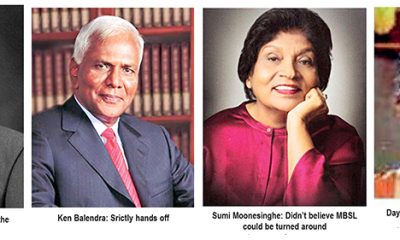
My experience in turning around the Merchant Bank of Sri Lanka (MBSL) – Episode 3
-

 Business4 days ago
Zone24x7 enters 2026 with strong momentum, reinforcing its role as an enterprise AI and automation partner
-

 Business3 days ago
Remotely conducted Business Forum in Paris attracts reputed French companies
-
 Business3 days ago
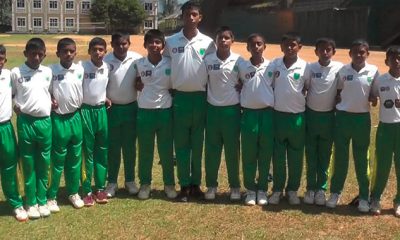
Four runs, a thousand dreams: How a small-town school bowled its way into the record books
-

 Business3 days ago
ComBank and Hayleys Mobility redefine sustainable mobility with flexible leasing solutions
-
 Business4 days ago
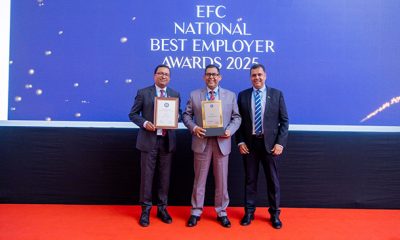
HNB recognized among Top 10 Best Employers of 2025 at the EFC National Best Employer Awards
-

 Business4 days ago
GREAT 2025–2030: Sri Lanka’s Green ambition meets a grid reality check
-

 Editorial6 days ago
All’s not well that ends well?