
News
Sri Lanka’s private sector given a spotlight at United Nations

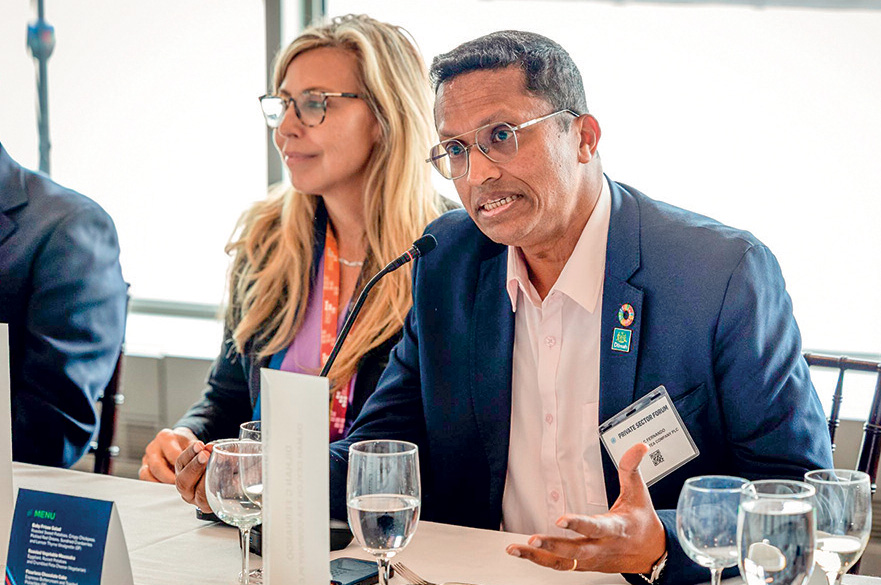
At the United Nations Private Sector Forum in New York, Dilhan C. Fernando, CEO & Chairman of Dilmah Tea and Chairman of UN Global Compact (UNGC) Network Sri Lanka, represented Sri Lanka with Supun Weerasinghe, CEO of Dialog Axiata and Rathika de Silva, Executive Director of Global Compact Network Sri Lanka. The two CEOs and Network Director were the first Sri Lankans to be invited by UN Secretary General Antonio Guterres to the prestigious gathering. The Forum took place alongside the UN General Assembly with global leaders, CEOs, and policymakers meeting during a pivotal moment for the United Nations as it marks its 80th year.
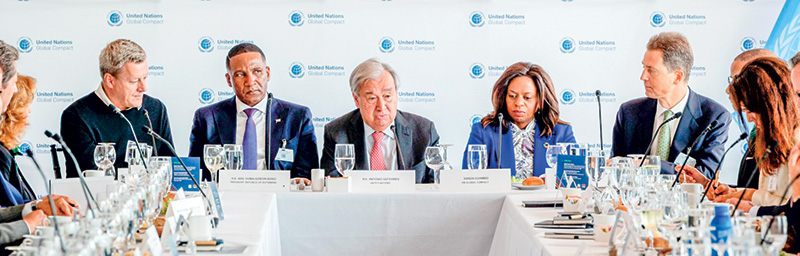
UN Secretary General Antonio Guterres presiding over the forum
In his intervention, Dilhan drew the forum’s attention to the critical role of Sri Lanka’s small entrepreneurs. With the 2030 target year only five years away, and only 35% of the Sustainable Development Goals (SDGs) on track, and 18% regressing, he emphasised the importance of including SMEs as partners in changing that trajectory. He advocated enabling them with access to finance, policy support and knowledge, while powering them with access to quality infrastructure and markets.
Dilhan emphasised the importance of creating collaborative mechanisms and support systems to enable small businesses to thrive in a changing global marketplace, positioning them as key partners in promoting sustainability and inclusive growth. With over 50% of Sri Lanka’s GDP formed by SMEs, this perspective reinforced the need for Sri Lanka’s unique priorities and aspirations to be represented on the global stage.
In other interventions, the Network Sri Lanka team, also joined by Hasrath Munasinghe of Commercial Bank, engaged UNGC and other UN entities in a bid to mobilise impact investment and stronger international support for Sri Lanka’s social and environmental development priorities.
Members of Sri Lanka’s private sector participating at the United Nations Private Sector Forum in New York signals that Sri Lanka is engaging with the world at a critical juncture, actively contributing toward global sustainability objectives. As the UN marks key anniversaries in 2025 – 10 years since the 2030 Agenda and 25 years since the founding of the UN Global Compact – the presence of Sri Lankan corporate leaders affirms that the country is part of this collective journey.



Chamindra Kularatne, the suspended Deputy Secretary General of Parliament and Chief of Staff, has told the Opposition that he will seek the intervention of the Inter-Parliamentary Union (IPU), Commonwealth Parliamentary Association (CPA), Association of Secretaries General of Parliament (ASGP) and the United Nations Human Rights Council (UNHRC).
Kularatne has also declared his intention to move the Court of Appeal against the suspension that came into effect on 23 January on the basis of an inquiry conducted by retired Additional Secretary S.K. Liyanage.
The inquiry found fault with Kularatne for receiving a pension for a three-year and seven-month period he served as the Secretary to the Chief Government Whip during the previous administration. However, political sources said that though that particular appointment had been on a contract basis, in terms of a gazette issued at that time, it was made pensionable. Therefore, there couldn’t have been any issue with regard to Kularatne receiving a pension as stipulated in the gazette, sources said. The Island learns that Public Administration, Provincial Councils and Local Government Ministry advised that the Cabinet of Ministers be consulted regarding the matter but the Parliament acted even without bothering to seek Kularatne’s explanation.
The Staff Advisory Committee (SAC), chaired by Speaker Dr. Jagath Wickremaratne, has initiated the inquiry, though such an action should have been the prerogative of the Secretary General of Parliament, Kushani Rohanadeera, sources familiar with the developments relating to the unprecedented case, said. The SAC has also disregarded stipulation that in case of an inquiry against the Deputy Secretary General of Parliament, it should have been conducted by an officer senior to him.
The SAC consists of the Speaker, Chief Government Whip Bimal Rathnayake, Deputy Finance Minister Prof. Anil Jayantha (he represents President Anura Kumara Dissanayake who also holds the Finance portfolio) and Opposition Leader Sajith Premadasa/Chief Opposition Whip Gayantha Karunatilleke. Sources said that the SAC had been deeply divided over the decision, with SJB Karunatilleke expressing opposition to the course of action proposed by the Speaker, while Prof. Jayantha didn’t extend his support. Before Kularatne had been informed of the SAC decision on 23 January, he wasn’t given an opportunity to respond to whatever allegations directed at him, sources said.
Kularatne’s complaint to IPU would be the second against Speaker Dr. Wickremaratne since his appointment as the Speaker on 17 December, 2024. The first complaint has been lodged by Jaffna District independent group member Ramanathan Archuna. Parliament accepted the NPP’s proposal to appoint the Polonnaruwa District lawmaker after their first choice Asoka Ranwala resigned after being exposed for false claims of his higher educational qualifications.
Sources said that the ruling party had targeted Kularatne because an influential section, within the government, believed that he had sneaked on the Speaker. Kularatne’s sacking and related accusations and counter accusations dominated social media.
Opposition Leader Sajith Premadasa and ITAK Batticaloa District lawmaker Shanakiyan Rasamanickam threw their weight behind Kularatne with Premadasa questioning the legality of the action taken without seeking an explanation from the official.
Authoritative sources said that in terms of the Parliament (Powers and Privileges) Act, in addition to members of Parliament, officials, too, received protection.
During the United National Front government of Prime Minister Ranil Wickremesinghe, the then Speaker, the late W.J. M. Lokubandara, interdicted Director General (Administration) Lacille de Silva over alleged misconduct though the official claimed he was punished for leaking information. Lacille de Silva successfully moved court against his interdiction and secured his position.
By Shamindra Ferdinando
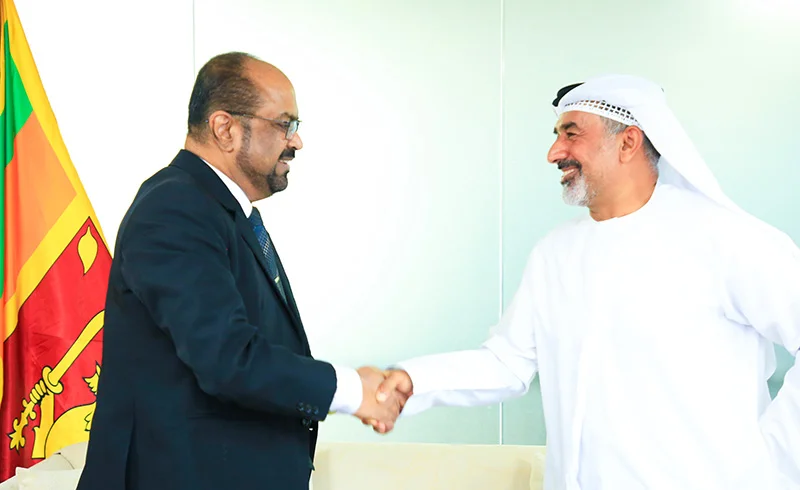
The Ambassador of the United Arab Emirates (UAE) to Sri Lanka, Khaled Nasser Al Ameri, met Minister of Power and Energy Eng. Kumara Jayakody yesterday (26) to review progress on bilateral energy cooperation and explore new avenues for collaboration, with a strong focus on regional energy security and strategic infrastructure development.
The high-level discussion centred on the implementation status of understandings reached in recent years, particularly in the energy sector, and on identifying fresh opportunities to deepen engagement between Sri Lanka and the UAE. Both sides underscored the importance of translating earlier agreements into tangible outcomes amid Sri Lanka’s ongoing energy transition.
A key focus of the talks was the proposed development of the Trincomalee region as a regional energy hub. The meeting reviewed follow-up actions related to the tripartite Memorandum of Understanding signed last year between Sri Lanka, India and the UAE, which envisages collaborative development of energy-related infrastructure and logistics in and around Trincomalee, leveraging its strategic location in the Indian Ocean.
Officials discussed the next steps required to operationalise elements of the agreement, including coordination mechanisms, investment frameworks and timelines, with a view to positioning Trincomalee as a focal point for energy storage, supply and distribution in the region.
The discussions also addressed broader cooperation on regional energy security, with both parties acknowledging the growing importance of resilient, diversified and sustainable energy systems amid global volatility.
The UAE reiterated its willingness to support Sri Lanka’s energy objectives, including through technical expertise, investment and strategic partnerships aligned with the country’s long-term power sector goals.
Minister Jayakody highlighted Sri Lanka’s commitment to strengthening international partnerships to ensure energy security, accelerate infrastructure development and support the shift towards a more reliable and future-ready energy mix.
Ambassador Al Ameri reaffirmed the UAE’s interest in expanding its role as a key partner in Sri Lanka’s energy sector, building on existing goodwill and cooperation.
The meeting reflects Colombo’s broader diplomatic and economic efforts to attract strategic partners to its energy sector, particularly for large-scale projects with regional significance, as Sri Lanka seeks to stabilise supply, enhance security and position itself as an emerging energy and logistics hub in the Indian Ocean, the Ministry said.
By Ifham Nizam

The Pathfinder Foundation’s Repository for Sri Lanka Peace Initiatives was inaugurated by Erik Solheim—former Norwegian Special Envoy to the Sri Lanka peace process, former Minister of the Environment and International Development of Norway, and former Executive Director of the United Nations Environment Programme (UNEP)—at the invitation of Milinda Moragoda, Founder, and Bernard Goonetilleke, Chairman of the Pathfinder Foundation, both among the principal negotiators of the peace process.
Over several decades, Sri Lanka repeatedly sought to resolve the separatist conflict through negotiations. Despite several initiatives, none succeeded in bringing the conflict to a negotiated conclusion.
Over the years, numerous publications—both local and foreign—have examined Sri Lanka’s conflict. SCOPP maintained a substantial body of documentation on the peace process, from January 2002 to January 2008, and the Norwegian facilitators also hold an extensive collection of records. Nevertheless, a major gap remains: the absence of a consolidated repository that brings together available documentation on the peace process, particularly one that preserves material relating to negotiations that did not reach a conclusive settlement.
Responding to this gap and encouraged by many associated with or studying the process, the Pathfinder Foundation has taken steps to establish a dedicated repository to collect and preserve documentation on Sri Lanka’s peace initiatives. Under this project, the Foundation will gather relevant information on the peace process from local and international sources.

Showers may occur in the North-central. Sabaragamuwa and Eastern provinces and Galle and Matara districts

U19 World Cup: Adnit ton powers USA to seven wicket win

U19 World Cup: Sri Lanka keep semifinal aspirations alive with four wicket win

U19 World Cup: Dominant England swat aside Bangladesh

Suspended Parliament official to move Court of Appeal, seek international intervention

Sri Lanka, UAE review energy cooperation; Trincomalee hub plans discussed

‘Dates have the highest sugar content to fight Coronavirus’

Sunday Island 27 December – Headlines

#SundayIsland 17th December – Headlines

Sunday Island – 28th March

Sunday Island Headlines – 21 March

Sunday Island – 21st February – Headlines
-
 Business1 day ago
ComBank, UnionPay launch SplendorPlus Card for travelers to China
-
 Business2 days ago
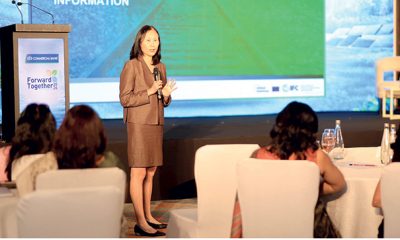
ComBank advances ForwardTogether agenda with event on sustainable business transformation
-
 Opinion5 days ago
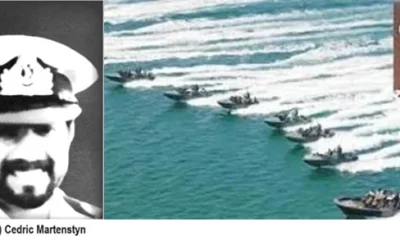
Remembering Cedric, who helped neutralise LTTE terrorism
-
 Business5 days ago
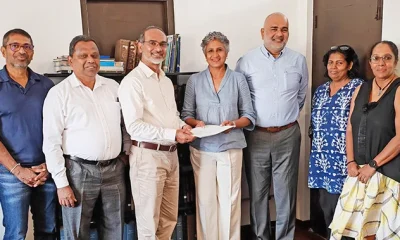
CORALL Conservation Trust Fund – a historic first for SL
-

 Opinion4 days ago
A puppet show?
-
 Opinion2 days ago
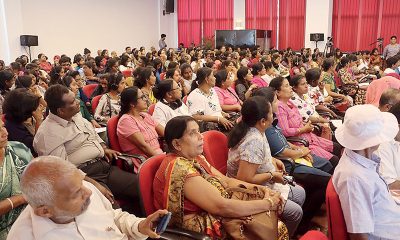
Conference “Microfinance and Credit Regulatory Authority Bill: Neither Here, Nor There”
-
 Features6 days ago
The middle-class money trap: Why looking rich keeps Sri Lankans poor
-

 Opinion1 day ago
Luck knocks at your door every day