
Sports
Sri Lanka’s chances of qualifying for Olympics in track and field


by Reemus Fernando
With 33 days to go for the Paris Olympics Sri Lanka is still in search for track and field athletes to represent the country at the world’s most sought-after sports event. Unlike in the runup to the past two Olympics some of the top hopefuls received top grade competitions overseas for them to strive for better world rankings and also to reach direct Olympic qualifying standards. Yet the tough qualifying standards have continued to elude country’s top athletes.
Being a country of just over 22 million people and most of its resources dedicated for sports being utilized by a none Olympic sport it is no wonder that it is struggling to qualify athletes to brush shoulders against the world’s best. Yet against odds there are at least two athletes who are within the required ranking range to be eligible for the Paris event. Asian Games medallists Tharushi Karunaratne (ranked 47th in the ‘Road to Paris 24’) and Dilhani Lekamge (ranked 30th in the ‘Road to Paris 24’) are ranked within the required ranking range currently and enthusiasts expect them to gather more ranking points at the next two local competitions, namely, the 102nd National Athletics Championships and the National Open Stage II Competition to further improve their standings.
Their current standing does not guarantee them a berth at the Olympics as there is space for the athletes ranked below them to improve before the qualifying period ends on June 30.
In the men’s category Italy based sprinter Yupun Abeykoon was the country’s top Olympic hopeful. But a minor injury forced him out of competitions temporarily. He is expected to return to competitions soon. Currently he is ranked 78th in the ‘Road to Paris 24’ rankings. He can book a second consecutive Olympic spot if he clocks 10.00 seconds or sub ten seconds.
Sprinters Aruna Dharshana and Kalinga Kumarage are currently ranked 53 and 54 in the ‘Road to Paris 24’ rankings. The competition to get into the top 48 is tough. Some 40 athletes around the world had clocked sub 45.00 seconds by mid-June and there will be a huge competition to grab the remaining eight Olympic slots during the next seven days.
Thrower Rumesh Tharanga produced a stunning feat when he established a championship record to win the gold medal in the men’s javelin throw at the recently held Asian Throwing Championships. His record setting throw fell just five centimeters short of the direct Olympic qualifying standard of 85.50 metres, though it is the ninth furthest throw in the world this year. His only chance of qualifying for Olympics is through reaching the direct qualifying standard. He has not entered the rankings as he has not competed in five ranking competitions during the qualifying period. It is no easy task bettering his record-breaking feat at the two local meets. If he reaches the target this week that will be a huge accomplishment.


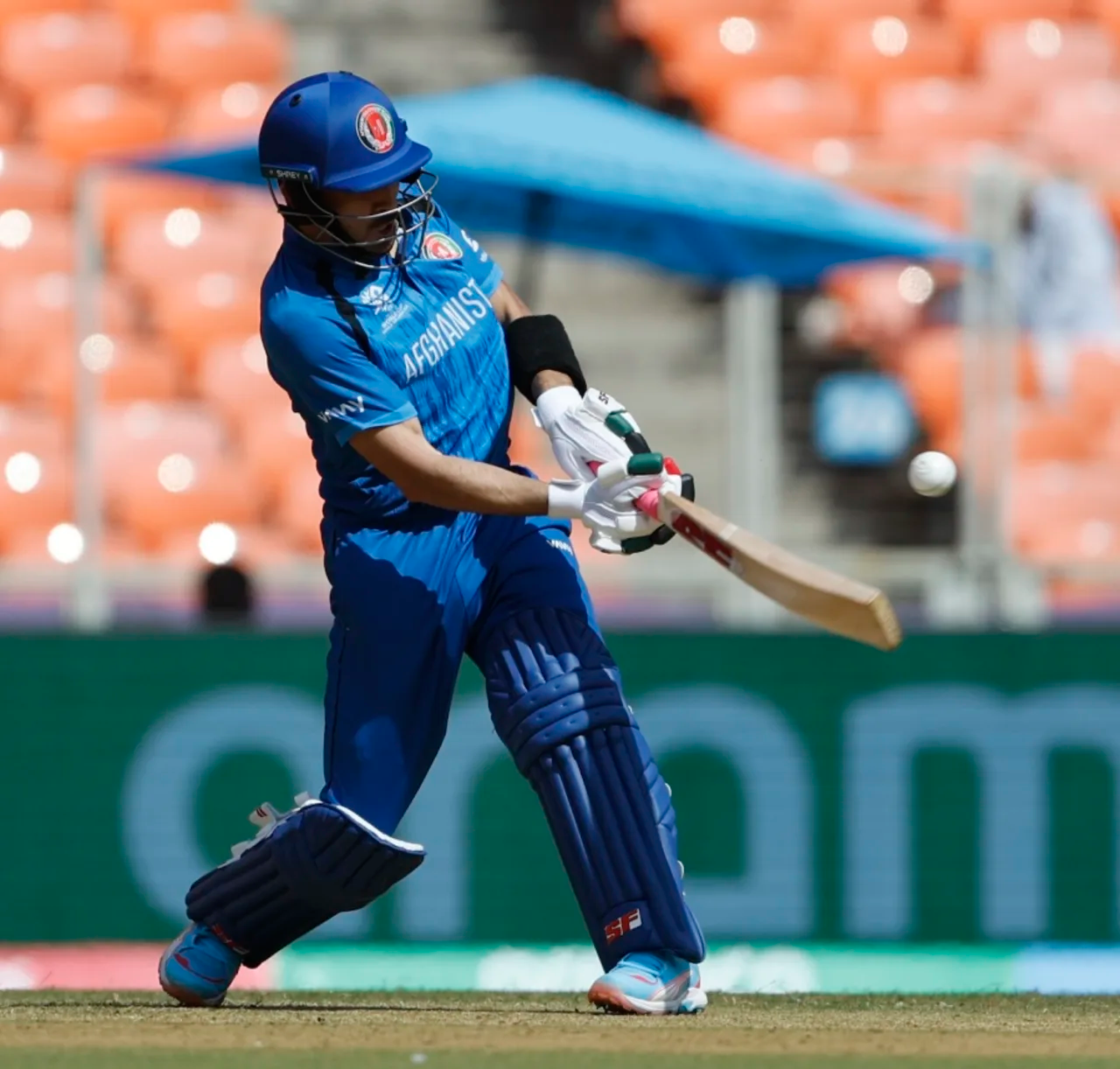
South Africa survived the T20 World Cup’s group of death by outlasting Afghanistan in a match that went into two Super Overs.
They had it won when the last over of regulation time began with Afghanistan needing 13 with one wicket in hand. Kagiso Rabada, though, bowled two no-balls, but a running error allowed them to tie the match. South Africa were then done and dusted but Tristan Stubbs hit a last-ball six to force a second Super Over. This one left Afghanistan needing four sixes off four balls; Rahmanullah Gurbaz, who scored 84 off 42 in regulation time, hit three of them, needed just a four to take it to the third Super Over after Keshav Maharaj bowled a wide, but hit straight to point.
A couple of metres either side, and Afghanistan would have had another shot at beating South Africa in a T20I for the first time. Losing semi-finalists last edition, now they are left needing more than just wins against UAE and Canada to make it out of the first round.
Allowed no soft launch by the draw, having lost the first match against New Zealand, Afghanistan came into this must-win encounter spin-heavy on a pitch with some grip. Quinton de Kock and Ryan Rickelton, though, scored twin half-centuries to give their taller bowlers with canny changes of pace just enough – it seemed – to defend despite an outlier effort by Gurbaz. However, Rabada and Marco Jansen made closing errors against the No. 10 Noor Ahmad. With two needed off the last three balls – first of those a free hit – the last pair took an improbable second to give South Africa a lifeline and the T20 World Cup its first double Super Over.
The skilled left-arm quick Fazalhaq Farooqi who would later make the error to cause the tie, got off to a superb start, swinging the ball each way and taking out Aiden Markram with a slower ball to expose two left-hand batters to offspinners. The shapes Rickelton’s body makes when playing shots can often be similar to de Kock’s, and he has for long been the natural heir. At times, South Africa have found it difficult to accommodate both in the same XI. They will be thankful they had these two here.
It was de Kock – only 6.94 per over against spin so far in his T20 career – who broke the shackles after a start of 12 for 1 in four overs. Whatever de Kock did, though, Rickelton did with more brute force. Left-arm wristspinner Noor, brought in this match as the only change, bore the biggest brunt of it. De Kock welcomed him with a six over long-on first ball, and two balls later Rickelton hit an even bigger one.
The duo even got to their fifties in the same over: the 11th, bowled by Mujeeb Ur Rahman. Rickelton took only 23 balls, de Kock 34, but it was de Kock who had taken on spin early on.
Taken down for 21 runs in his first two overs, captain Rashid Khan started the comeback for Afghanistan with the wickets of Rickelton and de Kock in the same over to reach 699 T20 wickets. The duo added 114 in 10.1 overs to take South Africa to 126 in the 13th over, but now began a new game. Afghanistan offered batters little pace, and only a couple of big blows from Jansen in the end took them to 187. That was just 63 runs off the last 7.3 overs.
Brief scores:
South Africa 187 for 6 in 20 overs (Ryan Rickelton 61, Quinton de Kock 59, Dewald Brevis 23, David Miller 20*, Marco Jansen 16; Fazalhaq Farooki 1-32, Azmatullah Omarzai 3-41, Rashid Khan 2-28) beat Afghanistan 187 in 19.4 overs (Rahmanullah Gurbaz 84, Ibrahim Zadran 12, Daewish Rasooli 15, Azmatullah Omarzai 22, Rashid Khan 20, Noor Ahmed 15*; Lungi Ngidi 3-26. Marco Jansen 1-42, Kagiso Rabada 1-38, George Linde 1-39, Keshav Maharaj 1-27) in the Super Over
Afghanistan [Super Over 1] 17/0 [Azmatullah Omarzai 16*, Rahmanullah Gurbaz 01*]
South Africa [Super Over 1] 17/1 [David Miller 01*, Dewald Brewis 06, Tristan Stubbs 10*; Fazalhaq Farooqi 1-17]
South Africa [Super Over 2] 23/0, [Tristan Stubbs 07*, David Miller 16*]
Afghanistan [Super Over 2] 19/2 [Mohammed Nabi 00, Azmatullah Omarzai 00*, Rahmanullah Gurbaz 18; Keshav Maharaj 2-19]
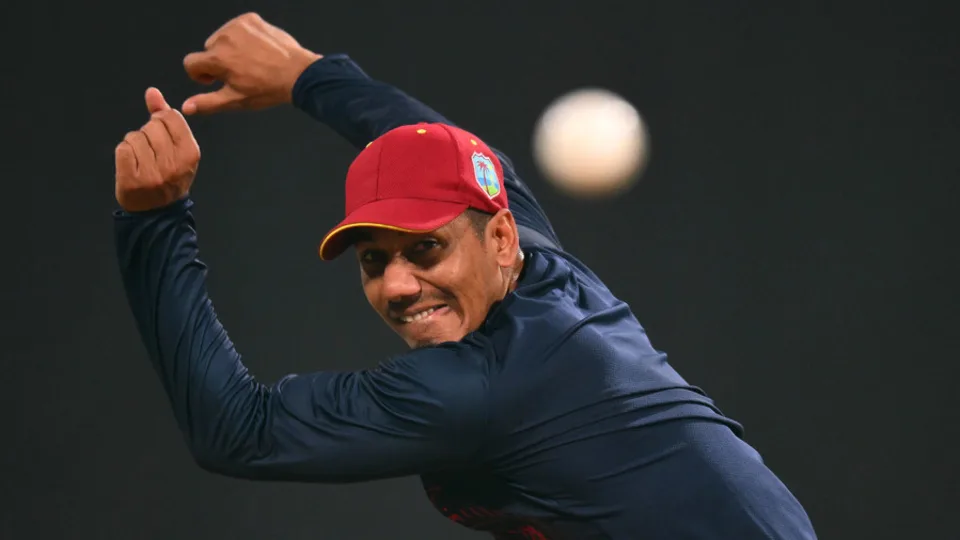
In a tournament that has so far been characterised by plucky challenges from unfancied underdogs, here’s a clash of big beasts to whet the appetite. Okay, so West Indies may not be among the big hitters on a global scale any more – hell, they didn’t even qualify for the ICC’s last two 50-over tournaments. But in a 20-over gunfight, they’ve proven time and again that their particular brand of physical might is right. Not least against Wednesday’s familiar foes at the Wankhede.
A clash of England and West Indies in a T20 World Cup is an inevitable opportunity to revisit one of the greatest finales of all time. Ten years ago in Kolkata, not quite to the month, Carlos Brathwaite launched Ben Stokes into the stratosphere time and time again to swipe the 2016 trophy from England’s grasp, almost as the engraver was getting to work.
But if the raw aggression of that moment left England feeling robbed, they could not say that they hadn’t been warned. For it was at the Wankhede, in their very first match of that same campaign, that they came a cropper in the face of an even more ferocious beating, as the mighty Chris Gayle blitzed 11 massive sixes in his 47-ball hundred.
Fittingly, those were the only two defeats of England’s knowingly naïve campaign. Perhaps they came too early in their ongoing white-ball awakening for the players to possess the street-smarts required to bring down an IPL-trained mean machine. But the lessons they learned would be invaluable, especially when the 2019 World Cup reached its own clutch moments.
England still have two survivors from that campaign – Adil Rashid and Jos Buttler, whose recognition of the value of six-hitting was his single biggest takeaway from that tournament; that, for a player who trusts his ability to clear the ropes, even the steepest of chases can be broken down into a handful of big hits when the match-up is right.
But, as Sam Curran noted after his nerveless death over had saved the day against Nepal, the lessons of that tournament cut both ways as they continue to echo down the generations. “I weirdly thought of the 2016 final, when Carlos got hold of Stokesy,” he told the BBC afterwards. “I was thinking, ‘Well, if I execute, he’s not going to hit me for six.'”
As for West Indies, Johnson Charles and Jason Holder remain from that squad of ten years ago, alongside their head coach, Darren Sammy – whose captaincy proved instrumental in drawing his players together to fight for a common cause. As he demonstrated on match eve, shooting the breeze with the media in a 15-minute address that touched every issue imaginable in West Indies cricket, his class of 2026 are unlikely to lack for motivation against these opponents.
History and precedent aside, this is a significant match-up for more basic qualification reasons. On the face of it, the jeopardy in Group C has been reduced by Bangladesh’s decision to withdraw, but Nepal are clearly itching for an upset and, as Scotland showed with a comprehensive win over the likely stragglers Italy, they have embraced their unlikely opportunity with gusto.
It’s an occasion that deserves to be savoured. As the weeks of uncertainty over India versus Pakistan ended up demonstrating, there’s still something precious about proper historical rivalries on the grandest stages that the game can offer. England and West Indies have each won two T20 World Cup titles, tying them with India as the most successful teams in the tournament’s history. Their storied pasts will inform the present on Wednesday night, as each team seeks to stride on into the future.
One of the main reasons for England’s angst in that Nepal run-chase was the unexpectedly brutal treatment meted out on Adil Rashid. Not only did he go wicketless for the first time in 25 T20I innings, dating back to the last World Cup, he was launched at a rate of 14 runs an over, the second most expensive T20I spell of three or more overs in his career. Nepal’s ability to pick his variations was the clincher, borne no doubt of their own familiarity with the art of legspin, and given his form coming into the tournament, there’s no question of Harry Brook losing any faith in Rashid’s impact. As the man himself said on this site last week, “you have to have a big heart as a spinner”. It’s about to be tested once more.
Quality spin remains an Achilles heel for England’s heavy hitters, and in Gudakesh Motie, they’ll be reunited with a left-arm spinner who knows how to cramp their style. Ten of his 40 T20I wickets have come in his frequent clashes with England, including a matchwinning haul of 3 for 24 in Tarouba two years ago. He was recently left out of their tour of New Zealand after a dip in form linked to a technical flaw, but last month he reasserted his trump-card status with a matchwinning haul in a rain-reduced game against South Africa.
Once again, England were quick out of the blocks with their starting XI. Just the one change from that fraught opener against Nepal, with Luke Wood’s left-arm seam making way from the heavier deck-hitting capabilities of Jamie Overton. He hits a long ball too, which might be useful down the order, given West Indies’ own six-hitting reputation.
England: Phil Salt, Jos Buttler (wk), Jacob Bethell, Tom Banton, Harry Brook (capt), Sam Curran, Will Jacks, Liam Dawson, Jamie Overton, Jofra Archer, Adil Rashid.
West Indies know their XI, but have chosen not to divulge it just yet. There was not much reason to change a winning formula from their tournament opener against Scotland.
West Indies (probable): Brandon King, Shai Hope (capt & wk), Shimron Hetmyer, Rovman Powell, Sherfane Rutherford, Romario Shepherd, Matthew Forde, Jason Holder, Akeal Hosain, Shamar Joseph, Gudakesh Motie.
[Cricinfo]

Australia are the last side to begin their T20 World Cup campaign and the late start plays heavily into their favour, given the injury issues they have had coming into the tournament.
They are already without Pat Cummins and Josh Hazlewood after both were ruled out with injury, and Australia’s selectors have intriguingly not yet replaced Hazlewood in the 15 and will only have 13 to choose from for their opening match against Ireland with Tim David expected to miss the opening round as he continues to rehab his hamstring injury.
Had the first match been any earlier, there may have also been doubts on Nathan Ellis coming off a hamstring concern and Adam Zampa, who experienced some groin tightness in the last T20I of the tour of Pakistan a fortnight ago, which Australia lost 3-0.
Australia are also struggling for form, having been hammered in Pakistan despite many of them coming from the BBL. However Ellis, David and Glenn Maxwell were all absent from that trip while many of the World Cup squad only played one or two games in the series at most. The change in conditions will challenge them, as will Ireland’s spinners George Dockerell and Gareth Delany after both bowled well against Sri Lanka.
Ireland themselves will feel under some pressure after butchering a chance to beat Sri Lanka in Colombo in their tournament opener. They dropped seven catches and gave up 59 runs from their final four overs with the ball. They were 105 for 2, albeit with the required run-rate climbing, but lost 8 for 38 to lose the game by 20 runs.
In theory, Ireland have the advantage of being a slightly unknown quantity to Australia. The two teams have only met twice in T20Is and only once in all international cricket since 2016. They played at the Gabba in the 2022 T20 World Cup and eight of the Ireland XI that played against Sri Lanka played in that game too. However, Australia may only have four players in their XI who played four years ago, with a number of retirements and injuries changing the formation of Australia’s team.
The only other time the two teams met in the shortest format was in the 2012 T20 World Cup in Colombo. Paul Stirling, Dockrell and Maxwell all played in that game.
Can Glenn Maxwell go to the well one more time to produce a stunning World Cup for his nation? Given he turns 38 this year, it seems unlikely that he will play another one for Australia, having already retired from ODI cricket. But since a match-winning 62 not out against South Africa last August, he has had a very lean run in all T20s. In eight innings in the BBL when he got past 3 he remained unbeaten, but that only happened three times with a highest score of 39 not out. His bowling will also be vital in the tournament as he will likely be the lone spinning allrounder in the top seven for most of the event.
Ireland need skipper Paul Stirling to set the tone at the top of the order, particularly against an inexperienced new-ball attack for Australia. His returns have also been lean in recent times with scores of 21, 29, 38, 0, 23, 45, 8, 14, and 6 in his last nine T20Is, striking at just 125.17. His 6 off 13 against Sri Lanka was not the start to the tournament he or Ireland were hoping for.
Australia appear set to play two specialist spinners in Matt Kuhnemann and Zampa. It will mean one of Xavier Bartlett and Ben Dwarshuis will miss out. There is another option Australia could take with Cooper Connolly playing at No. 8 to lengthen the batting, but that appears unlikely based on form. David’s absence will likely give Matt Renshaw a chance in the middle order. The combination of the top seven is likely to be fluid with the potential of elevating Maxwell early against spin.
Australia (probable): Travis Head, Mitchell Marsh (capt), Cameron Green, Josh Inglis (wk), Matt Renshaw, Glenn Maxwell, Marcus Stoinis, Xavier Bartlett/Ben Dwarshuis, Nathan Ellis, Matt Kuhnemann, Adam Zampa
There could be a temptation to bring in left-arm seamer Josh Little, who bowled very well against Australia four years ago, but he has gone wicketless in his last four T20Is. Ireland will more than likely remain unchanged given catching was the major issue against Sri Lanka.
Ireland (probable): Paul Stirling (capt), Ross Adair, Harry Tector, Lorcan Tucker (wk), Curtis Campher, Ben Calitz, George Dockrell, Gareth Delany, Mark Adair, Barry McCarthy, Matthew Humphreys
[Cricinfo]

Heartbreak for Gurbaz and Afghanistan as South Africa win after double Super Over

Amendment of the Inland Revenue Act No. 24 of 2017

Cabinet nod for “National Mineral Policy” – 2026

Twelve sentenced to death by Gampaha High Court
Ten new buses with facilities for people with special needs

Ghosts of 2016 writ large as England, West Indies meet again

‘Dates have the highest sugar content to fight Coronavirus’

Sunday Island 27 December – Headlines

#SundayIsland 17th December – Headlines

Sunday Island – 28th March

Sunday Island Headlines – 21 March

Sunday Island – 21st February – Headlines
-

 Features4 days ago
My experience in turning around the Merchant Bank of Sri Lanka (MBSL) – Episode 3
-

 Business5 days ago
Zone24x7 enters 2026 with strong momentum, reinforcing its role as an enterprise AI and automation partner
-

 Business4 days ago
Remotely conducted Business Forum in Paris attracts reputed French companies
-
 Business4 days ago
Four runs, a thousand dreams: How a small-town school bowled its way into the record books
-

 Business4 days ago
ComBank and Hayleys Mobility redefine sustainable mobility with flexible leasing solutions
-

 Business18 hours ago
Autodoc 360 relocates to reinforce commitment to premium auto care
-
 Business5 days ago
HNB recognized among Top 10 Best Employers of 2025 at the EFC National Best Employer Awards
-

 Editorial7 days ago
All’s not well that ends well?