
News
Sri Lankan Oil and Gas exploration grinds to a standstill amid protracted legal battle


Sri Lanka’s efforts to attract and leverage international investment into exploration and commercialisation of two blocks adding to over 5,000 square kilometers with potential oil and gas resources in the Mannar Basin have once again been gridlocked by legal challenges in the Court of Appeal.
According to the latest developments in the CA (Writ) Application No: 392/2023, the court found that a prima facie case has been established by the Petitioner, Serendive Energy.
Accordingly the court issued orders restraining the 1st to 36th Respondents and/or its servants or agents from granting to any third party other than the Petitioner the rights to offshore exploration of blocks M1 and C1, until a final determination is reached in the case.
Serendive Energy, which has a strategic alliance partnership with a large Indian conglomerate commenced pursuit of legal remedies following a recent effort in 2023 to reverse exploration block award that had previously been made to the company.
Serendive Energy first participated in an open international tender (SL 2019-02) in 2019, and was awarded the blocks, Mannar Basin M1 and Cauvery Basin C1 in May 2021. This decision took place following evaluations conducted by the Petroleum Development Authority, and headed at the time by former Chairman Saliya
Wickramasuriya and Current Chairman Surath Ovitigama, who have long served among the nation’s leading domain experts on oil and gas.As stated in the 2021 Ministry of Power and Energy Annual Report “International competitive bids were called for in the year 2019 for the exploration and production of oil and gas of Mannar Block M1 and Cauvery Block C1 and the bid evaluation process had been concluded in May 2021.”
“Negotiations had been held by the government of Sri Lanka throughout the year 2021 with Serendive Energy (Pvt) Ltd for separate petroleum resources agreements in respect of M1 and C1 blocks, and about 90% of the negotiations have been concluded. The final petroleum resources agreement is expected to be entered into during the first half of the year 2022.”
While the awarding of blocks to Serendive Energy was hailed at the time as critical forward after many previous false starts, all activity on exploration ground to a halt during the country’s economic crisis and the ‘aragalaya’, following which attempts were subsequently made to reverse the award. The Petitioners submitted that such measures amount to a direct contravention of the 2003 Petroleum Act.
The effort to attract international players to invest in Sri Lanka’s Oil and Gas exploration industry which ground to a halt in 1984 with the civil war recommenced in 2003 with the opening up of tenders for exploration to international local and global investors via the Petroleum Resources Act, No.26 of 2003.
Hydrocarbon prospectivity and legislation in Sri Lanka was established in 2001 with the funding by the Asian Development Bank (ADB) and technical assistance from New South Global, a part of the School of Petroleum Engineering within the University of New South Wales (UNSW) based in Sydney, Australia
The team leader of this project, Prof. Ray Shaw concluded in the report that “The Gulf of Mannar basin represents a new deepwater frontier region which has the indicia for hosting significant hydrocarbon accumulations.”
This report and conclusion based on the 2001 TGS Norpec Seismic survey encouraged a further more detailed survey by TGS and a Gravity/Magnetic study which confirmed the finding of this ADB/University of New South Wales Project.
The Petroleum Act 2003 was passed by parliament under the leadership of the then Prime Minister Hon. Ranil Wickremesinghe. However, subsequent mismanagement and bureaucratic inaction hindered any meaningful progress from being achieved.
With exploration and development requiring around 10 years, the window to leverage the country’s natural resource if fast disappearing with global “Net Zero” targets approaching in 2045-50 since the production period offered by the government is 20 years. Hence, all future investors will not have the full 20 years before global demand drops off significantly, making investment in Sri Lanka less attractive.
With the chances of success in this industry being as low as seven to 10%, international investors were already extremely hesitant, while Sri Lanka’s history of nationalization of such industries has proved to be a further deterrent. This included previous instances arbitrary, and often overnight policy changes towards nationalization and expropriation such as with TGS Norpec Seismic survey 2001 and 2005 as well as Caltex, Shell and Esso in the early 1960’s.
With the uncertainty created by two upcoming elections in the next 12 months and the country’s exploration process stuck in legal proceeding, and given the time required post-general election to call for EOI/RFP, shortlist, negotiate, select and conclude various administrative processes, it is unlikely that Sri Lanka to commence a new exploration process for at least two years with new investors for other blocks.
Moreover, Sri Lanka’s oil and gas bid is also still recovering from developments which took place in 2013 when a large regional National Oil Company first announced its intention to bid on multiple blocks, intimidating other interested investors in participating in the tender, only to ultimately refrain from bidding, and subsequently make a global announcement claiming that there was no oil and gas “prospectivity: in the Mannar basin – contradicting many independence assessments and geophysical surveys.
The combination of these factors led to negligible investor interest over the past 10 years, evinced by the lack of progress in that time. The latest injunctions on the largest blocks currently opened for exploration may prove to be the final nail in the coffin.



News
Compensation payments and reconstruction activities related to the Ditwah relief measures must be expedited with special attention at the district level – PM

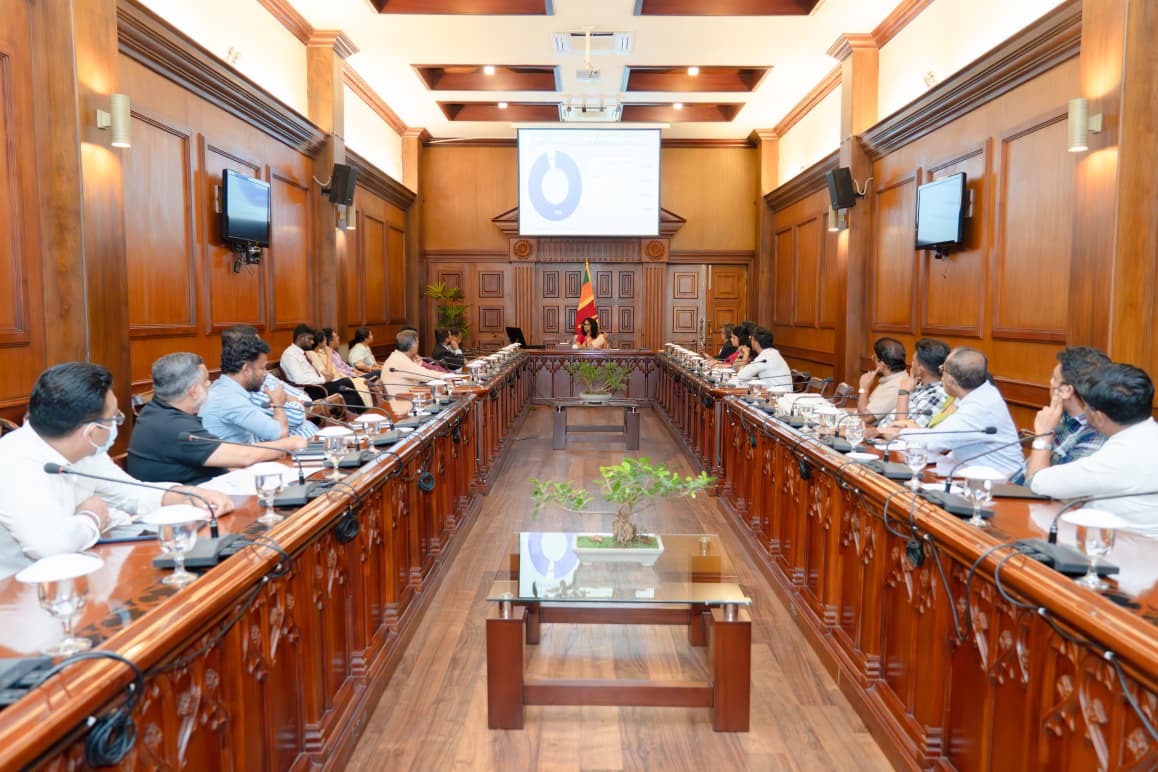
Prime Minister Dr. Harini Amarasuriya emphasized that compensation payments and reconstruction activities related to the Ditwah relief measures must be expedited with special attention at the district level. She further stated that all necessary allocations have already been made to Provincial Councils and instructed that the progress of disaster damage assessments and reconstruction efforts be closely monitored at the provincial level.
The Prime Minister made these remarks at a discussion held on Tuesday (21) at Temple Trees under her patronage, aimed at informing Chairpersons of District Coordination Committees and public representatives from disaster-affected districts, in order to accelerate the implementation of the “Rebuilding Sri Lanka” programme. The discussion focused on expediting disaster relief and compensation payments, as well as the swift restoration of infrastructure damaged by the disaster.
The Prime Minister emphasized that Rs. 500 billion has been allocated for damages caused by the Ditwah cyclone, and that all relevant development activities must be completed before the end of 2026. The Prime Minister also instructed officials to pay special attention to resolving issues at the local level that are causing delays in compensation payments.
Senior Additional Secretary to the President, G.M.R.D. Aponsu, stated that the estimated cost for reconstruction following the Ditwah cyclone is approximately USD 3.4 billion. Accordingly, funds have been allocated for compensation across several sectors including housing and social infrastructure, agriculture and livestock, fisheries, industry and livelihoods, and irrigation. He further noted that 99% of the Rs. 25,000 allowance has already been disbursed, while 95% of the Rs. 50,000 resettlement allowance has been paid. Compensation for fully and partially damaged houses is still ongoing, and 99% of temporary relief centres have been closed.
Additionally, attention was drawn to several other measures, including providing Rs. 25,000 to affected schoolchildren, paying Rs. 1 million as compensation for each deceased individual, compensation for children who lost one or both parents, support for persons with disabilities affected by the disaster, compensation for agricultural losses, and expediting resettlement of displaced families. Measures such as allocating land for new housing construction and accelerating the issuance of reports from the National Building Research Organization were also discussed.
Focus was also placed on the reconstruction of affected schools, hospitals, and daycare centres, improving the accuracy and speed of data collection at the local level, and accelerating infrastructure development.
The event was attended by Minister of Plantation and Community Infrastructure Samantha Vidyarathna, Minister of Public Administration, Provincial Councils and Local Government Dr. Chandana Abayarathna, Deputy Minister of Agriculture and Livestock Namal Karunaratne, Deputy Minister of Trade, Commerce, Food Security and Cooperatives R.M. Jayawardena, Deputy Minister of Education Dr. Madhura Senevirathna, Members of Parliament, Chairpersons of District Coordination Committees, Chief of Staff to the President and Commissioner General of Essential Services Prabath Chandrakeerthi, Additional Secretary to the President Jayantha Bandara; and officials of the Prime Minister’s Office.
[Prime Minister’s Media Division]
… five senior officials suspended
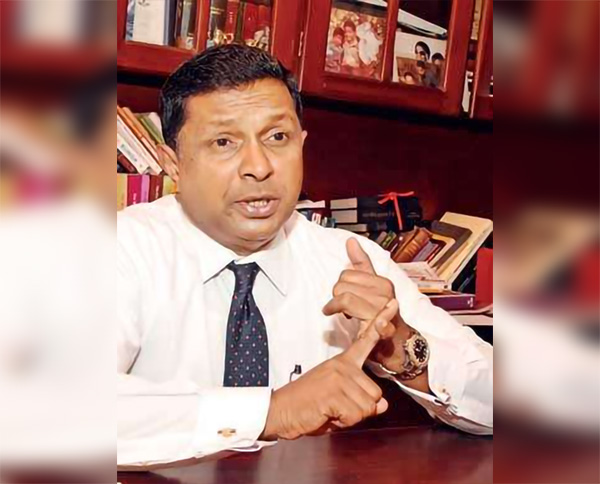
President’s Counsel Maithri Gunaratne has urged the Parliament to intervene in an ongoing investigation conducted by the Treasury into the wrongful payment of USD 2.5 mn loan instalment to a third party instead of the country that gave the loan to the Government of Sri Lanka.
Gunaratne, in a letter addressed to Speaker Dr. Jagath Wickremaratne copied to leaders of all political parties represented in Parliament, General Secretaries of those political parties, Committee on Public Finance, Auditor General and National Audit Office, has stated the payments were made between December 2025 and January 31, 2026.
Lawyer Gunaratne took up the issue on behalf of civil society grouping ‘Free Lawyers’ after gathering information related to the alleged payments. Spokesman for ‘Free Lawyers’ Keerthi Tennakoon told The Island that they expected the Parliament to act swiftly and decisively. Pointing out that the ‘disappearance’ of USD 2.5 mn took place amidst the massive National Development Bank (NDB) fraud, amounting to Rs. 13.2 bn, Tennakoon emphasised the responsibility of the Parliament to take charge of the investigation.
According to Gunaratne’s letter, seen by The Island, following an international investigation carried out by a technical committee, two Treasury Directors, two Deputy Treasury Directors and a senior official responsible for IT had been interdicted.
As the relevant payments amounted to USD 2.5 mn, the process couldn’t have been completed without the involvement of the Deputy Secretary, Treasury and Treasury Secretary, Gunaratne stated.
According to him, the Central Bank had been responsible for loan payments until recently but the alleged irregularities happened after that task was brought under the Department of External Resources and Public Debt Management Office.
The Free Lawyers said that as the Secretary to the Treasury, Harshana Suriyapperuma, was also the Secretary to the Finance Ministry, the Parliament should intervene to establish a suitable mechanism to investigate this.
Former NPP National List lawmaker Harshana Suriyapperuma succeeded Mahinda Siriwardena in late June 2025.
Tennakoon said that they felt the need to bring the shocking development to the public domain as those who knew of the incident remained silent.
By Shamindra Ferdinando
News
USD 2 mn bribe: CID ordered to arrest Shasheendra R, warrant issued against ex-SriLankan CEO’s wife


Colombo Fort Magistrate Isuru Neththikumara has directed the Criminal Investigation Department (CID) to arrest former SriLankan Airlines board member Shasheendra Rajapaksa and produced him in court in connection with the ongoing probe into the Airbus deal during his uncle President Mahinda Rajapaksa’s second term.
The Magistrate sought an explanation from the CID regarding the delay in executing the arrest warrant in respect of Shasheendra Rajapaksa when the case was taken up yesterday (22).
Neththikumara issued a warrant on Priyanka Nayomali Wijenayake, the wife of former SriLankan Chief Executive Officer Kapila Chandrasena, over the investigations into the Airbus transaction.
The Chandrasenas have been accused of receiving US 2 mn bribe to facilitate the transaction.
The Commission to Investigate Allegations of Bribery or Corruption (CIABOC) is also inquiring into the Airbus deal. The Magistrate further ordered that the case pending before the Court be called again on May 20.

Compensation payments and reconstruction activities related to the Ditwah relief measures must be expedited with special attention at the district level – PM

South Korean fighter jets collided due to pilots taking pictures, report finds

Showers above 75 mm are likely at some places in the Western, Sabaragamuwa, Central, Uva and Southern provinces and in Ampara and Batticaloa districts

Parliament urged to probe questionable payment of USD 2.5 mn from Treasury

USD 2 mn bribe: CID ordered to arrest Shasheendra R, warrant issued against ex-SriLankan CEO’s wife

Lanka faces crisis of conscience over fate of animals: Call for compassion, law reform, and ethical responsibility

‘Dates have the highest sugar content to fight Coronavirus’

Sunday Island 27 December – Headlines

#SundayIsland 17th December – Headlines

Sunday Island – 28th March

Sunday Island Headlines – 21 March

Sunday Island – 21st February – Headlines
-
 News2 days ago
Rs 13 bn NDB fraud: Int’l forensic audit ordered
-

 Business5 days ago
Harnessing nature’s wisdom: Experts highlight “Resist–Align” path to resilience
-

 Opinion3 days ago
Shutting roof top solar panels – a crime
-

 News5 days ago
Gratiaen Trust announces longlist for the 33rd Annual Gratiaen Prize
-

 News4 days ago
From Nuwara Eliya to Dubai: Isha Holdings markets Agri products abroad
-

 Latest News7 days ago
Singapore Zoo’s first Sri Lankan leopard cubs make their public debut
-
 News5 days ago
Heroin haul transported on 50-million-rupee contract
-
 News3 days ago
Church calls for Deputy Defence Minister’s removal, establishment of Independent Prosecutor’s Office