
News
Sri Lanka – thinking outside comfort zones to achieve progress

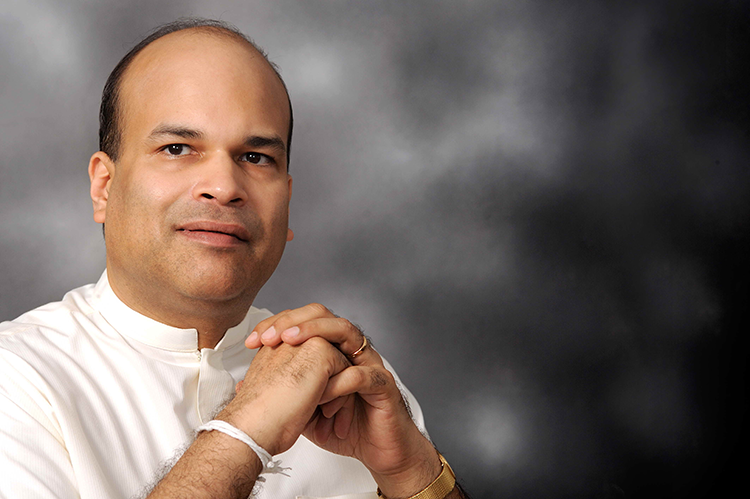
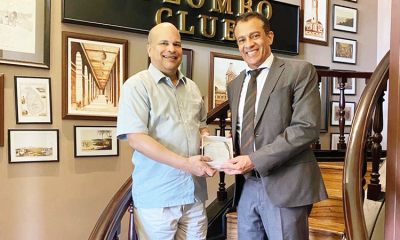
A proposal by Milinda Moragoda, founder of the Pathfinder Foundation, to all presidential candidates and political parties
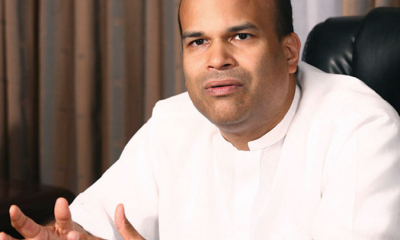
Milinda Moragoda has issued a proposal addressed to all presidential candidates and political parties for growth by at least six percent per annum for the next ten years, twice the growth rate projected by Sri Lankan authorities and international economists emphasizing the need for ambitious economic goals, and introducing the proposed reforms as a roadmap for the nation’s future.
“Citizens should demand that candidates and political parties participating in these elections present clearly articulated policy platforms that will enable the electorate to make an informed choice at the polls. While many Sri Lankans speak and complain about corruption, its root cause lies in the fact that government and politics pervade every facet of our day-to-day lives. The first step towards fighting corruption is to reduce the size of the government. Small government is good governance,” Moragoda says in his proposal.
Full text: Background:
The presidential and possible parliamentary elections are expected to take place later in 2024 and will be the most important set of elections in our post-Independence history. Sri Lanka can come out of the prevailing economic and political crises only if leaders and citizens are willing to recognise that the economy will have to grow by at least 6% per annum for the next ten years, which is twice the growth rate projected by Sri Lankan authorities and international economists at the moment. At the presently forecasted growth rates, Sri Lanka will be forced to restructure its debt at regular intervals and muddle through for the foreseeable future. Social instability is also likely to continue and may even worsen, and our youth will have no future in this country. Citizens should demand that candidates and political parties participating in these elections present clearly articulated policy platforms that will enable the electorate to make an informed choice at the polls.
While many Sri Lankans speak and complain about corruption, its root cause lies in the fact that government and politics pervade every facet of our day-to-day lives. The first step towards fighting corruption is to reduce the size of the government. Small government is good governance.
Every crisis presents an opportunity, and every cloud has a silver lining. This could be the moment to change direction. To achieve this goal, Sri Lanka must think beyond the box and discard old paradigms, prejudices, and mindsets. With this in mind, fourteen suggested prerequisites to guide the country in a new and fresh direction are outlined below. These policy points could provide food for thought to aspiring presidential candidates and political parties as they prepare their respective policy platforms.
Downsizing Government:
1. Abolish the Executive Presidency and replace it with a Parliamentary model with a first-past-the-post electoral system.
2. Create an effective Upper House in the legislature that will focus on national integration and reconciliation, social equity, and levelling up among districts within the country.
3. Abolish Provincial Councils and empower local councils. The number of local councils should be reduced, and a district-level coordination mechanism should be established.
4. Reduce the size and scope of Government on a predetermined timeline. Increase the role of the private, non-governmental, and social sectors. All government ministries, departments, and agencies should be evaluated on zero-based budgets. Superfluous entities should be closed down. All bureaucratic obstacles and impediments to speedy decision-making should be removed. To help minimise corruption, increase transparency, and facilitate interaction between citizens and government, technology should be used, wherever possible.
Economic Growth & Reforms – Taxes, the Workforce & Infrastructure:
5. Modernise and reform the economy to achieve a growth level of at least 6% annually. This should include large-scale privatisation and all necessary reforms that will increase competitiveness and productivity to facilitate rapid export-led economic growth fuelled by foreign investment. Sri Lanka will also have to follow niche market-based strategies for exports. This, too, will require a strong focus on new technologies and skills development.
6. Develop a workforce fit for a competitive, outward-looking economy by upgrading education, training and skills development.
7. Achieve inclusive and regionally balanced growth by modernising agriculture and promoting SMEs, particularly by facilitating their links to domestic and international supply chains.
8. Announce a clear timeline to reduce the highest personal and corporate income tax rates to 20% and VAT to 10%. Property, wealth, and inheritance taxes should not be implemented. Import controls should be lifted, and customs duties should be reduced to make Sri Lanka a globally competitive economy. Sri Lanka should also, with minimum delay, establish a network of free-trade agreements globally and, through this process, become the primary logistics and trading hub for our region. The country should astutely navigate to position itself advantageously, taking into consideration present geopolitical realities and their impact on international trade, investment, and supply chains.
9. Implement a large-scale, foreign-funded 4-year infrastructure development programme along the lines of the Mahaweli scheme to build highway, railway, power, and multi-product petroleum pipeline connectivity between India and Sri Lanka. The present aviation and maritime connectivity with India should be upgraded, too. In this regard, we should leverage Sri Lanka’s locational advantage and historical international links to build a world-class hub in the middle of the Indian Ocean, as the country was for millennia in the past.
10.At the same time, the large-scale wind energy potential available off the northwest coast of Sri Lanka should be harnessed speedily without delay.Through this process, Sri Lanka should aim to become a net electricity exporter within the next decade. In addition, Sri Lanka’s potential as a hydrogen-energy hub should be tapped. Furthermore, Trincomalee should be developed as the region’s primary energy and petroleum hub.
11.If required, any existing agreements and understandings with the IMF or with other multilateral or bilateral organisations, as well as commercial creditors should be renegotiated to fit into the framework outlined above.
National Identity & Inclusive Development
12.To foster a sense of unity, shared national identity, and purpose, all youth must take part in a one-year mandatory national service programme when they reach the age of 18. They should be given the option of either serving in the armed forces or volunteering to serve the country in a structured community service programme.
13.Until Sri Lanka’s transition into a fast-growing economy is completed, every low-income household should receive a monthly payment sufficient to meet basic needs. The selection of these households must be done in a carefully targeted and transparent manner.
14.Our nation has an ancient civilisational history of which all Sri Lankans should be proud. We must draw on this rich and diverse history for inspiration and self- confidence in a meaningful and constructive way. Our diversity is a strength, not a weakness.








The situation report issued by the Disaster Management Center at 0600hrs today [5th December] confirms that 486 persons have died and another 341 persons are missing after the devastating weather conditions in the past week.
171,778 persons have been displaced and have taken refuge at 1,231 safety centers established by the government.


Media organisations have denounced Deputy Minister of Public Security and Parliamentary Affairs Sunil Watagala after he urged law enforcement authorities to use emergency regulations to take action against those posting allegedly defamatory content about the President and senior ministers on social media.
The Sri Lanka Working Journalists Association (SLWJA) yesterday issued a strongly worded statement condemning Watagala’s remarks, warning that they posed a direct threat to freedom of expression and media rights, particularly at a time when the country is struggling through a national disaster.
Watagala made the controversial comments on 2 December during a meeting at the Malabe Divisional Secretariat attended by government officials and Deputy Media Minister Dr. Kaushalya Ariyarathna. During the discussion, the Deputy Minister claimed that a coordinated effort was underway to spread distorted or false information about the disaster situation through physical means, social media, and even AI-generated content. He also alleged that individuals based overseas were contributing to such activity.
According to the SLWJA, Watagala went further, directing police officers present at the meeting to treat those posting such content “not merely as suspects but as offenders” and to take action against them under emergency regulations currently in force.
The SLWJA accused the government of abandoning the democratic principles it once campaigned on, noting that individuals who publicly championed free speech in the past were now attempting to clamp down on it. The association said this was not an isolated incident but part of a pattern of growing state pressure on journalists and media platforms over the past year.
It warned that attempts to criminalise commentary through emergency powers especially during a disaster constituted a grave violation of constitutional rights. The union urged the government to respect democratic freedoms and refrain from using disaster-related powers to silence criticism.
In a separate statement, Internet Media Action (IMA) also expressed “strong objection” to Watagala’s comments, describing them as a “serious threat to freedom of expression”, which it said is a fundamental right guaranteed to all Sri Lankan citizens.
The IMA said Watagala’s assertion that “malicious character assassination attacks” were being carried out against the President and others through social media or other media channels, and that such acts should attract severe punishment under emergency law, represented “an abuse of power”. The organisation also criticised the Deputy Minister’s claim that false opinions or misrepresentations whether physical, online, or generated by AI could not be permitted.
Using emergency regulations imposed for disaster management to suppress political criticism amounted to “theft of fundamental rights”, the statement said, adding that the move was aimed at deliberately restricting dissent and instilling fear among social media users.
“Criticism is not a crime,” the IMA said, warning that such rhetoric could lead to widespread intimidation and self-censorship among digital activists and ordinary citizens.
The group demanded that Watagala withdraw his statement unconditionally and insisted that freedom of expression cannot be curtailed under emergency laws or any other legal framework. It also called on the government to clarify its stance on the protection of fundamental rights amid increasing concerns from civil society.

Archbishop of Colombo, Cardinal Malcolm Ranjith, has called on Sri Lankans to observe this Christmas with compassion and restraint, as the nation continues to recover from one of its worst natural disasters in recent memory.
In his message, the Colombo Archbishop has highlighted the scale of the crisis, noting that more than 1.5 million people have been displaced, while an “uncounted number” remain buried under debris in the hill country following landslides and severe flooding.
“It is a most painful situation,”
he has written acknowledging the difficulty of celebrating a season traditionally associated with joy while thousands are mourning lost loved ones, living in refugee centres, or left with nothing but the clothes they were wearing.
The Cardinal has urged the faithful to temper excessive celebrations and extravagance, instead focusing on helping those affected. “Celebrate, by all means, yes, but make it a moment of spiritual happiness and concern for the needs of those who suffer,” he said. “Assist as much as possible those who lost their loved ones, their homes, and their belongings.”
He has called for a Christmas marked by love, sharing, and solidarity, describing it as an opportunity to make the season “a deeply spiritual and joyful experience.”

Hope holds firm as West Indies drag New Zealand into fifth-day battle

Ireland among countries boycotting Eurovision after Israel allowed to compete

Putin says Russia will take Donbas by force or Ukraine’s troops will withdraw

486 dead, 341 missing, 171,778 displaced as at 0600hrs today [05]

Showers above 75 mm are likely at some places in the Western and Sabaragamuwa Provinces and in Galle and Matara districts

Media slams govt.’s bid to use Emergency to silence critics

‘Dates have the highest sugar content to fight Coronavirus’

Sunday Island 27 December – Headlines

#SundayIsland 17th December – Headlines

Sunday Island – 28th March

Sunday Island Headlines – 21 March

Sunday Island – 21st February – Headlines
-
 News5 days ago
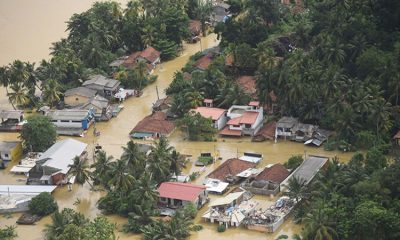
Weather disasters: Sri Lanka flooded by policy blunders, weak enforcement and environmental crime – Climate Expert
-
 Latest News6 days ago
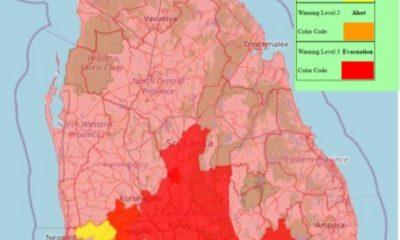
Level I landslide RED warnings issued to the districts of Badulla, Colombo, Gampaha, Kalutara, Kandy, Kegalle, Kurnegala, Natale, Monaragala, Nuwara Eliya and Ratnapura
-
 Latest News6 days ago
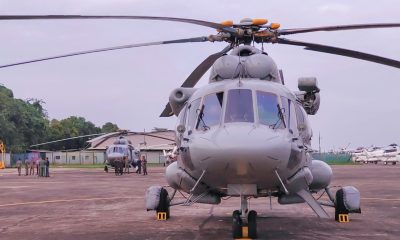
INS VIKRANT deploys helicopters for disaster relief operations
-
News2 days ago
Lunuwila tragedy not caused by those videoing Bell 212: SLAF
-
 Latest News6 days ago
Department of Irrigation issues Critical flood warning to the Kelani river basin
-
 Latest News4 days ago
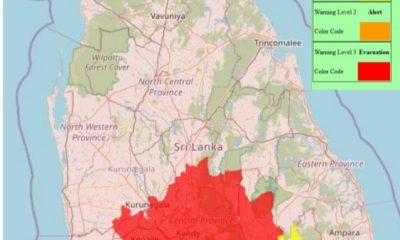
Level III landslide early warnings issued to the districts of Badulla, Kandy, Kegalle, Kurunegala, Matale and Nuwara-Eliya
-
 News6 days ago
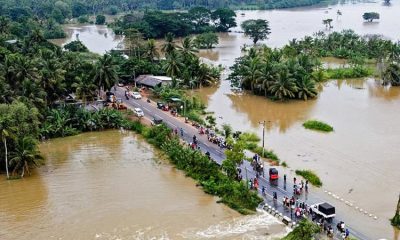
Country reels under worst weather in living memory
-

 Editorial6 days ago
Needed: Action not rhetoric