
Business
Sri Lanka needs to achieve many more beyond digital transformation: Sagala Ratnayaka


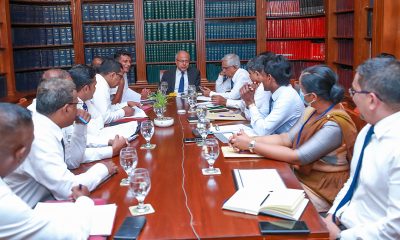
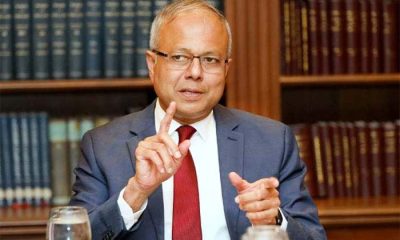
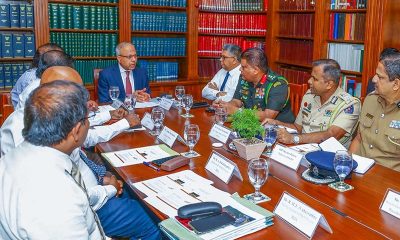
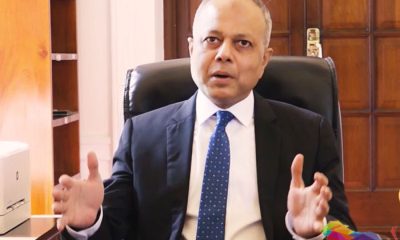
Sagala Ratnayaka, the President’s Senior Advisor on National Security and Presidential Chief of Staff said recently that while digital transformation is critical for Sri Lanka, there are other barriers it has to overcome to achieve real economic growth.
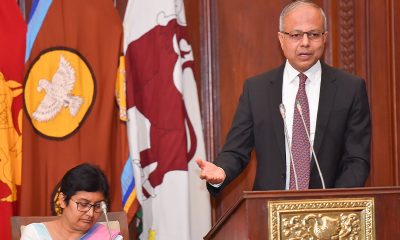
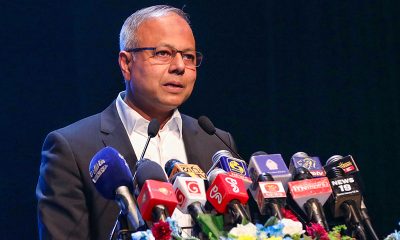
He said so while delivering the keynote address at the 16th International Research Conference – 2023, of the General Sir John Kotelawala Defence University, under the theme ‘Achieving Resilience through Digitalization, Sustainability and Sectoral Transformation.”.
He underscored the conference’s theme, emphasizing the significance of digital transformation in various sectors, including business, public services and governance. He also highlighted the need for a cultural shift to adapt to digitalization, cautioning against potential risks for individuals lacking digital skills, such as fraud, data distortion, identity theft and cyber bullying. He stressed the importance of thoughtful technology implementation and a society-wide approach to address these challenges.
“However, there’s also the downside of digitalization. The vulnerable and those lacking in skills could be susceptible to risks like fraud, data distortion, identity theft, and cyber bullying. The advent of artificial intelligence could also negatively impact people’s lives if not addressed correctly. Whether technology empowers or harms is a matter of choices we make. Therefore, technology needs to be thoughtfully designed and applied with a society-wide approach,” he said.
“For Sri Lanka, digital transformation is just one piece of the puzzle. To reach its potential, the country needs to address various aspects, including economic growth, reforming state-owned enterprises, creating a favourable economic climate for investment and opening up while maintaining the right regulations and safeguards. This approach, combined with research and education, will help Sri Lanka achieve its potential,” Ratnayaka said.







Advocata Institute says that, a regulatory barrier prevents Sri Lankan women achieving pay parity with their male counterparts despite recent legislative amendments that have opened doors for women to work night shifts.
Despite the 2024 and 2026 liberalizations of the Shop and Office Employees Act (SOEA), which allowed women over 18 to work night shifts in IT, BPO, and hospitality sectors, women remain legally barred from maximizing their income due to rigid overtime restrictions.
Under current regulations, women cannot be employed under the Shop and Office Act for more than nine hours per day, a limit that strictly includes overtime. While Regulation 6 of the Act permits up to twelve hours of overtime per week, this daily “hard cap” creates a practical barrier that prevents women from accessing the full overtime entitlement available to male workers. This creates a regulatory paradox: while the law now permits women to work at night, it simultaneously restricts them from working the hours necessary to take home the same pay as a man performing the same role.
The urgency for reform is underscored by the Sri Lanka Labour Force Survey for the third quarter of 2025, which reveals a significant participation gap. Female labour force participation stands at 33.9 percent, compared to 68.6 percent for men. Closing this gap is a key structural reform priority under Sri Lanka’s International Monetary Fund Extended Fund Facility (EFF) programme, which highlights the importance of modernizing labour laws to expand labour supply and support long-term economic growth.
Debates on reforming these restrictions are often framed around the concern that removing gender-specific protections could expose women to exploitation. However, a woman’s vulnerability in the labour market is shaped less by the absence of gender-specific laws and more by structural challenges such as inadequate public transport, poor workplace infrastructure, weak enforcement of law and order, and limited access to childcare.
Addressing these underlying barriers is critical to ensuring both protection and opportunity. True empowerment requires shifting the focus from paternalistic hour-caps to creating a safe, gender-neutral environment that allows women the agency to maximize their earnings and contribute fully to the national economy.
Authorities have traced the oil contamination reported along sections of the Hikkaduwa and Peraliya coastlines in the Galle District to drifting barrels of industrial lubricant, while rapid response teams have already removed almost all visible oil deposits from the affected beaches.
The Marine Environment Protection Authority (MEPA), together with the Sri Lanka Coast Guard, launched an immediate response after oil patches were detected along about a 20-metre stretch of coastline in the Hikkaduwa and Peraliya areas.
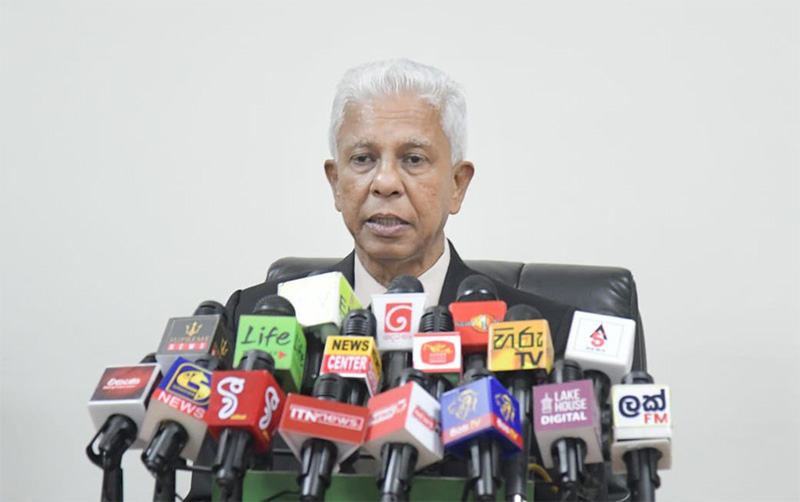
Addressing a media briefing at the Ministry of Environment, MEPA Chairman Samantha Gunasekara said emergency shoreline clean-up operations began on March 7 under the instructions of Environment Minister Dammika Patabendi.
“Nearly 99 percent of the oil patches have already been cleared from the affected coastal stretch,” Gunasekara said, adding that the swift intervention by authorities had prevented the incident from escalating into a wider marine pollution crisis.
Investigations carried out by MEPA have confirmed that the contamination originated from barrels containing Shell Corena S2 P 100 lubricant oil that had apparently been lost at sea and later drifted ashore.
The lubricant manufactured by Shell plc is commonly used to lubricate the internal components of reciprocating piston air compressors. Officials said the substance is not classified as a hazardous or toxic oil, easing initial fears of severe environmental damage.
MEPA General Manager Jagath Gunasekara said monitoring of the coastline was continuing to ensure that no additional oil patches washed ashore.
Meanwhile, the Department of Wildlife Conservation said there had been no confirmed reports of harm to marine animals, including sea turtles and coastal wildlife, following inspections in the affected areas.
Wildlife officials said they were continuing to keep the situation under close observation to ensure that marine fauna along the southern coast remained safe.
Authorities stressed that protecting the ecological integrity of the southern coastal belt—particularly around the Hikkaduwa marine area—remains a priority, while further investigations are under way to determine how the lubricant barrels ended up drifting in Sri Lankan waters.
By Ifham Nizam
Business
Support for psychological well-being: Launch of telemedicine psychology program in response to Ditwa Cyclone

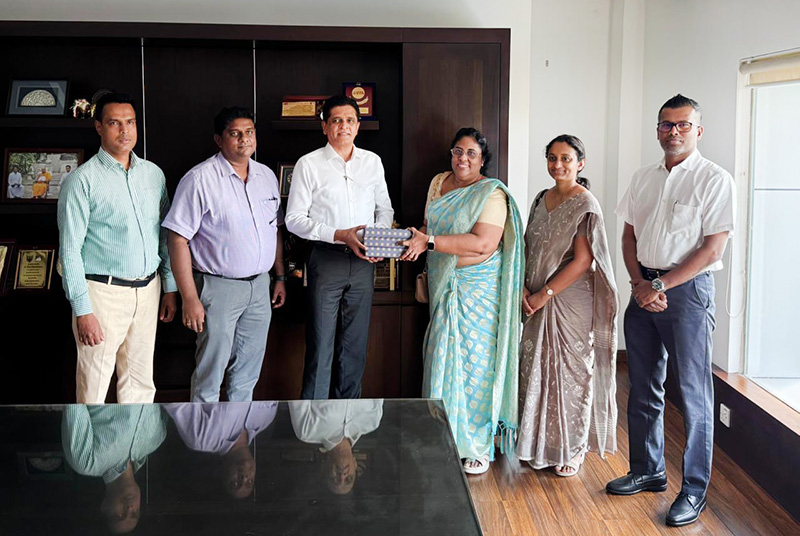
The Sri Lanka College of Psychiatrists has launched an innovative telemedicine psychology program designed to provide essential support and mental health care to individuals adversely affected by the Ditwa Cyclone. This initiative is a vital response to the psychological challenges faced by the community in the aftermath of the disaster.
However, the implementation of this program has faced significant obstacles, primarily due to a considerable lack of access to smart devices among the target beneficiaries. Recognizing the urgency of this situation, S-lon Lanka (Pvt) Ltd has made a commendable contribution by donating tablet devices through its corporate social responsibility initiative, the “Suwasahana Charika” Program. This generous donation aims to bridge the technological gap, ensuring that individuals in need can access the psychological services offered by the telemedicine program.
The collaborative efforts were strengthened during a recent event that was attended by key figures, including Mr. S.C. Weerasekara, the Group Director / Chief Operating Officer of The Capital Maharaja Group, and Dr. Dashanthi Akmemana, the Chairman of the Sri Lanka College of Psychiatrists.
The Sri Lanka College of Psychiatrists expressed its gratitude to S-lon Lanka for its support and is committed to addressing the community’s mental health needs during this challenging time.

Prof. Dunusinghe warns Lanka at serious risk due to ME war

Power sector restructuring completed; new state-owned entities established: Govt.

Pilleyan held over Eastern Uni VC’s 2006 disappearance seeks SC intervention: Case to be taken up on 18 March

Lanka takes part in Thai Red Cross Charity Bazaar

India hammer New Zealand to retain T20 World Cup crown

Advocata Institute highlights regulatory barrier limiting women’s overtime earnings

‘Dates have the highest sugar content to fight Coronavirus’

Sunday Island 27 December – Headlines

#SundayIsland 17th December – Headlines

Sunday Island – 28th March

Sunday Island Headlines – 21 March

Sunday Island – 21st February – Headlines
-
 News4 days ago
University of Wolverhampton confirms Ranil was officially invited
-

 News5 days ago
Legal experts decry move to demolish STC dining hall
-

 News4 days ago
Female lawyer given 12 years RI for preparing forged deeds for Borella land
-

 News3 days ago
Peradeniya Uni issues alert over leopards in its premises
-

 Business6 days ago
Cabinet nod for the removal of Cess tax imposed on imported good
-
 News4 days ago
Library crisis hits Pera university
-

 News3 days ago
Wife raises alarm over Sallay’s detention under PTA
-

 Business6 days ago
War in Middle East sends shockwaves through Sri Lanka’s export sector