
Opinion
Sri Lanka Medical Council imbroglio

I read with much interest the letter of Prof Lalitha Mendis in the Sunday Island of 13th December. The report of a press conference, where respected senior doctors, such as Prof Colvin Goonaratne and Dr Sarath Gamini de Silva, too, opposed, the manner in which a well known person, Prof Harendra de Silva, and some others, had been summarily dismissed by a woman Minister, was also placed in the public domain. It was said that the person who wore the Black Gown, before the Computer era was allowed, while sitting for the finals, was the catalyst to this illegal act.
These doctors who updated us have left an indelible mark in our health sector, having not only served the country but also trained young medical officers.
A trade union, known as the GMOA, was in existence for a long time, headed by responsible men, who did not use that Union for their benefit. They never used the STRIKE weapon, like illiterate workers unions, and sorted out matters that affected them, with dignity and decorum, conducting such negotiations in a civilised manner.
With the passage of time, a mafia assumed control of this union and caused immense hardship to the poorest of the poor, by resorting to strike action, at the drop of a hat, at the behest of politicians. The President of the Union is also a no time limit believer and has opted to remain till kingdom come, as the majority of the members are scared of the mafia, as a healing angel said.
The President of the SLMC then was the much respected Prof Carlo Fonseka, who was adored by his students, and society, too, as a simple versatile personality. Carlo, a rationalist, was an honest man who was content with his wage. In the course of conversation, he said that the present men sadly lacked culture and were unable to act with aplomb, having entered a much sought after profession. When I asked him why the profession lost the regard people had, he said with standardisation, quality dropped. The decision was laudable, however the flood gates opened and men unworthy also got washed in. They were self centred and were incapable to appreciate the high standards the public expected of the healing profession.
While inking my thoughts, it crossed my mind how a loud-mouthed man, at a talk show, was asked what his A-levels results were. He replied, making the moderator and others having a good laugh when he said “MATA MATHAKA NE”. Being senior men, we were sad that the country was not getting the best due to a poor education system. This man is now not seen before microphones and the replacements are no better, attemptIng to show that they are more equipped than qualified Virologists, who should have been in the vanguard of this pandemic.
Your readers will be aware that Carlo was a disappointed man in his later years and waited till his term ended to leave the SLMC. When that day dawned, I was shocked, watching television, how the current President of the GMOA and a few others visited him, and made a desperate plea for him not to leave the SLMC.
They had the gumption to tell him that the GMOA will go on strike if he left. I quote his words to the current President, which was seen by millions on television.
“mama wandinnam mama wenuven strike karanna epa, duppath minissunta karadara karanna epa”. (I will worship you please do not harass the poor patients because of me }
This country is unique in that despite constraints of finance, all governments offer free education, from kindergarten to university, and these men are products of that system. The poorest of the poor contributed for them to be in this noble profession ‘in ties’. It’s a disgrace that they stooped to low levels to gain personal benefits and harassed the patients who stormed our public hospitals; who travelled before dawn to get treatment.
With the change of government, the GMOA made a valiant bid to get their President appointed as the Secretary of the Ministry of Health. The nation salutes President Gotabaya for not appointing him, as he is unworthy of that senior administrative position, and hasten to thank him for appointing the credible respected Radiologist to that position.
The medical profession cannot be controlled by men suitable for a labour union. Having failed to get a grip, it now wants to creep into a legally established forum, the SLMC, that was established to protect PATIENTS’ INTERESTS, not to look after their errant members while also using that institution to harass those who oppose them.
The SLMC, to the best of my knowledge, was established to ensure that patient interests, which were fundamental, had to be protected, while guiding the profession on an ethical path. I do not think those who were responsible dreamt that the medical profession will slide to such abominable levels where the public lost respect. The men in ‘tie with stethoscope’ round the neck, were treated with awe while the seniors who were in lounge suits were venerated.
I do not think those who enacted this legislation, setting out term limits, would have dreamt that our little island will, within 72 years of self-rule, will produce such types who will down tools when politicians blow whistles.
I have watched a video today that has gone viral where the current President of the GMOA had said during Carlo’s time, that the statute does not allow removal of the Chairman of the SLMC.
As a senior citizen, who watched the despicable conduct of politicians, who used foul language, threw the Holy Bible/Quran, used chilli powder on colleagues, attempted to attack the Speaker, damaged public property, etc., we joined the millions and voted for you Mr President. We expected a quick turnaround towards good order and a disciplined legislature, where technocrats would be effective drivers to serve the country.
We sincerely hope you will not allow a legally established regulatory body to get into wrong hands. No sane person will want the GMOA to creep in to administer a regulatory body designed to protect our interests, as such a wrong move will make the port workers to seek a man from their unions to be the Chairman of the Port Authority, and other institutions, too, justifiably would demand similar recognition.
I wish you a better Year 2021 at the levers of power now in abundance.
SENIOR CITIZEN

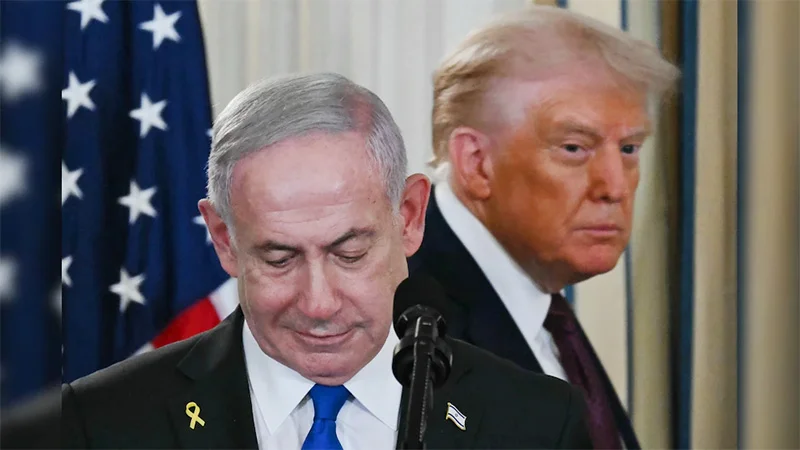
Wars often produce moments when leaders feel compelled to seek a decisive stroke that will end the conflict once and for all. History shows that such moments can generate choices that would have seemed unthinkable only months earlier. When Harry S. Truman authorised the atomic bombings of Hiroshima and Nagasaki in 1945, the decision emerged from precisely such wartime pressures. As the conflict involving the United States, Israel and Iran intensifies today, the world must ensure that a similar moment of desperate calculation does not arise again.
The lesson of that moment in history is not that such weapons can end wars, but that once the logic of escalation begins to dominate wartime decision-making, even the most unthinkable options can enter the realm of strategic calculation. The mere possibility that such debates could arise is reason enough for policymakers everywhere to approach the present conflict with extreme caution.
As the war drags on, both Donald Trump and Benjamin Netanyahu will face mounting pressure to produce decisive results. Wars rarely remain confined to their original scope once expectations of rapid victory begin to fade. Political leaders must demonstrate progress, military planners search for breakthroughs, and public narratives increasingly revolve around the need for a conclusive outcome. In this environment, media speculation about “exit strategies” or “off-ramps” for Washington can unintentionally increase pressure on decision-makers. Even well-intentioned commentary can shape the climate in which leaders make decisions, potentially nudging them toward harder, more dramatic actions.
Neither the United States nor Israel lacks the technological capability associated with advanced nuclear arsenals. The nuclear arsenals of advanced powers today are far more sophisticated than the devices used in 1945. While their existence is intended primarily as deterrence, prolonged wars have historically forced strategic communities to examine every available option. Even the discussion of such possibilities is deeply unsettling, yet ignoring the pressures that produce such debates can be dangerous.
For that reason, policymakers and societies on all sides must recognise the full range of choices that prolonged wars can place before leaders. For Iran’s leadership and its wider strategic community, absorbing this reality may be essential if catastrophic escalation is to be avoided. From Tehran’s perspective, the conflict may well be seen as existential. Yet history also shows that wars framed as existential struggles can generate the most dangerous strategic decisions.
The intellectual climate in Washington has also evolved. A number of influential voices in Washington now argue that the United States has become excessively risk-averse and that restoring global credibility requires a more assertive posture. Such arguments reflect a broader shift toward the language of renewed deterrence and strategic competition. Yet this very logic can make it politically harder for leaders to conclude conflicts without visible demonstrations of strength.
The outcome of this conflict will also be watched closely by other major powers. In 1945, the atomic decision was shaped not only by the desire to end a brutal war but also by the strategic message it sent to rival states observing the emergence of a new geopolitical era. Today, other significant powers will similarly draw lessons from how the United States manages both the conduct and the conclusion of this conflict.
This is why cool judgment is essential at this stage of the war. Whether the original decision to go to war was wise or ill-advised is now largely beside the point. Once a conflict has begun, the overriding priority must be to prevent escalation into something far more dangerous.
In such moments, the international system can benefit from the quiet diplomacy of actors that retain a degree of strategic autonomy. Among emerging nations, India stands out as a major emerging power in this regard. Despite its energy dependence on the Gulf and deep economic engagement with the United States, India has consistently demonstrated a capacity to maintain independent channels of communication across geopolitical divides.
This unique positioning may allow New Delhi to explore, discreetly and without public fanfare, avenues for de-escalation with Washington, Tel Aviv and Tehran alike. At moments of heightened tension in international politics, the world sometimes requires what might be called an “adult in the room”: a state capable of engaging all sides while remaining aligned exclusively with none.
If the present conflict continues to intensify, the value of such diplomacy may soon become evident. The most important lesson from 1945 is not only the destructive power of nuclear weapons but the pressures that can drive leaders toward choices that later generations struggle to comprehend. History shows that when wars reach their most desperate phases, restraint remains the only safeguard against catastrophe.
(Milinda Moragoda is a former Cabinet Minister and diplomat from Sri Lanka and founder of the Pathfinder Foundation, a strategic affairs think tank, can be contacted via email@milinda. This was published ndtv.com on 2026.03.1
by Milinda Moragoda

Dr. B.J.C. Perera (Dr. BJCP) in his article ‘Language: The symbolic expression of thought’ (The island 10.03.2026) delves deeper into an area that he has been exploring recently – childhood learning. In this article he writes of ‘a trilingual Sri Lanka’, reminding me of an incident I witnessed some years ago.
Two teenagers, in their mid to late teens, of Muslim ethnicity were admitted to the hospital late at night, following a road traffic accident. They had sustained multiple injuries, a few needing surgical intervention. One boy had sustained an injury (among others) that needed relatively urgent attention, but in itself was not too serious. The other had also sustained a few injuries among which one particular injury was serious and needed sorting out, but not urgently.
After the preliminary stabilisation of their injuries, I had a detailed discussion with them as to what needed to be done. Neither of them spoke Sinhala to any extent, but their English was excellent. They were attending a well-known international school in Colombo since early childhood and had no difficulty in understanding my explanation – in English. The boys were living in Colombo, while their father would travel regularly to the East (of Sri Lanka) on business. The following morning, I met the father to explain the prevailing situation; what needs to be done, urgency vs. importance, a timeline, prioritisation of treatment, possible costs, etc.
Doctor’s dilemma
The father did not speak any English and in conversation informed me that he had put both his boys into an International School (from kindergarten onwards) in order to give them an English education. The issue was that the father’s grasp of Sinhala was somewhat rudimentary and therefore I found that I could not explain the differences in seriousness vs, urgency and prioritisation issues adequately within the possible budget restrictions. This being the case and as the children understood exactly what was needed, I then asked the sons to ‘educate’ the father on the issues that were at hand. The boys spoke to their father and it was then that I realised that their grasp of Tamil was the same as their father’s grasp of Sinhala!
In the end I had to get down a translator, which in this case was a junior doctor who spoke Tamil fluently; explained to him what was needed a few times as he was not that fluent in English, certainly less than the boys, and then getting him to explain the situation to the father.
What was disturbing was having related this episode at the time to be informed that this was not in fact not an isolated occurrence. That there is a growing number of children that converse well in English, but are not so fluent in their mother tongue. Is English ‘the mother tongue’ of this ‘new generation’ of children? The sad truth is no and tragically this generation is getting deprived of ‘learning’ in its most fundamental form. For unfortunately, correct grammar and syntax accompanied with fluency do not equal to learning (through a language). It is the natural process of learning two/three languages (0 to 5 years) that Dr. BJCP refers to as being bilingual/trilingual and is the underlying concept, which is the title of Dr. BJCP’s article ‘Language: The symbolic expression of thought’.
“Introduction into society”
It is critical to understand at a very deep level the extent and process of what learning in a mother tongue entails. The mother’s voice is arguably the first voice that a newborn hears. Generally speaking, from that point onwards till the child is ‘introduced into society’ that is the voice he /she hears most. In our culture this is the Dhorata wedime mangalyaya. Till then the infant gets exposed to only the voices of the immediate /close family.
Once the infant gets exposed to ‘society’ he /she is metaphorically swimming in an ocean of language. Take for example a market. Vendors selling their wares, shouting, customers bargaining, selecting goods, asking about the quality, freshness, other families talking among themselves etc. The infant is literally learning/conceptualizing something new all the time. This learning process happens continuously starting from home, at friends/relatives’ houses, get-to-gathers, festivals, temples etc. This societal exposure plays a dominant role as the child/infant gets older. Their language skills and vocabulary increase in leaps and bounds and by around three years of age they have reached the so-called ‘language explosion’ stage. This entire process of learning that the child undergoes, happens ‘naturally and effortlessly’. This degree of exposure/ learning can only happen in Sinhala or Tamil in this country.
Second language in chilhood
Learning a second language in childhood as pointed out by Dr BJCP is a cognitive gift. In fact, what it actually does is, deepens the understanding of the first language. So, this-learning of a second language- is in no way to be discouraged. However, it is critical to be cognisant of the fact that this learning of the second language also takes place within a natural environment. In other words, the child is picking up the language on his own. As readily illustrated in Dr. BJCP’s article, the home environment where the parents and grandparents speak different languages. He or she is not being ‘forcefully taught’ a language that has no relevance outside the ‘environment in which the second language is taught’. The time period we (myself and Dr. BJCP) are discussing is the 0 to 5-year-old.
It does not matter whether it is two or three languages during this period; provided that it happens naturally. For as Dr. BJCP states in his article ‘By age five, they typically catch up in all languages…’ To express this in a different way, if the child is naturally exposed to a second /third language during this 0 to 5-year-old period, he /she will naturally pick it up. It is unavoidable. He /she will not need any help in order for this to happen. Once the child starts attending school at the age of 5 or later, then being taught a second language formally is a very different concept to what happens before the age of 5.
The tragedy is parents, not understanding this undisputed significance of ‘learning in/a mother tongue’, during the critical years of childhood-0 to 5; with all good and noble intentions forcefully introduce their child to a foreign tongue (English) that is not spoken universally (around them) i. e., It is only spoken in the kindergarten; not at home and certainly nowhere, where the parents take their children.
Attending school
Once the child starts attending school in the English medium, there is no further (or minimal) exposure to his /her mother tongue -be it Sinhala or Tamil. This results in the child losing the ability to converse in his/her original mother tongue, as was seen earlier on. In the above incident that I described at the start of this article, when I finally asked the father did he comprehend what was happening; his eyes filled with tears and I did wonder was this because of his sons’ injuries or was it because his decisions had culminated in a father and a son/s who could no longer communicate with each other in a meaningful way.
Dr BJCP goes on to state that in his opinion ‘a trilingual Sri Lanka will go a long way towards the goals and display of racial harmony, respect for different ethnic groups…’ and ‘Then it would become a utopian heaven, where all people, as just Sri Lankans can live in admirable concordant synchrony, rather than as a splintered clusters divided by ethnicity, language and culture’. Firstly, it must be admitted from the aspect of the child’s learning perspective (0 to 5 years); an environment where all three languages are spoken freely and the child will naturally pick up all three languages (a trilingual reality) does not actually exist in Sri Lanka.
However, the pleasant practical reality is that, there is absolutely no need for a trilingual Sri Lanka for this utopian heaven to be achieved. What is needed is in fact not even a bilingual Sri Lanka, but a Sri Lanka, where all the Sinhalese are taught Tamil and vice versa. Simply stated it is complete lunacy– that two ethnic communities that speak their own language, need to learn another language that is not the mother tongue of either community in order to understand one another! It is the fact that having been ruled by the British for over a hundred years, English has been so close to us, that we are unable to see this for what it is. Imagine a country like Canada that has areas where French is spoken; what happens in order to foster better harmony between the English and French speaking communities? The ‘English’, learn to speak French and the ‘French’ learn to speak English. According to the ‘bridging language theory of Sri Lanka’, this will not work and what needs to happen is both communities need to learn a third language, for example German, in order to communicate with one another!
Learning best done in mother tongue
eiterating what I said in my previous article – ‘Educational reforms: A Perspective (The Island 27.02.2026) Learning is best done in one’s mother tongue. This is a fact, not an opinion. The critical thing parents should understand and appreciate is that the best thing they can do for their child is to allow/encourage learning in his/her mother tongue.
This period from 0 to 5 years is critically important. If your child is exposed naturally to another language during this period, he /she will automatically pick it up. There is no need to ‘forcefully teach’ him /her. Orchestrating your child to learn another language, -English in this instance- between the ages of 0 to 5 at the expense of learning in his /her mother tongue is a disservice to that child.
by Dr. Sumedha S. Amarasekara
APPRECIATION
On Friday, the 20th of March, Vijitha Senevirathna would have celebrated his 85th birthday if not for his sad passing away nearly a year ago.
The passing of Vijitha was a moment of great sorrow to all who knew him.
He was my classmate from Montessori to pre-university at Maris Stella College, Negombo. As a Maristonian, Vijitha excelled in his academic studies.
Eventually, he entered the Law College and practised as an Attorney-at-Law and Notary Public for over 50 years.
As an Attorney-at-Law, Vijitha earned the respect of the judiciary and a wide circle of clients. He upheld the highest and most cherished values of the legal profession and earned the trust of all who knew him. His 50th anniversary in the noble profession of law was celebrated with much pageantry, amidst a distinguished gathering of friends, relations, clerics, and the rich and famous of Sri Lanka.
Vijitha dearly loved his proud wife Nirmali and his six children, who are in the highest professions in Sri Lanka. He inculcated among his children professional efficiency, diligence, and honesty.
We who associated closely with Vijitha miss his warm friendship, sense of humor, and animated conversation. He was a raconteur, and people gathered around him and listened to his narrations and tales of yore, especially at the many celebrations at his residence in Dehiwala, where the waters of Scotland flowed generously.
I have personally admired Vijitha’s patience, grit, and lifetime achievements, despite a physical dysfunctionality he suffered over his lifetime.
For Vijitha, the song has ended, but the melody lingers on, in the words of the popular composer Irving Berlin.
Merrick Gooneratne

Trump says US will ‘obliterate’ Iran’s power plants if Strait of Hormuz not open before 48-hour deadline

Showers may occur at several places in the Western, Sabaragamuwa and Southern provinces and in Nuwara-Eliya district after 1.00 pm.

PM Harini leads panel to protect public services

Sajith slams President over war conduct and economic missteps

Johnston Fernando, sons held in Lanka Sathosa lorry misuse case

Gura: The unsung hero

‘Dates have the highest sugar content to fight Coronavirus’

Sunday Island 27 December – Headlines

#SundayIsland 17th December – Headlines

Sunday Island – 28th March

Sunday Island Headlines – 21 March

Sunday Island – 21st February – Headlines
-

 Business6 days ago
Browns EV launches fast-charging BAW E7 Pro at Rs. 5.8 million
-

 News4 days ago
CIABOC questions Ex-President GR on house for CJ’s maid
-

 News5 days ago
Sri Lankan marine scientist Asha de Vos honoured at UNGA opening
-

 Features6 days ago
Achievements of the Hunduwa!
-

 News5 days ago
Australian HC debunks misleading travel risk claims for Sri Lanka
-

 Latest News6 days ago
Wednesdays declared a government holiday with effect from 18th March
-
 News3 days ago
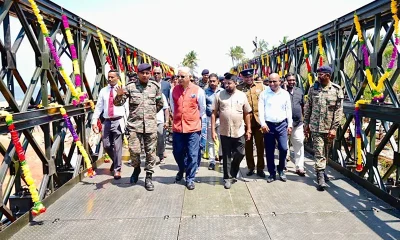
Bailey Bridge inaugurated at Chilaw
-

 News3 days ago
Pay hike demand: CEB workers climb down from 40 % to 15–20%