
Business
Spiraling costs of school closures in Sri Lanka

By Lynn Ockersz
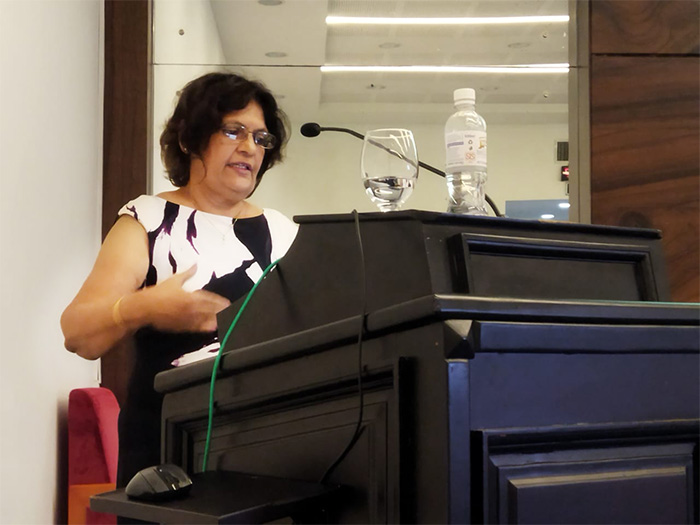
Immense learning loss among the young, the likelihood of increasing school dropouts, the interruption of the school feeding programme and rising mental stress and confusion among children are just a few among the multiple ills that result from prolonged school closures in Sri Lanka, the Gamani Corea Foundation’s (GCF) 13th discussion session was told recently.
The above insights formed part of a comprehensive issues paper that was authored and presented at the session held at the BMICH on January 5th by educationist Dr. Damaris Wikramanayake. The reading and discussion of such issues papers feature on a monthly basis at the Sri Lanka Innovators’ Forum which functions under the aegis of the GCF.
The local education sector consists of four categories, the researcher initially indicated. They are: pre-school education, general education (consisting of primary and secondary education), higher education and vocational and technical education (TVET).
Quoting the ADB Wikramanayake said that the recent pandemic caused 71 weeks of full or ‘partial’ school closures in Sri Lanka. Drawing on UNICEF and UNESCO information she indicated that, ‘The closing of schools for just one day causes a loss of about 25 million learning hours and 1.4 million of teaching hours.’
Wikramanayake identified the most pressing challenges to be overcome in the local school system currently as: ensuring equal access, regular learning assessments, monitoring school atten
dance, evolving monitoring and evaluation procedures, supporting teachers, increasing education budgets and promoting social cohesion.
Referring to the issue of income inequalities among local students the researcher quoting sources said that the poorest quintile of students incurred 57% more losses than the richest quintile.
Other important observations made by Wikramanayake were as follows: ‘To recover learning it is important to get all students back to school and ensure they stay in school.
‘Focused learning in a few subjects like Maths, English or IT that provide a direct link to possible employment might persuade potential dropouts to stay in school. Dropping out of school is sometimes because students are bored and see no connection between school life and “real” life.
‘If students obtained a fail grade in English or Maths, had been absent for more than 20% of school days and faced the possibility of not being promoted, they are most likely to drop out. Intense work on a few select subjects would inevitably help them improve their grade and gain more confidence in themselves.
‘In 2018 Sri Lanka’s expenditure on education was 2.135% of GDP, while India spent 4.364% of GDP, the Maldives 3.912% of GDP and Afghanistan 3.2% of GDP. The highest expenditure in recent years was 2.7% of GDP in 2017. In 2019, expenditure on education was a mere 1.93% of GDP. This rose to 2.4% in 2020, despite the pandemic.’
A most engrossing and wide-ranging discussion followed the presentation of the paper. Some respondents from the public sector, among very many other matters, pointed to the destructive impact on students of the current ‘craze for As and Bs.’ Others pointed to the deleterious impact on the education sector of the present economic crisis and prolonged trade union action, besides highlighting the need for curriculum reform and ‘practical-based education.’ One speaker observed that the local education crisis really began with the Easter Sunday bombings.
Wrapping-up the discussion, Board Director of the GCF, Dr. Harsha Athurupane, besides discussing a range of other topical issues, indicated the need to include STEAM education in the local school curriculum. The ‘A’ in the well-known combination of Science, Technology, Engineering and Maths or STEM, stands for Arts. GCF Chairman Dr. Lloyd Fernando wanted the audience to ponder long and deep on the fundamental question: ‘What is education?’

Business
India pledges $450 million for cyclone recovery while Sri Lanka’s top financial watchdog seat remains vacant

India extended a powerful hand of friendship on December 23, pledging $450 million to help Sri Lanka rebuild from Cyclone Ditwah. The aid, announced by Indian External Affairs Minister Dr. S. Jaishankar, is a lifeline for critical infrastructure, housing and agriculture.
Yet, even as this commitment was made, a crucial question hung in the air: Who will watch the money?
Sri Lanka has operated without a permanent Auditor General for eight months, an independent observer told The Island Financial Review.
“Since April 2025, the constitutional body meant to be the independent guardian of public spending has been led by temporary appointees. This isn’t just bureaucratic delay; it is a self-inflicted wound on democratic accountability,” he said.
He explained that the Auditor General, mandated by the Constitutional Council, is the linchpin that ensures public funds are used with integrity.
“In a nation still recovering from a devastating economic crisis, the AG’s role is the bedrock of trust. This office audits everything from social safety nets to state-owned enterprise losses and, critically, emergency expenditures,” he noted.
“The delay undermines public trust and robust oversight at a time when these are urgently needed. With no permanent AG, the oversight of billions in cyclone relief funds – including India’s generous package – can be fundamentally weakened.”
India’s decision to provide funds despite this oversight vacuum is a profound act of goodwill, the observer said.
“But the question now shifts squarely to the Sri Lankan government: How will it honour that faith? The $450 million is a mirror held up to Sri Lanka’s governance,” he stated.
He urged the Constitutional Council to act decisively to appoint a competent, independent Auditor General through a transparent process.
“This is the cornerstone of ensuring that disaster recovery builds not just physical infrastructure, but also public trust,” he concluded.
By Sanath Nanayakkare
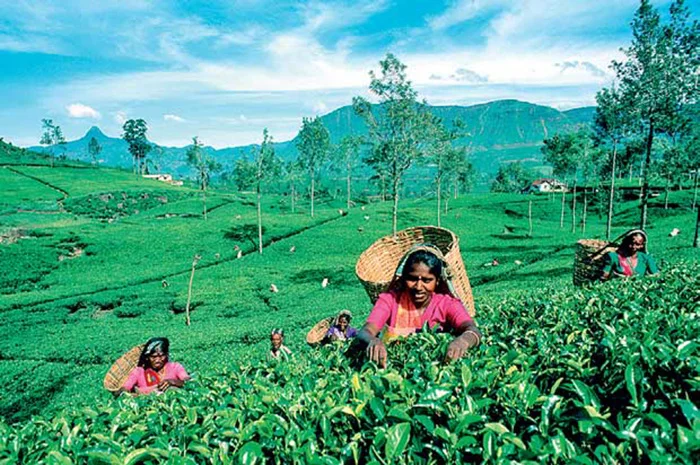
Ceylon Tea exports have demonstrated notable volume growth for the first eleven months of 2025, reaching a cumulative total of 239.57 million kilograms. This figure represents a solid increase of 16.35 million kilograms compared to the corresponding period in 2024, signalling robust overseas demand for Sri Lanka’s premier commodity.
The broader trend, however, reveals a dynamic reshuffling among the nation’s key export markets, painting a picture of both promising diversification and shifting global trade currents.
A striking development is the continued ascendancy of Iraq as the single largest importer of Ceylon Tea. During the January to November period, Iraq purchased 36.77 million kilograms, marking a substantial 21% year-on-year increase and firmly securing its top position. In contrast, the traditional powerhouse market of Russia, while holding second place with 19.94 million kilograms, recorded a 13% decline in volume. Other markets show significant movement; Türkiye follows closely in third place, while Libya has emerged as a high-growth destination, witnessing a remarkable 115% surge in imports to claim fourth position. This evolving landscape underscores a strategic shift, where gains in emerging and regional markets are actively counterbalancing softer demand in some established ones.
Categories such as Instant Tea and Tea Bags have recorded encouraging gains in both volume and foreign exchange earnings, indicating a positive consumer trend towards convenience and value-added products. This gradual move up the value chain is crucial for enhancing the sector’s resilience and profitability.

Sri Lanka is poised to enter the regional cultural spotlight as the host of South Asia’s first-ever reggae music festival. “ONE LOVE 2026 – A Tribute to Bob Marley” will be held from 27 to 29 March 2026 on the beaches of Bentota, marking an unprecedented celebration of global reggae music within the Asia-Pacific region.
The landmark announcement was made at a press conference hosted by the ultra-luxury property, NUWA- City of Dreams in Colombo.
The festival represents a significant cultural and tourism initiative, featuring an unprecedented assembly of international reggae talent for the region. The confirmed lineup includes six globally acclaimed acts: Maxi Priest, The Wailers, Julian Marley & Ky-Mani Marley, Inner Circle and Big Mountain.
Organised by One In A Million Entertainment Ltd.—a Sri Lankan-owned firm with headquarters in Europe and Colombo – in strategic collaboration with Caribbean Entertainment, the event builds upon a proven track record of delivering major international entertainment to Sri Lanka. The festival is anticipated to attract thousands of attendees, including local enthusiasts and visitors from key markets such as India, the Maldives, and Bangladesh, as well as Western tourists seeking a tropical retreat.
Aligning with the commemoration of Bob Marley’s 81st birthday, the event carries profound cultural resonance. It also incorporates a charitable component, with a portion of proceeds dedicated to a children’s orphanage water purification project managed by the Indian Cultural Association in Sri Lanka, and to supporting the charitable activities of the Bob and Rita Marley Foundation in Jamaica.
The festival’s international delegation will be accommodated at NUWA Sri Lanka, the flagship ultra-luxury destination of Melco Resorts & Entertainment in Colombo.
Ticket Information: Daily General Admission: LKR 10,000, Daily VIP Admission: LKR 50,000, Early Bird Three-Day Festival Pass (Limited Offer):, General Admission: LKR 25,000, VIP Access: LKR 125,000 Tickets are available via the PickMe Events platform.

BCB takes ownership rights of Chattogram Royals for remainder of BPL

Steps are being taken to relocate schools in risk prone Areas to Safe Locations – Prime Minister

Cargills (Ceylon) PLC Donates Rs. 100 million to “Rebuilding Sri Lanka” Fund

Let us uphold the true meaning of Christmas following the guidance of Jesus Christ, and work together towards the shared goal of building a new nation filled with peace and harmony – PM

Showers may occur in Uva province and in Ampara, Batticaloa, Matale and Nuwara-Eliya districts

CoPF Chief steps up pressure on Prez to appoint AG

‘Dates have the highest sugar content to fight Coronavirus’

Sunday Island 27 December – Headlines

#SundayIsland 17th December – Headlines

Sunday Island – 28th March

Sunday Island Headlines – 21 March

Sunday Island – 21st February – Headlines
-

 News3 days ago
Members of Lankan Community in Washington D.C. donates to ‘Rebuilding Sri Lanka’ Flood Relief Fund
-

 Business7 days ago
Unlocking Sri Lanka’s hidden wealth: A $2 billion mineral opportunity awaits
-

 News7 days ago
Army engineers set up new Nayaru emergency bridge
-
 News7 days ago
TISL, civil society flay NPP govt. for holding up Auditor General’s appointment
-

 Latest News5 days ago
Landslide early warnings issued to the districts of Badulla, Kandy, Kurunegala, Matale and Nuwara-Eliya extended till 8AM on Sunday (21)
-

 Opinion7 days ago
The Maha Jana Handa at Nugegoda, cyclone destruction, and contenders positioning for power in post-NPP Sri Lanka – II
-

 Latest News6 days ago
Tannane goal from own half sets Morocco on way to FIFA Arab Cup 2025 title
-
 News7 days ago
Sri Lankans rescued from cybercrime centers in Myanmar repatriated