
Business
SOE reforms vital, although monetary policies to put SL’s economy on right track are on – CBSL Governor

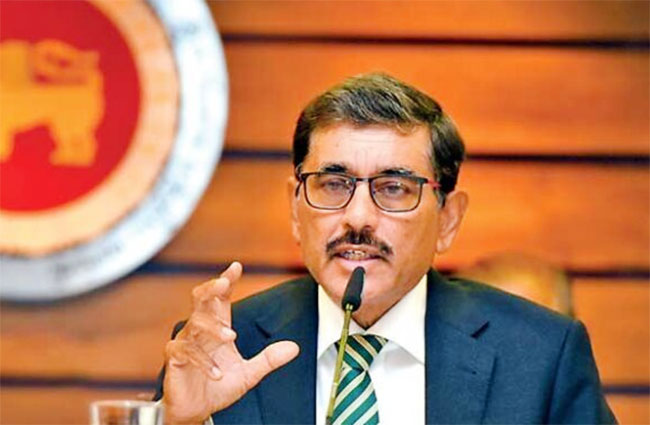
By Hiran H.Senewiratne
The government should expedite implementation of reforms relating to State Owned Enterprises (SOEs). However, the Central Bank is already implementing monetary policies to put the economy on the right track, CBSL Governor Dr. Nandalal Weerasinghe said.
“The Central Bank alone cannot do it. Parliament has to expedite implementation of reforms mainly in three state owned entities. Those are; Ceylon Petroleum Corporation (CPC), Ceylon Electricity Board (CEB) and Sri Lankan Airlines which have incurred heavy losses. The government needs to implement structural reforms in these institutions, concurrent to the Central Bank monetary reforms, Weerasinghe told the CBSL monetary policy review meeting, held at the CBSL auditorium last week.
Weerasinghe added: ‘At present the country is facing not only a dollar crisis but also a rupee crisis. These issues came about due to the previous government’s inaction or on account of not taking the correct decision at the correct time.
‘Both the CPC and CEB are running at a loss. Policy decision delays on these institutions adversely impact the economy.
‘The CPC wanted Rs 217 billion from the Treasury to purchase dollars to buy fuel for the country. Amid those developments, due to the rupee and dollar crises, the only option would be to print money, which is very critical for the sustainability of the rupee value against the dollar.
‘In the meantime, the CEB also owe money to the CPC and, therefore, both entities are facing major financial crises. Accordingly, monetary policy and public finance reforms on state- owned enterprises have to be implemented soon.
‘Our local import bill has gone down from US $ 2 billion to US $ 1.4 billion and that amount will further drop to US $ 1.3 billion. Our foreign reserves are at US $ 1.9 billion, including the swap from China. Our foreign inward remittances are down to US $ 350 million from US $ one billion.’

Business
Sri Lanka’s midnight fuel price hike sparks frustrations amidst claims of broken assurances

The government’s decision to raise fuel prices at midnight on March 9 has drawn criticism from observers who say the move contradicts earlier assurances that prices would remain stable for at least a month due to sufficient reserves already imported.
The surprise revision in fuel prices has triggered public concern and renewed debate over the government’s fuel pricing policy, with critics accusing authorities of misleading the public about the stability of supply and prices.
Officials had earlier sought to calm fears of potential shortages or sudden price increases, insisting that the country had adequate fuel stocks secured through prior imports. However, the latest price hike has raised questions about the reliability of those assurances.
Economic analysts say the development reflects the continuing vulnerability of Sri Lanka’s fuel market to global price volatility and geopolitical tensions affecting energy supply chains.
Aminda Methsila Perera, an economics professor at Wayamba University of Sri Lanka, said the latest move raises broader questions about the transparency of the government’s pricing strategy.
“The question arises whether the government is following a grey-market policy in this regard,” Prof. Perera said, suggesting that the manner in which prices are adjusted may not fully reflect a transparent or predictable formula.
Meanwhile, directors of the state-run Ceylon Petroleum Corporation (CPC) defended the decision, saying the increase was a pre-emptive measure aimed at cushioning the country from steeper price shocks in the near future.
A CPC director argued yesterday that implementing a moderate price revision now would allow authorities to manage potential increases more effectively should the international situation deteriorate further.
Meanwhile, an analyst said that the move was intended to preserve the financial stability of the CPC and its bottom line although President AKD had said in parliament that the Treasury had enough funds to mitigate global shocks.
However, they say the abrupt nature of the midnight announcement risks undermining public confidence, particularly after repeated assurances that prices would remain unchanged in the short term.
With global energy markets remaining volatile, analysts warn that further price adjustments cannot be ruled out if international crude prices continue to climb or if regional supply disruptions intensify.
Meanwhile, an economist said that with the unfolding scenario, many Sri Lankans already grappling with the rising cost of living, have been tossed to the fire from the frying pan.
By Sanath Nanayakkare

In celebration of International Women’s Day 2026, Havelock City Mall (HCM) hosted what is believed to be one of Sri Lanka’s first women-only cinema screenings, presenting a culturally significant and deeply meaningful tribute to womanhood.
Held at Scope Cinemas, Havelock City Mall, the exclusive event featured a complimentary screening of the iconic Sri Lankan film Gahanu Lamai, and welcomed an audience comprising corporate invitees, celebrities, female staff of Havelock City Mall, and winners of a special social media contest.
The occasion was further distinguished by the presence of Dr. Ranee Jayamaha, Chairperson of Overseas Realty (Ceylon) PLC, who graced the event and added significance to this special celebration.
Guests arrived dressed in purple, the internationally recognised symbol of dignity, solidarity, and justice, reinforcing the spirit and symbolism of the occasion. Through the screening of Gahanu Lamai—the acclaimed work of the late Dr. Sumitra Peiris, Sri Lanka’s first female film director—Havelock City Mall created a platform for reflection on the enduring cultural and contemporary relevance of women’s stories.
Commenting on the initiative, Mrs. Avanthie De Zoysa, Assistant General Manager of Havelock City Mall, stated:
“As a female manager of this organization, I am incredibly proud of this initiative. It is a heartfelt gesture of appreciation for the women who contribute so tirelessly to their families, to our society, and to the country at large. We wanted to provide a space that wasn’t just about celebration, but about acknowledging the profound impact women have in every sphere of life.”
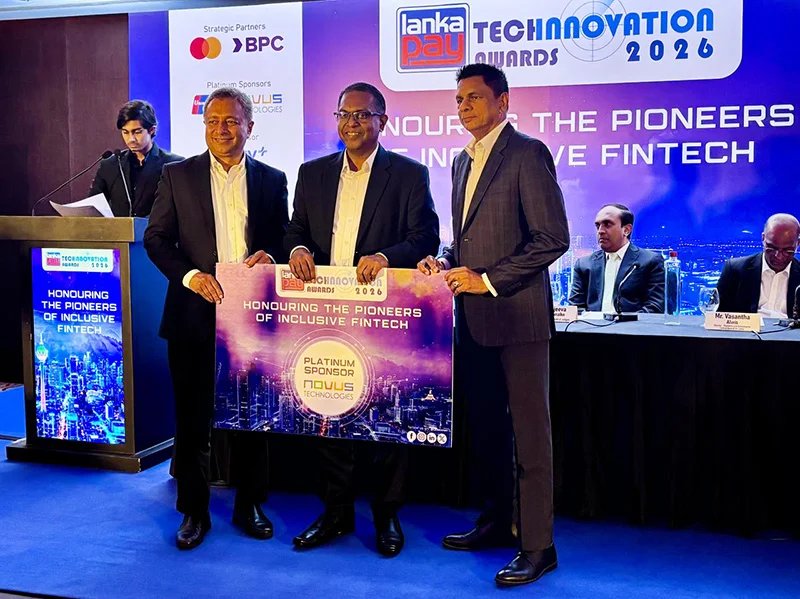
Novus Technologies has announced its partnership as the Platinum Sponsor for the LankaPay Technovation Awards 2026, reaffirming its commitment to driving innovation, financial inclusion, and the future of fintech in Sri Lanka.
Organised by LankaPay (Private) Limited, the LankaPay Technovation Awards has emerged as a premier industry platform recognising institutions that are spearheading digital transformation across the country.
The initiative celebrates banks, financial institutions, and technology providers that are enhancing customer experience through secure, efficient, and inclusive digital payment solutions.
Industry analysts note that the awards have played a pivotal role in strengthening Sri Lanka’s fintech ecosystem by encouraging competition, innovation, and collaboration among stakeholders.
Over the years, the platform has highlighted advancements in real-time payments, mobile banking, and integrated digital financial services, supporting the broader national agenda of building a digitally empowered economy.
Novus Technologies, a leading technology solutions provider to the banking and financial services sector, said its sponsorship reflects its long-standing dedication to accelerating the adoption of digital financial services and enhancing technological capabilities across the industry.
“As Sri Lanka continues its digital transformation journey, it is vital that we collectively foster innovation while ensuring security and inclusivity within the financial ecosystem,” a spokesperson for Novus Technologies said.
“Supporting initiatives such as the LankaPay Technovation Awards aligns with our mission to enable next-generation fintech solutions that empower institutions and customers alike.”
The awards ceremony is expected to bring together senior banking executives, fintech leaders, policymakers, and technology innovators, offering a platform to recognise excellence and share insights on emerging trends shaping the future of digital finance in Sri Lanka.
Novus Technologies is a forward-thinking technology solutions provider specialising in delivering innovative, secure, and scalable solutions to the banking and financial services industry.
With a strong focus on digital transformation, system integration, and next-generation fintech solutions, the company continues to play a key role in shaping Sri Lanka’s rapidly evolving digital landscape.
By Ifham Nizam

Prime Minister highlights the importance of recognising Women’s Unpaid Care Work

Australia grants asylum to 2 more members of Iranian women’s football team

Showers are likely in the Northern, Eastern, Sabaragamuwa, Southern and Uva provinces and in Kandy and Nuwara-Eliya districts

CEBEU warns of operational disruptions amid uncertainty over CEB restructuring

Remittances up compared to last year before outbreak of war, but the economic picture is not rosy

The Netherlands alleges Russian Embassy interfering in World Press Photo Exhibition

‘Dates have the highest sugar content to fight Coronavirus’

Sunday Island 27 December – Headlines

#SundayIsland 17th December – Headlines

Sunday Island – 28th March

Sunday Island Headlines – 21 March

Sunday Island – 21st February – Headlines
-
 News6 days ago
University of Wolverhampton confirms Ranil was officially invited
-

 News7 days ago
Legal experts decry move to demolish STC dining hall
-

 News5 days ago
Peradeniya Uni issues alert over leopards in its premises
-

 News6 days ago
Female lawyer given 12 years RI for preparing forged deeds for Borella land
-

 News3 days ago
Repatriation of Iranian naval personnel Sri Lanka’s call: Washington
-

 News6 days ago
Library crisis hits Pera university
-

 News5 days ago
Wife raises alarm over Sallay’s detention under PTA
-

 News6 days ago
‘IRIS Dena was Indian Navy guest, hit without warning’, Iran warns US of bitter regret