
Business
‘SLT-MOBITEL – digitally ready for a system change in SL’

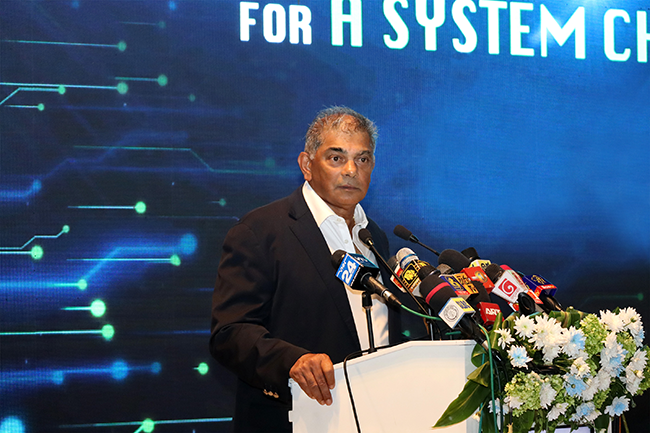
Announces national proposal for future-focused technology and digitally empowered citizens to usher change and growth
SLT-MOBITEL,the leading communication and technology service provider in Sri Lanka announced a national proposal to enhance critical services and sectors, and digitally empower citizens, a company press release said.
The release adds:SLT-MOBITEL, one of the most powerful players in the telecommunications and technology sector, cites archaic legacy systems, inefficiency, corruption, heavy operational costs and waste in critical sectors and services to be the main reason to expedite a system change in the country.
The new system change proposed by SLT-MOBITEL places digitally empowered citizens at its foundation, with digitalisation of identities and strong digital security and privacy. This will serve as the building block for new technological innovations that can strengthen Digital Commerce and E-Governance in all aspects of operations critical to the county. SLT-MOBITEL has identified healthcare, education, transportation, agriculture, tourism, judiciary and banking and finance as critical services and sectors that can thrive under this new system, more efficiently and transparently.
Elaborating on this new system change for the country, Rohan Fernando, Group Chairman, Sri Lanka Telecom said, “Much like Singapore did, Sri Lanka has the potential to transition to a Smart Nation, making innovative technology the backbone of every sphere of activity. By doing this, key issues currently facing the country can be addressed and critical sectors and services can be transformed into highly efficient, transparent, and profitable systems which in turn can transform people’s lives. Our vision is to move the country towards E-Governance and Digital Commerce. We have the broadest presence across the value chain and unparalleled capacity to meet the needs of tech companies, large corporates, public and state institutions. With our capabilities and strong infrastructure across the country, we believe we are fully geared to undertake this challenge and bring about the change the people of this country want to see.”
SLT-MOBITEL which began over 160 years ago as a state-owned national communications service provider, transformed itself over the years into a highly profitable and efficient publicly listed conglomerate, offering technology and connectivity solutions, ready-to-go technology platforms, advanced network backbone services and digital infrastructure.
“The brand unification initiative of SLT-MOBITEL in 2020 brought together the best services of fixed and mobile technology. It couldn’t have come at a better time, as the same year saw a dramatic increase in the need for technology and connectivity solutions due to the COVID-19 pandemic. Seeing this surge and understanding the demand of the future, we extended our fibre network to 65,000km across Sri Lanka, offering fast and accessible broadband services to boost the digital capacity in the country. The SLT Group has the largest data centres in the country, and our longstanding partnerships with global tech giants like Microsoft, Oracle and VMware mean we are fully equipped to provide the most secure hosting services for public and state institutions, as well as large corporates and foreign investors. As we continue to invest in infrastructure, our efforts are now focused on developing technological solutions for the challenges the country is facing today and will face tomorrow. SLT-MOBITEL is digitally ready for that system change we all want to see in Sri Lanka,” said Fernando.
Under this system change proposition, SLT-MOBITEL will focus on Healthcare, Education, Transportation, Agriculture, Tourism, Judiciary and Banking and Finance.


Escalating geopolitical tensions in the Middle East involving Iran are beginning to raise concerns here, with analysts warning that the fallout could affect not only the island’s tourism industry but also its energy sector.
Tourism stakeholders say the first signs of a slowdown in visitor arrivals have begun to emerge as airlines and travel operators adjust to disruptions across key Middle Eastern aviation corridors.
According to Harsha Suriyapperuma, Chairman of the Sri Lanka Tourism Development Authority, the current tensions could temporarily influence travel flows mainly due to disruptions affecting major transit hubs in the Gulf region.
A significant share of travellers heading to Sri Lanka from Europe and other long-haul destinations transit through aviation hubs such as Dubai, Doha and Abu Dhabi.
Industry analysts say that when geopolitical tensions escalate in the Middle East, airlines often revise flight paths, cancel services or adjust schedules due to security concerns and airspace restrictions, which can slow tourism flows to destinations like Sri Lanka.
According to a Tourism industry leader, global travel demand is highly sensitive to geopolitical developments affecting major aviation corridors.
He noted that disruptions to Middle Eastern airspace could result in longer travel routes, higher airline operating costs and increased airfares, which may influence the travel decisions of tourists planning long-haul holidays.
At the same time, economists and energy analysts warn that the conflict could also create ripple effects in global energy markets.
Sri Lanka is heavily dependent on imported fuel, and any instability in the Middle East — particularly involving a major oil producer like Iran — could push global crude oil prices upward.
Energy sector sources said rising oil prices would increase the cost of fuel imports and place additional pressure on the country’s foreign exchange reserves.
Higher global oil prices could also raise operational costs in the power generation sector, particularly for thermal power plants operated by the Ceylon Electricity Board, which relies on fuel and coal imports to meet electricity demand.
Analysts say increased fuel costs could eventually translate into higher electricity generation costs and additional financial pressure on the national power utility.
The tourism sector had entered 2026 on a strong recovery trajectory after attracting more than two million visitors last year, with authorities targeting three million arrivals this year.
However, industry experts caution that prolonged geopolitical instability in the Middle East could slow the momentum of Sri Lanka’s tourism recovery while simultaneously creating new challenges for the country’s energy sector.
Despite these emerging risks, officials remain cautiously optimistic that the impact will be temporary if tensions in the region stabilise in the coming weeks.
They stress that Sri Lanka continues to be viewed internationally as a safe and attractive destination, while authorities are closely monitoring developments in global energy markets and aviation networks.
By Ifham Nizam

National Development Bank PLC (NDB/ the Bank) recently announced that it successfully raised LKR 16.0 billion through the issuance of Basel III-compliant Tier II Rated Unsecured Subordinated Redeemable GSS+ Bonds (the GSS+ Bonds), to be listed on the Colombo Stock Exchange (CSE). This issuance marks a major milestone in thematic fundraising within Sri Lanka’s capital markets landscape, signaling the country’s growing progress in the increasingly important segment of sustainable finance.
The GSS+ Bonds issue opened on 10 March 2026 and was oversubscribed within the same day, demonstrating strong demand from both retail and institutional investors. This response reaffirms the confidence investors place in NDB and its overall financial strength and stability. The issuance of the GSS+ Bonds reflects the Bank’s strong environmental and social considerations embedded in its lending practices. For many years, NDB has maintained a robust Environmental and Social Management System (ESMS) ensuring that funds are directed toward environmentally and socially responsible projects and causes.
NDB’s GSS+ Bonds will be deployed to finance eligible Green (including Blue), Social, Sustainability, and Sustainability-Linked projects, supporting environmentally responsible, socially impactful, and sustainable economic development.
Business
HNB General Insurance fastest in reaching LKR 11 Bn. revenue (GWP) within 10 years of operations


HNB General Insurance Limited (HNBGI) announced its financial results for the year ended 31 December 2025, marking a milestone year of accelerated growth, strengthened financial resilience, and sustained business momentum.
The Company recorded a Gross Written Premium (GWP) of LKR 11.0 billion for 2025, reflecting a robust 21% growth compared to LKR 9.1 billion in 2024. This performance significantly outpaced the industry’s growth of 15%, demonstrating the Company’s strong competitive positioning, disciplined execution, and continued customer confidence. With this achievement, HNBGI becomes the first general insurer in Sri Lanka to reach the LKR 11 billion GWP milestone within ten years of operations. The Company also improved its market position, moving up to 6th place from 7th in Sri Lanka’s general insurance sector.
The Fire segment emerged as a standout contributor with a 27% growth, reaching LKR 2.4 billion, while the Motor portfolio grew by 25% to LKR 6.0 billion. Marine recorded a steady 16% increase to LKR 378 million, and the Miscellaneous segment contributed LKR 2.2 billion. The broad-based growth across segments reflects HNB General Insurance’s balanced portfolio, effective distribution reach, and strong customer confidence.
The Company demonstrated its unwavering commitment to customers through timely and efficient claims management, committing LKR 2.5 billion towards Ditwa cyclone-related claims. In addition, a further LKR 4.7 billion was paid in claims across all other segments during the year, underscoring the Company’s financial strength and reliability in times of need.
The Company’s financial strength further consolidated during the year, with Total Assets growing by a significant 31% to LKR 13.38 billion, while Funds Under Management increased by 9% to LKR 6.74 billion. The Capital Adequacy Ratio remained well above regulatory requirements at 190%, reflecting a solid capital base to support future growth.

Israel says it’s killed Ali Larijani, Iran’s security chief and Basij commander

Devon Conway, bowlers star as New Zealand make it 1-1

Israel claims to have assassinated commander of Iran’s Basij militia unit

Trump seeks to delay meeting with Xi in China

Pakistan lodge official complaint about Bangladesh’s review at end of chase

Showers or thundershowers will occur at several places in the Central, Sabaragamuwa, Southern and Uva provinces after 2.00 pm.

‘Dates have the highest sugar content to fight Coronavirus’

Sunday Island 27 December – Headlines

#SundayIsland 17th December – Headlines

Sunday Island – 28th March

Sunday Island Headlines – 21 March

Sunday Island – 21st February – Headlines
-
 Business7 days ago
BOI launches ‘Invest in Sri Lanka’ forum
-

 News6 days ago
Historic address by BASL President at the Supreme Court of India
-

 Sports6 days ago
The 147th Royal–Thomian and 175 Years of the School by the Sea
-

 Sports7 days ago
Royal start favourites in historic Battle of the Blues
-

 News7 days ago
CEBEU warns of operational disruptions amid uncertainty over CEB restructuring
-
 Features7 days ago
Indian Ocean zone of peace torpedoed!
-
 News6 days ago
Power sector reforms jolted by 40% pay hike demand
-

 News4 days ago
Crypto loopholes funnel Lankan funds abroad