
Business
SLT Group revenue decreased by 2.8% from Q2’22 to Q2’23

While SLT PLC had 2.4% (Rs.400mn) revenue growth, Mobitel recorded 9.3% (Rs.1,066mn) de-growth during Q2’23 compared to Q2’22. Group revenue, therefore, decreased by 2.8% (Rs.763mn) from Q2’22 to Q2’23. SLT PLC revenue increase was driven by growth in Broadband, IPTV, and Enterprise revenue streams. However, such increase was slowed down due to decrease in International Transit revenue (90.3%, Rs.614mn) during Q2’23, though it must be noted that such international transit revenue has virtually no margin. SLT PLC revenue growth was primarily hindered due to delay in monetization of fibre network and customer churn. Revenue de-growth in Mobitel was due to significant decline in subscriber base. Subscriber base contracted by 1mn from June 2022 to June 2023.
Group Opex increased by 15.1% (Rs.2,513mn) in Q2’23 compared to corresponding quarter in previous year. Even though Mobitel revenue has declined YoY, Opex increased by 30.4% (Rs.1,998mn) during Q2’23 due mainly to sales related commissions. SLT PLC Opex increased by 5.5% (Rs.619mn) owing to AMC/license cost driven by devaluation of LKR, electricity tariff and fuel price increases.
Group EBITDA dropped by 31.9% (Rs.3,276mn) during Q2’23 due to decrease in Mobitel EBITDA by 61.9% (Rs.3,064mn). Accordingly, Group Operating Profit, PBT and PAT were also decreased by 92.7% (Rs.3,121mn), 161.3% (Rs.6,039mn) and 208.0% (Rs.4,076mn) respectively. Mobitel recorded Rs.835mn Operating Loss due to lower revenue and higher Operating Costs, ending with a net loss of Rs.1,390mn for the quarter. SLT PLC net loss for the quarter was Rs.1,027mn due to cost escalations and impairment of LTE assets. SLT PLC staff costs account for 36.8% of Operating Costs.
SLT Group’s revenue growth was stagnant for the 1st half of 2023 to record Rs. 52.7Mn, a 0.4% degrowth compared to the same period last year. At a company level, SLT revenues grew by 6.4% to Rs. 34.6Bn for the 1st half of the 2023.
During the first half of 2023, Mobitel revenue has contracted by Rs. 2.2Bn compared to revenue for the same period in 2022 and the loss recorded for the period was Rs. 1.5Bn. However, with the recent changes in management, Mobitel has been able to arrest the decline in subscriber base and revenue.
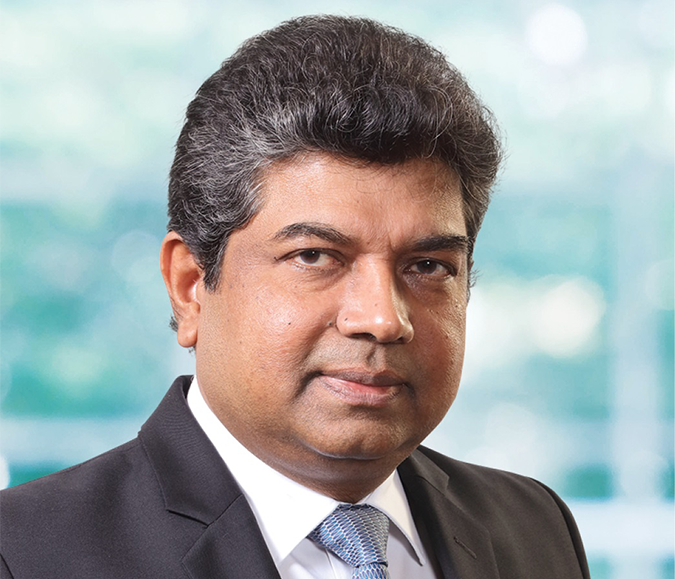
Janaka R. Abeysinghe, Chief Executive Officer, Sri Lanka Telecom said, “Prolonged recovery from the effects of the economic downturn, loss of Mobitel subscriber base, low productivity, and delay in monetization of fibre network have had a significant impact on the revenue generation of the Group. The government’s macroeconomic adjustments will help the country’s economic revival in the long term but may initially affect business growth and the disposable income levels of our customers. Managing the escalating operational costs, resulting from fluctuations in exchange rates and inflationary conditions etc.
\is a huge concern. In this context, pricing is key but setting the right price has become increasingly challenging. This situation will add pressure to our revenue generation and top line performance. Under these conditions, the Mobitel turnaround has become an immediate concern. Bank lending rates remaining high in the recent past has caused margins to erode and made funding extremely difficult. However, with the positive changes adopted by the Central Bank recently, we believe the lending rates will decline. We will continue to forge ahead, with increased productivity and navigate through the current economic uncertainties. Our commitment to providing innovative solutions and exceptional customer service will remain unwavering.”




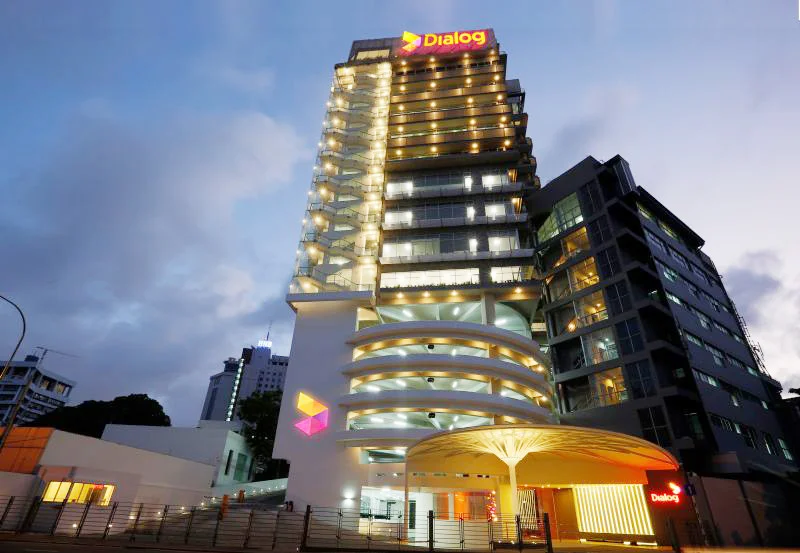
Dialog Axiata PLC announced, Friday 6th February 2026, its consolidated financial results (Reviewed) for the year ended 31st December 2025. Financial results included those of Dialog Axiata PLC (the “Company”) and of the Dialog Axiata Group (the “Group”).
Group Performance
The Group delivered a strong performance across Mobile, Fixed Line and Digital Pay Television businesses recording a positive Core Revenue growth of 16% Year to Date (“YTD”). Group Headline Revenue reached Rs179.6Bn, up 5% YTD, despite the continued strategic scaling down of low-margin international wholesale business. In Q4 2025, Revenue was recorded at Rs46.5Bn up 2% Quarter-on-Quarter (“QoQ”) and 2% Year-on-Year (“YoY”).
The Group Earnings Before Interest, Tax, Depreciation and Amortisation (“EBITDA”) reached Rs86.0Bn up 30% YTD supported by Core Revenue performance and Cost Rescaling Initiatives. On a QoQ basis Group EBITDA demonstrated a modest growth to record at Rs23.0Bn up 2% QoQ with an EBITDA margin of 49.5% in line with the Revenue performance. Group EBITDA margin reached 47.9% for FY 2025, up 9.2pp.
Group Net Profit After Tax (“NPAT”) reached Rs20.8Bn for FY 2025, up 67% YTD mainly resulting from robust EBITDA growth, despite higher tax and net finance costs. Normalized for forex impact, NPAT growth was recorded at +>100% YTD to reach Rs22.1Bn. On a QoQ basis NPAT grew 3% to reach Rs5.9Bn resulting from strong EBITDA performance.
On the back of strong operational performance, the Group recorded Operating Free Cash Flow (“OFCF”)
of Rs49.3Bn for FY 2025 up >100% YTD.
Dividend Payment to Shareholders
In line with the dividend policy and financial performance of the Group and taking into account the forward investment requirements to serve the nation’s demand for Broadband and Digital services, the Board of Directors of Dialog Axiata PLC at its meeting held on 6th February 2026, resolved to propose for consideration by the Shareholders of the Company, a dividend to ordinary shareholders amounting to Rs1.50 per share. The said dividend, if approved by shareholders, would translate to a Dividend Yield of 5.0% based on share closing price for FY 2025. The dividend so proposed will be considered for approval by the shareholders at the Annual General Meeting (AGM) of the Company, the date pertaining to which would be notified in due course.
Company and Subsidiary Performance
At an entity level, Dialog Axiata PLC (the “Company”) continued to be the primary contributor to Group Revenue (76%) and Group EBITDA (74%). Aided by sustained growth in the Data segment and cost-rescaling initiatives, Company revenue was recorded at Rs135.8Bn for FY 2025, up 18% YTD, EBITDA rose 32% YTD to reach Rs63.6Bn. On a QoQ basis, Q4 2025 Revenue was recorded at Rs34.8Bn, down 1% QoQ due to a reclassification of Hubbing Revenue, while EBITDA decline 1% QoQ to record Rs17.0Bn, largely attributable to network restoration costs and donations made in relation to the Cyclone Ditwah relief efforts. Furthermore, NPAT was recorded at Rs15.6Bn for FY 2025, up 41% YTD. Normalised for forex impacts, the company NPAT was up +>100% YTD to reach Rs17.0Bn. On a QoQ basis, Company NPAT was recorded at Rs4.5Bn, down 6% QoQ.
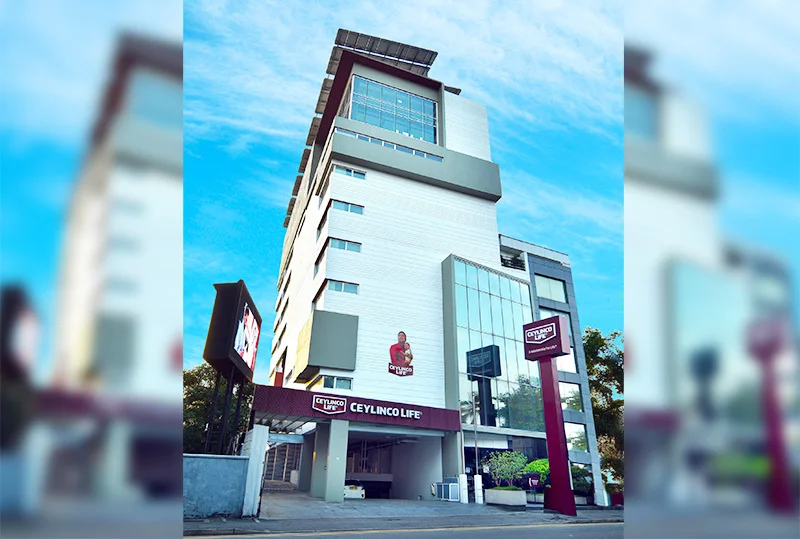
Ceylinco Life has announced the launch of the 25th consecutive edition of its flagship Pranama Scholarships programme, marking a significant milestone in the company’s long-standing commitment to recognising and rewarding excellence among the children of its policyholders.
Under the 2026 programme, the life insurance market leader will present scholarships with a total cumulative value of Rs. 22.7 million, continuing a rewards initiative that has now been conducted without interruption for a quarter of a century. Since its inception, the Ceylinco Life Pranama Scholarships programme has benefitted 3,466 students across the country, representing a total investment of Rs. 240 million in nurturing academic achievement and outstanding performance in sports, arts and other extracurricular pursuits.

The artistic genius of Sri Lankans was amply manifest all over again at ‘Kala Pola ‘26’ which was held on February 8th at Ananda Coomaraswamy Mawatha Colombo 7; the usual, teeming and colourful venue for this annual grand exhibition and celebration of the work of local visual artists.
If there is one thing that has flourished memorably and resplendently in Sri Lanka over the centuries it is the artistic capability or genius of its people. It is something that all Sri Lankans could feel a sense of elation over because from the viewpoint of the arts, Sri Lanka is second to no other nation. With regard to the visual arts a veritable dazzling radiance of this inborn and persisting capability is seen at the annual open air ‘Kala Pola’.
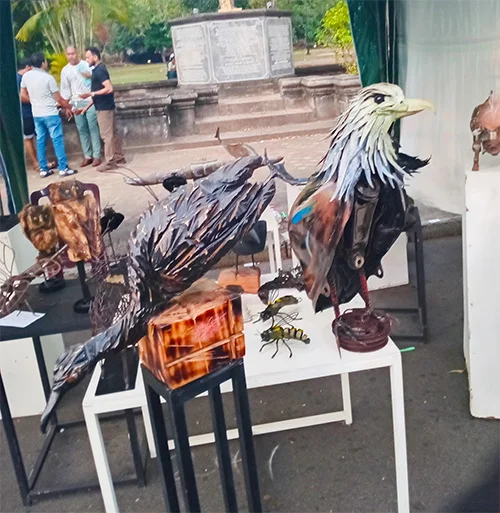
A bird of Sri Lanka created from scraps of iron waste.
All capable visual artists, wherever they hail from in Sri Lanka, enjoy the opportunity of exhibiting their work at the ‘Kala Pola’ and this is a distinctive ‘positive’ of this annual event that draws numberless artists and viewers. There was an abundance of paintings, sketches and sculptures, for instance, and one work was as good as the other. Ample and equal space was afforded each artist. Its widely participatory and open nature enables one to describe the exhibition as exuding a profoundly democratic ethos.
Accordingly, this time around at ‘Kala Pola ‘26’ too Sri Lankans’ creative efforts were there to be viewed, studied and enjoyed in the customary carnival atmosphere where connoisseurs, local and foreign, met in a sprit of camaraderie and good cheer. Many thanks are owed once again to the George Keyt Foundation for the presentation of the event in association with the John Keells Group and the John Keells Foundation, not forgetting the Nations Trust Bank, which was the event’s Official Banking Partner. The exhibition was officially declared open by Chief Guest Marc-Andre Franche, UN Resident Coordinator in Sri Lanka.
By Lynn Ockersz

Seifert, Allen fifties help New Zealand gallop to record-breaking win against UAE
All-round de Leede leads Netherlands to thumping win over Namibia

Wanindu Hasaranga ruled out of T20 World Cup with injury

Royal Navy of Oman Vessel “SADH” arrives at Port of Colombo

Spirited USA seek Pakistan scalp after opening day heartbreak

New Zealand brace for unfamiliar opponents UAE

‘Dates have the highest sugar content to fight Coronavirus’

Sunday Island 27 December – Headlines

#SundayIsland 17th December – Headlines

Sunday Island – 28th March

Sunday Island Headlines – 21 March

Sunday Island – 21st February – Headlines
-

 Features3 days ago
My experience in turning around the Merchant Bank of Sri Lanka (MBSL) – Episode 3
-

 Business4 days ago
Zone24x7 enters 2026 with strong momentum, reinforcing its role as an enterprise AI and automation partner
-

 Business3 days ago
Remotely conducted Business Forum in Paris attracts reputed French companies
-

 Business3 days ago
Four runs, a thousand dreams: How a small-town school bowled its way into the record books
-
 Business3 days ago
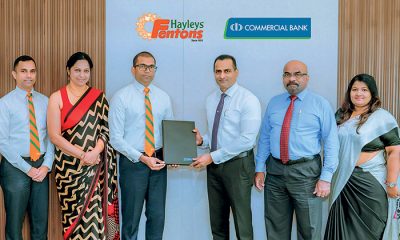
ComBank and Hayleys Mobility redefine sustainable mobility with flexible leasing solutions
-
 Business4 days ago
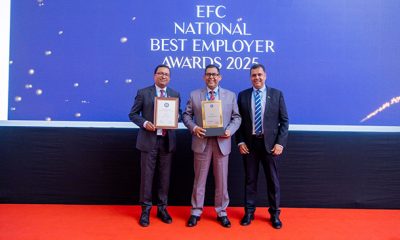
HNB recognized among Top 10 Best Employers of 2025 at the EFC National Best Employer Awards
-

 Business4 days ago
GREAT 2025–2030: Sri Lanka’s Green ambition meets a grid reality check
-

 Editorial6 days ago
All’s not well that ends well?