
News
SL should not stop trading with Moscow to please Washington, London – Ranil

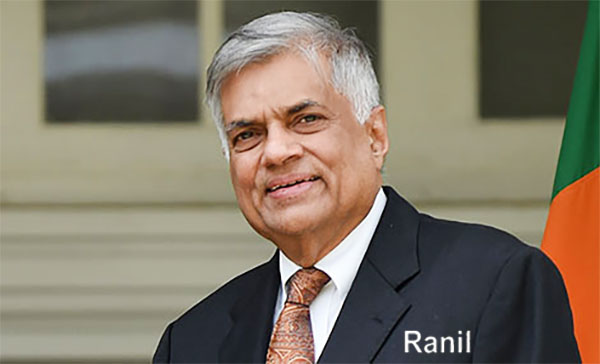
Sri Lanka should not be stopped from trading with Russia because placing sanctions on Russia is something that the US and UK want, United National Party (UNP) leader Ranil Wickremesinghe said on Thursday at a meeting with a group of youth activists.
Wickremesinghe said: “The war in Ukraine will affect everyone and there is a lot of potential in Asia to overcome the challenges posed by war and western sanctions.
“Firstly, no one wants SWIFT and other such tools to be used as a political weapon. If the US and UK want to place sanctions against Russia, that is their business. But we should not be stopped from trading with Russia and others. We live in a globalised economy, but we have agreed that the West would run the system. But if the system is going to be used for political purposes, where we lose, then I think Asia has to look at another system. China is starting a China-centric one, some of the others may not want a China-centric one, but will want one that is acceptable to all. I think Africa may also join it. That is where the power is. The West is losing that power it had,” he said.
When this confrontation comes to an end, Indonesia, which is the chair of the G20 and is also where the first Asian conference was held, should get together with China, India, and the UAE to summon a conference of all Asian nations and re-invent Asia. Indonesia was the country that hosted the Bandung Conference, and so they should take the lead and call for such a conference, he said.
Asia must step in and ensure the war in Ukraine does not reach global proportions, Wickremesinghe said, adding that while most countries around the world agree that Russia invaded Ukraine, they do not approve of what the West has done.
“The fact is Asia is silent. The African Union has also not taken part, Brazil and Argentina have supported the US but the Mexicans have stayed out. Asia hasn’t condemned Russia the way America expected them to. They have raised issues with the invasion. In the Security Council India, China and the UAE are all silent. They were non-committal. Indonesia, the leader of the G20 is non-committal. Pakistan is also going around Russia. So it looks like most of Asia is going along with Russia. Now that is what is important, because Asia counts today. Everyone is neglecting this, nobody wants to report it,” he said.
Wickremesinghe said that Asian countries do not want to be affected by a war that can cause global economic fallout. Despite many problems among them, Asian countries have ensured that they do not escalate into full blown war.
“Therefore, the Asian view is that we cannot only allow the West to decide the rules of the world. Asia must come in, and that is a view I have, and many others have. The Government of Sri Lanka has been non-committal like all the others, such as Bangladesh. Some of them who have commented have not said who has invaded whom, the invasions are bad, and the war must stop. This is what the media is not highlighting, because the West cannot accept that Asia today is also calling the shots,” he said.
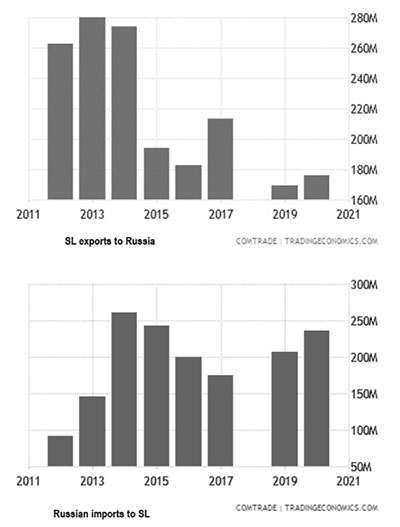
Wickremesinghe said that Sri Lanka exports low country and mid-grown tea to countries such as Russia. Due to the war a lot of the low-grown and mid-grown smallholders’ families will be having problems. Factory holders too will be affected, and this will become a serious issue for Sri Lanka.
Ukraine is basically a part of the old Soviet Union and Russians think of Ukraine like we think of Kandy, the UNP leader said. Wickremesinghe said that the war between Russia and Ukraine could have been prevented
“There were problems between Russia and Ukraine because NATO wanted to bring in missiles, and that is part of the old Soviet Union territory, which they should not have done. This went on for some time, and then there is the famous case of Russians taking over Crimea, which originally belonged to them and then they got into Donbas and other areas,” he said.
Wickremesinghe added that President Obama and President Trump did not make Ukraine an issue, but President Biden’s foreign policy seems to be to take on both Russia and China. He wants to be the defender of the Western Order, Wickremesinghe said.
“Especially President Trump reached out and had a good rapport with President Putin. Now after President Biden came in, his foreign policy seems to be to take on both Russia and China. Recently Russia and China signed an agreement which is called the “no-limit friendship”, which is a friendship without limits and boundaries or prohibitions. Thereafter Russia was emboldened further to ask that nuclear missiles not be put in Ukraine and Ukraine should not become a member of NATO. The U.S. and U.K., not the other NATO members, tried to play their own game and corner Russia and make Russia back down by getting Ukraine to say they want to be part of NATO. They expected Putin to climb down. Putin thought was ready, or thought he was ready, and he invaded Ukraine. So the real issue is about the security of Russia and what are they going to do. They took the West and the Americans by surprise,” he said.
Wickremesinghe added that the sanctions against Russia will not deter them. Sanctions are the only tool available to the West because they are not prepared to fight the Russians. The West has also removed Russian banks from SWIFT and both President Biden and Prime Minister Boris Johnson are acting tough because of domestic politics, the UNP leader said.
“President Biden also is in a problematic area. (Former) President Trump says he knew how to deal with Putin and handle Ukraine. So, he (Biden) had to show he can bring results, and he needs to bring results quickly because he is going to lose in the midterm elections. So, he is pushing hard on the sanctions thinking Russia will come down and he can save himself. Basically, many of the issues will be domestic issues, and the Republicans won’t be unhappy if the Russians stay on in Ukraine a bit longer because they can get the advantage of it. The third man with elections is President Macron of France. But he is playing a different role, he is showing that he can talk to Russia, he can talk to the West, and he can talk to China. So, he is telling the Frenchmen that if you remove me you will not have a leader who is recognised globally. So, he is playing a different game to the other two. The Australian Prime Minister Scott Morrison is also having elections and he is also upping his stakes to show he can be tough on China. But all this means is that we do not know where this will end. They are playing for their politics, and this will bring the global economy down,” he said.
Wickremesinghe said that China, India, Pakistan, Iran, and the Central Asian republics would help Russia.” These are all members of the Shanghai Co-operation Organisation, and the events of the past week have shown that the Organisation has held together. On the other hand, although India is a part of the Quad, it has not taken the same line as the US.”


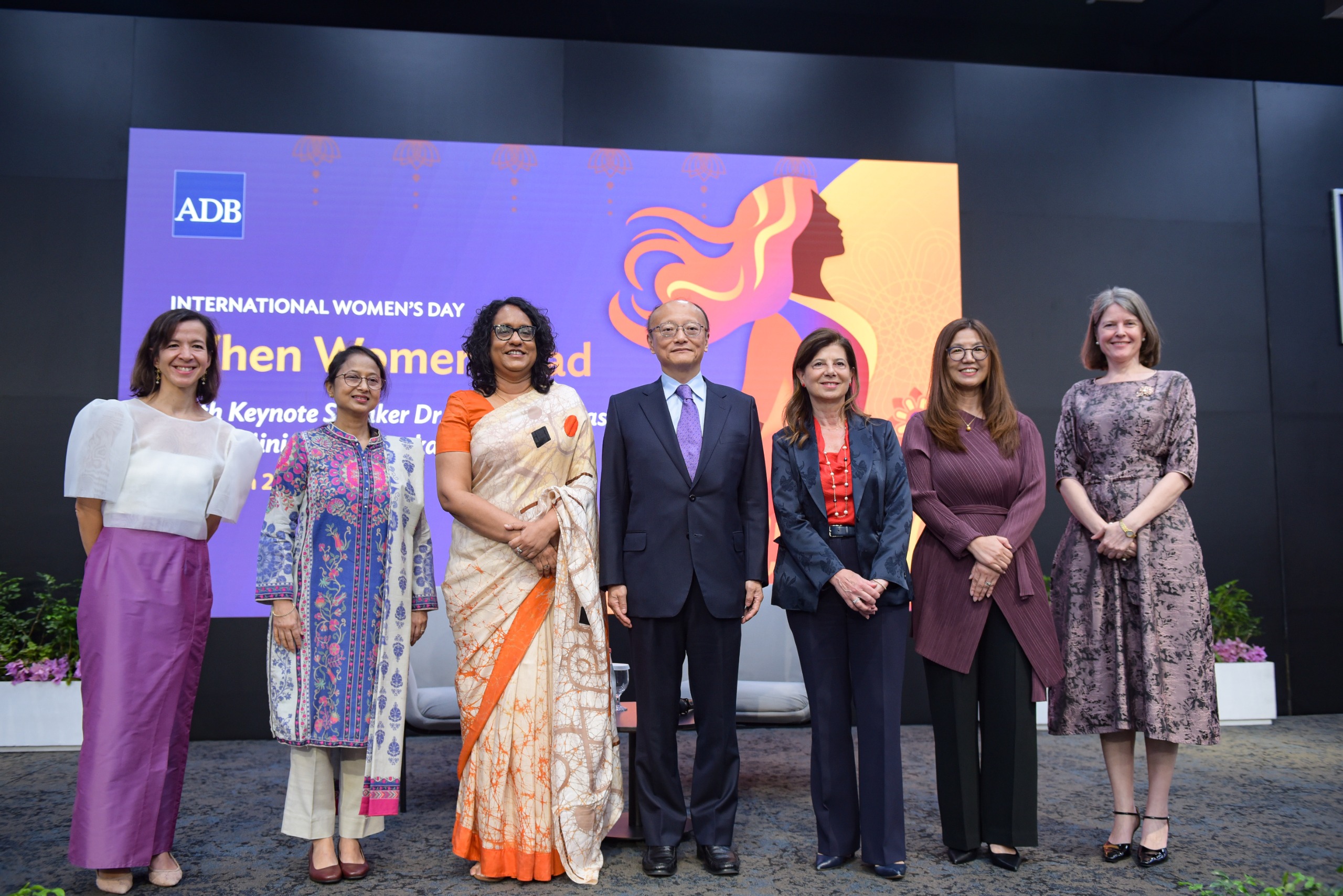
Prime Minister Dr Harini Amarasuriya participated in the International Women’s Day Flagship Event hosted by the Asian Development Bank (ADB) on 10 March at the ADB Headquarters in Manila, Philippines. The event brought together senior ADB leadership, representatives of the diplomatic community, and development partners to mark International Women’s Day and to reaffirm global commitments to gender equality.
Delivering the keynote address, the Prime Minister highlighted the critical role of education in empowering women and girls, emphasising that equitable access to quality education remains one of the most powerful tools for achieving social and economic transformation. She underscored Sri Lanka’s longstanding commitment to education and noted the importance of strengthening inclusive learning systems that enable women to fully participate in national development.
The Prime Minister also drew attention to the significant contribution of women’s unpaid care work, noting that it remains largely unrecognised despite its vital role in sustaining families, communities, and national economies. She emphasised the need for policies and social protection mechanisms that acknowledge and support care work, thereby enabling women to participate more fully in economic life.
Addressing broader structural challenges, the Prime Minister stressed the importance of increasing women’s participation in political decision-making and the labour force, noting that inclusive governance and economic participation are essential for sustainable and equitable development.
She highlighted the need for continued collaboration between governments, international institutions, and development partners to remove barriers that limit women’s opportunities.
During the event, Prime Minister was honoured with the Shireen Lateef Women’s Leadership Award in recognition of her commitment to advancing women’s leadership and empowerment.
The event was opened by the President of the Asian Development Bank and senior ADB leadership, followed by a high-level discussion on advancing gender equality across the region. The Prime Minister’s participation reaffirmed Sri Lanka’s commitment to strengthening partnerships with international institutions to promote women’s empowerment and gender-responsive development policies.
(Prime Minister’s Media Division)

The Ceylon Electricity Board Engineers’ Union (CEBEU) yesterday warned that uncertainty surrounding the ongoing restructuring of the Ceylon Electricity Board (CEB) had forced many employees to refrain from performing their regular duties, raising concerns about potential disruptions to electricity sector operations.
The engineers’ union said the current situation had arisen due to what it described as either deliberate actions or extreme negligence in implementing the restructuring process, which has created significant confusion among staff who previously served under the CEB.
According to the union, although the state power utility has been formally restructured and new companies established, a large majority of former CEB employees have yet to receive official appointment letters, confirming their positions in the newly formed entities.
“The reality is that the institution, previously known as the Ceylon Electricity Board, no longer exists in its earlier form, yet most employees, who served under it, have not been issued proper appointment letters, or related documentation, assigning them to the newly established companies,” the CEBEU said.
The union said that while some workers had been issued “assignation letters”, those documents merely indicate the institution to which an employee has been attached and do not clearly define employment conditions, responsibilities, authority, or reporting structures.
“As a result, employees currently lack the necessary legal framework confirming their employment status, their duties, the authority under which they operate, and who they are accountable to within the new institutions,” the CEBEU said.
The engineers’ union emphasised that the current crisis was not created by employees but was the direct result of, what it called, shortsighted and questionable actions taken by those responsible for implementing the reforms.
It also expressed concern that the relevant Minister, appointed through the National List, had failed to hold meaningful discussions with employees, despite having previously advocated strongly for workers’ rights.
The union said trade union action had been launched only after months of unsuccessful attempts to resolve the issues through verbal requests and written communication with the authorities.
“Despite repeated appeals made over several months, there has been no satisfactory response. Decisions appear to have been taken under the assumption that a government with a strong mandate can proceed without proper consultation,” the union said.
However, the CEBEU stressed that employees engaged in essential operations—including power generation, transmission, and distribution—continue to work in order to ensure electricity supply to the public.
“These staff members are continuing their duties under considerable risk to prevent major disruptions to the electricity supply,” the union noted.
Nevertheless, the union warned that the prevailing uncertainty could affect certain operational activities, and restoration work following breakdowns may take longer than usual.
The CEBEU appealed to the public to understand the situation and expressed regret for any inconvenience that may arise.
“We request the public to understand the situation and cooperate with us during this difficult period. We sincerely regret any inconvenience that may be caused,” the union added.
By Ifham Nizam
News
Remittances up compared to last year before outbreak of war, but the economic picture is not rosy

Sri Lanka Bureau of Foreign Employment (SLBFE) yesterday said that foreign remittances, during January and February this year, had been 32% higher than the corresponding period in the previous year.
According to a press release issued by the SLBFE, Sri Lanka received Rs 1,480.1 mn during January and February this year, whereas in 2025 the country received Rs1,121 mn during the corresponding period. During the first two months of this year, 47,819 Sri Lankans had left the country for employment abroad.
However, Prof. Priyanga Dunusinghe has warned that Sri Lanka could face a catastrophic situation due to a rapid and sharp drop in revenue caused by the escalating Gulf war. Fighting erupted on February 28 following a joint US-Israel attacks on Iran.
Appearing on Derana ‘Big Focus’ on Monday, the Professor in Economics in the Department of Economics, and Head – Department of Information Technology, University of Colombo, Dunusinghe said that that the drop in remittances from the Middle East, as well as exports, should be examined against the backdrop of runaway oil prices.

Nahid Rana and Tanzid Hasan complete Pakistan’s demolition in opening ODI

Prime Minister highlights the importance of recognising Women’s Unpaid Care Work

Australia grants asylum to 2 more members of Iranian women’s football team

Showers are likely in the Northern, Eastern, Sabaragamuwa, Southern and Uva provinces and in Kandy and Nuwara-Eliya districts

CEBEU warns of operational disruptions amid uncertainty over CEB restructuring

Remittances up compared to last year before outbreak of war, but the economic picture is not rosy

‘Dates have the highest sugar content to fight Coronavirus’

Sunday Island 27 December – Headlines

#SundayIsland 17th December – Headlines

Sunday Island – 28th March

Sunday Island Headlines – 21 March

Sunday Island – 21st February – Headlines
-

 News6 days ago
University of Wolverhampton confirms Ranil was officially invited
-

 News7 days ago
Legal experts decry move to demolish STC dining hall
-

 News6 days ago
Female lawyer given 12 years RI for preparing forged deeds for Borella land
-

 News5 days ago
Peradeniya Uni issues alert over leopards in its premises
-

 News3 days ago
Repatriation of Iranian naval personnel Sri Lanka’s call: Washington
-

 News6 days ago
Library crisis hits Pera university
-

 News5 days ago
Wife raises alarm over Sallay’s detention under PTA
-

 News6 days ago
‘IRIS Dena was Indian Navy guest, hit without warning’, Iran warns US of bitter regret