
News
SL expatriates in US use ‘diplomatic tool’ to promote trade-commerce-investments

… and dispel misconceptions about Sri Lanka
by Daya Gamage
During the two-and-a-half-decades of foreign affairs work with the U.S. Department of State assigned to its Colombo diplomatic post as a Foreign Service National, this writer saw how trade, commerce, investment, aid – both economic as well as military – were well tied to diplomacy and correct understanding of both nations, and the importance of clearing perceived misunderstandings and obstacles.
In 1987, a couple of months before the Vadamarachchi Offensive to combat the separatist LTTE, the US Department of Defense administratively directed several US arms manufacturing companies to refrain from selling military equipment to Sri Lanka requested by the Jayewardene administration. This decision was based on two documents jointly written by the US National Security Agency and the State Department in 1984 and 1986 which determined that such military sales could be used against the minority Tamils and that the Tamil-majority North-East needs a political solution with devolved power structure under a federal setup.
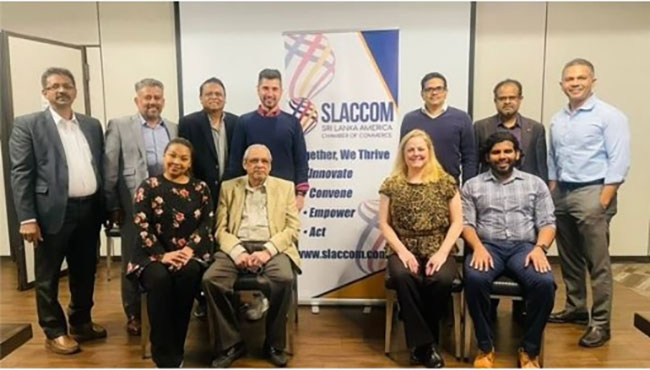
When the Sri Lanka America Chamber of Commerce, in which this writer is a founder director, launched by a group of professional Sri Lankan expatriates in Las Vegas, Nevada as a US national entity, commenced its operations, clearly found that the two areas – promoting trade-commerce-investment, and diplomacy – are even more inter-twined because of misconceptions Washington has toward Sri Lanka’s governance and rule of law.
Ascertaining the ‘road blocks’, while focusing on trade and commerce, the Chamber entrusted itself with broad diplomatic assignment to strengthen rapport with lawmakers in the U.S. Congress and develop new contacts even with policymakers in Washington, especially the US Departments of Commerce and State.
While identifying possible investors, the president of the Chamber Saje Sedera in fact took an American billionaire to the then Sri Lanka president Gotabaya Rajapaksa when he was visiting his son in Los Angeles as one of the initial moves to activate trade and investment between the two nations.
Meanwhile, three Board Members of the Chamber met officials of the Board of Investment (BOI) for discussions in the Sri Lankan capital Colombo.
Two senior officials of the US Department of Commerce flew to Las Vegas, Nevada to have a discourse with officials of the Chamber on investments in the newly launched Colombo Port City. Two officials from the Sri Lanka embassy in Washington D.C. and Consulate in Los Angeles too attended.
The two US officials and the Chamber were aware that in 2002, Sri Lanka and the U.S. signed a Trade and Investment Framework Agreement (TIFA), which facilitates bilateral discussions to resolve frictions at an early stage. Despite holding more than a dozen TIFA meetings Sri Lanka is still not on the U.S.’ radar for a Free Trade Agreement (FTA).
The two senior officials of the South & Central Asia Division of the Commercial Law Development Program (CLDP) of the U.S. Department of Commerce were in Nevada, to ascertain the feasibility of establishing a better flexibility for trade, commerce and investment between the two countries. They had already met with Sri Lanka’s finance minister and had discussions with the Econ-Commercial Division of the American Embassy in Colombo.
During an interview in August 2021, the then US Ambassador, Alaina B. Teplitz, “expressed concern that the government should create the best possible business environment to attract investment to Port City” and warned against poor practices or even illicit finance like money laundering and corruption. The Chamber officials discussed the above aspect with the Commerce Department representatives.
With all these initial efforts, the Chamber officials found that without effective diplomacy with US lawmakers and policymakers such endeavours could face obstacles. Sri Lankan diplomats on the American soil – all these years – and the authorities in Colombo had failed to achieve this task.
Focusing deep into the obstacles, the professionals in the Sri Lanka America Chamber of Commerce found:
U.S. policy was based on an inadequate understanding of the underlying causes of the civil war—an understanding that does not include unwilling to adapt to the post-independence democratic order; the origins and dynamics of two competing nationalisms; demographic and economic pressures in an island state; and the imperative in a young democratic system of policies to expand economic opportunity to the disadvantaged majority of all ethnic communities domiciled in the 70% of the rural sector. A biased understanding of the separatist struggle led to a misguided strategy for constraining the violence, negotiating a ceasefire, and imposing a political resolution based on a more decentralised political structure. U.S. bilateral policy was driven astray also by the common narratives of well-meaning but naïve international organizations and human rights ideologues that seized on the Sri Lankan conflict to burnish their credentials as arbiters of international morality.
The SL-US Chamber further found that there has been a perverse lack of appreciation internationally for the threat that a dictatorial, criminal, terrorist organization posed to the security of the great majority of Sri Lankans, including Tamils. Tragically, the U.S.’ simplistic perception of an ethnic majority oppressing a righteously rebellious minority prolonged the bloodshed, alienated a historically reliable partner, weakened a beleaguered democracy, and strengthened the influence of U.S. antagonists in the region.
In an official notification dated October 21 by the Sri Lanka embassy in Washington to two members of the Sri Lankan expatriates, one to this writer, and the other the president of the Chamber Sanje Sedera, provided a list of US Members of Congress Sri Lanka ambassador to Washington Mahinda Samarasinghe had met since his arrival in Dec 2021 obviously the dialogues were to apprise the ‘correct’ situation in Sri Lanka.
Subsequent developments showed that the embassy had failed to adequately provide ‘Sri Lanka’s true story’ to the American lawmakers.
In late Sept this year, two US House Members the ambassador had previously met, signed an official letter, with another six members, to US Secretary of State Antony Blinken urging him to “investigate and hold accountable alleged perpetrators of war crimes during the Sri Lankan Civil War, including former Sri Lankan President Gotabaya Rajapaksa and his family. We also urge you to use all diplomatic tools available, including sanctions, for the State Department to hold accountable those who are credibly alleged to have been responsible for gross human rights violations”.
Ambassador Samarasinghe, according to the official letters sent to the two Nevada Sri Lankan expatriate activists, had met Congressman Henry “Hank” Johnson twice. He was one of the signatory to the letter addressed to Blinken. Another signatory to the letter was Congressman Bill Johnson, Ambassador Samarasinghe states he had met, who too wanted war crimes investigation. What was not mentioned by the US Congressmen in the letter the crimes committed by the terrorist LTTE which was designated by the State Department in 1997 as a Foreign Terrorist Organization (FTO). In 2010, US Supreme Court determined that “Material Support’ to a terrorist organization is amount to helping a terrorist organization – in this case LTTE and PKK- violating US Statutes. US lawmakers were not apprised that there are several such ‘material supporters’ living on American soil. Looks like the signatories were unaware that a terrorist organization had committed war crimes, and that this organisation – well connected to a global network – threatened the sovereignty and territorial integrity of a friendly nation for 26 long years, and that it used unarmed innocent Tamils as ‘human shield’ endangering their lives. This is just one example how Sri Lanka diplomacy has failed to change the ‘mind-set’ of American lawmakers and policymakers.
The expatriate officials of the Chamber fully understood the handicap Sri Lanka was facing in its foreign relations to undertake discourses with US lawmakers with the sole intention of bringing Sri Lanka out of this political stalemate while discussing trade and commerce.
The Congressmen’s letter to Secretary Blinken further declares: “Only by bringing justice and redress to victims of past human rights violations during the decades-long civil war will Sri Lanka be able to fully address its current economic crisis and political situation. The United States must remain committed to holding perpetrators accountable and work to establish an international justice mechanism for war crimes and crimes against humanity from the Sri Lankan Civil War.”
A Zoom meeting was initiated by the Chamber on December 14, 2021 bringing in SL ambassador Mahinda Samarasinghe and US Congresswoman Susie Lee focusing on socio-economic diplomacy between the two nations. Ms. Lee declared the importance of strengthening the bonds between the two nations and said she was prepared to work with the Congress to assist Sri Lanka in whatever manner, a prime target of the expatriates handling the Chamber. Sri Lankan expatriates never saw the Sri Lankan diplomats reaching them to have a coordinated effort to remove the tarnished image of Sri Lanka in Washington.
The Sri Lankan expatriates in the State of Nevada who founded the Chamber of Commerce – working hand-in-hand with Sri Lanka’s premier civic organization in Las Vegas, maintaining a constant rapport with the Sri Lanka Foundation in Los Angeles, keeping in touch with US lawmakers and policymakers, taking into account Washington’s misunderstanding of social developments and the structural changes in Sri Lanka endeavour to perform certain duties Sri Lankan authorities and her overseas representatives so far failed as facilitators to disseminate a better view of Sri Lanka toward opening better opportunities for trade, commerce and investments.
(The writer is a Board Member of the Sri Lanka America Chamber of Commerce in US and a Trustee of the Sri Lanka America Association in the State of Nevada)


The special ward at Sri Jayewardenepura General Hospital, which had until now been reserved exclusively for the use of the Executive President, was opened for the public for the provision of medical treatment to the general public from Tuesday (24).
This decision was taken jointly by the Ministry of Health and the hospital administration, in accordance with instructions given by President Anura Kumara Dissanayake.
Constructed in 1984 with a grant from the Government of Japan, Sri Jayewardenepura General Hospital was originally established with a capacity of 1,000 beds. However, in line with the initial design, an additional special unit, designated as Room No. 1001, was included exclusively for the personal use of the Executive President.
Over the 42 years since the hospital’s establishment, this facility has been utilised only on a very limited number of occasions. Nevertheless, it has been maintained over the years in anticipation of a possible visit by a sitting President, without being made available for patient use.
With effect from today, this special unit will be utilised for the benefit of general patients receiving treatment at the hospital. This step has been taken in line with the Government’s policy of ensuring the more efficient use of public assets and resources to meet the healthcare needs of the people.

The second meeting of the Cabinet Sub-Committee appointed to ensure the orderly functioning of the public service was held on Tuesday (24) afternoon at the Presidential Secretariat, under the patronage of Prime Minister Dr Harini Amarasuriya.
Extensive discussions were held on the immediate measures required to ensure the uninterrupted delivery of government services to the public and to address the challenges faced by public servants.
Attention was also drawn to maintaining the continuous operation of services under the Ministries of Public Administration, Provincial Councils and Local Government, Health, Education, and Justice. Accordingly, it was decided to ensure that examinations are conducted as scheduled and that essential medicines are supplied to hospitals without disruption.
The challenges in passenger transport services and the railway transport system, as well as future measures, were also discussed at length. Focus was also placed on the steps to be taken regarding the transportation of essential goods.
In addition, attention was given to introducing digital service systems to facilitate working from home and to enhance the efficiency of existing services. It was also noted that these activities would be supervised under the Ministry of Digital Economy.
Instructions were further issued to review the current energy management practices across all ministries and departments and to take steps to implement necessary policy changes.
Minister of Public Administration, Provincial Councils and Local Government A. H. M. M. H. Abeyaratne, Secretary to the Prime Minister Pradeep Saputhanthri, Chief of Staff to the President Prabath Chandrakeerthi, Secretary to the Ministry of Public Administration, Provincial Councils and Local Government S. Aloka Bandara, Secretary to the Ministry of Health and Mass Media Dr Anil Jasinghe, Secretary to the Ministry of Energy Professor T. M. Udayanga Hemapala, Secretary to the Ministry of Digital Economy T. R. W. S. Dhanapala, Secretary to the Ministry of Justice and National Integration Ayesha Jinasena, PC, Senior Additional Secretary to the President Roshan Gamage, and Chairman of the Ceylon Petroleum Corporation D. J. A. S. S. Rajakaruna, along with other committee members, were also present at the occasion.

… first NPPer to face charges under Section 70 of Bribery Act
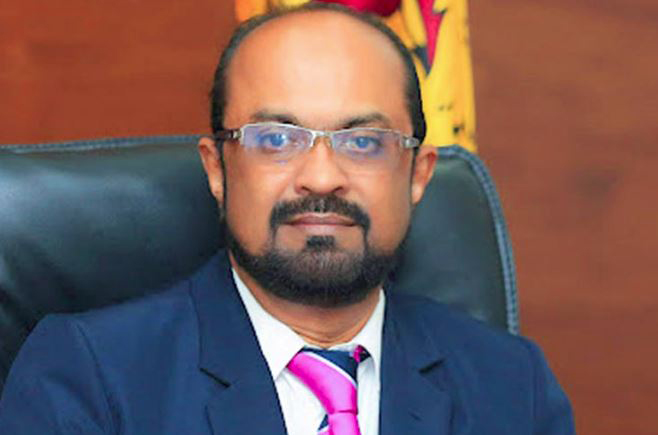
Colombo High Court has issued summons on Energy Minister Kumara Jayakody to appear in court today (27) to serve indictment in a corruption case filed by the Commission to Investigate Allegations of Bribery or Corruption (CIABOC). Action has been taken under Section 70 of the Bribery Act. The losses suffered by the government have been estimated at Rs. 8,859,708.
National List (NL) MP Jayakody is the first NPP minister or politician at any level to be indicted for corruption. The NPP parliamentary group consists of 159 including 18 NL members.
The summons has been issued by High Court judge Rashantha Godawalage.
Although CIABOC previously in many instances arrested those who had been under investigation and produced them before Magistrate courts, Minister Jayakody has been directly summoned by the Colombo High Court.
The investigation into alleged corruption in procurement during the time Jayakody served the Ceylon Fertilizer Corporation (CFC) started after the change of government in 2015.
According to the CIABOC investigation, the alleged instance of corruption took place in early 2014 towards the tail end of Mahinda Rajapaksa’s second term. At that time Jayakody was CFC’s Procurement Manager, and the CIABOC dragged the investigation until its current leadership under overall speeding up of the cases recently completed the inquiry.
Parliament recently announced that the debate on no-faith motion moved against Minister Jayakody over alleged irregularities in the procurement of substandard coal for the country’s only coal-fired power station at Norochcholai.
SJB MP Mujibur Rahman said that the NPP, having campaigned on an anti-corruption platform during presidential and parliamentary polls in 2025 couldn’t under any circumstances shield minister Jayakody. The indictment of Jayakody over a corruption case that had happened in 2014 and the failure on his part to fulfill obligations as Energy Minister under the current dispensation couldn’t be considered separately, the Colombo District MP said.
The issue at hand is whether the NPP would try to protect Jayakody at the expense of the government, MP Rahman said. Once the NPPer is formally charged in a corruption case the government would find it extremely difficult to keep him in the cabinet, the former UNPer said.
SJB lawmaker S.M. Marrikar recently warned Minister Jayakody that he should be prepared to serve a jail term. The warning was issued at a media briefing that primarily dealt with the alleged irregularities in the procurement of coal and their decision to move a no-faith motion against the minister. Marrikar explained how the crisis coupled with the growing diesel shortage could compel the government to increase electricity tariffs by as much as 18 percent next week. MP Marikkar said that they were eagerly waiting to see who backs Jayakody at the expense of the government during the upcoming vote on the no-faith motion.
There had been a previous case of a sitting minister being charged under the Bribery Act in respect of corruption perpetrated as a government servant. MP Rahman said that they intended to intensify the ongoing campaign against the government on the strength of the unprecedented corruption case and the outcome of the no-faith motion. “Of course, they have the numbers to defeat our no-faith motion. But, in doing so, they end up with egg on their face. That is the reality,” Rahman said, adding that those responsible for waste, corruption and irregularities whichever political parties they represented shouldn’t expect special status.
MP Rahman alleged that the CIABOC granted special status to Minister Jayakody. All those who had been indicted previously were first called to the CIABOC, recorded their statements and then arrested, handcuffed and produced in court. The media was afforded the opportunity to cover their humiliation, MP Rahman said, but in this case the powers that be paved the way for the accused to receive indictments directly from the Colombo High Court.
“Let us see whether the Bar Association of Sri Lanka responds to this development,” MP Rahman said.
By Shamindra Ferdinando

Presidential Suite at Sri Jayewardenepura General Hospital opened to the public

Cabinet Sub-Committee appointed to streamline the Public Service meets for the second time

PSL 2026: Teams allowed to submit two XIs and pick one after toss

Japan Premier League [JPL], building cricket from the ground up

Showers may occur at a few places in the Sabaragamuwa province and in Galle, Matara, Kalutara and Nuwara-Eliya districts in the evening

Energy Minister indicted on corruption charges ahead of no-faith motion against him

‘Dates have the highest sugar content to fight Coronavirus’

Sunday Island 27 December – Headlines

#SundayIsland 17th December – Headlines

Sunday Island – 28th March

Sunday Island Headlines – 21 March

Sunday Island – 21st February – Headlines
-

 News3 days ago
Senior citizens above 70 years to receive March allowances on Thursday (26)
-

 Features5 days ago
Trincomalee oil tank farm: An engineering marvel
-
 News16 hours ago
Energy Minister indicted on corruption charges ahead of no-faith motion against him
-

 News2 days ago
US dodges question on AKD’s claim SL denied permission for military aircraft to land
-

 Features5 days ago
The scientist who was finally heard
-

 Business2 days ago
Dialog Unveils Dialog Play Mini with Netflix and Apple TV
-

 News3 days ago
CEB Engineers warn public to be prepared for power cuts after New Year
-
 News3 days ago
Japanese boost to Sri J’pura Hospital, an outright gift from Tokyo during JRJ rule