
Business
Siyapatha Finance debenture issue oversubscribed


Siyapatha Finance PLC, a subsidiary of Sampath Bank PLC and a prominent leader in Sri Lanka’s non-banking financial sector, announces the resounding success of its recent debenture issuance, which received an overwhelming response from investors, meeting and surpassing all expectations.
The highly anticipated initial public offering of Siyapatha Finance PLC’s Subordinated debenture issuance, officially opened for subscription on the 20th March 2026 and closed on the same day , due to the remarkably positive investor sentiment from the market. The initial tranche of Rs. 2,000 million and subsequent tranches of Rs. 1,000 million and Rs. 750 million were oversubscribed in record time, reflecting positive investor sentiment and confidence in Siyapatha Finance PLC’s financial stability and growth prospects. The company received an exceptional number of applications over Rs. 3.75 billion, indicative of the strong demand for Siyapatha Finance PLC’s offerings.
Commenting on the oversubscription of the issue, Mathisha Hewavitharana, Chief Executive Officer of Siyapatha Finance PLC, stated, “This overwhelming demand reaffirms our commitment to delivering value to our stakeholders and driving sustainable growth over 20 years of trust. We are immensely pleased by the enthusiastic response to our debenture issuance, which emphasizes the trust and confidence that investors place in Siyapatha Finance PLC.”


Mahindra Ideal Finance Limited (MIFL) has announced the successful conclusion of its debut Rs 1 Billion debenture issue, which was oversubscribed on the first day of opening, marking a significant capital market milestone for one of Sri Lanka’s fastest-growing licensed Non-Banking Financial Institutions.
The Issue comprised up to Ten Million (10,000,000) Tier 2, Listed, Rated, Unsecured, Subordinated, Redeemable Debentures at a par value of LKR 100 per Debenture, raising up to Sri Lanka Rupees One Thousand Million (LKR 1,000,000,000), with a five-year tenure maturing in 2031.
Commenting on the outcome, MIFL Managing Director/CEO, Mufaddal Choonia said the proceeds of the Company’s inaugural debenture issue will be deployed to strengthen lending capacity across its core business segments, including vehicle leasing, gold loans, SME loans, and business loans.
“The success of our first debenture issue is testament of our performance so far and speaks of the confidence that investors have placed in our future growth story. The strong market response is also the best validation we can secure from the investor community on the strong fundamentals that underpin our business. We will honor that trust by deploying these funds to further provide accessible credit to enrich the lives of our customers and for the communities we serve.”
The capital raise also strengthens the Company’s Tier 2 capital base in compliance with the Central Bank of Sri Lanka’s Capital Adequacy Requirements.
The Debentures were offered in two structures — Type A, at a fixed rate of 12.00% per annum payable annually, and Type B, at a floating rate of the 364-Day Treasury Bill rate plus 3.50% per annum payable semi-annually.
The Issue carried a credit rating of A (lka) from Fitch Ratings Lanka Limited, with MIFL holding an entity rating of AA-(lka) with a Stable Outlook. The Issue was managed by NDB Investment Bank Limited, with Bank of Ceylon serving as Joint Placement Agent. (MIFL)
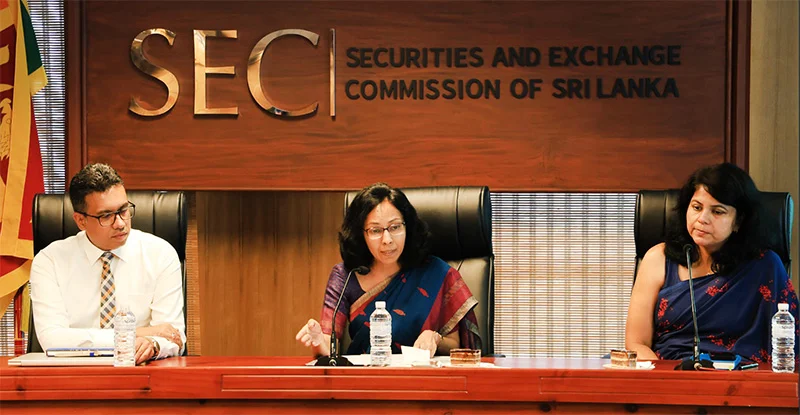
The Securities and Exchange Commission of Sri Lanka (SEC) and the Colombo Stock Exchange (CSE) jointly organized an awareness session recently, for auditors of companies which are currently on the CSE Watchlist. The session focused on enhancing awareness of enforcement actions and timelines, reducing prolonged Watchlist durations, and fostering a more coordinated regulatory approach among regulators, auditors, and listed companies.
Addressing the session, the Chairman of the SEC, Senior Prof. D.B.P.H. Dissabandara highlighted the core professional virtues of an auditor drawing from his own career beginnings, “At the heart of every auditor’s role lies three virtues: integrity, objectivity and confidentiality.” He reminded the gathering, that while an auditor may formally be recognized as a supplementary service provider under the SEC Act, their true value runs far deeper. Every time a listed company submits its financial statements, it is the auditor’s opinion that gives investors the confidence to trust those numbers. In that sense, auditors are not just ticking a regulatory box, they are the ones holding the line on transparency.
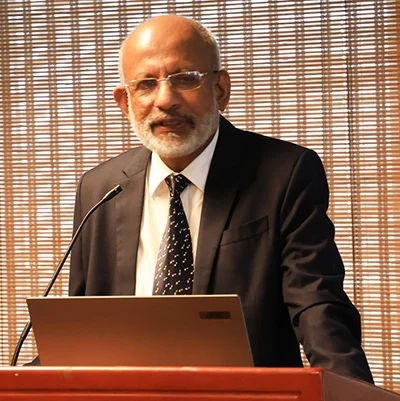
Senior Prof. D.B.P.H.
Dissabandara
Further, Professor Dissabandara drew attention to the current Watchlist situation, noting that while the inclusion of certain companies on the Watchlist is an appropriate regulatory measure, their prolonged presence on the Watchlist may send adverse signals to investors. He called for a structured connected approach involving auditors and listed company management to ensure incremental progress towards resolving Watchlist triggers, particularly those arising from going concern issues and the non-submission of financial statements.
The Head of Listed Entity Compliance at the CSE, Kassapa Weerasekara delivered a presentation focused on enforcement actions that can lead to securities being transferred to the watchlist. Weerasekara reminded the gathering “If companies take the right steps and obtain independent verification on the resolution of all matters giving rise to Modified Opinion and Emphasis of Matter on Going Concern, their securities can be fully reinstated.” He closed by emphasizing that the process is designed to give companies a fair and structured opportunity to correct course.

By Ifham Nizam
The government’s Ditwah relief programme, introduced as a support mechanism for communities affected by economic hardships and recent crises, has brought a measure of relief to a significant portion of vulnerable families across the country. While the initiative has eased immediate financial burdens, questions remain over its reach, efficiency, and long-term impact.
According to official estimates, nearly 65–70% of identified low-income households have benefited from some form of assistance under the Ditwah programme since its rollout. Of this, authorities say around 55% received direct cash transfers, while a further 15% benefited from essential goods and targeted subsidies.
Issuing an official statement, President Anura Kumara Dissanayake said the programme was aimed at strengthening social protection during a challenging economic transition.
“This initiative is designed to support those most affected by the crisis. Our objective is to ensure that relief reaches every deserving household in a fair and transparent manner, the President said, noting that the government is working towards expanding coverage closer to 85% of vulnerable groups by the end of the year.
He added that reforms to welfare databases and delivery systems are expected to improve targeting efficiency by at least 20%, reducing exclusion errors and duplication.
Meanwhile, Cabinet Spokesman and Media Minister Dr. Nalinda Jayatissa acknowledged both the progress and the existing shortcomings.
“While a majority—nearly two-thirds—of eligible families have been reached, we recognise that approximately 25–30% of vulnerable households are yet to receive consistent support. Efforts are underway to bridge this gap, he said.
He further noted that administrative improvements have already reduced delays in disbursement by around 15% in recent months, although inconsistencies remain in certain districts.
On the ground, beneficiaries in several regions confirmed that the assistance has helped cover essential expenses such as food, medicine, and education. However, many also pointed out irregular payments and uncertainty about eligibility.
Critics argue that despite the programme’s scale, targeting accuracy remains below optimal levels, with some estimates suggesting up to 20% inclusion or exclusion errors due to outdated data and gaps in identifying newly vulnerable groups such as informal sector workers.
Logistical challenges continue to affect delivery. Reports indicate that nearly 30% of recipients have experienced delays or irregular disbursements, limiting the effectiveness of the support in managing monthly household expenses.
Economists emphasise that while the Ditwah programme has provided short-term relief covering roughly two-thirds of those in need, its long-term impact will depend on complementary measures such as job creation, livelihood support and rural economic revitalisation.
Despite these concerns, the initiative is widely seen as a necessary intervention during a fragile recovery period. As President Dissanayake stressed, “Relief must go hand in hand with empowerment. Our goal is to ensure that citizens are supported today while being prepared for a more stable tomorrow.”

Senior citizens above 70 years to receive March allowances on Thursday (26)

CEB Engineers warn public to be prepared for power cuts after New Year

Japanese boost to Sri J’pura Hospital, an outright gift from Tokyo during JRJ rule

Govt., Opp fail to reach consensus on PC polls

Post-Ditwah collaboration in disaster preparedness and response

Sinking of Iranian frigate: Prof. Peiris questions govt.’s perceived neutrality

‘Dates have the highest sugar content to fight Coronavirus’

Sunday Island 27 December – Headlines

#SundayIsland 17th December – Headlines

Sunday Island – 28th March

Sunday Island Headlines – 21 March

Sunday Island – 21st February – Headlines
-

 Features2 days ago
Trincomalee oil tank farm: An engineering marvel
-

 News6 days ago
Bailey Bridge inaugurated at Chilaw
-

 News5 days ago
CIABOC tells court Kapila gave Rs 60 mn to MR and Rs. 20 mn to Priyankara
-

 News6 days ago
Pay hike demand: CEB workers climb down from 40 % to 15–20%
-

 Features5 days ago
Science and diplomacy in a changing world
-

 News4 days ago
Colombo, Oslo steps up efforts to strengthen bilateral cooperation in key environmental priority areas
-

 News2 days ago
Substandard coal deepens energy crisis, warns former CEB Chief
-

 Features6 days ago
Illegal solar push ravages Hambantota elephant habitat: Environmentalist warns of deepening crisis