Connect with us

Sports

Shanaka fireworks helps Sri Lanka thrash Oman

Published

on

Dasun Shanaka

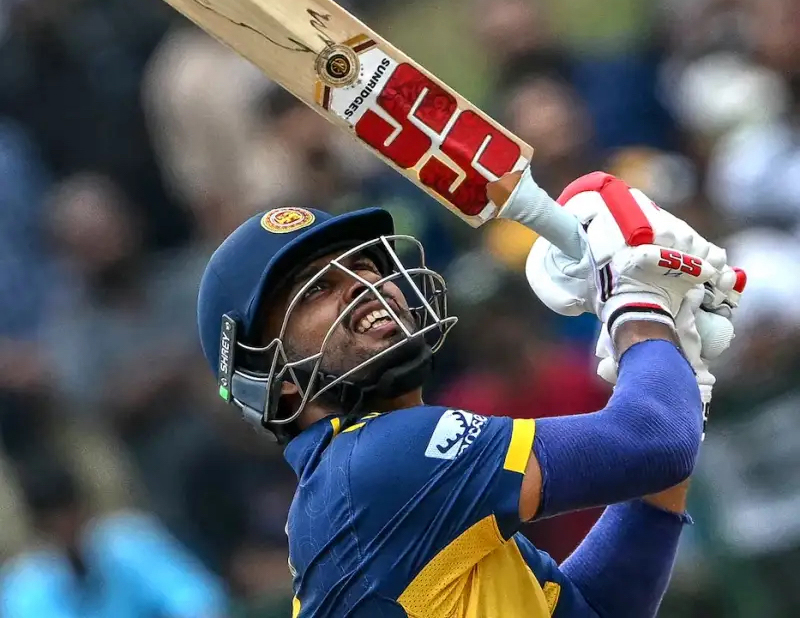
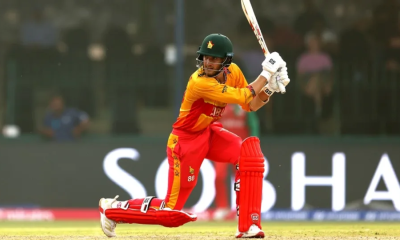
Dasun Shanaka hammered the fastest half-century by a Sri Lankan in T20Is as the co-hosts thrashed Oman by 105 runs at the T20 World Cup on Thursday in Pallekele for their second win in Group B.

The 2014 champions piled up 225-5, the highest total of the tournament, before restricting an outclassed Oman to 120-9.

The 43-year-old Mohammad Nadeem waged a lone battle for Oman, compiling an unbeaten 53 to become the oldest player to score a fifty in T20 World Cups.

Having promoted himself up the order and under pressure to deliver, Sri Lanka skipper Shanaka smashed a 19-ball half-century.

It has been a bruising few months for the out-of-form Shanaka since reclaiming the captaincy late last year.

But on a batting-friendly pitch he smacked the Oman bowlers to all corners of the park, peppering the stands with five sixes and two fours.

Before that, Pavan Rathnayake and Kusal Mendis laid the foundation as the pair each posted fluent half-centuries, stitching together a 94-run stand for the third wicket.

Once the platform was set, Kamindu Mendis applied the finishing touches.

Fresh from his match-turning cameo in the win over Ireland, the left-hander scored an unbeaten 19 off just seven deliveries, striking one four and two sixes.

Oman were never really in the game as they fell to a second defeat at the tournament.

Sri Lanka spinner Maheesh Theekshana shared the new ball with Dushmantha Chameera and they accounted for two wickets apiece.

by Rex Clementine ✍️



Latest News

Paul Stirling ruled out of World Cup with knee injury

Published

on

By

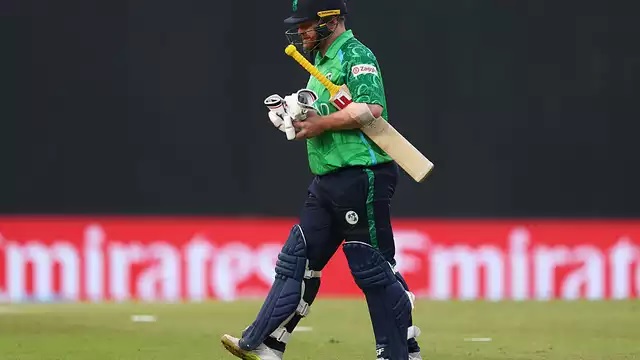
Paul Stirling, the captain of Ireland, has been ruled out of the ongoing ICC Men’s T20 World Cup, after suffering a knee injury, Cricket Ireland announced on Friday.

Stirling injured his knee while taking a diving catch in the seventh over of the first innings to dismiss Australian opener Josh Inglis on Thursday. As he came down, he landed on the point of his knee on an area of hard ground, and he left the field, handing over the captaincy duties to his deputy, Lorcan Tucker.

Stirling walked out to bat in the run chase, advising the Ireland team management that he felt he was able to bat. However on the first ball, as he set off for a single, he took a few steps and his knee buckled. The Irish captain was forced to retire hurt.

Ireland have included Sam Topping, the 20-year-old uncapped wicketkeeper-batter, as Stirling’s replacement. Topping is currently in Chennai at an off-season training camp with the Northern Knights squad. Last season, Topping scored 217 runs at 31.00 in T20s with a strike rate of 140 in his home domestic season. Topping’s inclusion is also critical as Ben Calitz is carrying some pain in his hand from the last match.

Speaking on the replacement Graeme West, Director of High Performance at Cricket Ireland, said, “Paul Stirling underwent an assessment and a scan after the Australian match which has subsequently revealed ligament damage – as such, he has been ruled out of the remainder of the T20 World Cup. Paul will shortly return home for rest and rehabilitation, ahead of the home summer.

“To replace Paul, we have called up Sam Topping, who is able to provide immediate cover as he is a short flight away in Chennai. Sam has been with the Northern Knights training squad and has been playing and training in similar conditions to Sri Lanka. The skill set he offers provides cover across a number of areas within the squad, which is important as Ben Calitz is also carrying a knock to his hand after the last match.”

Continue Reading

Sports

The silent pace revolution in Sri Lanka

Published

on

By

Anusha Samaranayake (R) has been responsible for the development of many fast bowlers in Sri Lanka [Cricbuzz]
Sri Lanka may be a breeding ground for spinners, but a silent fast-bowling revolution is taking place on the island – rather stealthily, without being largely unnoticed. Every day, around 40-50 pace bowlers, drawn from different parts of Sri Lanka, train at the Khettarama Stadium in Colombo under coach AD Anusha Samaranayake, who has worked with fast bowlers ranging from Lasith Malinga of the previous decade to Matheesha Pathirana of the current era. Sling, swing, pace, bounce, yorkers – the full fast-bowling menu is on display.

“Anusha is the father of Sri Lanka’s fast bowling,” says Zubin Bharucha, a coach of repute in India who has worked – and continues to work – with players ranging from Yashasvi Jaiswal to Vaibhav Sooryavanshi. “Few can match his knowledge of biometrics, physics, technique and the neuroscience of fast bowling. He has even worked with spinners.”

Crishan Kalugamage instantly endorses Bharucha’s views. “I have worked with Anusha sir for many years in Italy. I speak to him every day, and certainly before a match. He has a big impact on my bowling,” says the 34-year-old spinner from Italy. Kalugamage called Anusha after Italy’s demolition of Nepal in a Group C league fixture of the World Cup on Thursday. Kalugamage emerged player of the match at the Wankhede with figures of three for 18, and he told this website after the match on Thursday night that even before the Nepal game, he had a conversation with Anusha.

Anusha, himself a fast bowler in his playing days and played first class cricket, has worked with almost all Sri Lanka fast bowlers of recent times, beginning from the start of the century at the academy run by Sri Lanka Cricket. From Nuwan Zoysa and Farveez Maharoof of the past to Dushmantha Chameera, Eshan Malinga, Pramod Madushan, Dilshan Madushanka and Nuwan Thushara of the present day, his influence has been wide-ranging.

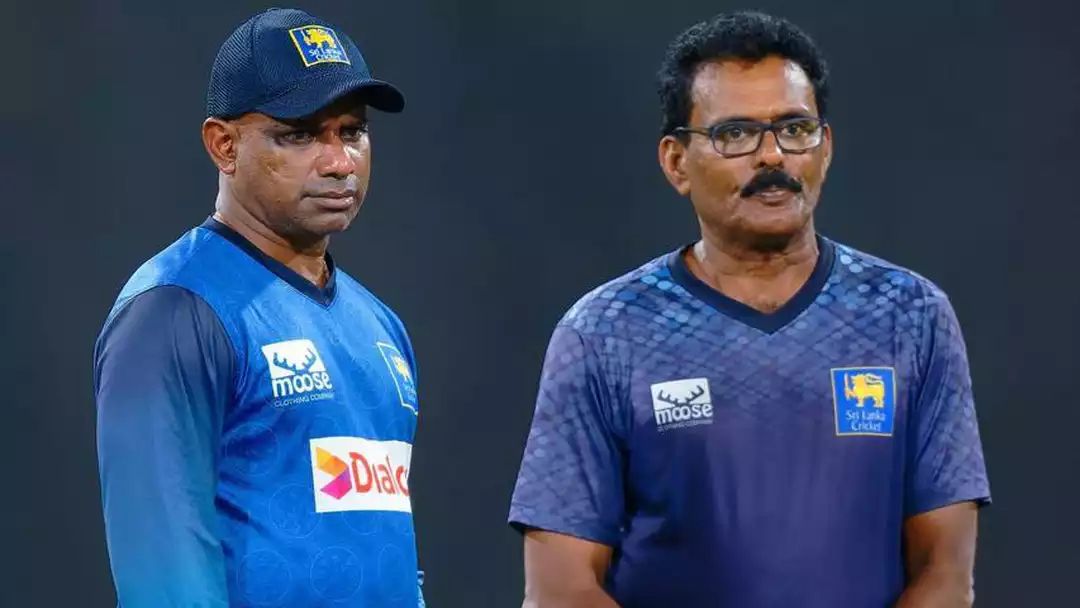
Along the way, the two famous slingers – Lasith Malinga and Matheesha Pathirana – also came under his wings at the academy. A fact of the matter, Malinga was brought to notice by current Sri Lanka coach Sanath Jayasuriya. And Pathirana had a stint with him and he was advised not to move his face along with his hand before bowling. He has been doing well since. Against Oman in the World Cup on Thursday, Pathirana bowled three overs for 11 runs and the word is back to his past best.

The academy was initially started by Anusha along with Rumesh Ratnayake and Champaka Ramanayake. Rumesh and Champaka later left in search of greener pastures, while Anusha continued with his national duties. He is currently Sri Lanka’s national fast-bowling coach. Incidentally, Anusha has also worked with India pacer Prasidh Krishna and Rahul Dravid’s son, Samit in recent times, having made a trip to Bengaluru.

“I am really surprised by the fast-bowling talent in Sri Lanka,” Bharat Arun, a former India bowling coach, told this website. Arun recently worked with Sri Lanka Cricket and during his two-week stint there in mid-2025, he observed around 70-80 fast bowlers with the potential to break into the national team. “The problem in Sri Lanka is that they tend to address the symptoms rather than the root cause. If they get the system right, there will be many pacers like Malinga and Pathirana,” added Arun.

Anusha (63), of course, is a perfectionist, as Bharucha says. He seems to have an answer to everything about Sri Lanka’s fast bowling – why there are many slingers on the island rather than conventional pacers, why unorthodoxy often outweighs orthodoxy among their quicks, why spin has traditionally taken primacy over pace, and the recent emergence of fast bowlers.

The last question first. It is said that most Sri Lankan pacers come from the coastal areas of the island and are inherently strong, having grown up swimming and running on the beaches – habits that help produce fast bowlers.

Now, coming to the first point – unorthodoxy – it is mainly because there are not many labs, high-performance centers, or research initiatives in the country. The coaches tend to encourage natural, raw talent rather than suppress non-conformity, unlike in other countries who have more organised systems. The reason why slingers emerge from Sri Lanka is that cricket is largely played with tennis balls and sub-innings balls, where sling and sidearm bowling is often more effective than a conventional high-arm action.

Besides, a slinging delivery, bowled from a lower release point, is less likely to meet the sweet spot of the bat than a high-arm delivery. Finally, spin is preferred more in Sri Lanka because the surfaces here deteriorate by about 15 per cent, helping turners more than in SENA countries, where pitches deteriorate by roughly seven per cent, favoring pacers.

Anusha is known for explaining the dynamics of Sri Lanka’s bowling landscape but he does not speak about his own contributions to Sri Lankan cricket. He often talks about three types of fast bowlers. The first group consists of those who bowl around 145 kmph, like Brett Lee and Shoaib Akhtar. The second group bowls between 125-135 kmph, such as Sri Lanka’s Vaas and India’s Irfan Pathan. The third group includes bowlers who bowl between 135-145 kmph, like James Anderson, and even Wasim Akram.

The first type can unsettle batters with sheer pace but lacks the ability to swing or seam with control. The third type can swing and seam effectively but may not consistently unsettle batters, while the middle type combines both skills – able to bowl with pace, swing, seam, and control.

India’s very own Jasprit Bumrah should belong to this middle category, which could explain his phenomenal success. However, Anusha is contractually bound not to and would not speak about Bumrah or other pacers of current or past generations unless he has permission from his employer, SLC.

[Cricbuzz]

Continue Reading

Latest News

Canada, UAE face each other for only the second time in T20Is

Published

on

By

UAE were beaten comprehensively by New Zealand in Chennai [Cricinfo]

UAE are the more experienced, and better performing, side when compared to Canada, though there isn’t much to separate them in the T20I rankings. UAE are 17th, Canada 19th. They have also had more exposure against high-quality opposition between the previous T20 World Cup and this one, playing 11 matches against Full Members while Canada have played none.

UAE, however, were disrupted ahead of their tournament opener, with top-order batter Muhammad Zohaib being sent home. The ECB said it was for “disciplinary reasons”. The ICC said it was due to “player mental well-being and team welfare issues”. Zohaib reportedly said he was forced out.

UAE had to rejig their combination and ended up losing their first game to New Zealand by ten wickets in Chennai. They got half-centuries from Muhammad Waseem and Alishan Sharafu but not much from anyone else, and their bowlers conceded the target of 174 in 15.2 overs.

Canada also suffered a heavy defeat against South Africa in Ahmedabad, where they conceded 213 for 4 and made only 156 in response, with only Navneet Dhaliwal and Harsh Thaker getting past 20 in the chase.

These two teams have faced each other only once before the T20Is – back in 2019, when UAE won by 14 runs in Abu Dhabi.

Alishan Sharafu matched Muhammad Waseem shot for shot during their 107-run stand for the second wicket against New Zealand. Sharafu, 23, struck the ball cleanly and played both an aggressive yet supporting role in the company of Waseem. He had a poor run of scores leading into this T20 World Cup and UAE will hope the 55 in Chennai is a turnaround in form.

“Damien Martyn, eat your heart out!” said Danny Morisson on commentary, when Nayneet Dhaliwal played a back-foot punch through the off side. Dhaliwal rose onto his toes as he punched Kagiso Rabada and Lungi Ngidi through the tightly set field. He struck seven fours and a six during his 64 off 49 balls against New Zealand. Dhaliwal, incidentally, was the Canada captain when they played UAE in that T20I in 2019.

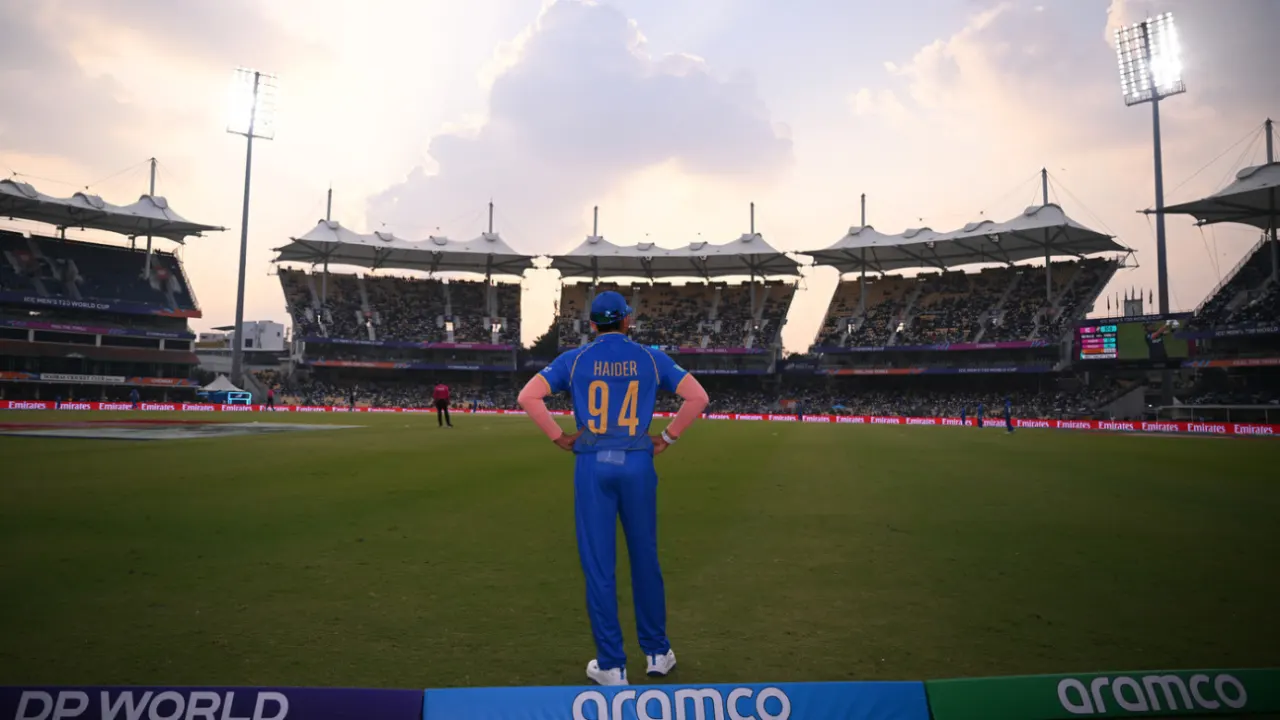
UAE could bring in Muhammad Jawadullah as a seam-bowling option. They also have Muhammad Farooq and Simranjeet Singh on the bench, while Haider Shah replaced Zohaib in the squad.

UAE (probable): Aryansh Sharma (wk), Muhammad Waseem (capt), Alishan Sharafu, Harshit Kaushik, Mayank Kumar,  Sohaib Khan, Muhammad Arfan, Dhruv Parashar, Haider Ali,  Junaid Siddique,  Muhammad Rohid

Canada are likely to play the same XI that lost to South Africa.

Canada (probable):  Dilpreet Bajwa (capt),  Yuvraj Samra, Navneet Dhaliwal, Nicholas Kirton,  Shreyas Movva (wk),  Harsh Thaker,  Saad Bin Zafar, 8Jaskaran Singh,  Dilon Heyliger,  Kaleem Sana,  Ansh Patel

[Cricinfo]

Continue Reading

Trending