
Opinion
Servant of God: Thomas Cardinal Cooray OMI


36th Death Anniversary
The 36th anniversary of the death of His Eminence Thomas Cardinal Cooray falls on 29th October 2024. He was born as the fifth child to a devout catholic family of Periyamulla, Negombo on 28th December 1901. After pursuing his secondary education at St. Joseph’s College, Colombo, as a junior seminarian, he earned a B.A. degree from the University of London offering Botany, English Literature and Latin. He joined the Congregation of the Oblates of Mary Immaculate (OMI) making his first vows in 1925. His devout character and academic excellence won him the opportunity of being sent to Rome to further his priestly and missionary training. Ordained priest in 1929 he returned to Sri Lanka in July 1931 with doctorates in Theology and Philosophy to his credit. Assigned first to the staff of St. Joseph’s College, he was next appointed Warden to the Catholic University Hostel and finally became the first Sri Lankan Director of the Oblate major seminary in Borella in 1937. After an eight–year tenure in this office, he was nominated in mid-January 1945 as Co-Adjutor to the then Archbishop Jean-Marie Masson OMI whom he succeeded in July 1947. Thus he became the sixth and the first Sri Lankan Archbishop of the Metropolitan See of Colombo. In February 1965 Archbishop Cooray was created cardinal by Pope Paul VI, the first ever Sri Lankan to be thus honoured. While he is the third cardinal in the 200-year history of the Oblate Congregation, he is the fifth in Asia. Having administered the Archdiocese for nearly three decades he resigned in September 1976. His death occurred in the house of his retirement “Emmaus” closer to the Basilica Church at Tewatte (Rāgama) at the age of 87 and his mortal remains were interred in the crypt of the Basilica on November 3rd 1988 amidst a large crowd of bishops, priests, religious, lay faithful and State dignitaries. The servant of God had been 63 years an Oblate religious, 59 years a priest, 43 years a Bishop and 23 years a cardinal. It is well-known that he died in the odour of sanctity. The cause of his sainthood is now under the purview of the Vatican. An elaborate Memorial Celebration is scheduled for 26th October involving many churches in and around Negombo.
Multi-faceted Endeavours
The Cooray-era dawns with the independence period of Ceylon in 1948 and meanders through events of profound religious, socio-cultural and political changes. The dawn of independence saw the birth of nationalism igniting manifold conflicts, tensions and alienation among people. The majority-minority syndrome in the form of Sinhala-Buddhist ethno-nationalism emerged as a reaction to the prevailing vestiges of colonial rule. Articulated in the Buddhist-Commission report submitted by the All-Ceylon Buddhist Congress, it was incorporated with the Act No 24 of 1955. Seen as foreign to the local culture, Christianity was perceived as a relict left by colonial powers. The situation normalised with the Constitution of 1972 which made Ceylon the Republic of Sri Lanka with Buddhism though given the foremost place also guaranteeing religious freedom for others. Cardinal Cooray attended the promulgation of this constitution on 22 May 1972. With the independence-era also leftist and Marxist ideologies began infiltrating into the country and Archbishop Cooray feared that such influence would derail the benefits of independence, adversely affect the religious culture of the people and even seep into the universities. However, Cardinal Cooray always steered clear of political involvements yet standing strongly for social justice and fundamental rights. He dreamt of a motherland of peace and prosperity with differences reconciled in true patriotism and envisioning it an oasis of national unity and ethnic harmony.
Challenges and Issues of Crisis
Archbishop Cooray faced many challenges such as the 1960/61 schools take-over when out of the over 600 Grade-III schools run by the Catholic Church, the archdiocese of Colombo lost over 250. He could safeguard only some Grade I and II schools conceded but retained at heavy cost. Today, these same schools are prestigious and well-known for the quality of education, discipline, safety and character formation. Though bereft of schools, to ensure the formation of Catholic children, Cardinal Cooray initiated the Daham Pāsala church programme as well as opening a teacher-training center in 1972.
Successive governments which often vacillated, paved the way for social unrest amongst the youth which flared up in the youth insurrection of April 1971. The island was plunged in the first-ever virulent and bloody country-wide violence. Though the rebellion was suppressed, the rehabilitation of the errant youth became a formidable task in which Cardinal Cooray was ready to collaborate. As a result he readily offered a 150-acre land in Bangadeniya in Chilaw, for a farm-school for vocational training.
In the mid-sixtees, restriction of visas for foreign missionaries saw the exodus of many catholic priests and nuns including the Charity Sisters of Mother Teresa, thus creating a great void especially in church administration. However, continuity of spiritual care had to be ensured. It was this challenge foreseen much earlier that prompted Archbishop Cooray to initiate building an indigenous local clergy: one of his unique achievements. The National Seminary of Our Lady of Lanka nestling in the proximity of the Dumbara Valley was thus inaugurated in 1955 with the Jesuit-run Papal Seminary there since 1893 being shifted to Poona. Today this historic institution has become the nursery of the catholic clergy. An adverse situation arose for all Christians when Poya-days were declared public holidays with Sunday as a working day (Holiday Act 17/1965) till it was amended by Holiday Act 27/1971 restoring also Sunday. The ceiling on the acquisition of land for the building of places of worship too created difficulties.
Specific Services and Projects
His concern for social justice is seen in the Socio-Economic and Development Centre (SEDEC) opened in Kynsey Road, Borella in 1969 which became eventually the National Caritas with its affiliation to International Caritas organization. Meant to help the poor, animation and empowerment of vulnerable classes such as plantation workers, farmers, lower-income earners and unemployed youth, SEDEC is in the forefront of promoting human rights as well as national reconciliation.
Education in general was one of his priorities. The Aquinas University College in Borella he founded in 1954 has grown to be a degree-awarding institution providing diploma and degree courses in various branches in view of professional advancement. Today, it has become a hub of higher learning in Colombo. Fr. Peter Pillai OMI, one of Asia’s best brains assisted in this venture. Youth are able to receive practical skills in the Radio and Electronic Laboratory that was founded in Kotahena in 1962 with Fr. Ignatius Perera a man of multiple skills, providing training mainly to school drop-outs. The nine-storey edifice named Paul VI Centre in Pettāh, co-ordinates all Laity services which included Young Christian Workers (YCW) and Christian Workers Movement (CWM). The needs of the fisher-folk and farmers had been uppermost in his agenda. His rehabilitation projects for the victims of natural disasters such as the floods of Chilaw and NCP (1950s) and of Trincomalee (1960s) are well on record.
The pastoral zeal of Cardinal Cooray embraced his entire catholic flock scattered in 88 churches from Negombo along the west coast through Colombo, Moratuwa stretching up to Bēruwala, also along the Kandy road through Kadawata, Nittambuwa to Welivēriya. The Basilica Church of Our Lady of Lanka built in Tēwatte is a monument in oriental architecture. The massive trees planted with his own hands there is proof of his great love for the plant-world nurtured even from his student days at St. Joseph’s College. A retreat house and two convents of contemplative nuns adorn the surroundings of the Basilica making its environs an oasis for prayer and meditation. In January 1965, on his initiative, a nine-day renewal seminar conducted by the Better World Movement, an international organisation brought in more than 350 participants, including Bishops, priests, religious and laity to Kandy. It reflected the face of the entire catholic community of Sri Lanka. A significant spiritual endeavour was the missionary district and catholic settlements he inaugurated in Anuradhapura in mid-fifties to care for the scattered Sinhala-speaking Catholics of NCP which to his immense joy became a full-fledged diocese in 1982. Cardinal Cooray is credited with being a founding-father of the Association of the Asian Bishops (FABC) with headquarters in Bangkok and co-founding Radio Veritas based in Manila for beaming Catholic programs across South-East Asia.
The Servant of God, Thomas Cardinal Cooray OMI was truly a great spiritual leader and true patriot commanding much respect from both religious dignitaries of his time such as Madihē Pagnāseeha Nāyake Thēro, Ven. Dr. Walpola Rahula Thēro and by those in government. The New York Times of 1st November 1988 quoting the Vatican said that: “During his time as Archbishop, Cardinal Cooray ‘favoured a respectful dialogue with the Buddhists and with other Christians, …….During the years of suppression or limitation of religious freedom, Cardinal Cooray constantly affirmed the spirituality of his own mission and the loyalty of Roman Catholics to the Sri Lankan Government’. President R. Premadāsa had said of him: “A personality of exceptional character and grace, and an eminent spiritual leader who made a mark in the history of the country and brought to his motherland great honour”. Cardinal Cooray, is an illustrious son of the soil with his rare charisma gracing the landscape of our mother-land. May his dream of a united and prosperous Sri Lanka rich in her religiosity, culture and history be ours too.
Rev. Fr. Leopold Ratnasekera OMI.
OMI Seminary, Ampitiya, 20160.
Tel: 0764702299


Recently, we all held our breath when a conflict began to develop very close to Sri Lanka. The sinking of the Iranian frigate IRIS Dena in the Indian Ocean took place in international waters about 30 miles from Sri Lanka’s southern coast. As the whole world watched, the President and the Government of Sri Lanka were faced with a humanitarian crisis. A second Iranian ship was also in distress and needed assistance. Although Sri Lanka’s maritime history dates back to 5th
Century BCE, this type of geopolitical crisis has been very rare.
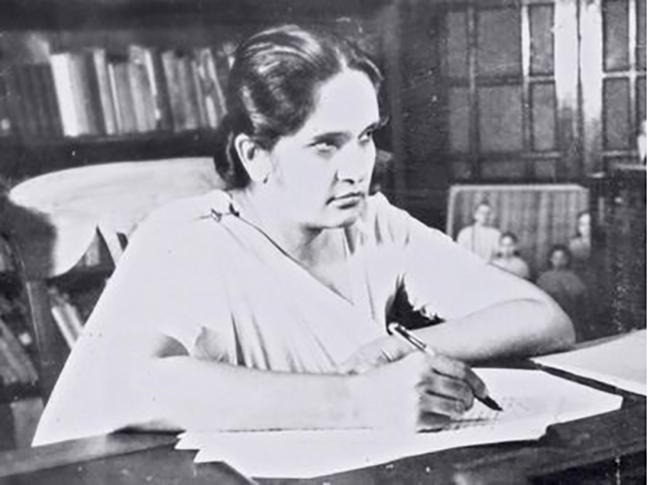
Sri Lanka considered it the moral responsibility of the country to help out those affected during this geopolitical crisis. It chose to activate its role as a custodian of the Indian Ocean. Perhaps, not many individuals are aware of Sri Lanka’s historical role in calling on the United Nations to declare the Indian Ocean a Zone of Peace. In 1971, under the leadership of the first woman prime minister of the world, Sirimavo Bandaranaike, Sri Lanka, together with Tanzania brought forth a resolution to the 26th Session of the General Assembly of the United Nations to declare the Indian Ocean a “Zone of Peace.” This was done to avoid it being used by superpower rivalries to gain military control of the region. Sri Lanka’s Ambassador Shirley Amarasinghe, the President of the 31st general Assembly of the UN was responsible for working on this resolution as with others dealing with the “Law of the Sea”.
Chandra Fernando, Educational Consultant, USA)
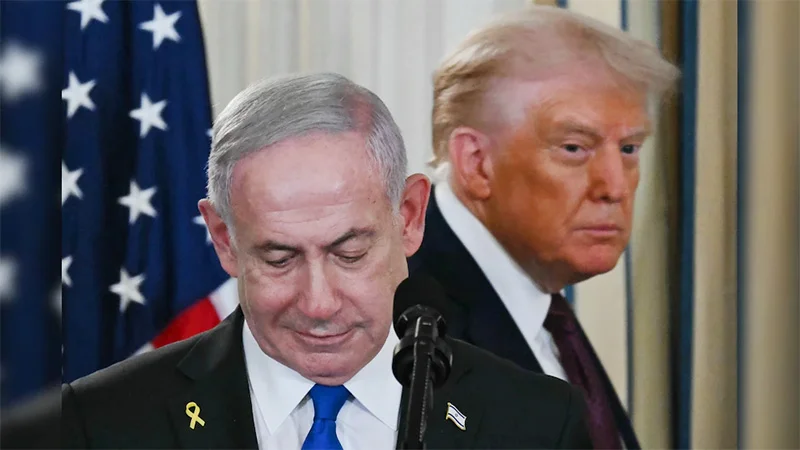
Wars often produce moments when leaders feel compelled to seek a decisive stroke that will end the conflict once and for all. History shows that such moments can generate choices that would have seemed unthinkable only months earlier. When Harry S. Truman authorised the atomic bombings of Hiroshima and Nagasaki in 1945, the decision emerged from precisely such wartime pressures. As the conflict involving the United States, Israel and Iran intensifies today, the world must ensure that a similar moment of desperate calculation does not arise again.
The lesson of that moment in history is not that such weapons can end wars, but that once the logic of escalation begins to dominate wartime decision-making, even the most unthinkable options can enter the realm of strategic calculation. The mere possibility that such debates could arise is reason enough for policymakers everywhere to approach the present conflict with extreme caution.
As the war drags on, both Donald Trump and Benjamin Netanyahu will face mounting pressure to produce decisive results. Wars rarely remain confined to their original scope once expectations of rapid victory begin to fade. Political leaders must demonstrate progress, military planners search for breakthroughs, and public narratives increasingly revolve around the need for a conclusive outcome. In this environment, media speculation about “exit strategies” or “off-ramps” for Washington can unintentionally increase pressure on decision-makers. Even well-intentioned commentary can shape the climate in which leaders make decisions, potentially nudging them toward harder, more dramatic actions.
Neither the United States nor Israel lacks the technological capability associated with advanced nuclear arsenals. The nuclear arsenals of advanced powers today are far more sophisticated than the devices used in 1945. While their existence is intended primarily as deterrence, prolonged wars have historically forced strategic communities to examine every available option. Even the discussion of such possibilities is deeply unsettling, yet ignoring the pressures that produce such debates can be dangerous.
For that reason, policymakers and societies on all sides must recognise the full range of choices that prolonged wars can place before leaders. For Iran’s leadership and its wider strategic community, absorbing this reality may be essential if catastrophic escalation is to be avoided. From Tehran’s perspective, the conflict may well be seen as existential. Yet history also shows that wars framed as existential struggles can generate the most dangerous strategic decisions.
The intellectual climate in Washington has also evolved. A number of influential voices in Washington now argue that the United States has become excessively risk-averse and that restoring global credibility requires a more assertive posture. Such arguments reflect a broader shift toward the language of renewed deterrence and strategic competition. Yet this very logic can make it politically harder for leaders to conclude conflicts without visible demonstrations of strength.
The outcome of this conflict will also be watched closely by other major powers. In 1945, the atomic decision was shaped not only by the desire to end a brutal war but also by the strategic message it sent to rival states observing the emergence of a new geopolitical era. Today, other significant powers will similarly draw lessons from how the United States manages both the conduct and the conclusion of this conflict.
This is why cool judgment is essential at this stage of the war. Whether the original decision to go to war was wise or ill-advised is now largely beside the point. Once a conflict has begun, the overriding priority must be to prevent escalation into something far more dangerous.
In such moments, the international system can benefit from the quiet diplomacy of actors that retain a degree of strategic autonomy. Among emerging nations, India stands out as a major emerging power in this regard. Despite its energy dependence on the Gulf and deep economic engagement with the United States, India has consistently demonstrated a capacity to maintain independent channels of communication across geopolitical divides.
This unique positioning may allow New Delhi to explore, discreetly and without public fanfare, avenues for de-escalation with Washington, Tel Aviv and Tehran alike. At moments of heightened tension in international politics, the world sometimes requires what might be called an “adult in the room”: a state capable of engaging all sides while remaining aligned exclusively with none.
If the present conflict continues to intensify, the value of such diplomacy may soon become evident. The most important lesson from 1945 is not only the destructive power of nuclear weapons but the pressures that can drive leaders toward choices that later generations struggle to comprehend. History shows that when wars reach their most desperate phases, restraint remains the only safeguard against catastrophe.
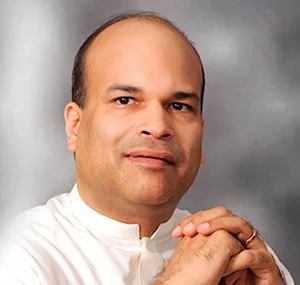
(Milinda Moragoda is a former Cabinet Minister and diplomat from Sri Lanka and founder of the Pathfinder Foundation, a strategic affairs think tank, can be contacted via email@milinda. This was published ndtv.com on 2026.03.1
by Milinda Moragoda

Dr. B.J.C. Perera (Dr. BJCP) in his article ‘Language: The symbolic expression of thought’ (The island 10.03.2026) delves deeper into an area that he has been exploring recently – childhood learning. In this article he writes of ‘a trilingual Sri Lanka’, reminding me of an incident I witnessed some years ago.
Two teenagers, in their mid to late teens, of Muslim ethnicity were admitted to the hospital late at night, following a road traffic accident. They had sustained multiple injuries, a few needing surgical intervention. One boy had sustained an injury (among others) that needed relatively urgent attention, but in itself was not too serious. The other had also sustained a few injuries among which one particular injury was serious and needed sorting out, but not urgently.
After the preliminary stabilisation of their injuries, I had a detailed discussion with them as to what needed to be done. Neither of them spoke Sinhala to any extent, but their English was excellent. They were attending a well-known international school in Colombo since early childhood and had no difficulty in understanding my explanation – in English. The boys were living in Colombo, while their father would travel regularly to the East (of Sri Lanka) on business. The following morning, I met the father to explain the prevailing situation; what needs to be done, urgency vs. importance, a timeline, prioritisation of treatment, possible costs, etc.
Doctor’s dilemma
The father did not speak any English and in conversation informed me that he had put both his boys into an International School (from kindergarten onwards) in order to give them an English education. The issue was that the father’s grasp of Sinhala was somewhat rudimentary and therefore I found that I could not explain the differences in seriousness vs, urgency and prioritisation issues adequately within the possible budget restrictions. This being the case and as the children understood exactly what was needed, I then asked the sons to ‘educate’ the father on the issues that were at hand. The boys spoke to their father and it was then that I realised that their grasp of Tamil was the same as their father’s grasp of Sinhala!
In the end I had to get down a translator, which in this case was a junior doctor who spoke Tamil fluently; explained to him what was needed a few times as he was not that fluent in English, certainly less than the boys, and then getting him to explain the situation to the father.
What was disturbing was having related this episode at the time to be informed that this was not in fact not an isolated occurrence. That there is a growing number of children that converse well in English, but are not so fluent in their mother tongue. Is English ‘the mother tongue’ of this ‘new generation’ of children? The sad truth is no and tragically this generation is getting deprived of ‘learning’ in its most fundamental form. For unfortunately, correct grammar and syntax accompanied with fluency do not equal to learning (through a language). It is the natural process of learning two/three languages (0 to 5 years) that Dr. BJCP refers to as being bilingual/trilingual and is the underlying concept, which is the title of Dr. BJCP’s article ‘Language: The symbolic expression of thought’.
“Introduction into society”
It is critical to understand at a very deep level the extent and process of what learning in a mother tongue entails. The mother’s voice is arguably the first voice that a newborn hears. Generally speaking, from that point onwards till the child is ‘introduced into society’ that is the voice he /she hears most. In our culture this is the Dhorata wedime mangalyaya. Till then the infant gets exposed to only the voices of the immediate /close family.
Once the infant gets exposed to ‘society’ he /she is metaphorically swimming in an ocean of language. Take for example a market. Vendors selling their wares, shouting, customers bargaining, selecting goods, asking about the quality, freshness, other families talking among themselves etc. The infant is literally learning/conceptualizing something new all the time. This learning process happens continuously starting from home, at friends/relatives’ houses, get-to-gathers, festivals, temples etc. This societal exposure plays a dominant role as the child/infant gets older. Their language skills and vocabulary increase in leaps and bounds and by around three years of age they have reached the so-called ‘language explosion’ stage. This entire process of learning that the child undergoes, happens ‘naturally and effortlessly’. This degree of exposure/ learning can only happen in Sinhala or Tamil in this country.
Second language in chilhood
Learning a second language in childhood as pointed out by Dr BJCP is a cognitive gift. In fact, what it actually does is, deepens the understanding of the first language. So, this-learning of a second language- is in no way to be discouraged. However, it is critical to be cognisant of the fact that this learning of the second language also takes place within a natural environment. In other words, the child is picking up the language on his own. As readily illustrated in Dr. BJCP’s article, the home environment where the parents and grandparents speak different languages. He or she is not being ‘forcefully taught’ a language that has no relevance outside the ‘environment in which the second language is taught’. The time period we (myself and Dr. BJCP) are discussing is the 0 to 5-year-old.
It does not matter whether it is two or three languages during this period; provided that it happens naturally. For as Dr. BJCP states in his article ‘By age five, they typically catch up in all languages…’ To express this in a different way, if the child is naturally exposed to a second /third language during this 0 to 5-year-old period, he /she will naturally pick it up. It is unavoidable. He /she will not need any help in order for this to happen. Once the child starts attending school at the age of 5 or later, then being taught a second language formally is a very different concept to what happens before the age of 5.
The tragedy is parents, not understanding this undisputed significance of ‘learning in/a mother tongue’, during the critical years of childhood-0 to 5; with all good and noble intentions forcefully introduce their child to a foreign tongue (English) that is not spoken universally (around them) i. e., It is only spoken in the kindergarten; not at home and certainly nowhere, where the parents take their children.
Attending school
Once the child starts attending school in the English medium, there is no further (or minimal) exposure to his /her mother tongue -be it Sinhala or Tamil. This results in the child losing the ability to converse in his/her original mother tongue, as was seen earlier on. In the above incident that I described at the start of this article, when I finally asked the father did he comprehend what was happening; his eyes filled with tears and I did wonder was this because of his sons’ injuries or was it because his decisions had culminated in a father and a son/s who could no longer communicate with each other in a meaningful way.
Dr BJCP goes on to state that in his opinion ‘a trilingual Sri Lanka will go a long way towards the goals and display of racial harmony, respect for different ethnic groups…’ and ‘Then it would become a utopian heaven, where all people, as just Sri Lankans can live in admirable concordant synchrony, rather than as a splintered clusters divided by ethnicity, language and culture’. Firstly, it must be admitted from the aspect of the child’s learning perspective (0 to 5 years); an environment where all three languages are spoken freely and the child will naturally pick up all three languages (a trilingual reality) does not actually exist in Sri Lanka.
However, the pleasant practical reality is that, there is absolutely no need for a trilingual Sri Lanka for this utopian heaven to be achieved. What is needed is in fact not even a bilingual Sri Lanka, but a Sri Lanka, where all the Sinhalese are taught Tamil and vice versa. Simply stated it is complete lunacy– that two ethnic communities that speak their own language, need to learn another language that is not the mother tongue of either community in order to understand one another! It is the fact that having been ruled by the British for over a hundred years, English has been so close to us, that we are unable to see this for what it is. Imagine a country like Canada that has areas where French is spoken; what happens in order to foster better harmony between the English and French speaking communities? The ‘English’, learn to speak French and the ‘French’ learn to speak English. According to the ‘bridging language theory of Sri Lanka’, this will not work and what needs to happen is both communities need to learn a third language, for example German, in order to communicate with one another!
Learning best done in mother tongue
eiterating what I said in my previous article – ‘Educational reforms: A Perspective (The Island 27.02.2026) Learning is best done in one’s mother tongue. This is a fact, not an opinion. The critical thing parents should understand and appreciate is that the best thing they can do for their child is to allow/encourage learning in his/her mother tongue.
This period from 0 to 5 years is critically important. If your child is exposed naturally to another language during this period, he /she will automatically pick it up. There is no need to ‘forcefully teach’ him /her. Orchestrating your child to learn another language, -English in this instance- between the ages of 0 to 5 at the expense of learning in his /her mother tongue is a disservice to that child.
by Dr. Sumedha S. Amarasekara

Public will not be served as Computer system failure at Department of Registration of Persons

Trump says he is postponing strikes on Iran power plants after ‘productive’ talks on ending war

Asia stocks slide as US and Iran threaten to escalate war

Heat Index at Caution Level in the Western, Sabaragamuwa, Southern and North-western provinces and in Anuradhapura, Mannar and Vavuniya districts

Showers may occur at several places in the Western and Sabaragamuwa provinces and in Galle, Matara and Nuwara-Eliya districts after 2.00 pm.

Fuel price hikes trigger transport disruptions and calls for fare increases

‘Dates have the highest sugar content to fight Coronavirus’

Sunday Island 27 December – Headlines

#SundayIsland 17th December – Headlines

Sunday Island – 28th March

Sunday Island Headlines – 21 March

Sunday Island – 21st February – Headlines
-

 News6 days ago
CIABOC questions Ex-President GR on house for CJ’s maid
-

 News7 days ago
Sri Lankan marine scientist Asha de Vos honoured at UNGA opening
-

 News7 days ago
Australian HC debunks misleading travel risk claims for Sri Lanka
-
 News5 days ago
Bailey Bridge inaugurated at Chilaw
-
 Latest News7 days ago
Wednesdays declared a government holiday with effect from 18th March
-

 News5 days ago
Pay hike demand: CEB workers climb down from 40 % to 15–20%
-
 News4 days ago
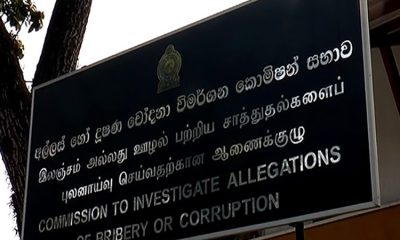
CIABOC tells court Kapila gave Rs 60 mn to MR and Rs. 20 mn to Priyankara
-

 Editorial6 days ago
Couple QR-based quota with odd-even rationing