
Latest News
Scientists find ‘strongest evidence yet’ of life on distant planet


Scientists have found new but tentative evidence that a faraway world orbiting another star may be home to life.
A Cambridge team studying the atmosphere of a planet called K2-18b has detected signs of molecules which on Earth are only produced by simple organisms.
This is the second, and more promising, time chemicals associated with life have been detected in the planet’s atmosphere by Nasa’s James Webb Space Telescope (JWST).
But the team and independent astronomers stress that more data is needed to confirm these results.
The lead researcher, Prof Nikku Madhusudhan, speaking at his lab at Cambridge University’s Institute of Astronomy said that he hopes to obtain the clinching evidence soon.
“This is the strongest evidence yet there is possibly life out there. I can realistically say that we can confirm this signal within one to two years.”
K2-18b is two-and-a-half times the size of Earth and is 700 trillion miles, or 124 light years, away from us – a distance far beyond what any human could travel in a lifetime.
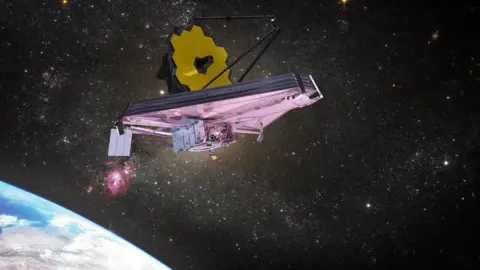
JWST is so powerful that it can analyse the chemical composition of the planet’s atmosphere from the light that passes through from the small red Sun it orbits.
The Cambridge group has found that the atmosphere seems to contain the chemical signature of at least one of two molecules that are associated with life: dimethyl sulphide (DMS) and dimethyl disulphide (DMDS). On Earth, these gases are produced by marine phytoplankton and bacteria.
Prof Madhusudhan said he was surprised by how much gas was apparently detected during a single observation window. “The amount we estimate of this gas in the atmosphere is thousands of times higher than what we have on Earth,” he said. “So, if the association with life is real, then this planet will be teeming with life,” he added.
Prof Madhusudhan went further: “If we confirm that there is life on K2-18b, it should basically confirm that life is very common in the galaxy.”
He told BBC Radio 5Live on Thursday: “This is a very important moment in science, but also very important to us as a species. “If there is one example, and the universe being infinite, there is a chance for life on many more planets.”
Dr Subir Sarkar, a lecturer in astrophysics at Cardiff University and part of the research team, said the research suggests K2-18b could have an ocean which could be potentially full of life – though he cautioned scientists “don’t know for sure”.
He added that the research team’s work will continue to focus on looking for life on other planets: “Keep watching this space.”
There are lots of “ifs” and “buts” at this stage, as Prof Madhusudhan’s team freely admits.
Firstly, this latest detection is not at the standard required to claim a discovery.
For that, the researchers need to be about 99.99999% sure that their results are correct and not a fluke reading. In scientific jargon, that is a five sigma result.
These latest results are only three sigma, or 99.7%. Which sounds like a lot, but it is not enough to convince the scientific community. However it is much more than the one sigma result 0f 68% the team obtained 18 months ago. which was greeted with much skepticism at the time.
But even if the Cambridge team obtains a five sigma result, that won’t be conclusive proof that life exists on the planet, according to Prof Catherine Heymans of Edinburgh University and Scotland’s Astronomer Royal, who is independent of the research team.
“Even with that certainty, there is still the question of what is the origin of this gas,” she told BBC News.
“On Earth it is produced by microorganisms in the ocean, but even with perfect data we can’t say for sure that this is of a biological origin on an alien world because loads of strange things happen in the Universe and we don’t know what other geological activity could be happening on this planet that might produce the molecules.”
That view is one the Cambridge team agree with. They are working with other groups to see if DMS and DMDS can be produced by non-living means in the lab.
“There is still a 0.3% chance that it might be a statistical fluke,” Prof Madhusudhan said.
Suggesting life may exist on another planet was “a big claim if true”, he told BBC Radio 4’s Today programme, adding: “So we want to be really, really thorough, and make more observations, and get the evidence to the level that there is less than a one-in-a-million chance of it being a fluke.”
He said this should be possible in “maybe one or two years”.
Other research groups have put forward alternative, lifeless, explanations for the data obtained from K2-18b. There is a strong scientific debate not only about whether DMS and DMDS are present but also the planet’s composition.
The reason many researchers infer that the planet has a vast liquid ocean is the absence of the gas ammonia in K2-18b’s atmosphere. Their theory is that the ammonia is absorbed by a vast body of water below.
But it could equally be explained by an ocean of molten rock, which would preclude life, according to Prof Oliver Shorttle of Cambridge University.
“Everything we know about planets orbiting other stars comes from the tiny amounts of light that glance off their atmospheres. So it is an incredibly tenuous signal that we are having to read, not only for signs of life, but everything else,” he said.
“With K2-18b part of the scientific debate is still about the structure of the planet.”
Dr Nicolas Wogan at Nasa’s Ames Research Center has yet another interpretation of the data. He published research suggesting that K2-18b is a mini gas giant with no surface.
Both these alternative interpretations have also been challenged by other groups on the grounds that they are inconsistent with the data from JWST, compounding the strong scientific debate surrounding K2-18b.
Prof Chris Lintott, presenter of the BBC’s The Sky at Night, said he had “great admiration” for Prof Madhusudhan’s team, but was treating the research with caution.
“I think we’ve got to be very careful about claiming that this is ‘a moment’ on the search to life. We’ve [had] such moments before,” he told Today.
He said the research should be seen instead as “part of a huge effort to try and understand what’s out there in the cosmos”.
Prof Madhusudhan acknowledges that there is still a scientific mountain to climb if he is to answer one of the biggest questions in science. But he believes he and his team are on the right track.
“Decades from now, we may look back at this point in time and recognise it was when the living universe came within reach,” he said.
“This could be the tipping point, where suddenly the fundamental question of whether we’re alone in the universe is one we’re capable of answering.”
The research has been published in The Astrophysical Journal Letters.
[BBC]


A South Korean court has sentenced former First Lady Kim Keon Hee to one year and eight months in prison after finding her guilty of accepting bribes from the Unification Church, according to South Korea’s official Yonhap news agency.
The Seoul Central District Court on Wednesday cleared Kim, the wife of disgraced ex-President Yoon Suk Yeol, of additional charges of stock price manipulation and violating the political funds act.
Kim was accused of receiving bribes and lavish gifts from businesses and politicians, as well as the Unification Church, totaling at least $200,000.
The prosecution team had also indicted Unification Church leader Han Hak-ja, now on trial, after the religious group was suspected of giving Kim valuables, including two Chanel handbags and a diamond necklace, as part of its efforts to win influence with the president’s wife.
Prosecutors in December said Kim had “stood above the law” and colluded with the religious sect to undermine “the constitutionally mandated separation of religion and state”.

Prosecutor Min Joong-ki also said South Korea’s institutions were “severely undermined by abuses of power” committed by Kim.
The former first lady had denied all the charges, claiming the allegations against her were “deeply unjust” in her final testimony last month.
But she has also apologised for “causing trouble despite being a person of no importance”.
[Aljazeera]
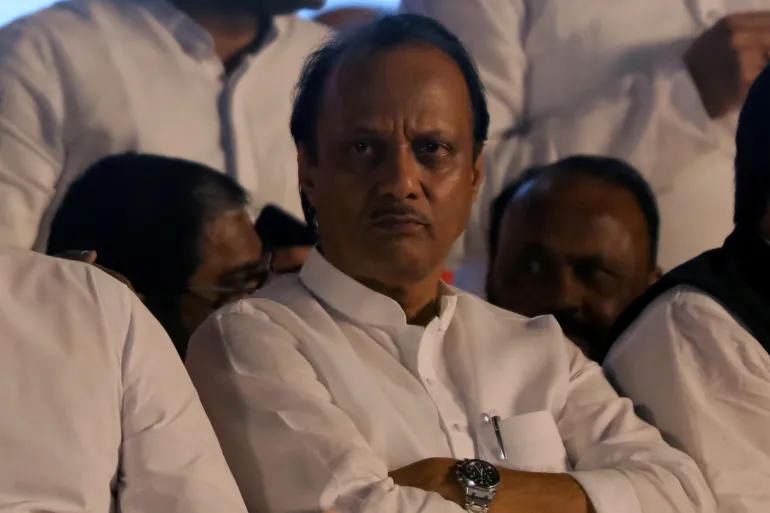
A plane crash has killed the deputy chief minister of India’s Maharashtra state, Ajit Pawar, the country’s aviation regulator has said.
The plane, which took off from the state capital, Mumbai, on Wednesday, crash-landed at the airport in Pawar’s constituency of Baramati, according to the Directorate General of Civil Aviation (DGCA).
Two members of the prominent politician’s staff and two crew members were also reported to have been killed.
The cause of the crash has not yet been officially confirmed.
Flightradar24, an online flight tracking service, said the aircraft was attempting a second approach to Baramati airport when it crashed.
The Times of India newspaper quoted DGCA officials as saying the aircraft, a Learjet 45 operated by a company called VSR, crashed at about 8:45am local time (03:15 GMT).
The daily said Pawar, the nephew of veteran politician Sharad Pawar, who founded the Nationalist Congress Party (NCP), was on his way to attend a public rally for the district council elections.
A witness quoted by the newspaper said the aircraft exploded moments after hitting the ground.
“When we rushed to the spot, the aircraft was on fire. There were four to five more explosions. People tried to pull the passengers out, but the fire was too intense,” said the witness.

Pawar, 66, built his political base through the grassroots cooperative movement. He was a key figure in state politics and served as the second-highest elected official in Maharashtra, as part of the larger federal governing coalition led by Prime Minister Narendra Modi.
He wielded considerable influence in the state’s vibrant sugar belt and was known for his ability to mobilise rural voters.
[Aljazeera]
Latest News
New circular issued to support disaster-affected Micro, Small and Self-Employed Businesses
A new circular has been issued by the Ministry of Finance, Planning and Economic Development to provide relief to micro, small and self-employed businesses affected by the emergency situation caused by Cyclone Ditwah. The circular has been issued in line with Circular No. 08/2025, which was introduced to restore disrupted livelihoods following the disaster.
The Government programme to empower communities affected by the disaster was introduced through Budget Circular No. 08/2025 dated December 5, 2025. Expanding this relief framework further and ensuring more effective and efficient delivery of assistance, additional circulars No. 08/2025(i) dated December 20, 2025 and No. 08/2025(iii) dated January 22, 2026 have been issued.
The social empowerment programme under the newly issued circular is structured as follows.
Assistance for affected individual, small and micro businesses
A one-time grant to restore businesses damaged by the disaster to a condition suitable for reopening.
LKR 200,000 for individual, small and micro-businesses registered with the Ministry of Industry.
LKR 200,000 for individual, small and micro-businesses registered with the Divisional Secretariat as a business entity.
LKR 50,000 for unregistered home-based businesses operated from a permanent structure.
LKR 50,000 per unit for unregistered production industries, including greenhouses.
LKR 25,000 for temporary business setups, including mobile and street hawking.
A grant will be provided to owners of the commercial buildings affected by the disaster to restore their business premises to operational condition.
A grant of Rs. 500,000/- will be provided to each business building owner who voluntarily opts to receive assistance without a damage assessment.
A grant of up to Rs. 5,000,000/- will be provided to each business building owner who opts to receive assistance after a damage assessment, based on the assessed value of the building.
In addition to the above grants, the following loan facilities have also been provided.
In addition to these grants, the Treasury has introduced a new credit scheme to provide loans for business owners whose enterprises were affected by the disaster, enabling them to restart their operations and meet essential requirements.
Accordingly:
Facilities have been provided for affected businesses to obtain loans ranging from Rs. 250,000 to Rs. 25,000,000 through the banking system at an interest rate of 3%, with a 6-month grace period and repayment over 3 years to restart their operations.
As part of the investment loans for business reconstruction, entrepreneurs whose businesses were damaged can access bank loans of up to Rs. 25 million at an interest rate of 5%, with a 12-month grace period and repayment over 10 years.

South Korea’s former first lady sentenced to jail term in bribery case

Plane crash kills prominent Indian politician Ajit Pawar

New circular issued to support disaster-affected Micro, Small and Self-Employed Businesses

Food safety practices should not be confined to the school curriculum alone, but must become an integral part of the attitude and daily behavioral patterns of the child -PM

Vintage Markram, clinical Linde headline South Africa’s comfortable win

Cabinet nod for MOU between Sri Lanka and Romania on the cooperation in the Labour Field

‘Dates have the highest sugar content to fight Coronavirus’

Sunday Island 27 December – Headlines

#SundayIsland 17th December – Headlines

Sunday Island – 28th March

Sunday Island Headlines – 21 March

Sunday Island – 21st February – Headlines
-
 Business3 days ago
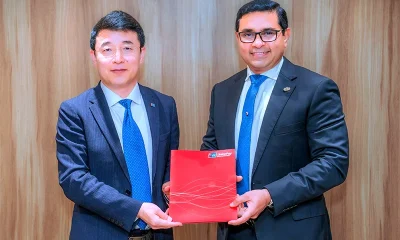
ComBank, UnionPay launch SplendorPlus Card for travelers to China
-

 Business4 days ago
ComBank advances ForwardTogether agenda with event on sustainable business transformation
-

 Opinion7 days ago
Remembering Cedric, who helped neutralise LTTE terrorism
-
 Business7 days ago
CORALL Conservation Trust Fund – a historic first for SL
-
 Opinion4 days ago
Conference “Microfinance and Credit Regulatory Authority Bill: Neither Here, Nor There”
-

 Opinion6 days ago
A puppet show?
-

 Opinion3 days ago
Luck knocks at your door every day
-
 Features6 days ago
‘Building Blocks’ of early childhood education: Some reflections